Springs · Beaverton
Garage Door Roller Replacement in Beaverton
The door is the one the builder installed and has never had a part changed.
In plain words
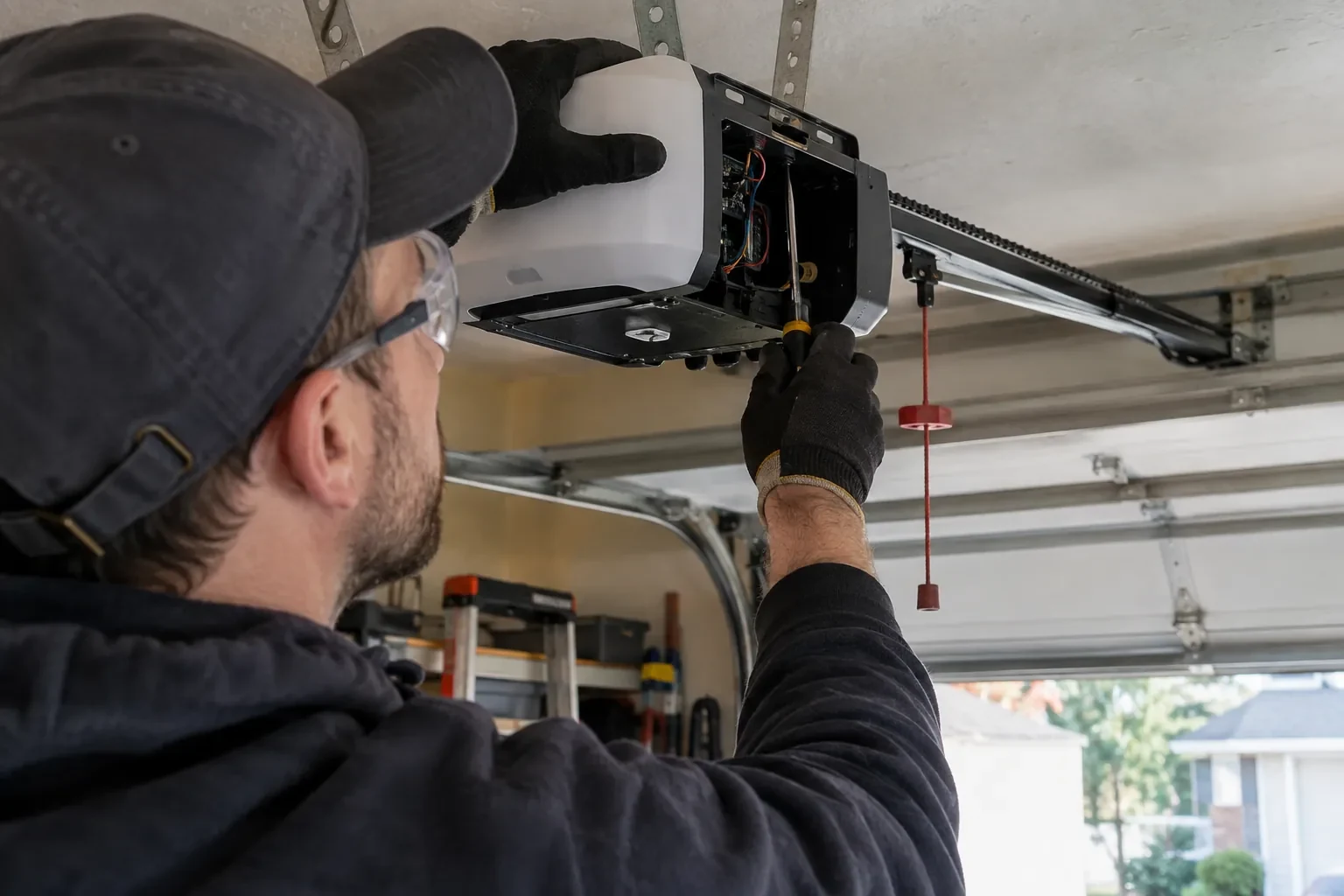
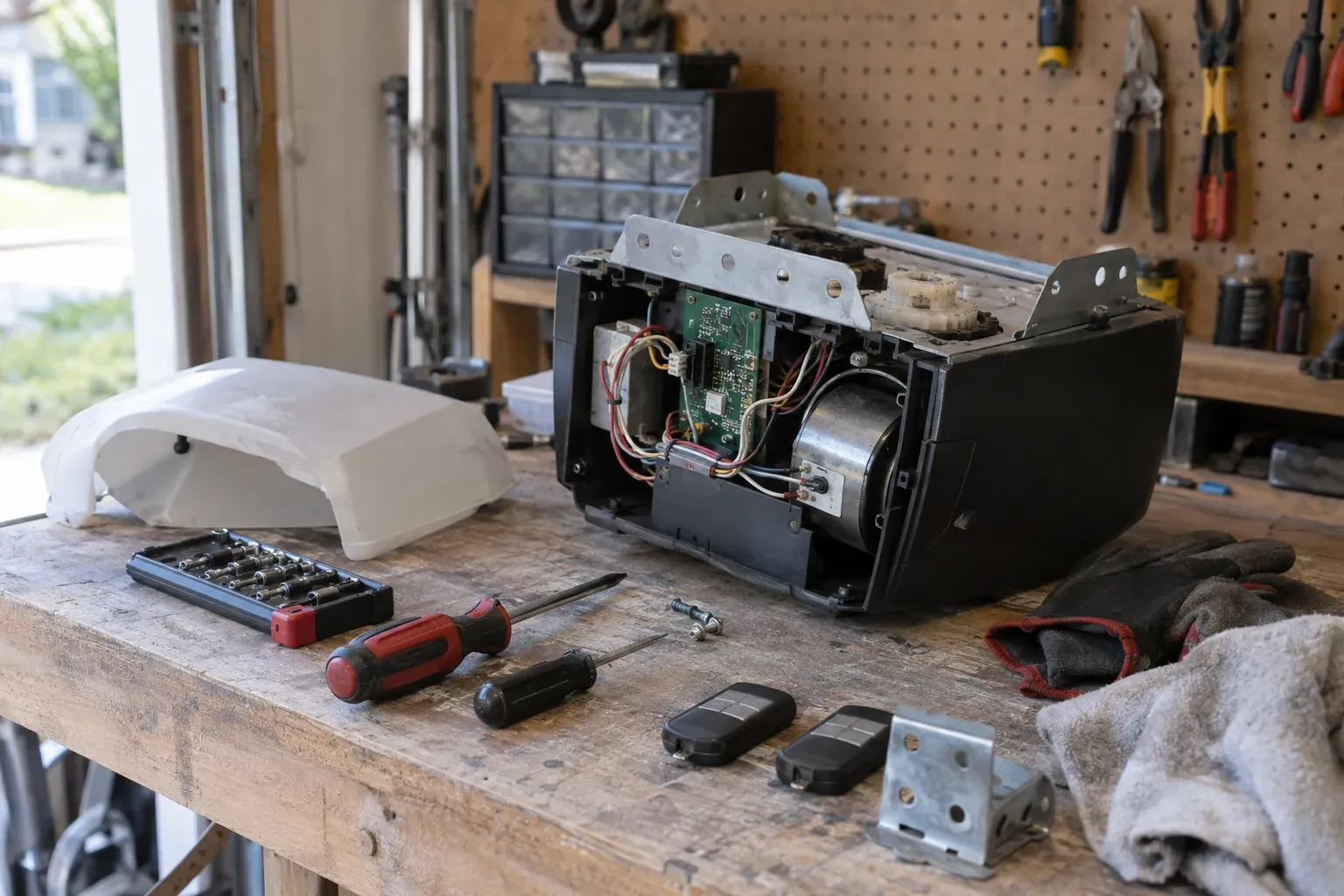
A garage door opener is designed to guide a balanced door, not to haul a rough one. Rollers that bind, wobble or grind add resistance across the whole travel, and the opener answers by working harder, running hotter and tripping its force limit or reversing partway. Replacing worn rollers with a smooth-running set takes that load away, which is why the opener often sounds calmer after the same visit. The technician confirms the door holds its own weight with the opener released, then checks the opener's force and reversal settings once the new rollers are in.
How the visit goesHalfway up, the door hesitates and the opener strains before it carries on. Pulled by hand with the opener released, you feel the same catch at the same height, as if a wheel is dragging instead of turning.
Garage Door Roller Replacement
How the visit goes
Track straightness and roller clearance
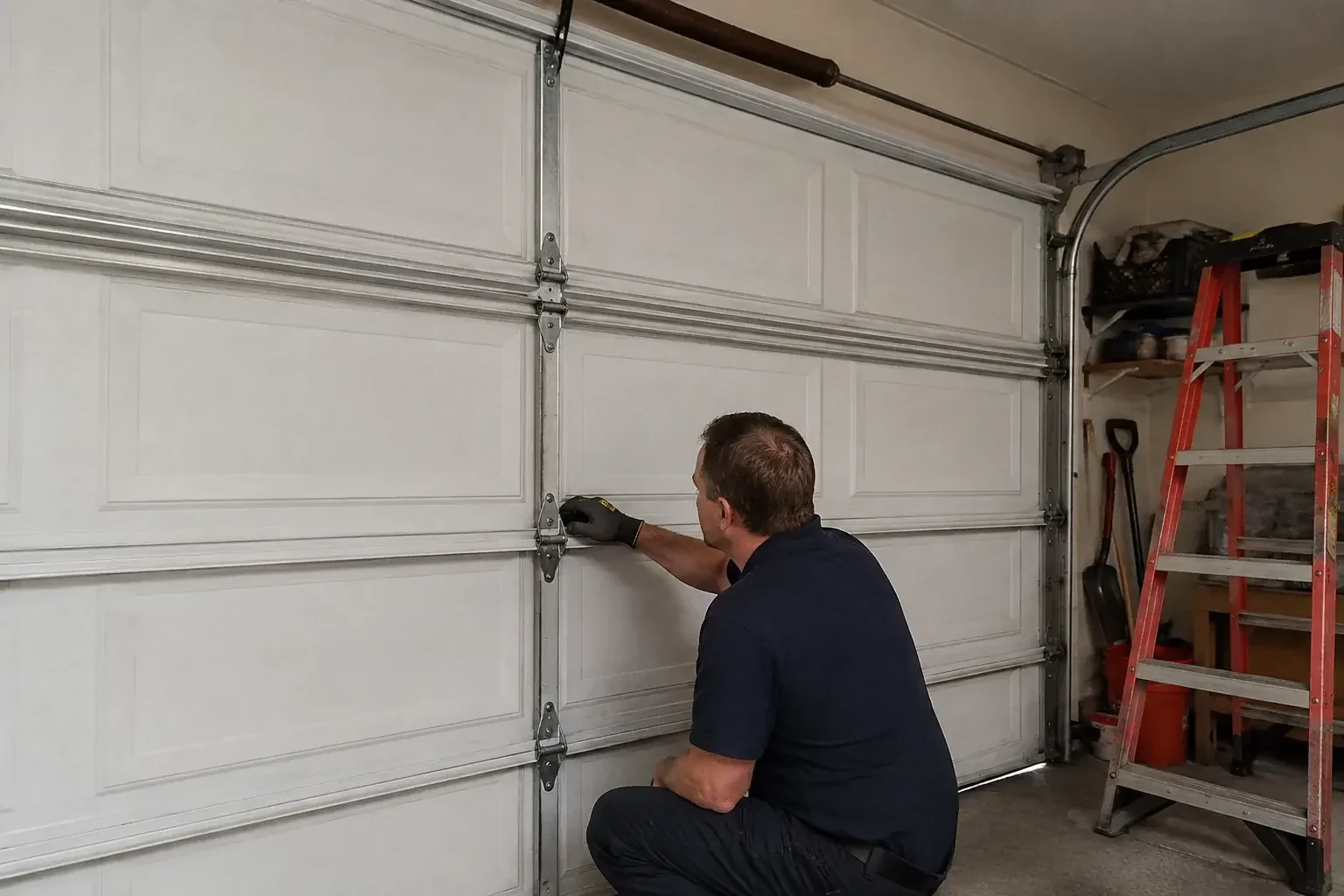
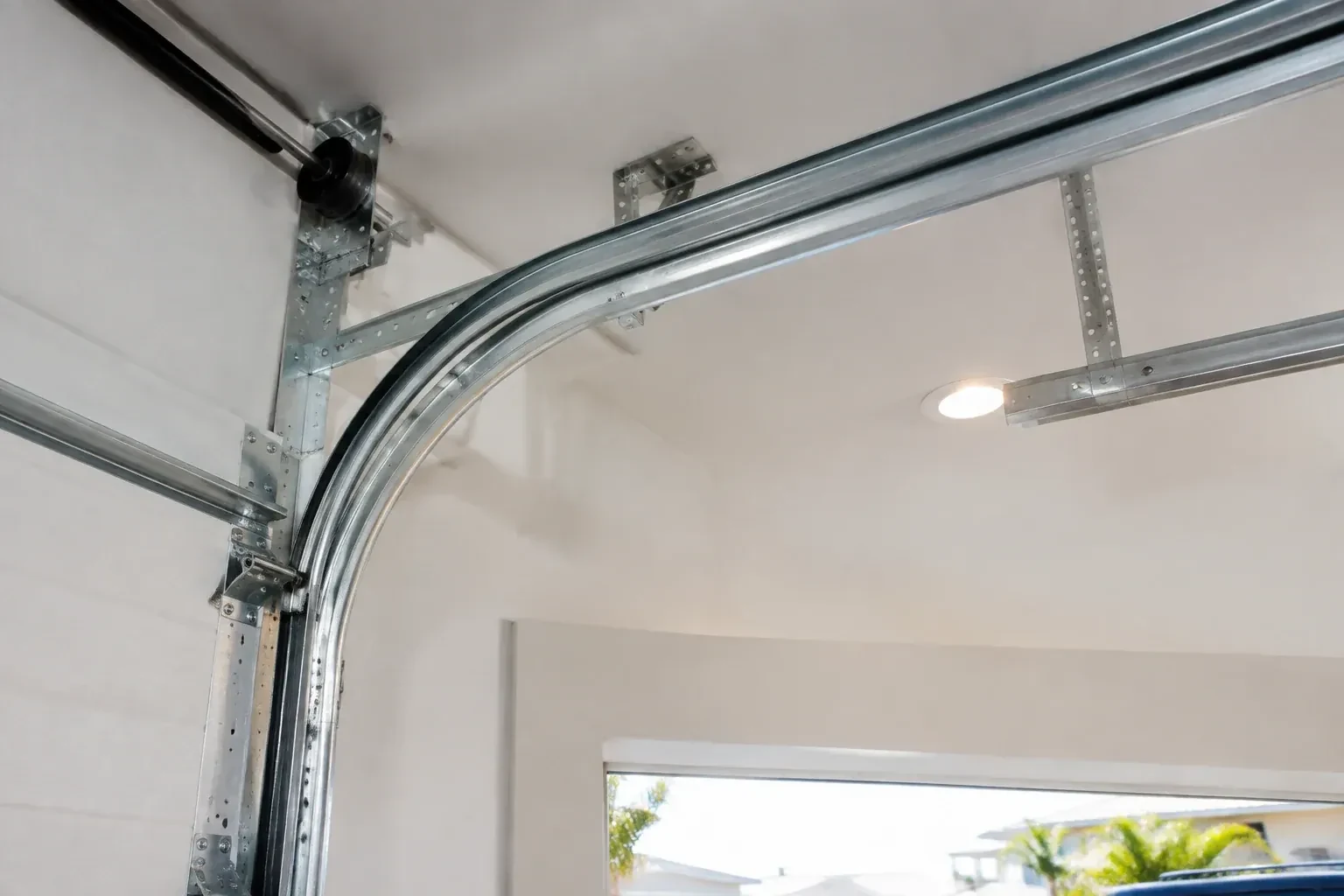
The vertical tracks are checked for plumb and the horizontal tracks for level and for sag at the rear hangers. The technician sights along each track for dents, spread or pinched edges, rust scale and the debris that collects in the bottom few inches. Clearance matters too: a wheel should turn freely with a little side play, neither squeezed by a track pulled too close to the door nor so loose that the door can lean. Where the track has drifted, the jamb brackets are adjusted before new rollers go in, because fitting fresh wheels to a crooked track simply wears them the same way the old ones went.
Middle rollers, one hinge at a time
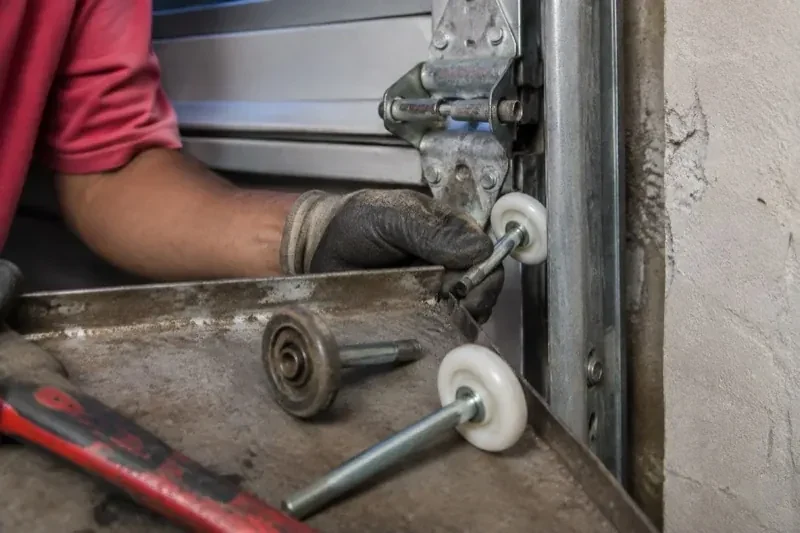
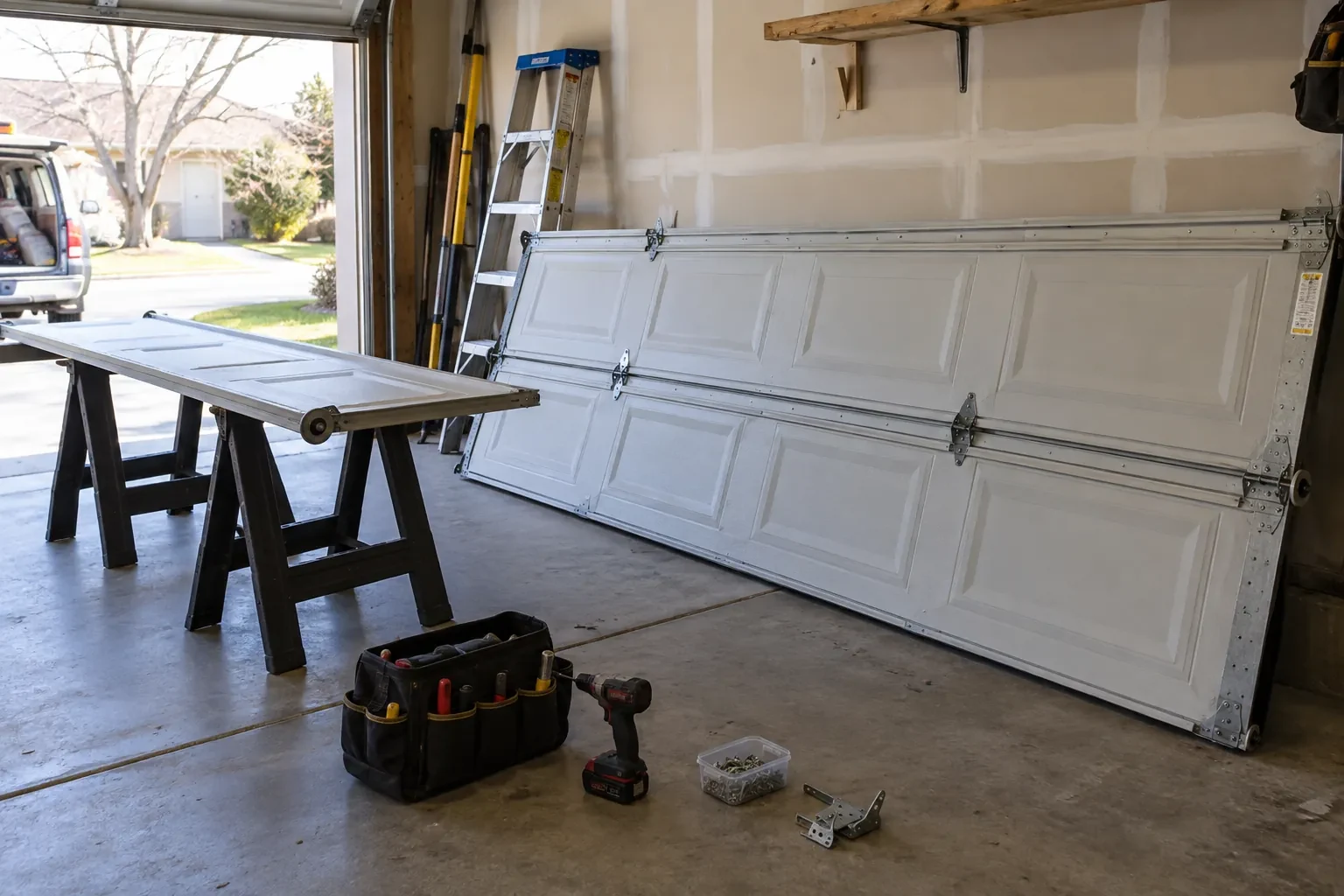
The rollers at the section joints sit in the edge hinges, and each is changed in turn. The technician loosens the hinge fasteners just enough to swing the hinge leaf and ease the old roller out of the track, seats the new roller in the hinge, guides its wheel back into the channel and refastens the hinge with the section held square. Because every other roller stays put while one is out, the door never loses its alignment. Numbered hinges go back to their own rows, since each row holds its wheel at a slightly different offset to follow the graduated spacing of the track.
Looking after nylon rollers
Modern nylon rollers ask for very little. Twice a year, glance along each track with the door closed for a wheel that sits crooked, a cracked tire or a stem that has begun to wobble. Give the hinge knuckles a short burst of garage door lubricant once or twice a year, and leave the wheels and track dry; lubricate bearings only if the roller's maker calls for it, since some are sealed or built to run without added grease. Keep the bottom of each track swept clear of leaves, grit and, in winter, slush. Rollers with sealed bearings need even less, since the seal keeps dirt and moisture away from the balls; a wipe and a look is enough.
Garage Door Roller Replacement
In the van
Adjustable top fixtures
1-1/2 inch reversal test block
Jamb bracket fasteners
Replacement numbered hinges
Two-inch nylon ball-bearing rollers
Garage Door Roller Replacement
What affects the quote
Weight and construction of the door
A heavy insulated steel or solid wood door needs higher-rated rollers and takes more care to secure and handle than a light single-skin door, which shows in both parts and time.
Opener adjustments afterwards
Resetting force limits and re-testing the reversal once the door moves freely is normally part of the job; reprogramming or repairs to the opener itself are quoted separately.
Hinges that need replacing
Cracked, elongated or rusted hinges found during the inspection are replaced with the correct numbered hinge, each priced as its own item alongside the rollers.
What to have ready
- Can we reach both tracks, or is there shelving or a car in the way?
- Are there two hinges stacked at the ends of each section, or one?
- Where in the travel does the noise, shake or hesitation happen?
Garage Door Roller Replacement: questions
QuestionsWhat is checked after the rollers go in?
The door is run through several cycles with the technician watching each wheel stay seated, then balanced by hand with the opener released to confirm it holds at halfway. The top section is checked for a tight seal at the header, the hinge and bracket fasteners are snugged, and the opener's force and reversal are tested with a 1-1/2 inch block in the door's path. The industry checklist for a residential door covers exactly these points, and they are all part of finishing the job.
How does the technician tell rollers from hinges or track as the cause?
By watching where and when the trouble happens and then checking the parts in that spot. Rollers are spun and wiggled to reveal rough bearings and worn wheels; hinges are checked for cracks, elongated holes and loose bolts; tracks are checked for plumb, dents and spacing. A shudder at the curve tends to be rollers, a pop as sections pivot tends to be a hinge, and a rub the full height of the door tends to be track. Often more than one is involved, and the visit covers them all.
How do worn rollers affect the opener?
An opener is built to guide a balanced door, and every wheel that binds, wobbles or grinds adds resistance it has to overcome across the whole travel. It works harder, runs hotter, and may trip its force limit or reverse partway through a cycle. After roller replacement the technician confirms the door holds its own weight with the opener released, then checks the opener's force setting and its reversal on a test block, since a door that moves freely often needs those settings reduced.
Related services
- Garage Door Track Repair or ReplacementThe door has started rubbing the frame on the left, leaving a shiny stripe down the weatherstrip.
- Garage Door Cable ReplacementSomeone left the snow shovel leaning in the opening and the door came down on it.
- Torsion Spring ReplacementNothing broke outright, but the door has grown heavier each winter, opens more slowly and squeals as it moves.