Springs · Derryville
Garage Door Roller Replacement in Derryville
The door is the one the builder installed and has never had a part changed.
In plain words
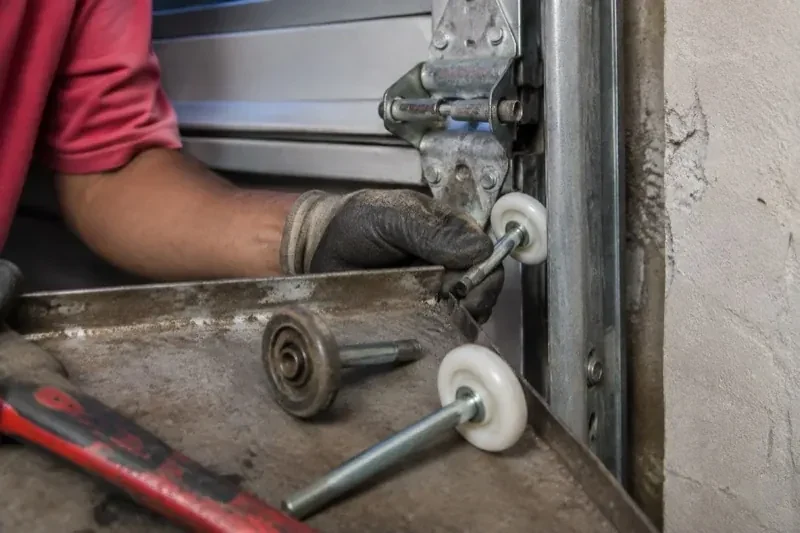
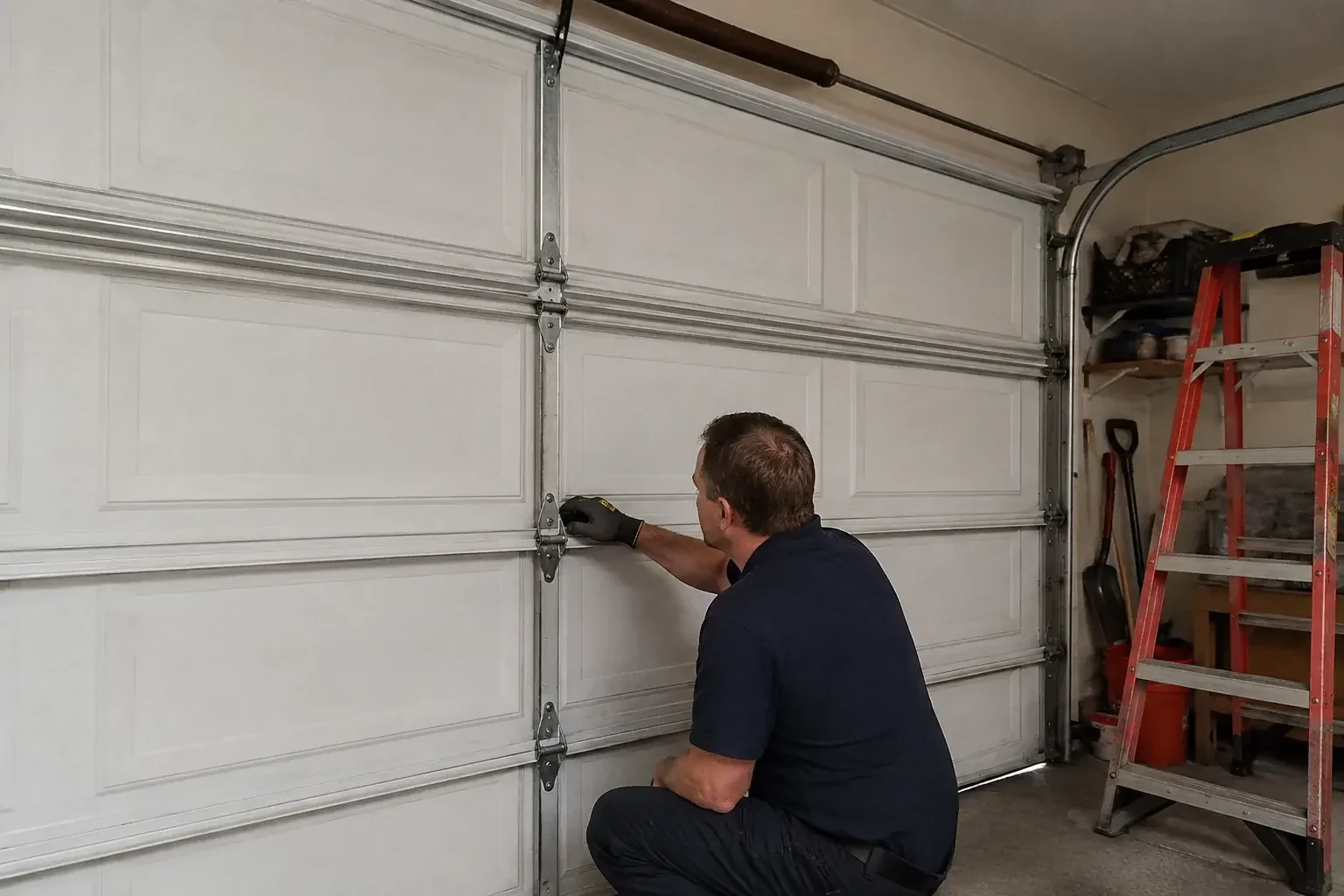
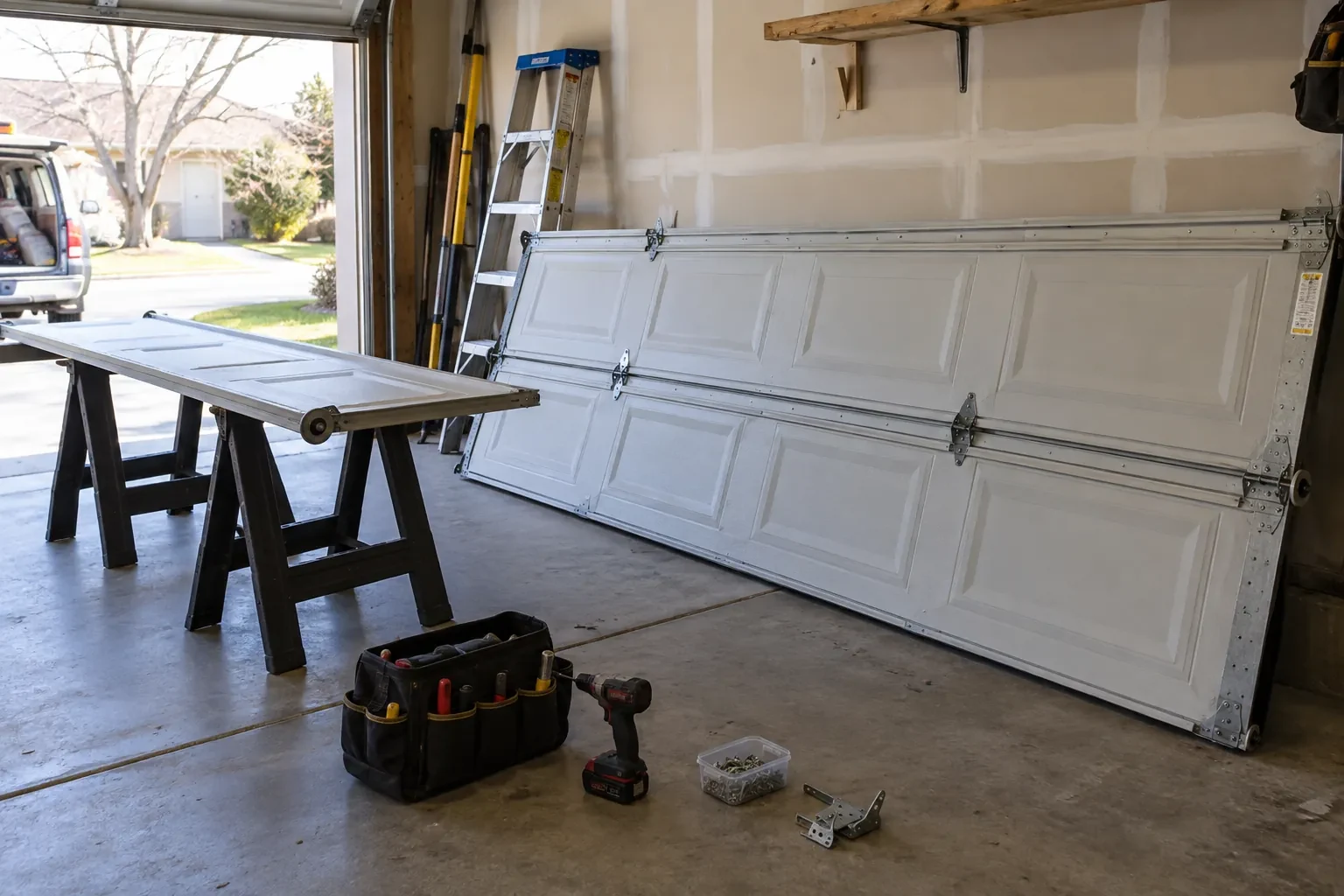
The visit starts with the door rather than the parts. A technician runs it on the opener and then by hand, listens for where the trouble is, examines every roller for wear and play, and confirms the door is balanced, because an unbalanced door chews through rollers. Then the door is clamped in position and the rollers are changed one at a time so the remaining wheels keep the sections aligned. Top fixtures are reset so the top section seals, the track is cleaned and squared, moving parts are lubricated, and the door is cycled and tested before the tools go back in the van.
How the visit goesThe door shudders as it rises, worst where the track bends from vertical to horizontal. Watching from inside, you can see one section rock from side to side while the others sit still, and the whole door lands with a clunk.
Garage Door Roller Replacement
How the visit goes
Does the door hold its own weight?
With the opener released, the technician lifts the door to knee height and then to halfway and lets go. A balanced door stays where it is put; one that drifts down or climbs is telling you the springs are out of adjustment. This check comes before roller work for a practical reason: an unbalanced door leans on its rollers and hinges with weight the springs should be carrying, and new rollers fitted to such a door wear early. If the balance is off, the technician explains what the spring system needs so you can decide whether to have it corrected in the same visit.
The bottom rollers and the cable brackets
The lowest rollers live in the bottom brackets, and those brackets also anchor the lifting cables, which means they carry the counterbalance load whenever the door is closed. This is the one roller position that is never approached casually. Depending on the door, the technician either exchanges the roller while the bracket stays fastened and the cable stays put, or first takes the spring tension off with winding bars so the bracket can be unbolted and inspected. Either way the bracket, the cable end and the fastening into the section are examined, and a corroded or bent bracket is replaced while the door is already secured.
An opener with less to carry
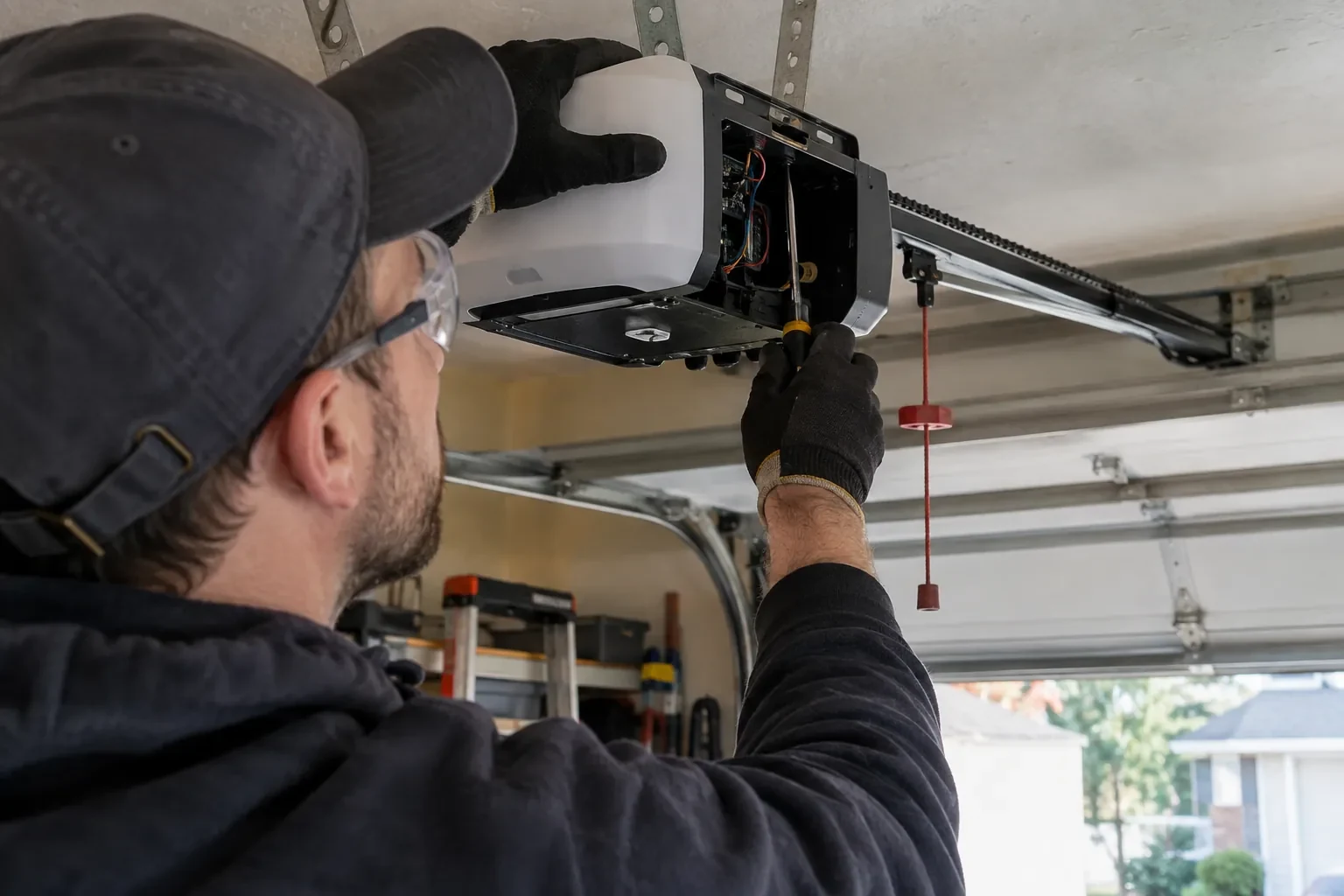
With smooth rollers under the door, the opener goes back to its intended job of guiding a balanced door rather than hauling a rough one. The technician will have confirmed the force settings and the reversal against a test block before leaving, and it is worth repeating the reversal check yourself each month: lay a 1-1/2 inch block, such as a scrap of two-by-four laid flat, in the door's path and close it; the door should reverse on contact. If the opener ever begins straining or reversing partway again, mention it at the next visit, since it is often the earliest sign of hardware wear.
Garage Door Roller Replacement
In the van
Adjustable top fixtures
1-1/2 inch reversal test block
Jamb bracket fasteners
Replacement numbered hinges
Two-inch nylon ball-bearing rollers
Garage Door Roller Replacement
What affects the quote
Opener adjustments afterwards
Resetting force limits and re-testing the reversal once the door moves freely is normally part of the job; reprogramming or repairs to the opener itself are quoted separately.
Balance adjustment first
If the door drifts when released at halfway, the spring system needs adjusting before new rollers are fitted so they do not wear early; that adjustment is quoted as its own line.
Track alignment and repair
Realigning jamb brackets, straightening a dented lip or replacing a damaged length of track is separate from the roller work and quoted as such when the inspection finds it.
What to have ready
- Does the door stay put at halfway when the opener is released?
- Where in the travel does the noise, shake or hesitation happen?
- Is the track the two-inch residential size or a wider commercial track?
Garage Door Roller Replacement: questions
QuestionsWhat is checked after the rollers go in?
The door is run through several cycles with the technician watching each wheel stay seated, then balanced by hand with the opener released to confirm it holds at halfway. The top section is checked for a tight seal at the header, the hinge and bracket fasteners are snugged, and the opener's force and reversal are tested with a 1-1/2 inch block in the door's path. The industry checklist for a residential door covers exactly these points, and they are all part of finishing the job.
How does the technician tell rollers from hinges or track as the cause?
By watching where and when the trouble happens and then checking the parts in that spot. Rollers are spun and wiggled to reveal rough bearings and worn wheels; hinges are checked for cracks, elongated holes and loose bolts; tracks are checked for plumb, dents and spacing. A shudder at the curve tends to be rollers, a pop as sections pivot tends to be a hinge, and a rub the full height of the door tends to be track. Often more than one is involved, and the visit covers them all.
How do worn rollers affect the opener?
An opener is built to guide a balanced door, and every wheel that binds, wobbles or grinds adds resistance it has to overcome across the whole travel. It works harder, runs hotter, and may trip its force limit or reverse partway through a cycle. After roller replacement the technician confirms the door holds its own weight with the opener released, then checks the opener's force setting and its reversal on a test block, since a door that moves freely often needs those settings reduced.
Related services
- Garage Door Track Repair or ReplacementThe door has started rubbing the frame on the left, leaving a shiny stripe down the weatherstrip.
- Garage Door Cable ReplacementSomeone left the snow shovel leaning in the opening and the door came down on it.
- Torsion Spring ReplacementNothing broke outright, but the door has grown heavier each winter, opens more slowly and squeals as it moves.