Garage Doors in Briars Park, OntarioBuilt for winterslike ours.
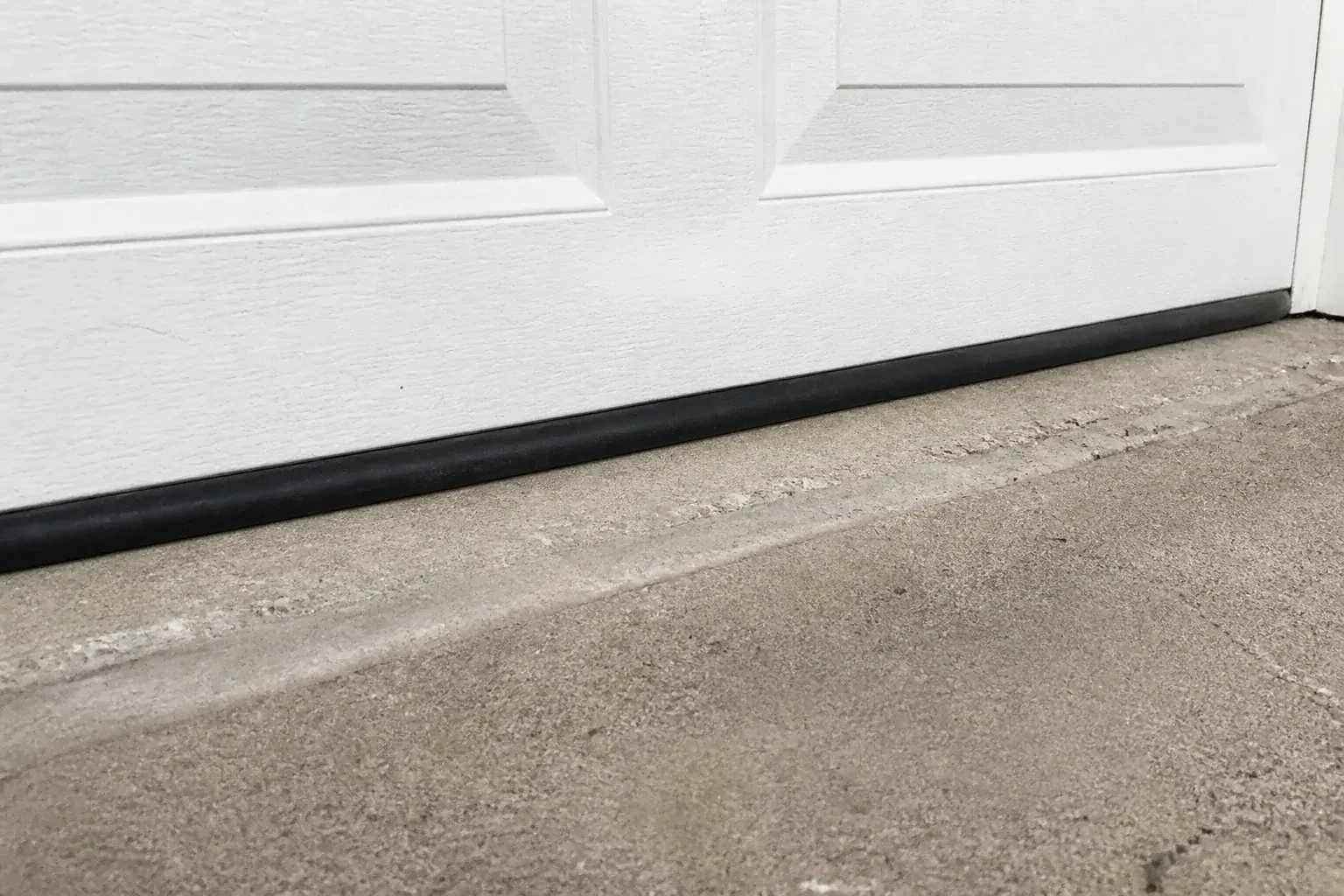
Cold thickens grease, steel contracts, and a spring that was tired in the autumn lets go in the middle of a freeze. We service garage doors in Briars Park for the seasons they actually live through, with cold-rated lubricants, bottom seals that stay flexible below zero, and hardware that stands up to road salt. The same crew covers Mossington Park.
Cold thickens grease, steel contracts, and a spring that was tired in the autumn lets go in the middle of a freeze. We service garage doors in Briars Park for the seasons they actually live through, with cold-rated lubricants, bottom seals that stay flexible below zero, and hardware that stands up to road salt. The same crew covers Mossington Park.
Keeping the weather on the outside.
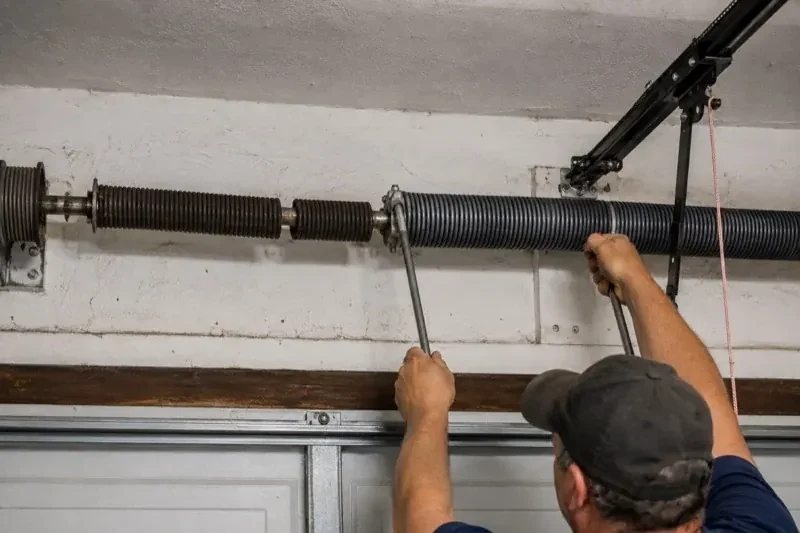
For homeowners in Briars Park who like to understand the work, we explain the mechanics: how a torsion spring stores the weight of the door, why cables fray at the bottom bracket, what the photo-eyes are looking for. For those who just want it fixed, we fix it and keep the explanation short.
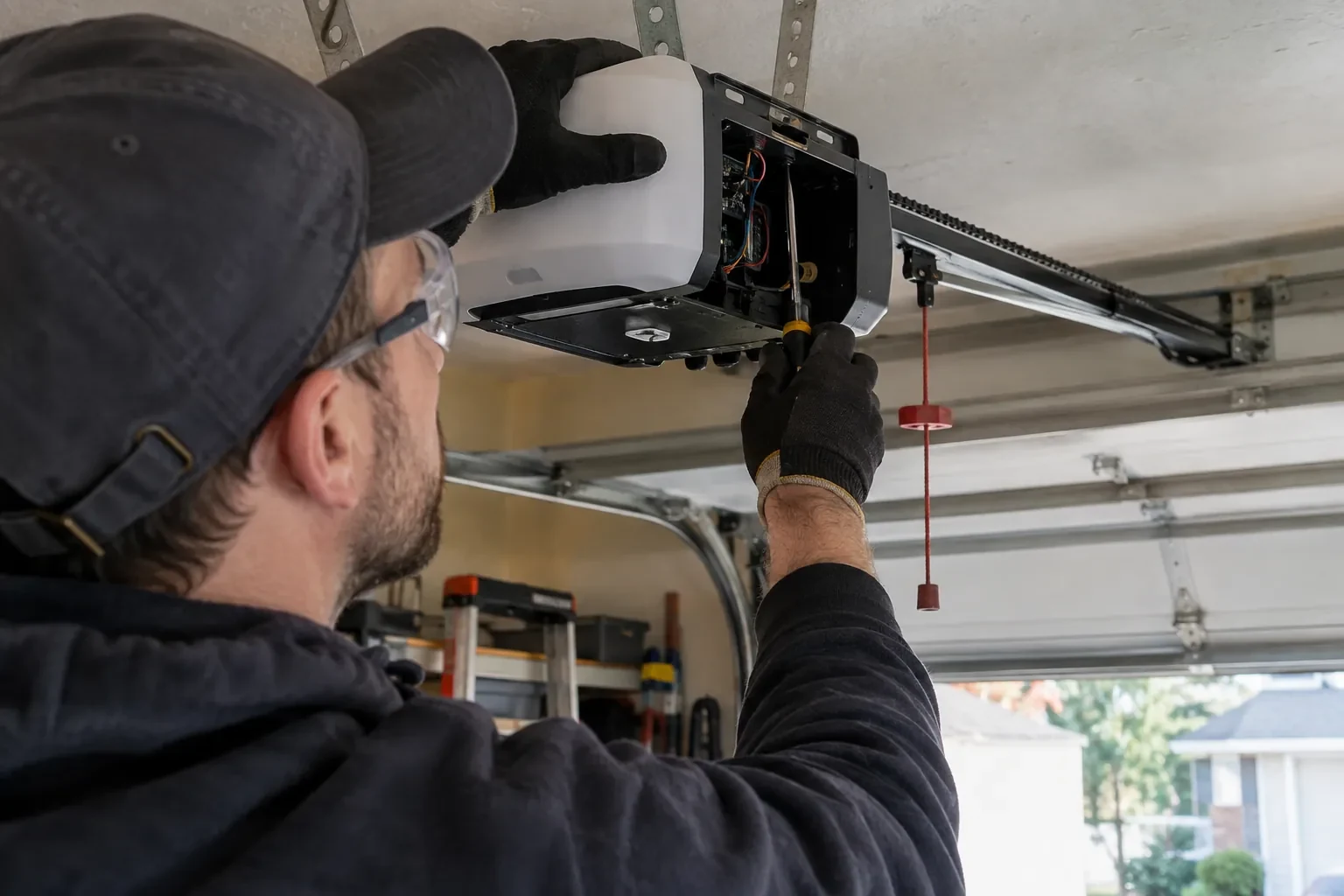
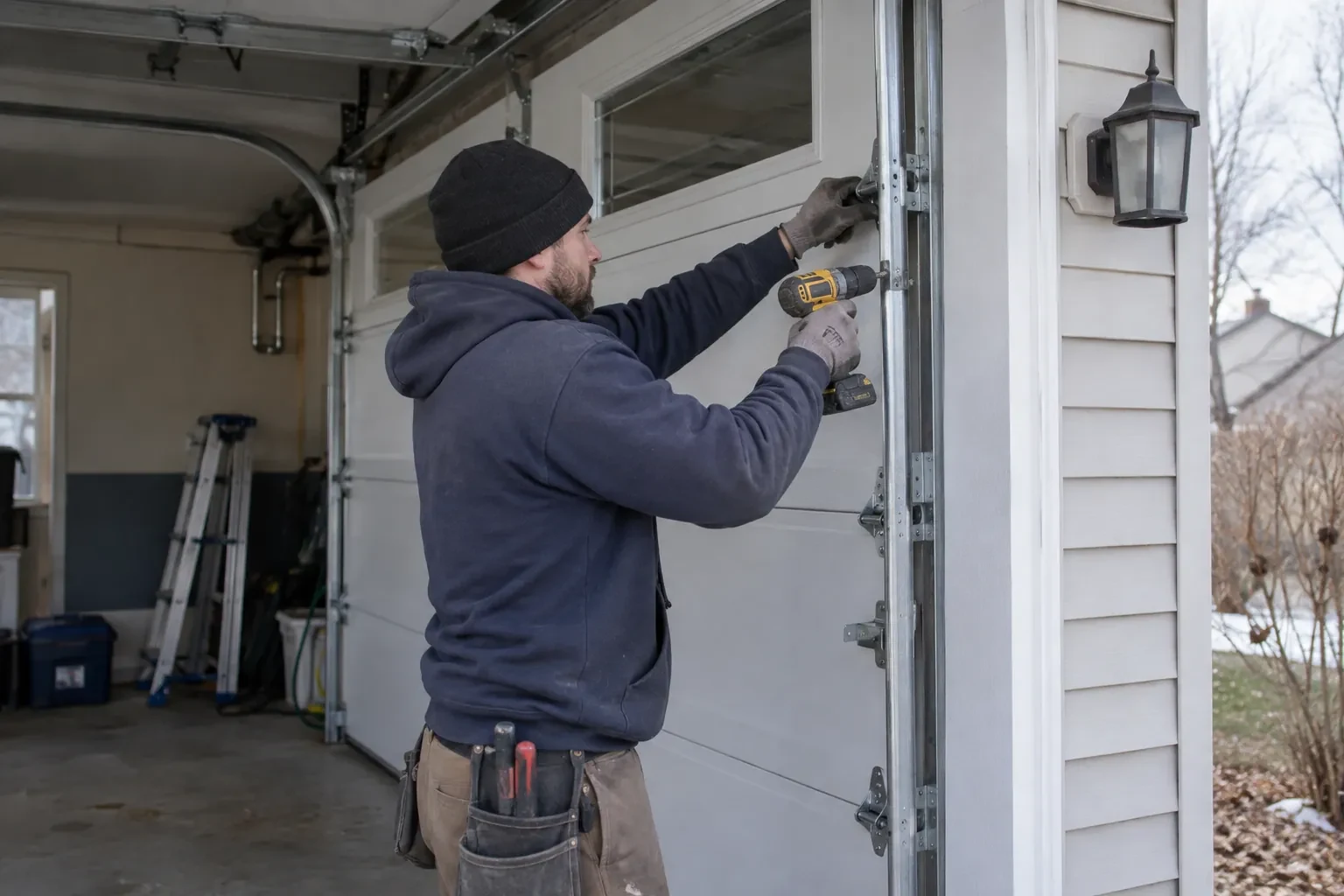
Our technicians know Briars Park well, from the older streets with their original wooden doors to the newer subdivisions with insulated steel sectionals. That range keeps us ready for whatever the day brings. We handle spring and cable replacement, opener repair and installation, panel and track work, weather sealing and complete new doors, and we explain the options before the work starts.
12years in business
24/7open every day
A technician who talks. You hear what we are checking and why, in real time. Ask anything; the explanation is part of the job.
Mess that leaves with us. Debris, packaging and the old spring go with us. Your floor and your car look the same after as before.
Your decision, informed. We put the choices on the table with their pros and cons. Whether to repair, upgrade or replace stays with you.
Schedule a garage door visit for your Briars Park property.
A garage door in Briars Park is really three systems working together: the door and its panels, the springs and hardware that carry the weight, and the opener that does the lifting. Our services are organised the same way, so you can find help for the part that is giving trouble.
About 43% of homes in Georgina were built in 1980 or earlier, according to the 2021 Census.
A mixed housing stock means some doors are on their original openers without photo-eyes while others have modern units with apps and keypads. We handle both: upgrading the older ones for safety and quietness and adjusting or expanding the newer ones as the household grows.
Single-detached houses make up about 83% of homes in Georgina (2021 Census).
Mostly houses
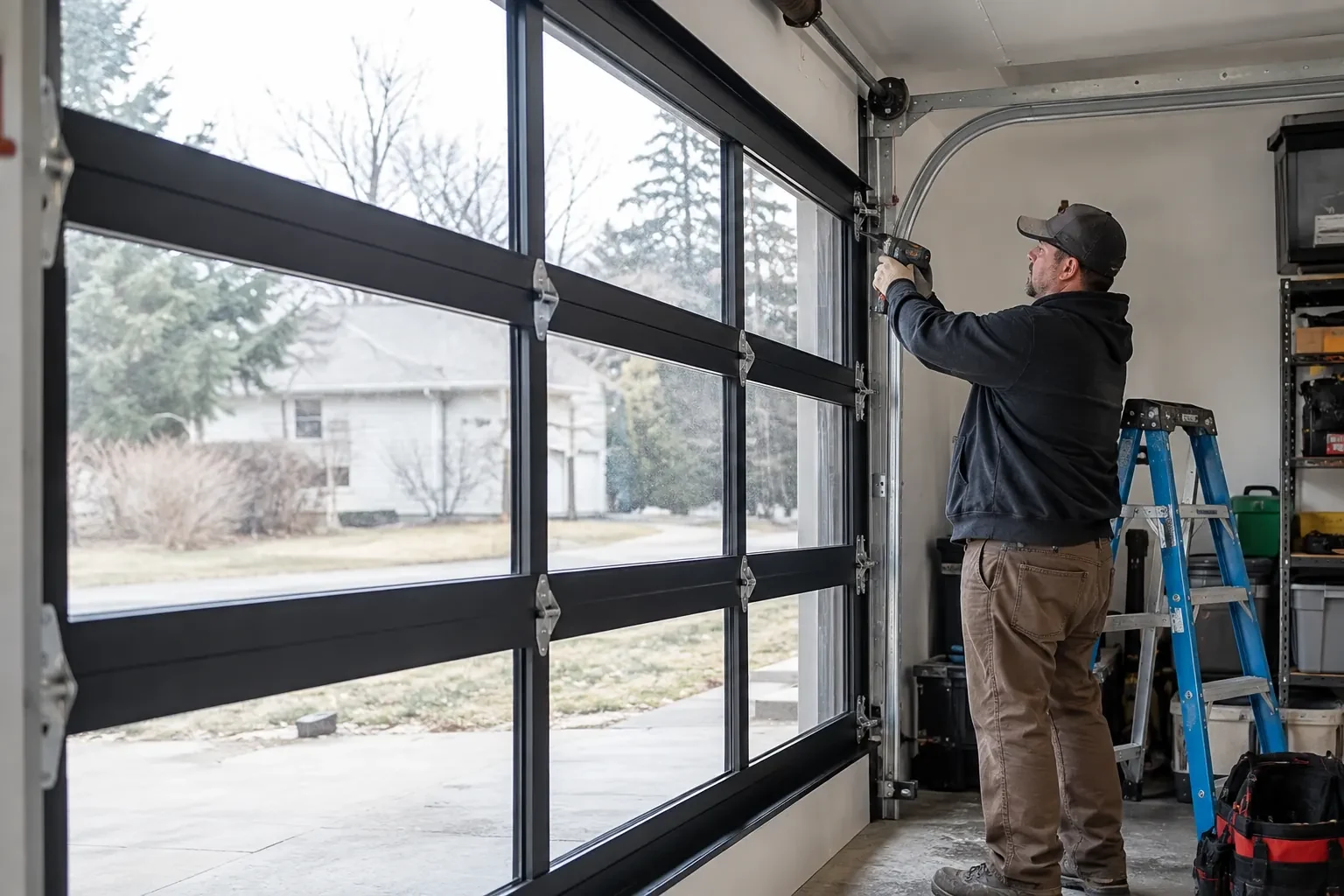
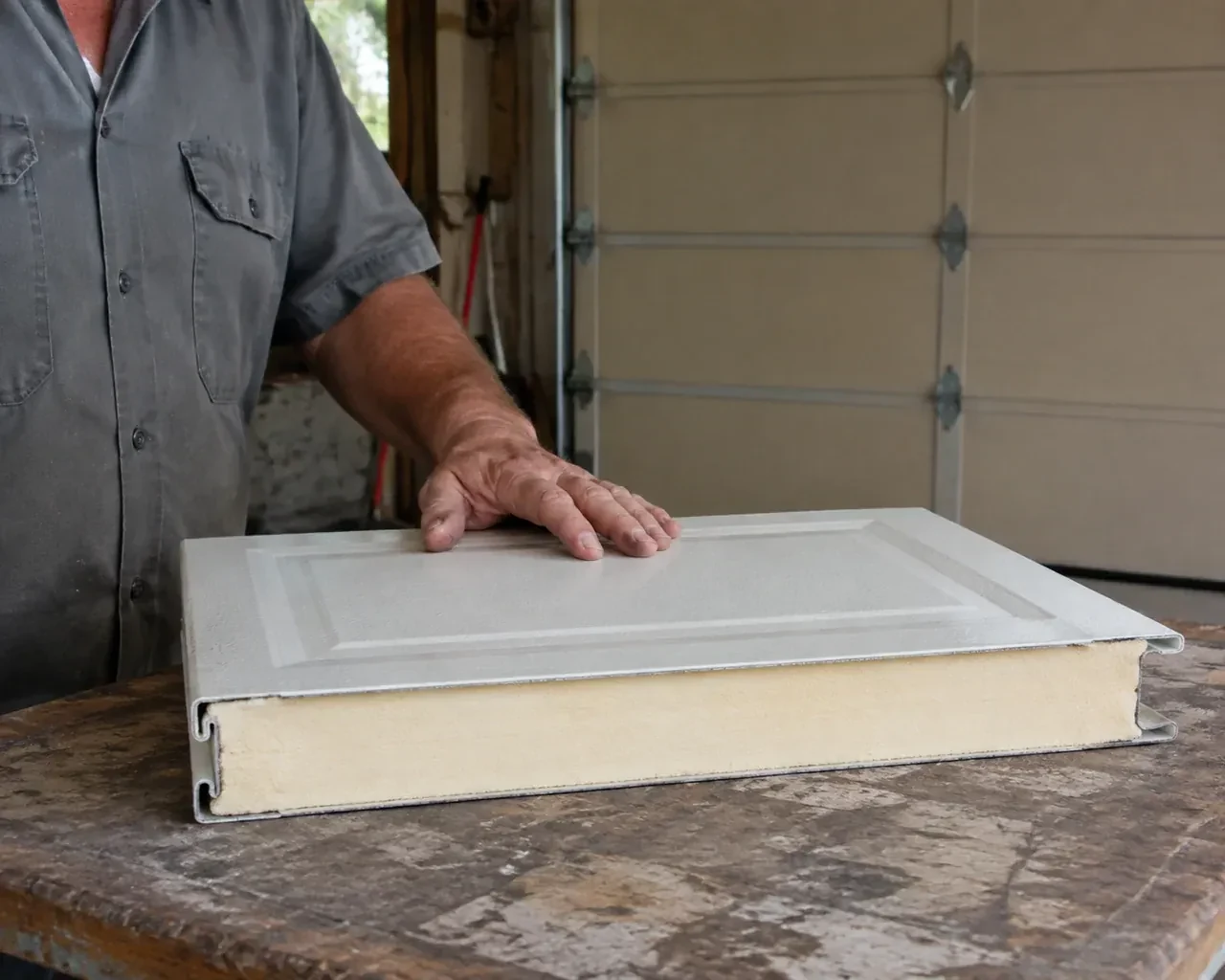
In a neighbourhood of houses, each garage door is chosen by the household, so styles vary from one driveway to the next. When it is time for a new door, homeowners pick panel design, windows, colour and insulation freely, and we bring samples to compare against the siding.
The belt looks fine from a distance, but up close the rubber has cracked across the back in dozens of places and, in one spot, you can see the steel cords showing through.
You want the ceiling back. A storage loft, a vehicle lift or kayak racks would fit if the long rail and motor box were not hanging in the middle of the garage, and the low ceiling of an older house leaves little room for the standard rail anyway.
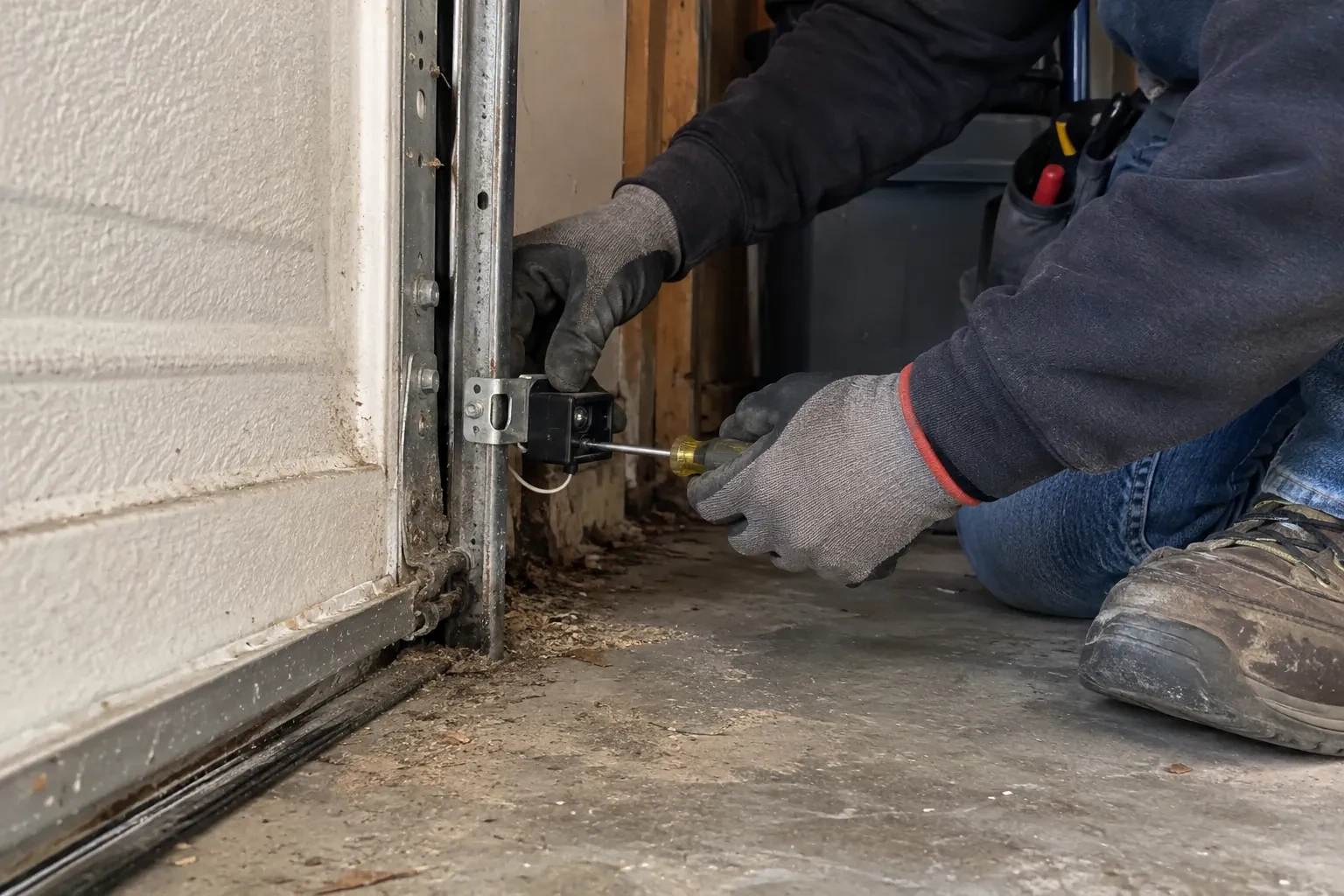
On bright mornings the door will not close, then by lunchtime it behaves itself. The garage faces the low sun, and the light reaches straight across the floor to one of the little black sensors.
Someone in the family tried to add a remote, held the button on the ceiling unit a little too long, and now every remote in the house is dead at once. The wall control still moves the door.
The house came with a controller already screwed to the garage ceiling and a sensor on the door, but the app insists the device belongs to another account. The seller has moved provinces, the emails go unanswered, and every evening the door still reports to a stranger's phone.
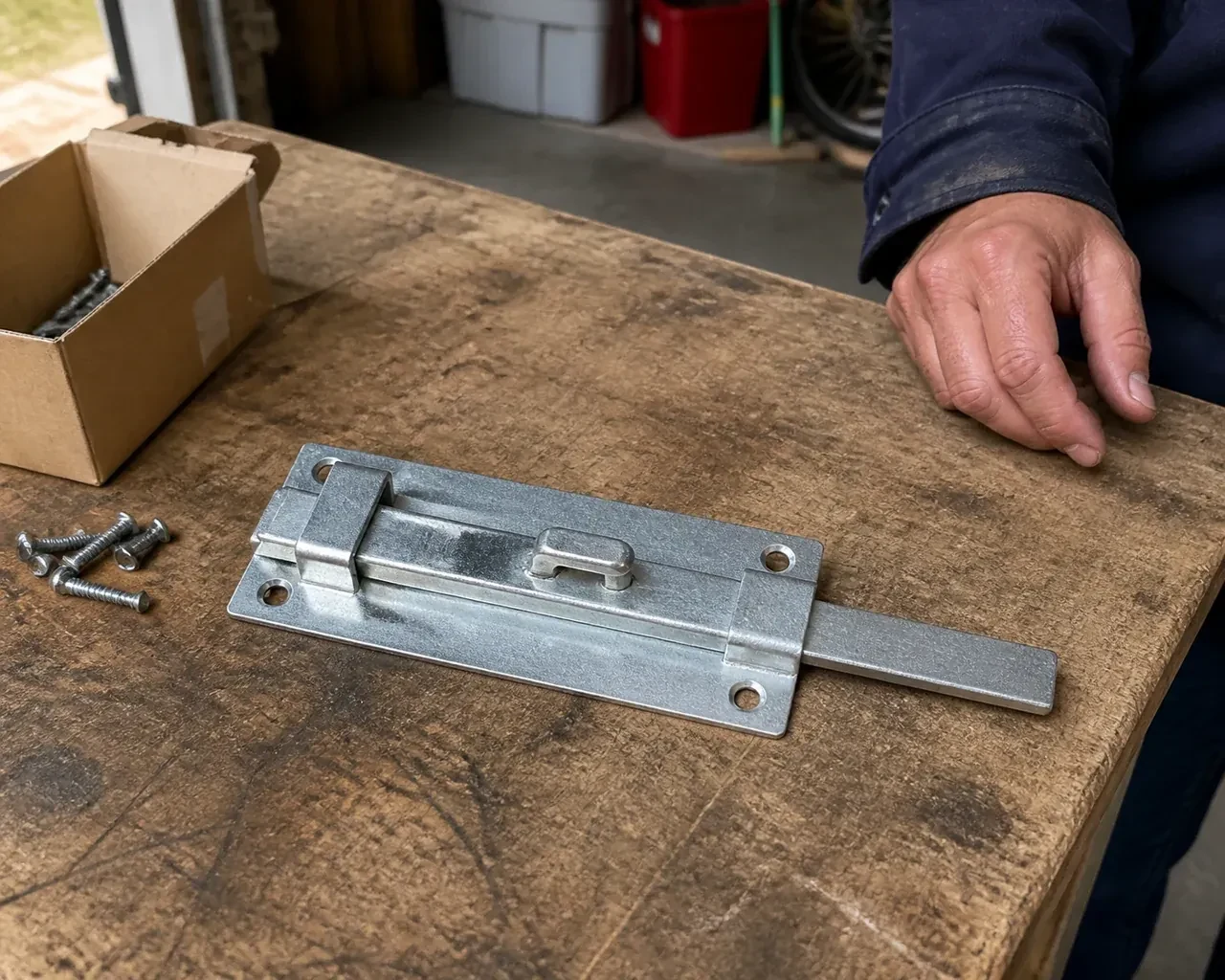
It is the coldest morning of the year. A week of slush and road salt has crusted over the outside release lock, the key will not seat, and the opener inside is silent after the overnight outage.
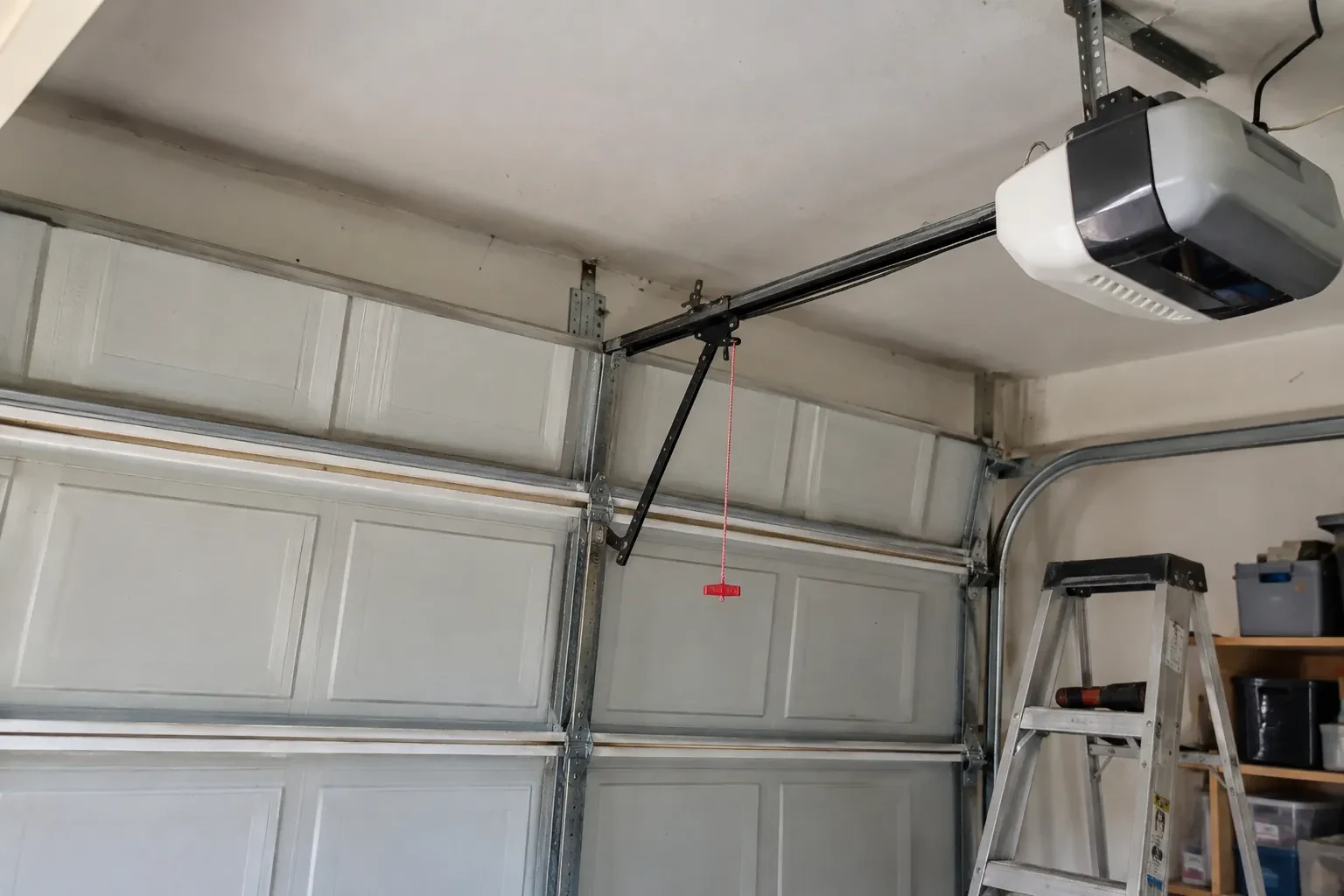
WhyThe operator standard for residential openers in this country asks for a manual release that is coloured red, easy to tell apart from the rest of the mechanism, and reachable from the floor, with the handle no more than about 1.8 metres up.
The existing door opens on old tracks that crowd storage near the ceiling.
WhyA vehicle lift and an overhead door can share one bay when their clear zones are designed together.
How a visit goes
Describe the property, the hardware and what has changed, and the visit starts from what you have seen.
01
Booking made simple
One call sets the visit. We ask for the door type, the opener if you know it, and whether the door is currently stuck open or shut.
02
A careful look
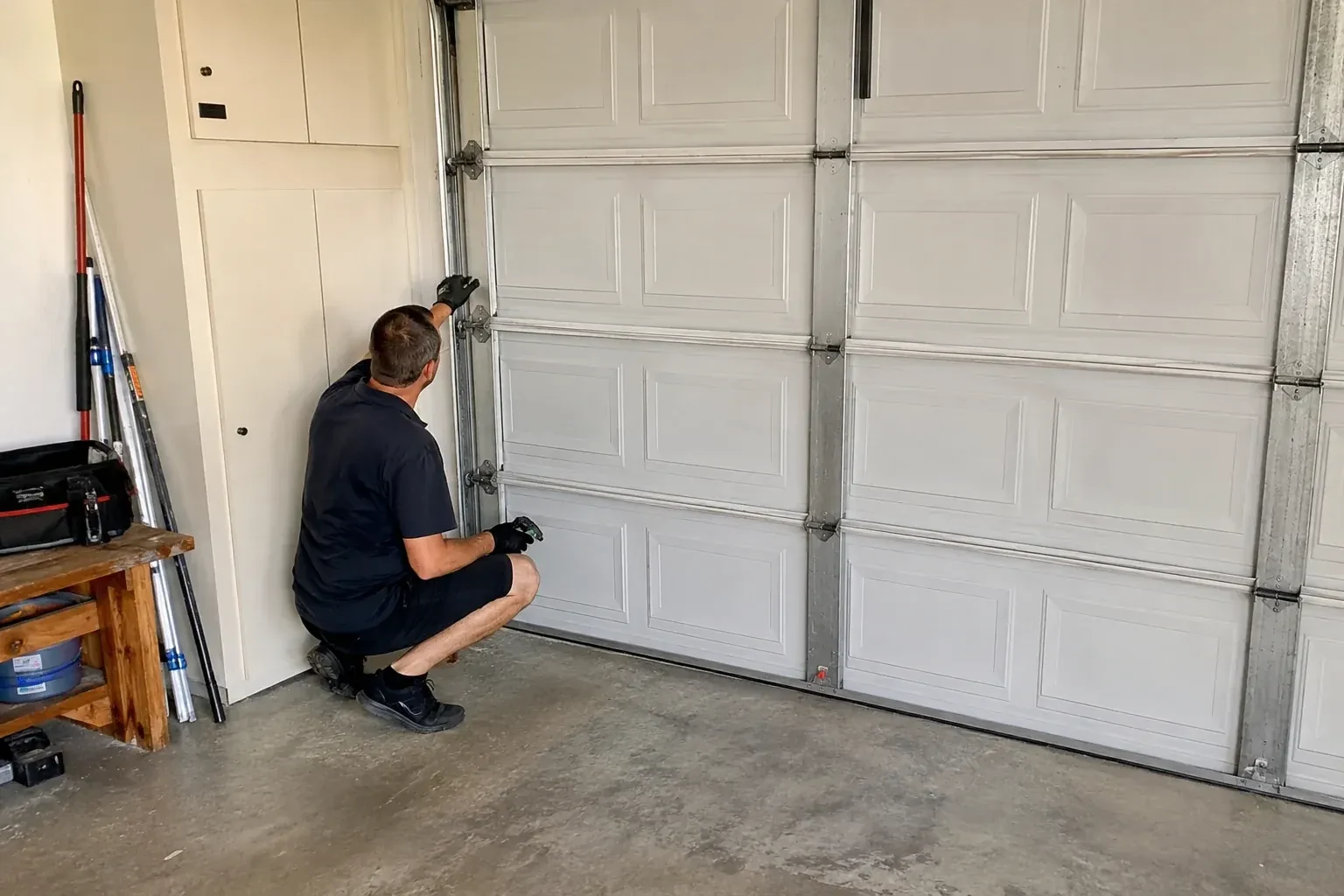
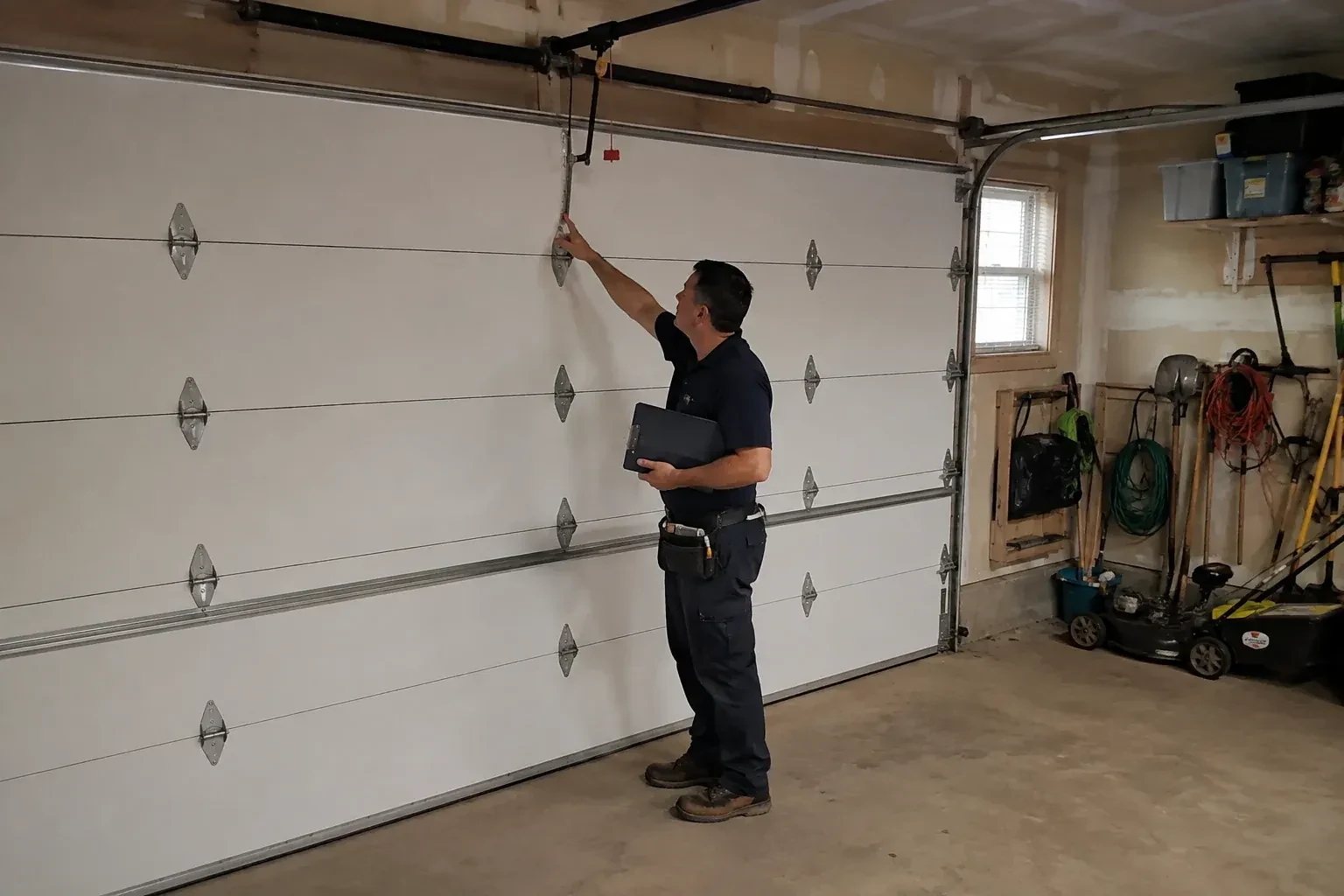
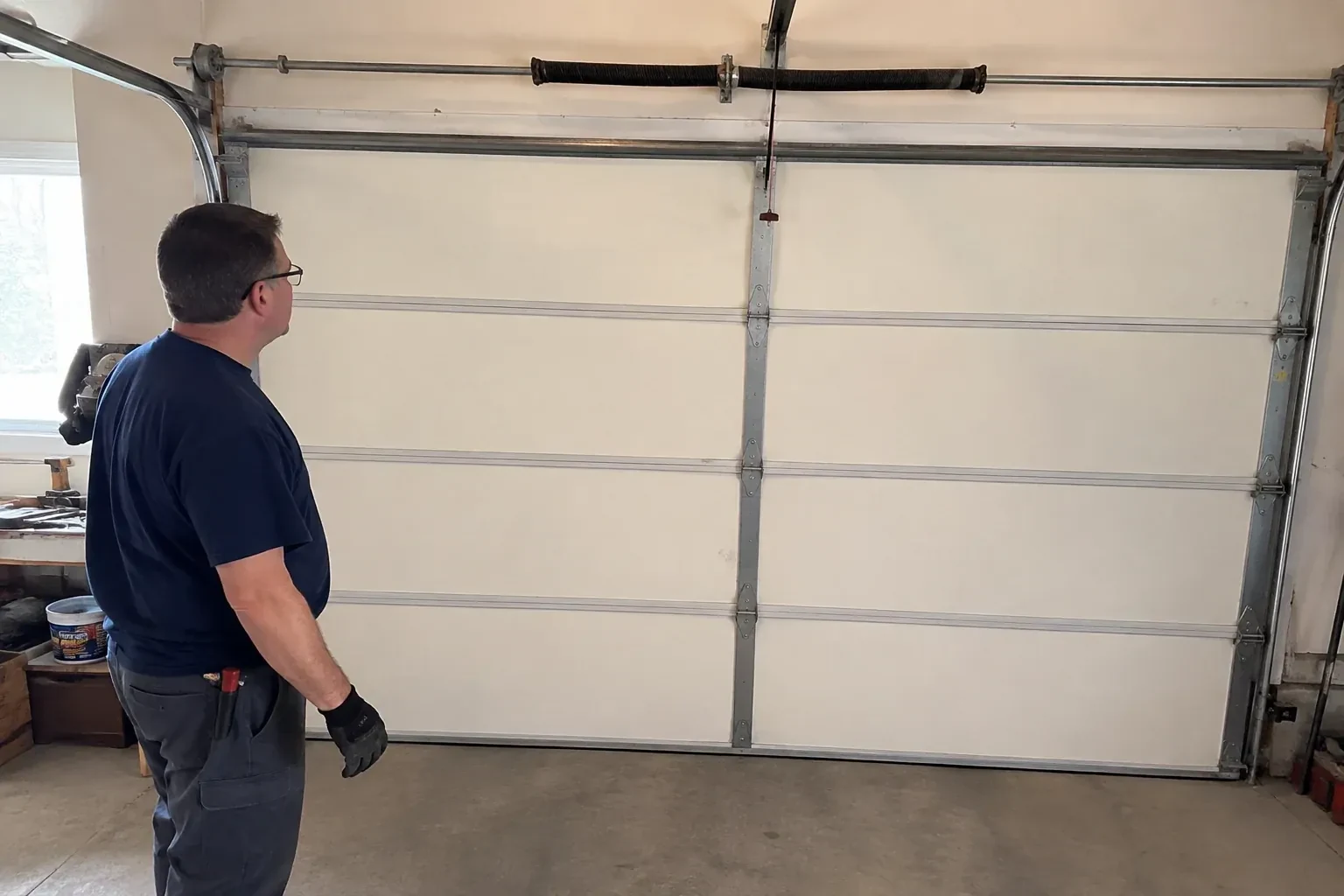
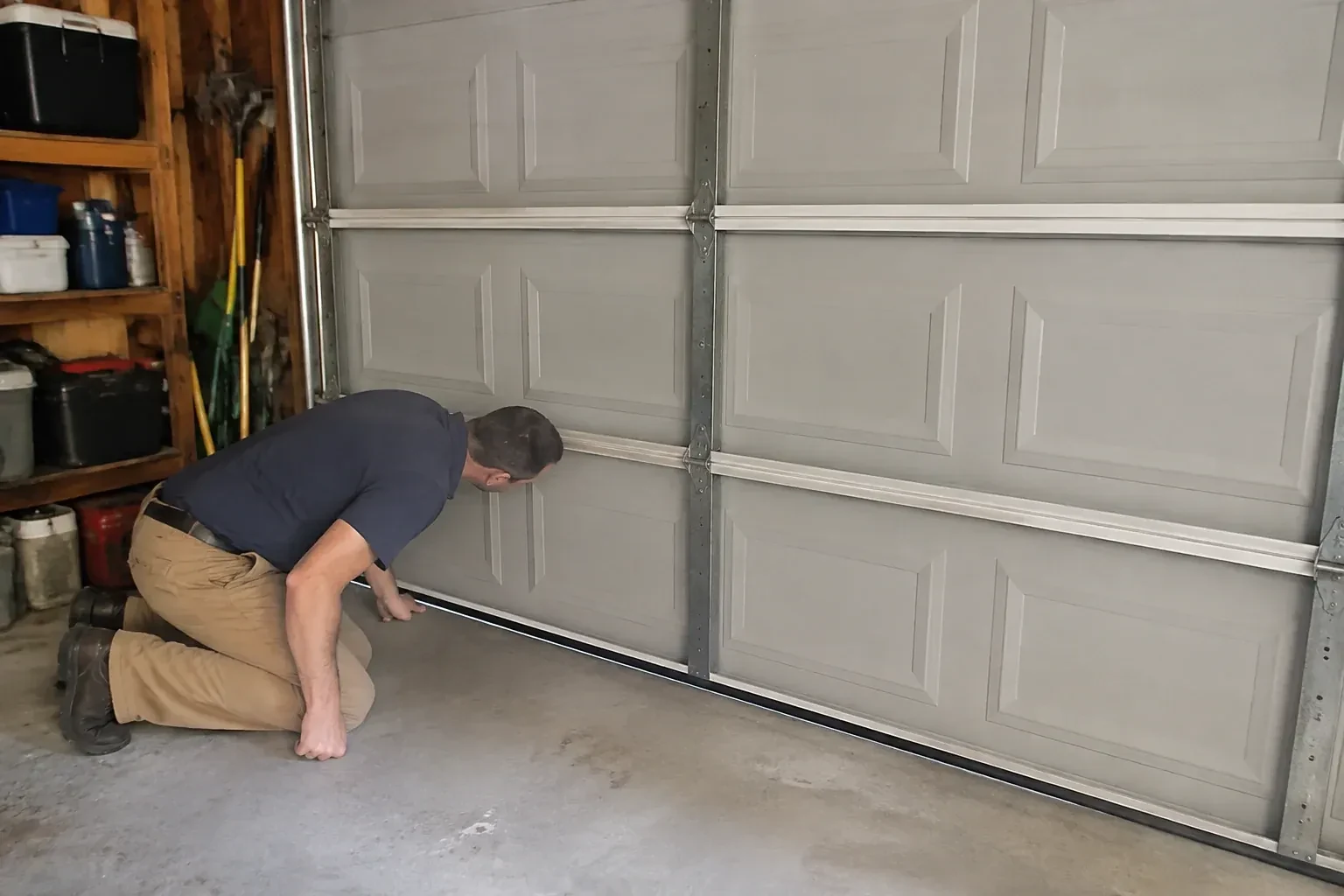
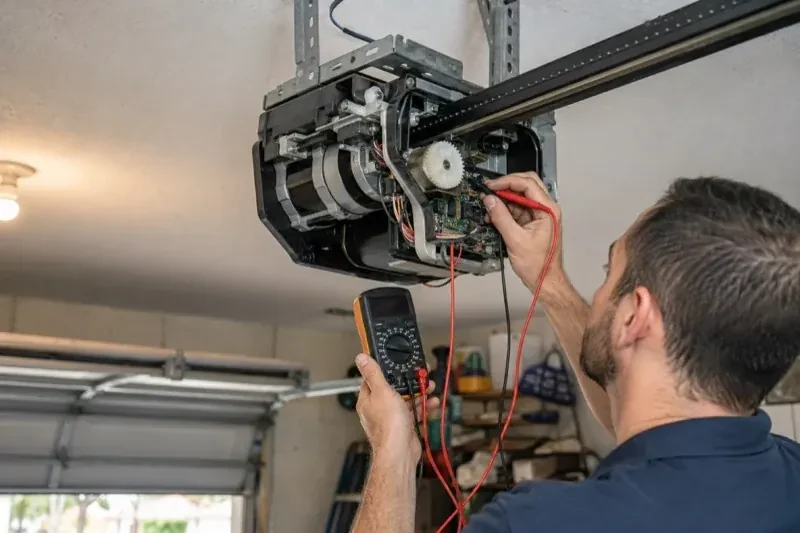
Every visit opens with a full check: balance, spring condition, cable wear, roller state, track alignment and sensor response.
03
Clear choices, careful work
We lay out the options in plain terms, do what you choose with the right tools, and run the door until we are satisfied it is right.
An entrance. Not an afterthought.
1/10Garage Door Safety Inspection
There is a new sound. Last week the door simply hummed up and down; now there is a bang at the top of travel and a scrape on the way back, and you have started standing well back while it moves.
Years of slap shots have peppered the lower two sections with dents. Each one alone is small, but from the street the door looks tired, and the deepest dent near the centre has cracked the paint and shows bare steel.
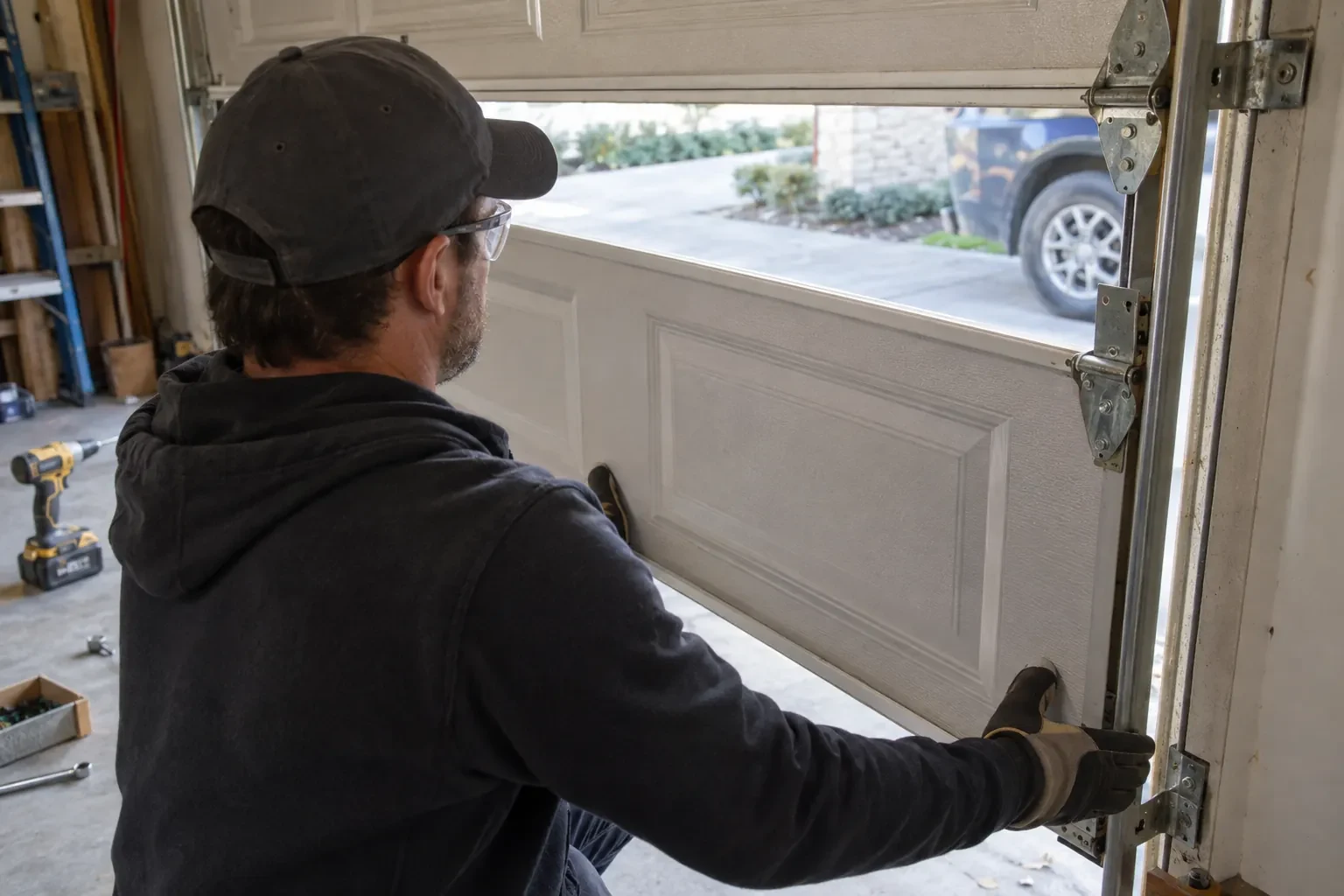
The car nudged the door on the way in. There is a dent low on one end, and above it the hinge that carries the roller is bent so the panel edges rub together and squeal as the door lifts.
On cold mornings the door barely makes it up. The motor whines, the door crawls, and once or twice it has given up halfway. By afternoon, with the sun on the garage, it runs almost normally again.
You swapped the old wooden door for a heavier insulated steel one, and the twenty-year-old opener that was kept has never settled. It strains on the way up, stops partway on cold mornings, and the rail shudders with every cycle.
There are no sensors at the floor at all, or a previous owner has wired the pair together up beside the motor so the beam never crosses the doorway. A home inspector has just pointed it out.
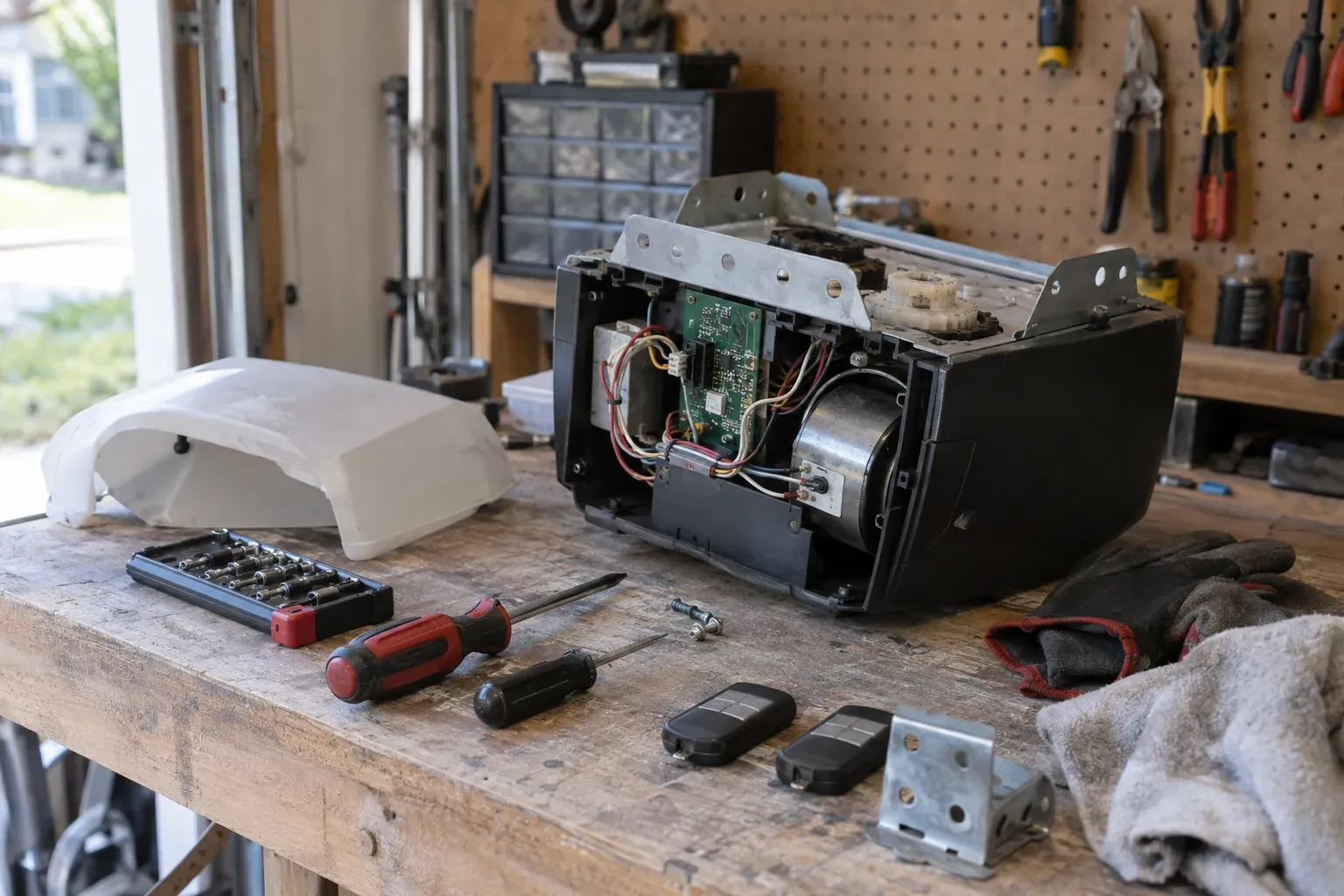
After a week of lifting the door by hand you pressed the button, hoping it would catch. Instead the motor grinds, the trolley thumps against the end of the rail, and the little lever that should snap back stays stubbornly upright.
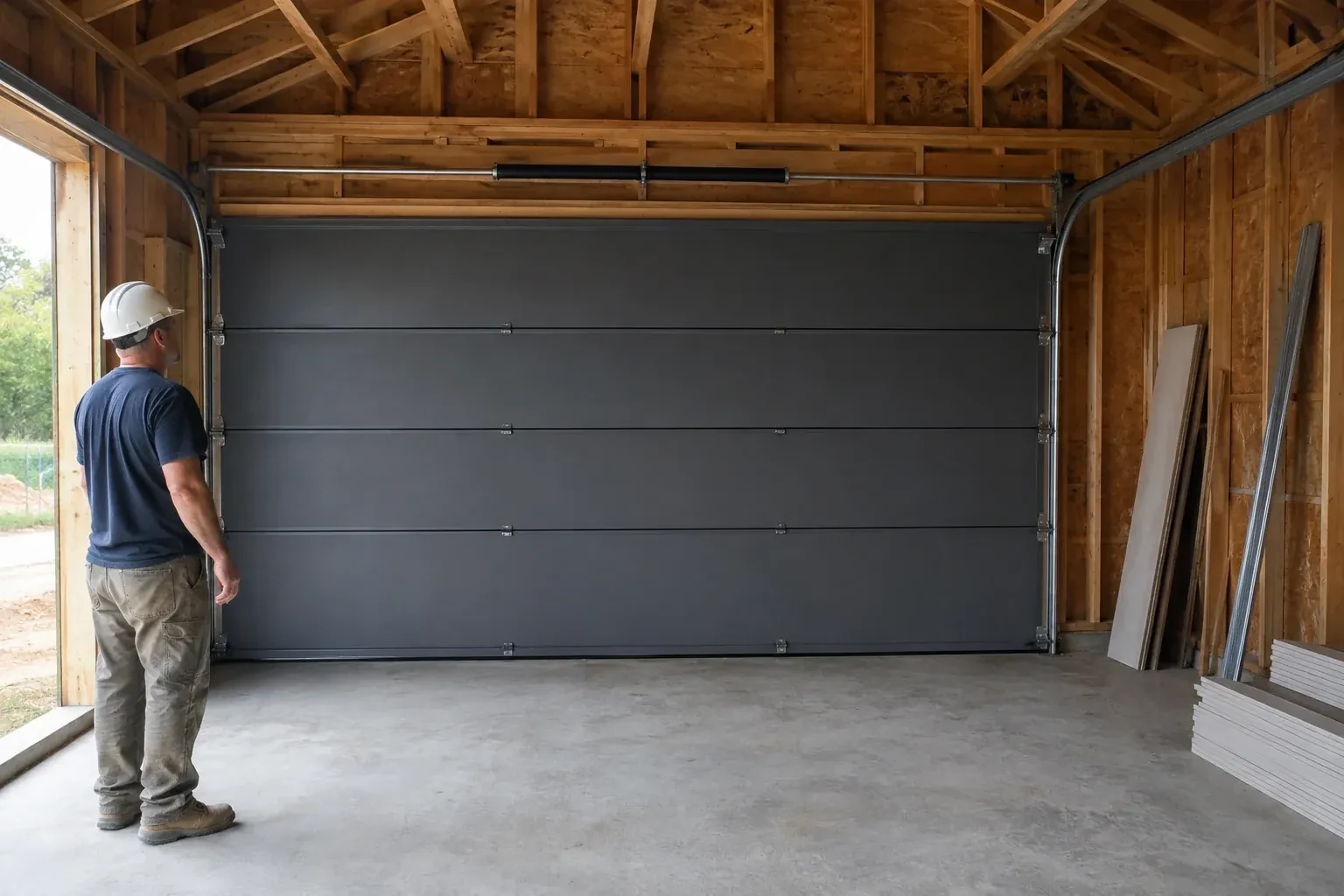
The existing door opens on old tracks that crowd storage near the ceiling. A replacement needs careful measurements for headroom, backroom and opener clearance before the new sections can travel properly.
A beam, sloped ceiling or duct crosses the space above the new opening. The door still needs a clear path, which makes headroom, backroom and the right track arrangement central to the plan.
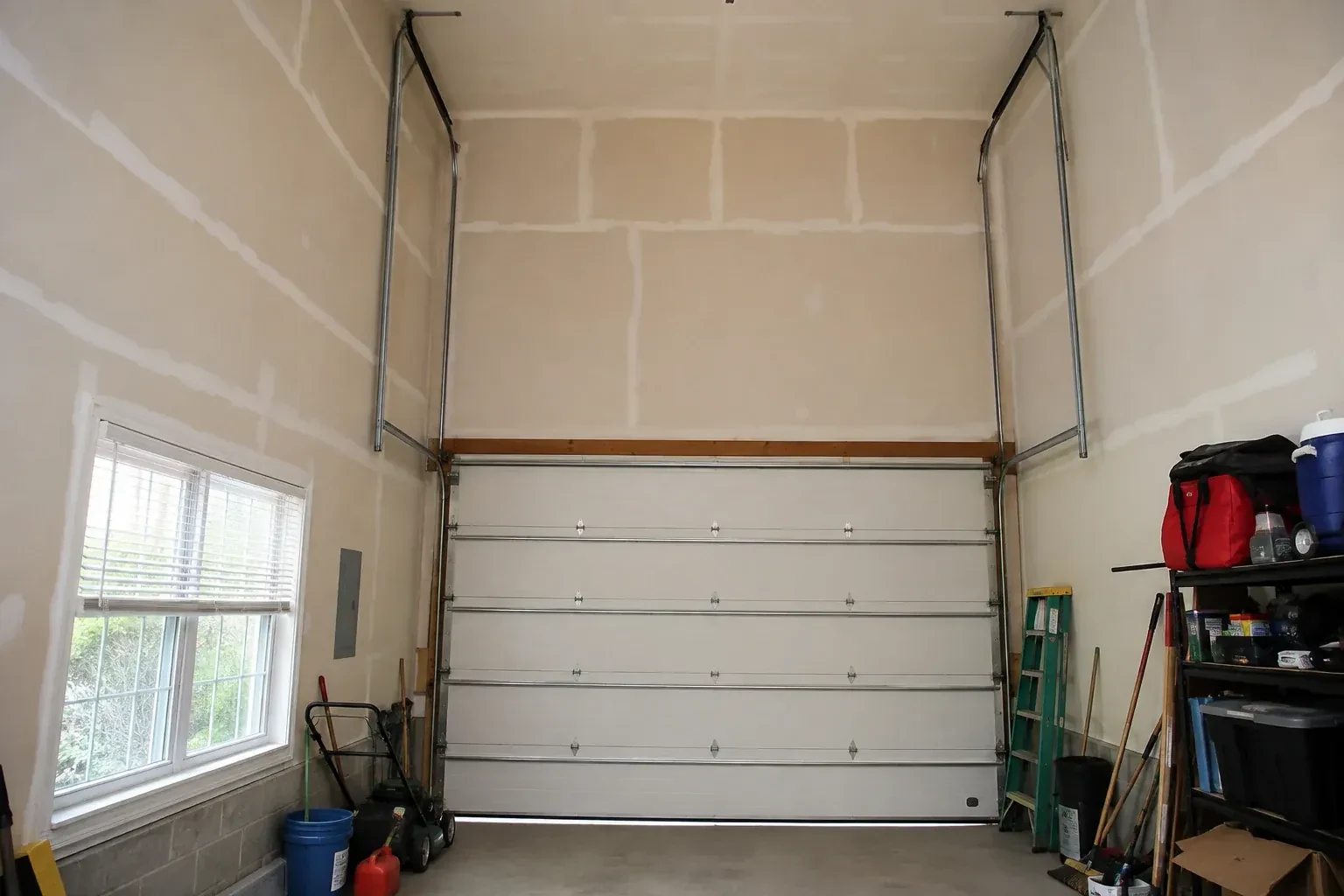
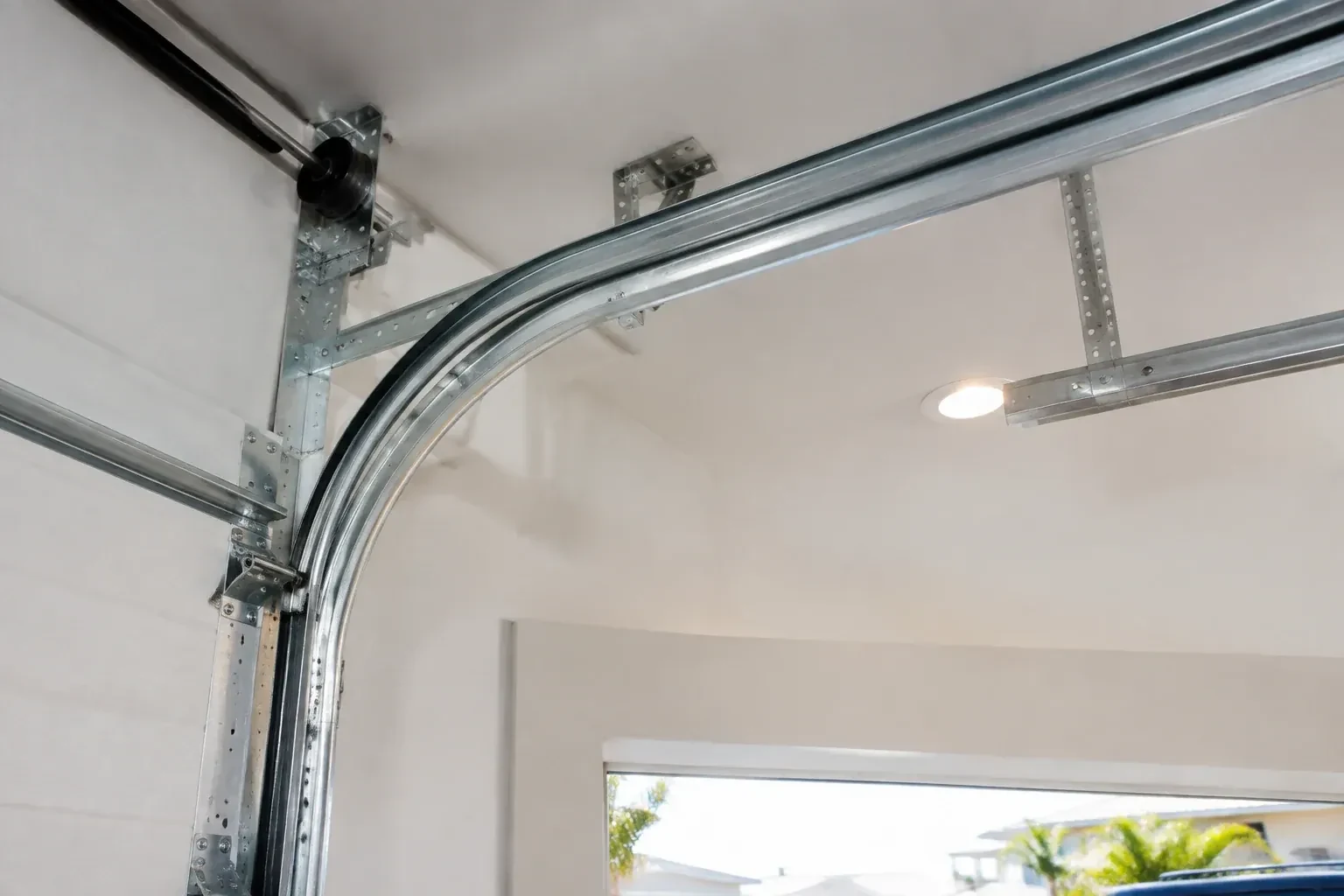
The garage has a tall ceiling, yet the horizontal tracks sit much lower than the lights and joists. That unused wall height makes the open door feel like a low shelf across an otherwise generous room.
Why does my door reverse on the way down for no reason?
Most often it is the photo eyes. A sensor knocked slightly out of line, a lens with a film of road grime, a loose wire, or low afternoon sun shining straight into one eye will each break the beam as far as the opener is concerned. The next candidates are a down-force setting that has drifted, a binding roller or a door that has gone out of balance. The inspection checks each in turn.
How much room do you need in the garage on the day?
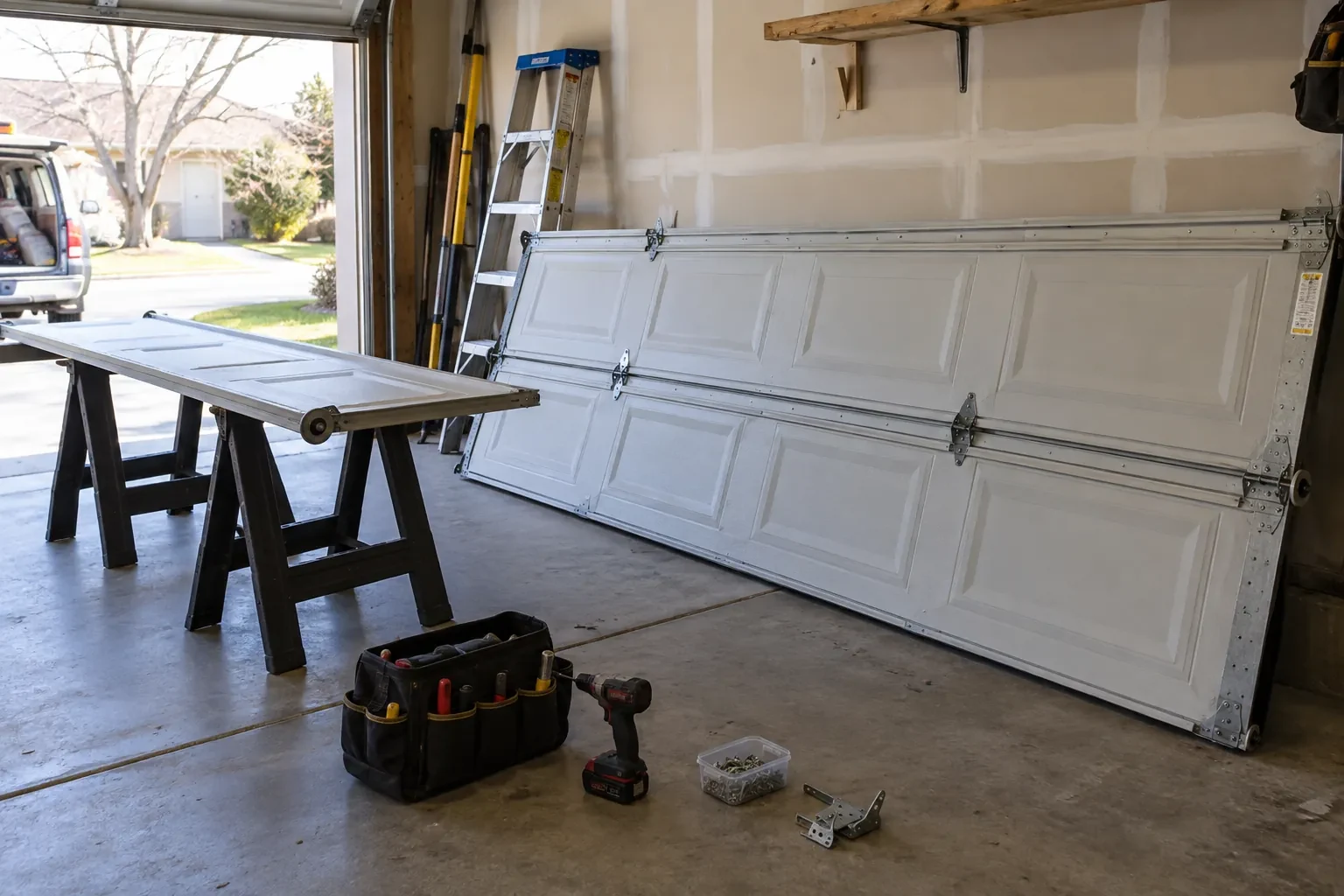
Enough to bring the new section in, lay it flat, and work at both tracks and the spring shaft. Moving vehicles out of the garage and clearing a metre or two along the walls where the tracks run makes the job smoother, as does clear access to the opener and the ceiling around the spring. Sections are handled by two people and are wider than the door opening, so a clear path from the driveway helps.
Can a light bump from the car damage a hinge?
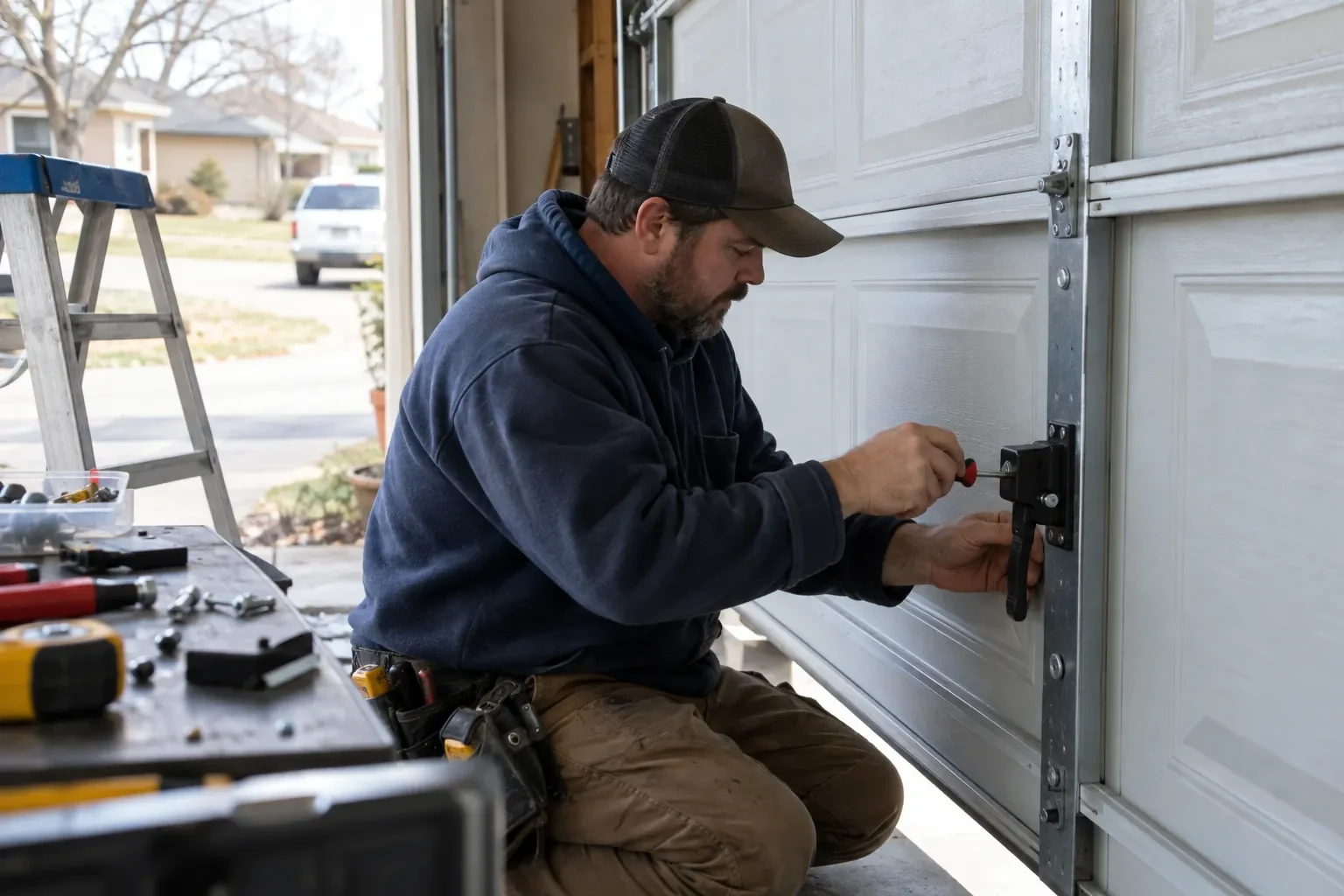
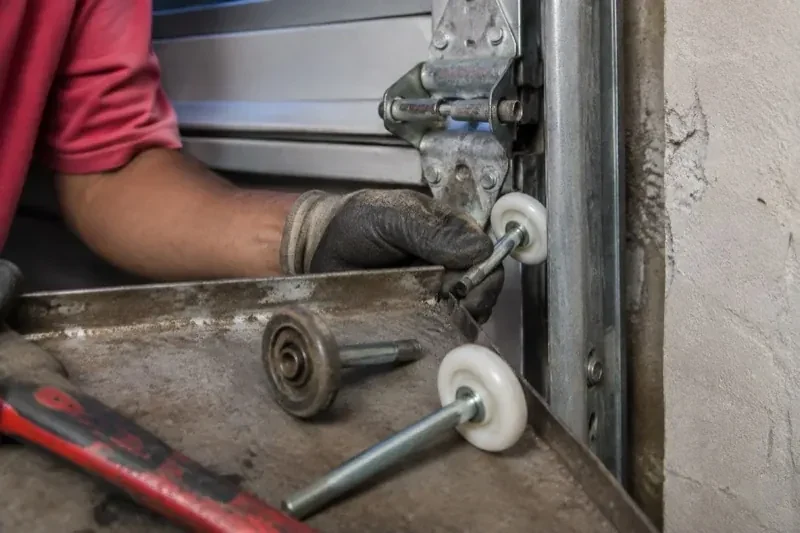
Yes, more often than people expect. The bottom two panels take the contact, and the edge hinge at that joint bends along with the stile behind it, so the panel edges rub and the roller leans. The damage sometimes only shows as a new squeak at the curve. The technician straightens or renews the stile, fits a new hinge and roller, and checks the strut and track on that side.
I am getting a new opener. Should the door be balanced first?
Yes, and installers will usually insist on it. A new opener is set up against the door it meets on the day, so its travel and force settings are only right if the door is already balanced. Fitting a new motor to a heavy door shortens the motor's life and puts the safety reversal out of range. Balancing first means the new opener starts life doing the light work it was designed for.
My garage ceiling is low and full of storage. What are my options?
Two good ones. A low-headroom kit lets a standard operator work where the open door sits close to the ceiling. Going further, a jackshaft unit mounts on the wall where the spring shaft ends and drives the door from there, so the whole ceiling stays empty for shelving, a mezzanine or a car lift. That route needs a door on torsion springs and a little clearance beside the shaft, which the technician measures on site.
Will the sensors need replacing or just aligning?
Most visits end in alignment, cleaning and bracket work, because the sensors themselves are hardy. Replacement comes into it when a lens has clouded or crazed, when the housing is split or holds water, an indicator stays dark with the wiring proven good, or the pair is from a different generation than the opener and is never recognised. The technician tests before choosing, so the parts list matches what the door needs.
The motor hums and the trolley is jammed at the end of the rail. What happened?
The trolley has been driven into the stop bolt or stop tab, usually because the travel limit let it run too far. The technician frees it by pulling the release, slackening the chain or belt a few turns, running the motor so the trolley walks off the stop, then correcting the travel limit and re-tensioning the drive. The reversal tests are repeated afterwards, since the limits were changed.
How should I prepare the garage for installation?
Move vehicles out and clear floor space across the full width of the opening plus a useful working area inside. Remove hanging items, bicycles and storage that intrude into the track or ceiling zone. Provide access to electrical controls and keep pets away from the work area. The installer can identify any unusually large staging space needed for wide sections beforehand.
Which documents should stay with the completed door system?
Keep the door and operator manuals, model or component identification, approved selections and any relevant drawings with the building records. The closeout note can include door size, track arrangement, counterbalance type, controls and completed commissioning checks. Private access codes remain with the owner rather than in a general service file. These records make future maintenance and compatible part identification much more straightforward.
When is high-lift conversion a practical choice?
It is practical when an existing sectional opening has meaningful wall height above it, enough ceiling depth for the horizontal run, suitable support conditions and a clear reason for gaining overhead room. The door, counterbalance and operator must be designed together. A measured feasibility plan confirms the usable clearance before installation becomes the next step.
Request a visit
For homeowners in Briars Park who like to understand the work, we explain the mechanics: how a torsion spring stores the weight of the door, why cables fray at the bottom bracket, what the photo-eyes are looking for. For those who just want it fixed, we fix it and keep the explanation short.