Springs · Georgina
Garage Door Roller Replacement
The door is the one the builder installed and has never had a part changed.
In plain words
Winter is hard on rollers. Slush carried in on the tires freezes in the foot of the track, wheels skid across the ice instead of turning and wear flat spots, and salt eats into steel stems and bearings at the lowest positions first. By spring a door that was merely a little noisy is juddering. Roller replacement after a hard season puts fresh wheels and bearings under the door, and the technician clears the salt from the lower track and inspects the bottom brackets and cables that share the same wet corner, so the door heads into the next winter in better shape.
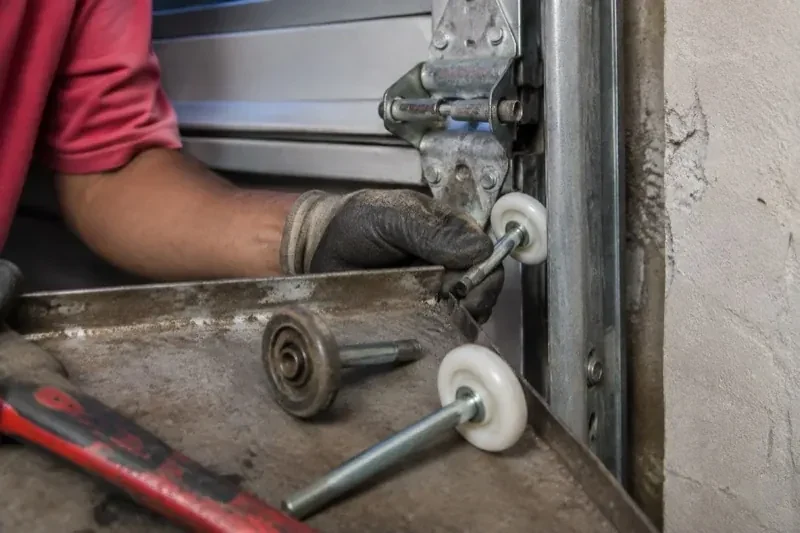
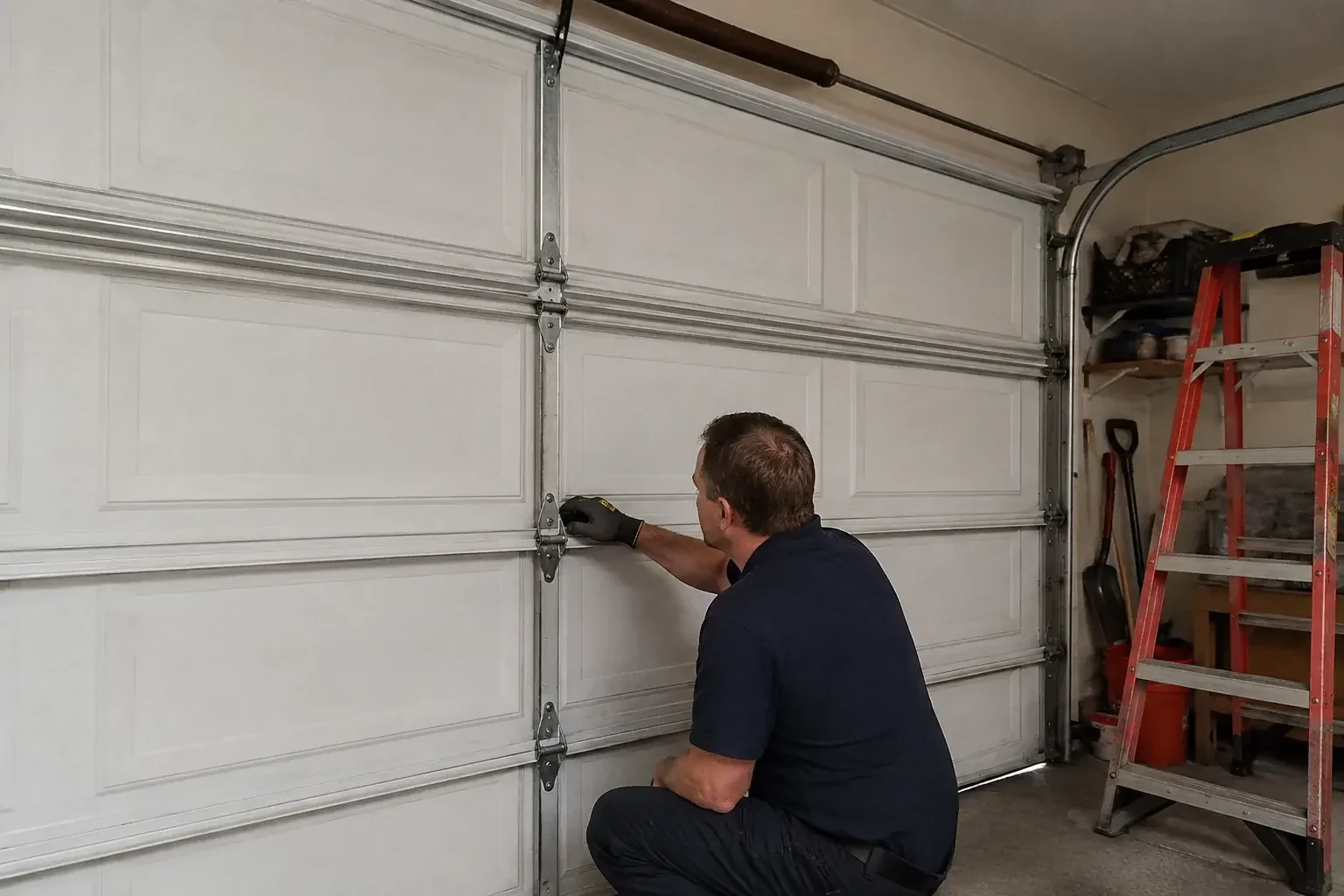
How the visit goesOne of the little wheels along the edge of the door has a chunk missing, another sits crooked in its hinge, and there is a fine grey dust on the floor under the track where plastic has been wearing away.
Garage Door Roller Replacement
How the visit goes
Counting hinges and measuring stems
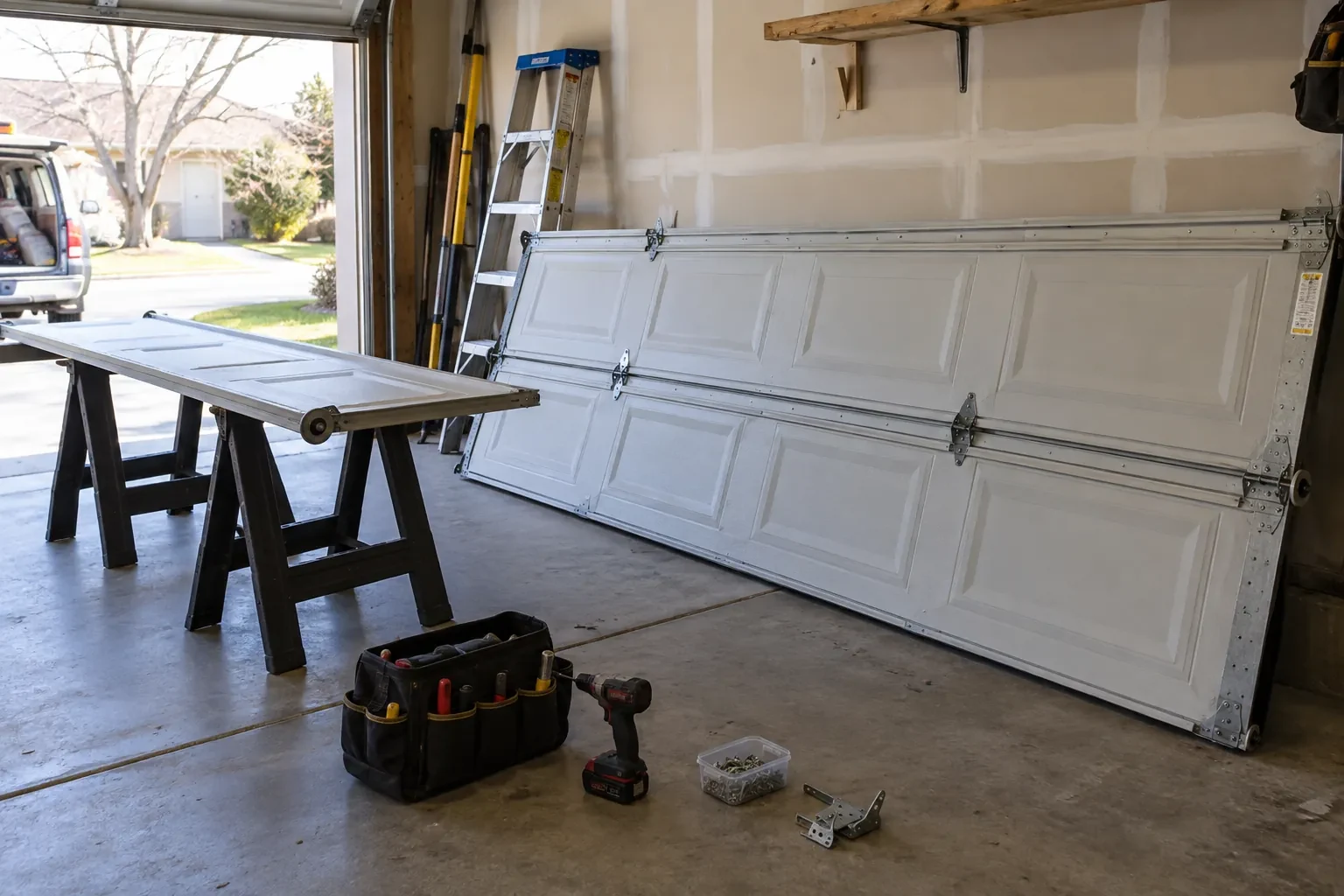
The right replacement depends on numbers taken from your door, not from a catalogue. The wheel diameter is measured across its face: residential track takes a two-inch wheel, while commercial track can take a two-inch or a three-inch wheel depending on the system. The stem is measured from the wheel to its end, and the hinges at each end stile are counted, because a single hinge takes a four-inch stem while two hinges stacked together on a heavier door call for a seven- or ten-inch stem that reaches through both. Stem diameter is confirmed too, since most doors built since the 1980s share one standard size but older doors may not. These measurements decide which set goes in.
Running it in and testing
The opener is reconnected and the door is run through several full cycles while the technician watches each wheel stay seated in its track and listens for anything left over. Balance is rechecked with the opener released. Then the opener's settings are confirmed: the force limits, which may need reducing now that the door moves so freely, and the reversal, tested against a 1-1/2 inch block laid on the floor in the door's path exactly as the industry checklist describes. Only when the door travels smoothly, seals at the top and reverses on contact is the job called finished.
A door that runs quietly and squarely
The first thing most people notice is the quiet. A door on new nylon ball-bearing rollers moves with a low hum instead of a clatter, sections stay level as they rise, and the landing at the floor is soft rather than a thump. Because the top fixtures have been reset, the top section pulls snug to the header and the draught that used to come over the top of the door is reduced. Beneath the quiet is the structural benefit: every wheel is centred in its track with the right stem through the right hinge, so the door has far less tendency to wander toward the track lip.
Garage Door Roller Replacement
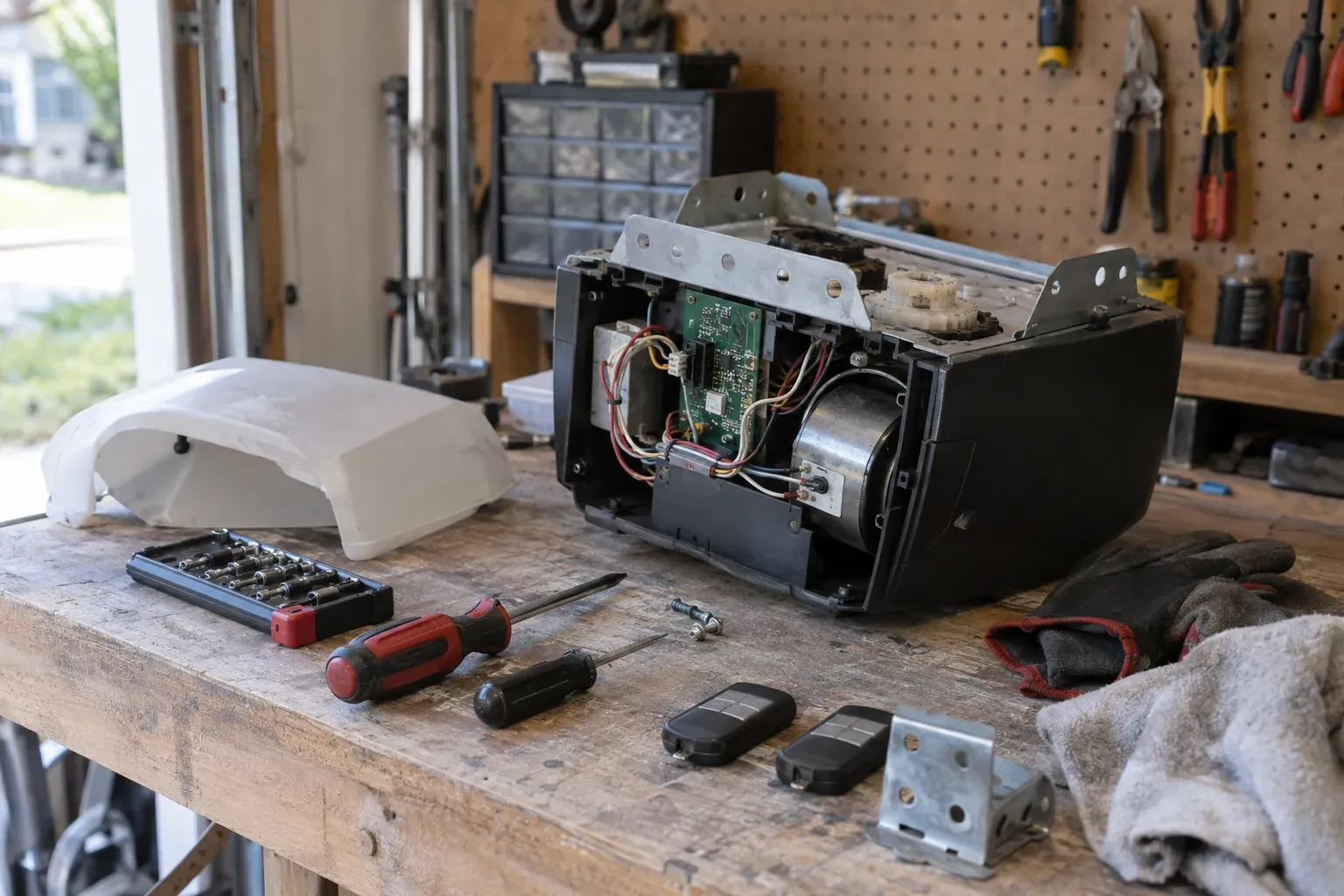
In the van
Adjustable top fixtures
1-1/2 inch reversal test block
Jamb bracket fasteners
Replacement numbered hinges
Two-inch nylon ball-bearing rollers
Garage Door Roller Replacement
What affects the quote
Hinges that need replacing
Cracked, elongated or rusted hinges found during the inspection are replaced with the correct numbered hinge, each priced as its own item alongside the rollers.
Track alignment and repair
Realigning jamb brackets, straightening a dented lip or replacing a damaged length of track is separate from the roller work and quoted as such when the inspection finds it.
Relieving spring tension for the bottom rollers
When the bottom brackets have to be unbolted, the technician takes the spring load off first with winding bars, skilled extra work that is included in the figure for that position.
What to have ready
- Does the door stay put at halfway when the opener is released?
- Do any wheels look chipped, crooked, or sitting on the lip of the track?
- Has the door ever come off its track or been hit by a vehicle?
Garage Door Roller Replacement: questions
QuestionsWhat is checked after the rollers go in?
The door is run through several cycles with the technician watching each wheel stay seated, then balanced by hand with the opener released to confirm it holds at halfway. The top section is checked for a tight seal at the header, the hinge and bracket fasteners are snugged, and the opener's force and reversal are tested with a 1-1/2 inch block in the door's path. The industry checklist for a residential door covers exactly these points, and they are all part of finishing the job.
How does the technician tell rollers from hinges or track as the cause?
By watching where and when the trouble happens and then checking the parts in that spot. Rollers are spun and wiggled to reveal rough bearings and worn wheels; hinges are checked for cracks, elongated holes and loose bolts; tracks are checked for plumb, dents and spacing. A shudder at the curve tends to be rollers, a pop as sections pivot tends to be a hinge, and a rub the full height of the door tends to be track. Often more than one is involved, and the visit covers them all.
How do worn rollers affect the opener?
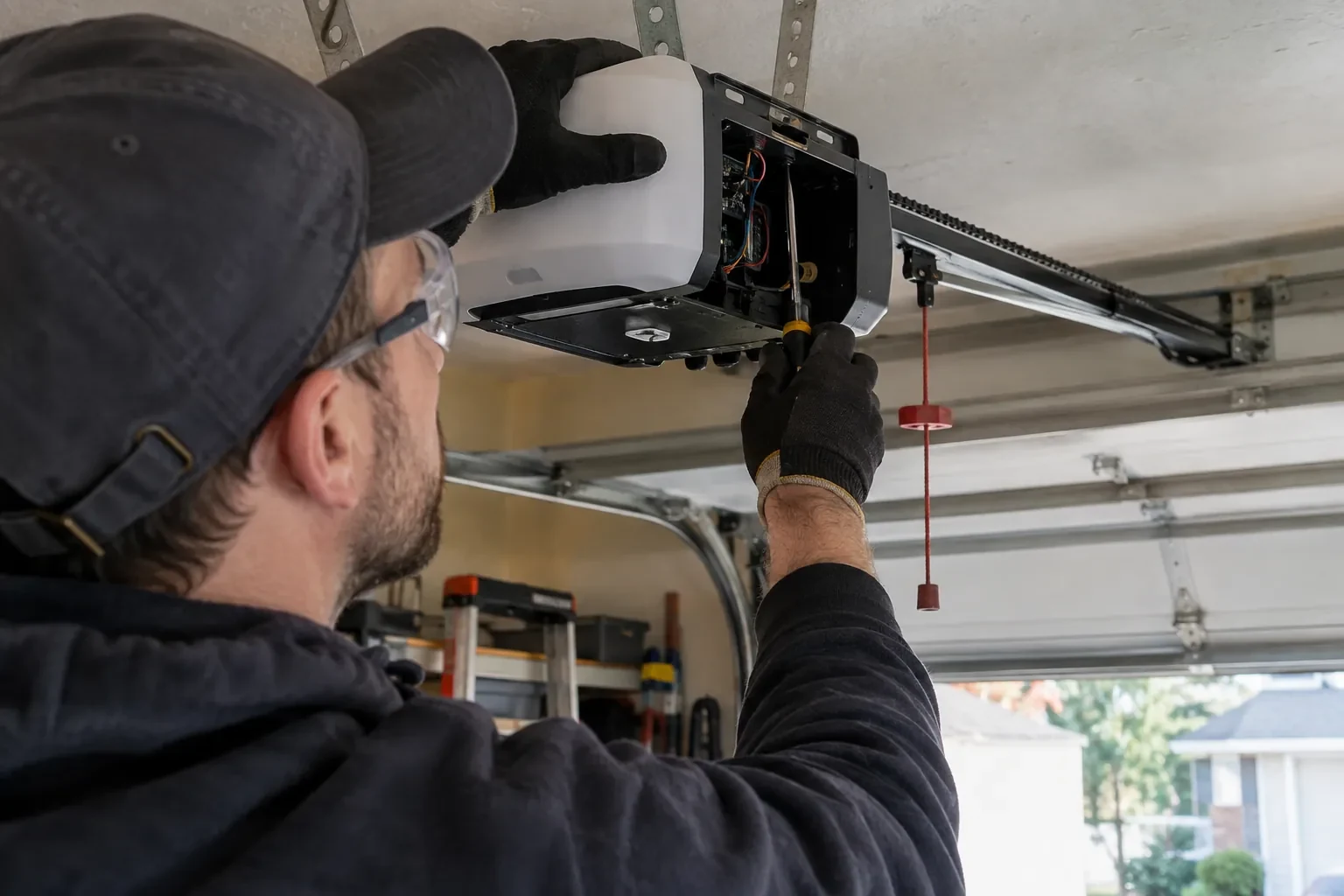
An opener is built to guide a balanced door, and every wheel that binds, wobbles or grinds adds resistance it has to overcome across the whole travel. It works harder, runs hotter, and may trip its force limit or reverse partway through a cycle. After roller replacement the technician confirms the door holds its own weight with the opener released, then checks the opener's force setting and its reversal on a test block, since a door that moves freely often needs those settings reduced.
Related services
- Garage Door Track Repair or ReplacementThe door has started rubbing the frame on the left, leaving a shiny stripe down the weatherstrip.
- Garage Door Cable ReplacementSomeone left the snow shovel leaning in the opening and the door came down on it.
- Torsion Spring ReplacementNothing broke outright, but the door has grown heavier each winter, opens more slowly and squeals as it moves.