Garage Doors in Wilfrid, OntarioA frayed cableis a warning.
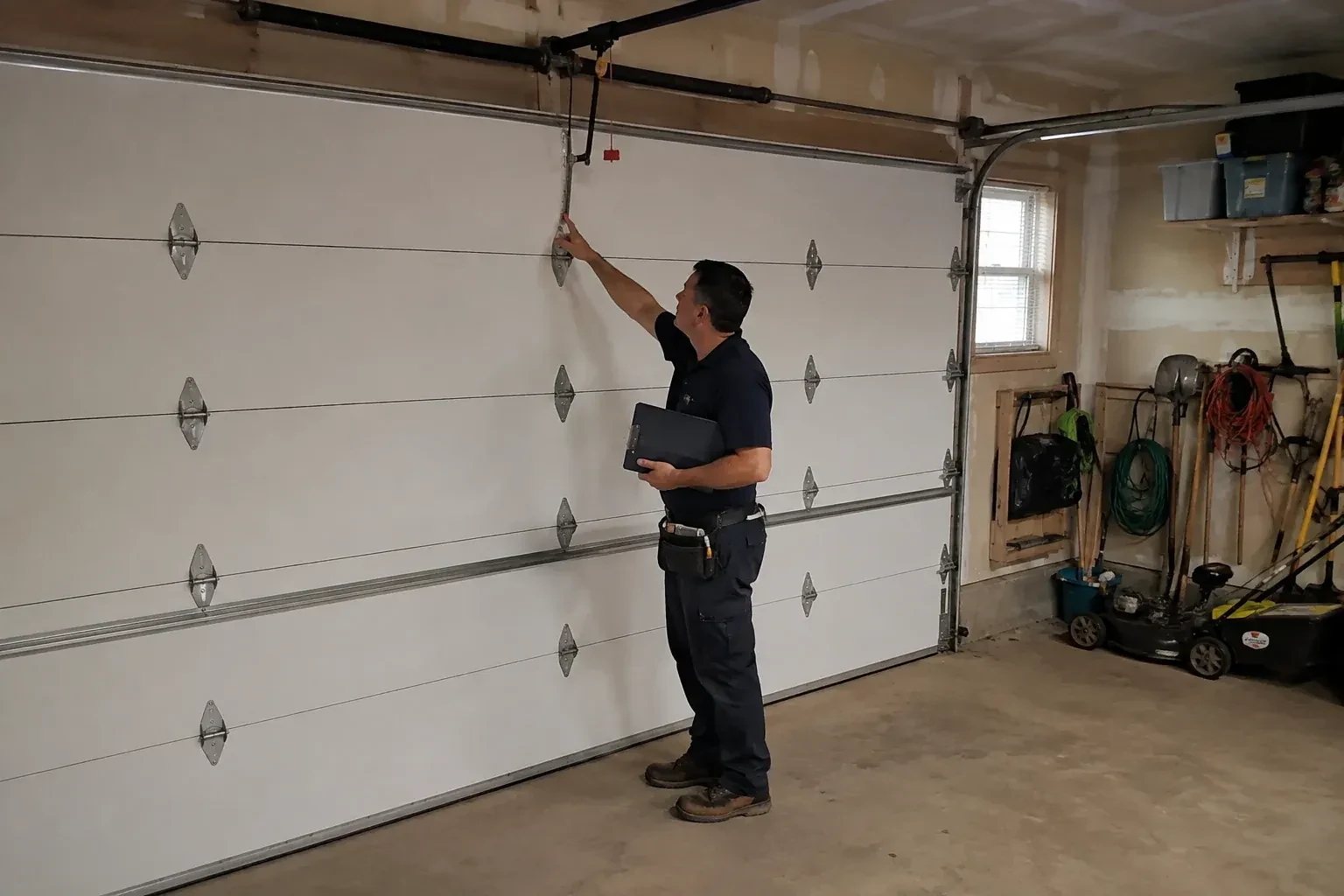
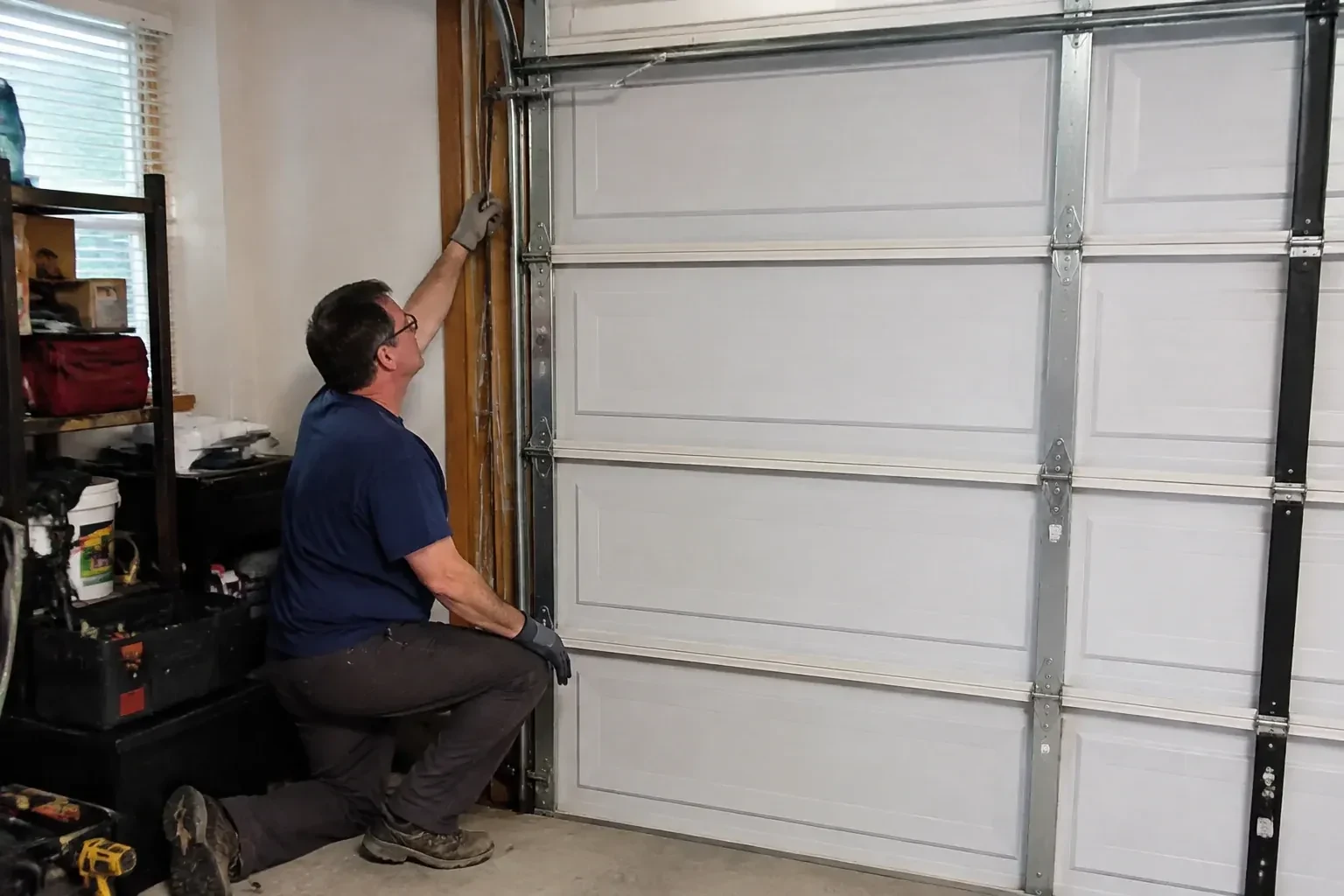
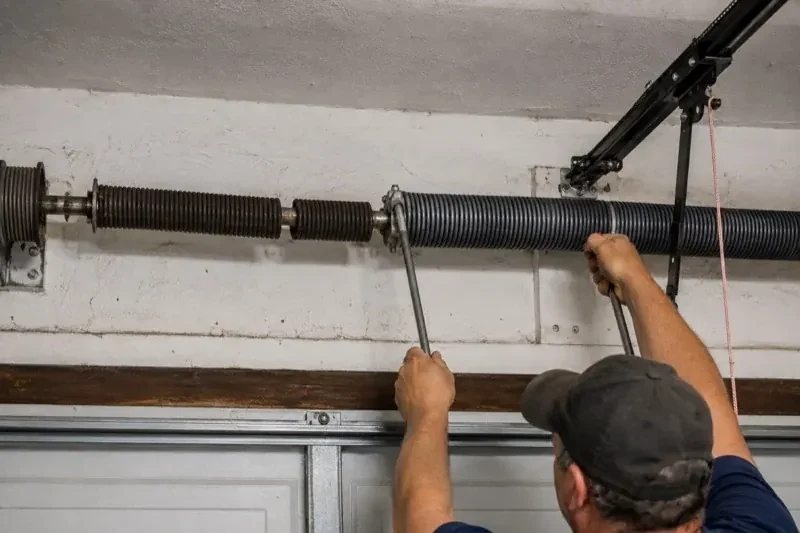
Lifting cables on a door in Wilfrid show their age as a few broken strands near the bottom bracket, long before they snap. We inspect them on every visit, replace both cables together with new bottom fixtures, and check the drums and bearings that wear alongside them so the door lifts evenly.
Lifting cables on a door in Wilfrid show their age as a few broken strands near the bottom bracket, long before they snap. We inspect them on every visit, replace both cables together with new bottom fixtures, and check the drums and bearings that wear alongside them so the door lifts evenly.
Keeping the weather on the outside.
Businesses in Wilfrid get the same technicians as households, with a schedule built around the hours the door has to be open. We arrive with commercial springs and operator parts, do the noisy work when it disturbs the fewest people, and leave a written note of what was done and what to watch for.
We have been servicing garage doors in Wilfrid for long enough to recognize the door styles that came with each stretch of building. That familiarity helps when a spring needs matching or an older opener needs a sensible upgrade. Homeowners and businesses in the area can expect a careful look at the door, plain talk about the options and a repair or installation done properly.
12years in business
24/7open every day
A technician who talks. You hear what we are checking and why, in real time. Ask anything; the explanation is part of the job.
Mess that leaves with us. Debris, packaging and the old spring go with us. Your floor and your car look the same after as before.
Your decision, informed. We put the choices on the table with their pros and cons. Whether to repair, upgrade or replace stays with you.
From a stuck door on a winter morning to a planned replacement before the house goes on the market, the services on this page cover what garage doors in Wilfrid typically need. Each one explains what is checked, how the work is done and what you can expect afterwards.
About 64% of homes in Brock were built in 1980 or earlier, according to the 2021 Census.
Older homes
Where most houses were built a generation or more ago, a good share of garage doors are still the originals: wood or early steel sections on extension springs. Those doors respond well to fresh pulleys, safety cables and a careful balance, and the technician carries the parts for them.
Single-detached houses make up about 87% of homes in Brock (2021 Census).
Mostly houses
Where homes are detached, the garage is frequently a workshop or storage room as well as parking, and the door may be opened dozens of times on a Saturday. Sealed-bearing rollers, protected sensors and a regular tune-up keep a hard-working door running smoothly.
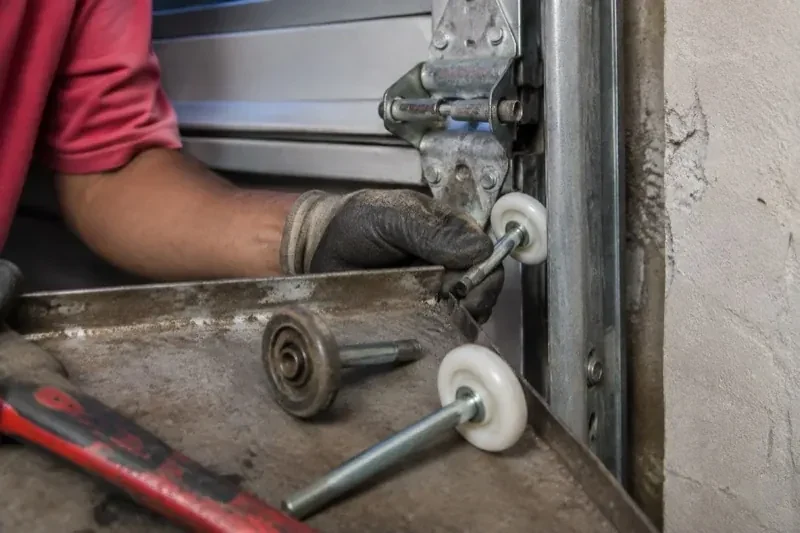
A tenant mentioned the door is louder than it used to be. From the driveway it looks fine, but on closer inspection the hinges near the floor are streaked orange and one roller wobbles as it turns.
The door lands with a thud you can feel through the kitchen floor, and sometimes it bounces back up a few centimetres before settling. The bottom section has a small dent where it keeps slamming the concrete.
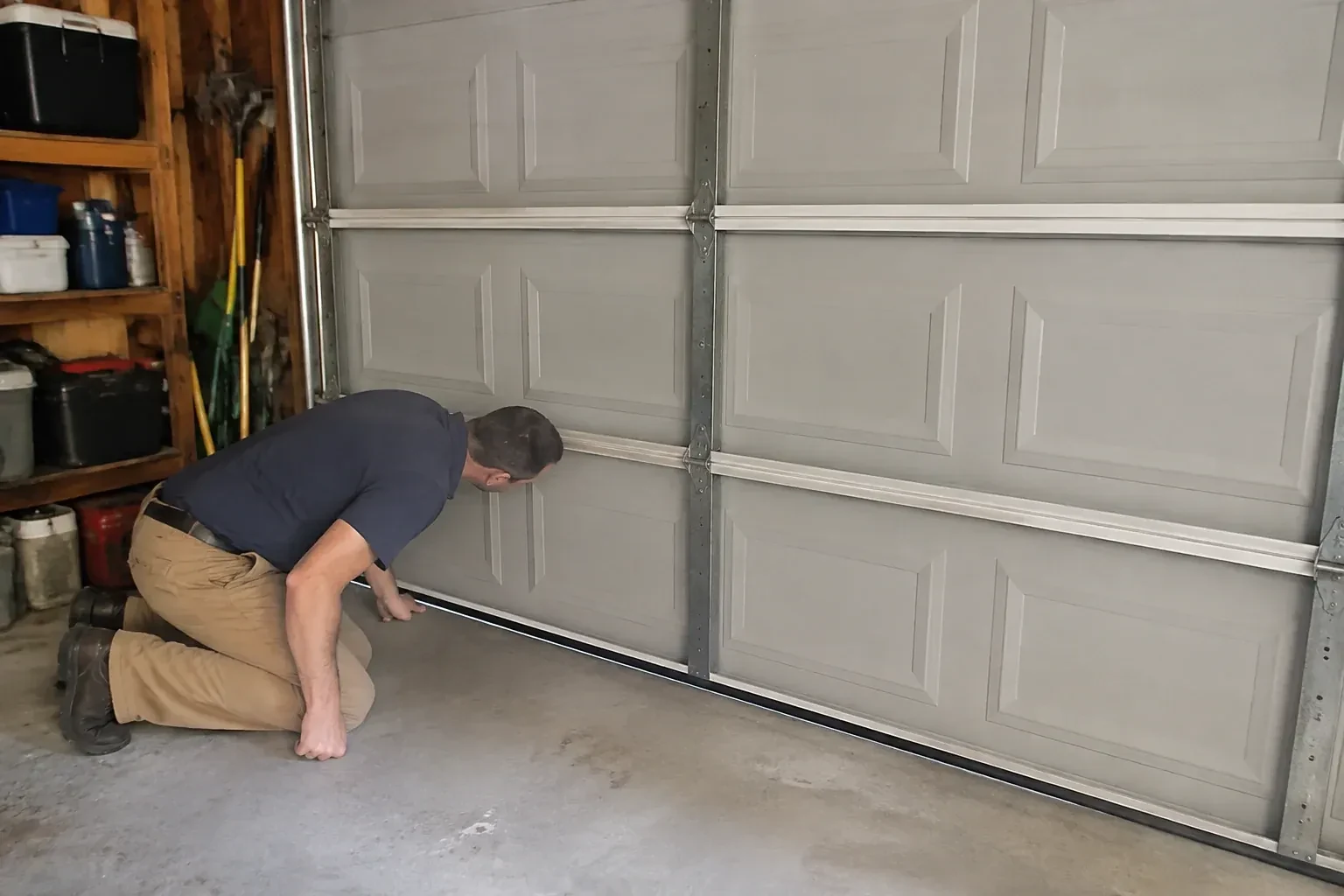
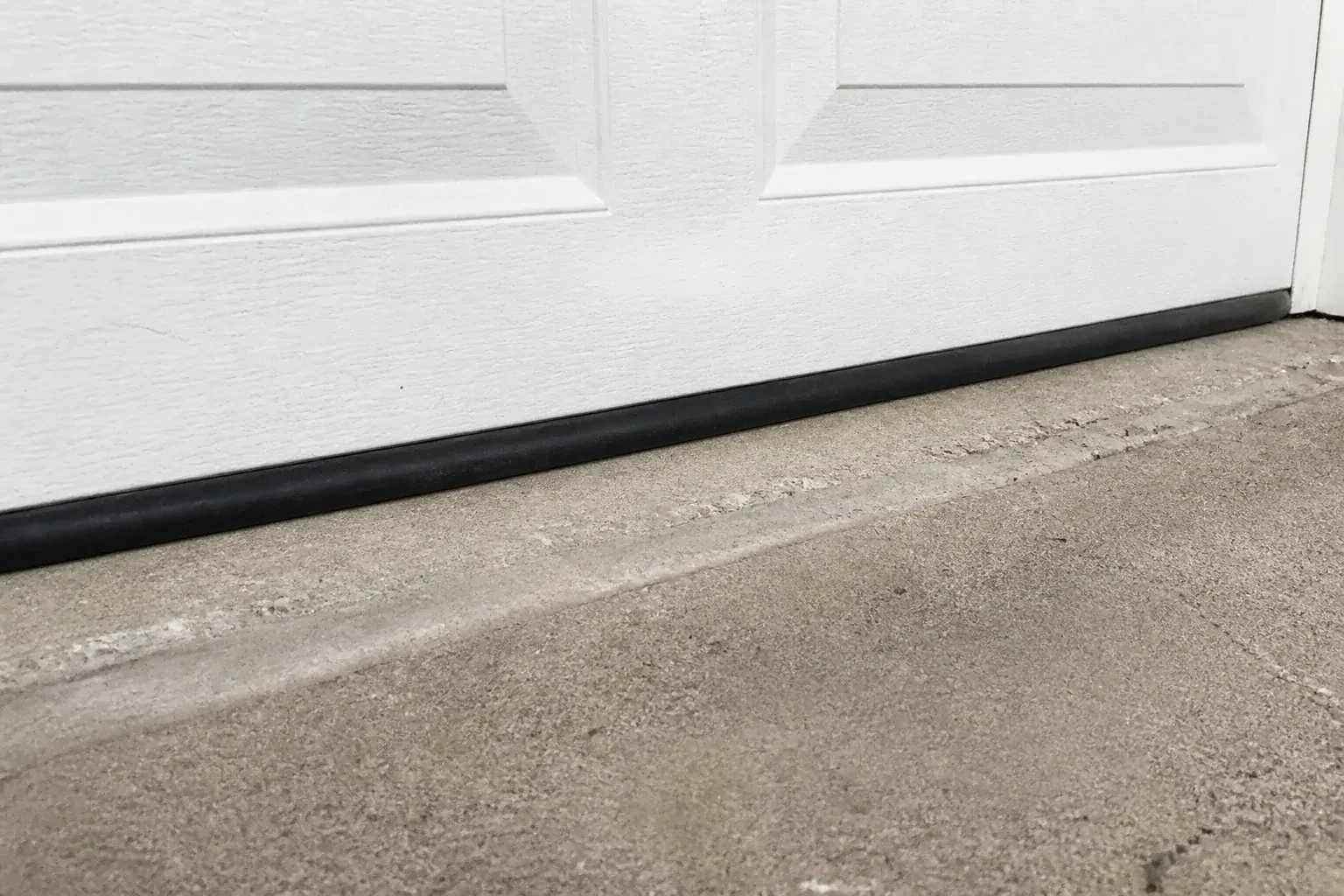
A length of weatherstrip along the right jamb has pulled away, nails and all, and it slaps against the trim every time the wind picks up. The wood behind it is dark and soft where it meets the floor.
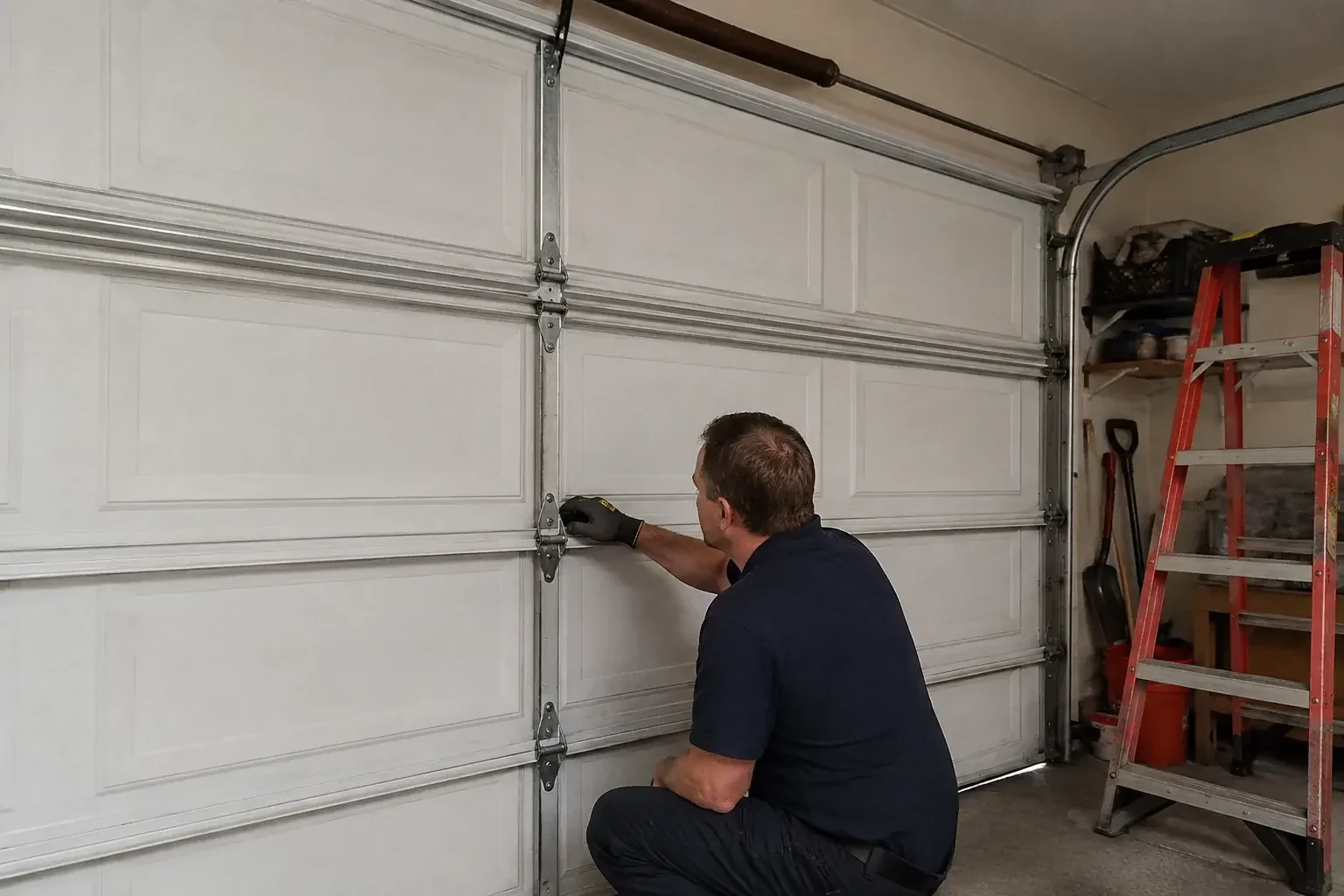
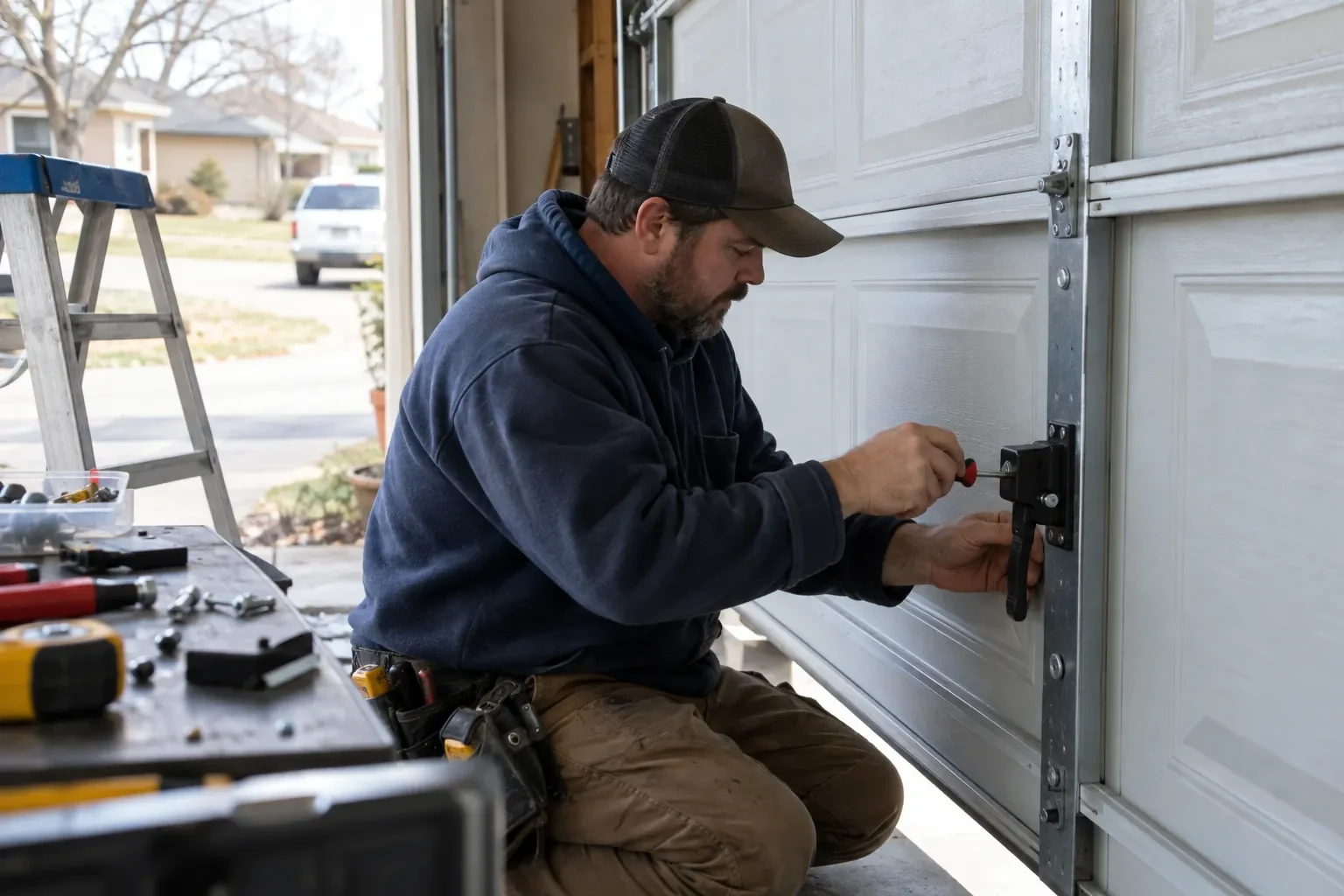
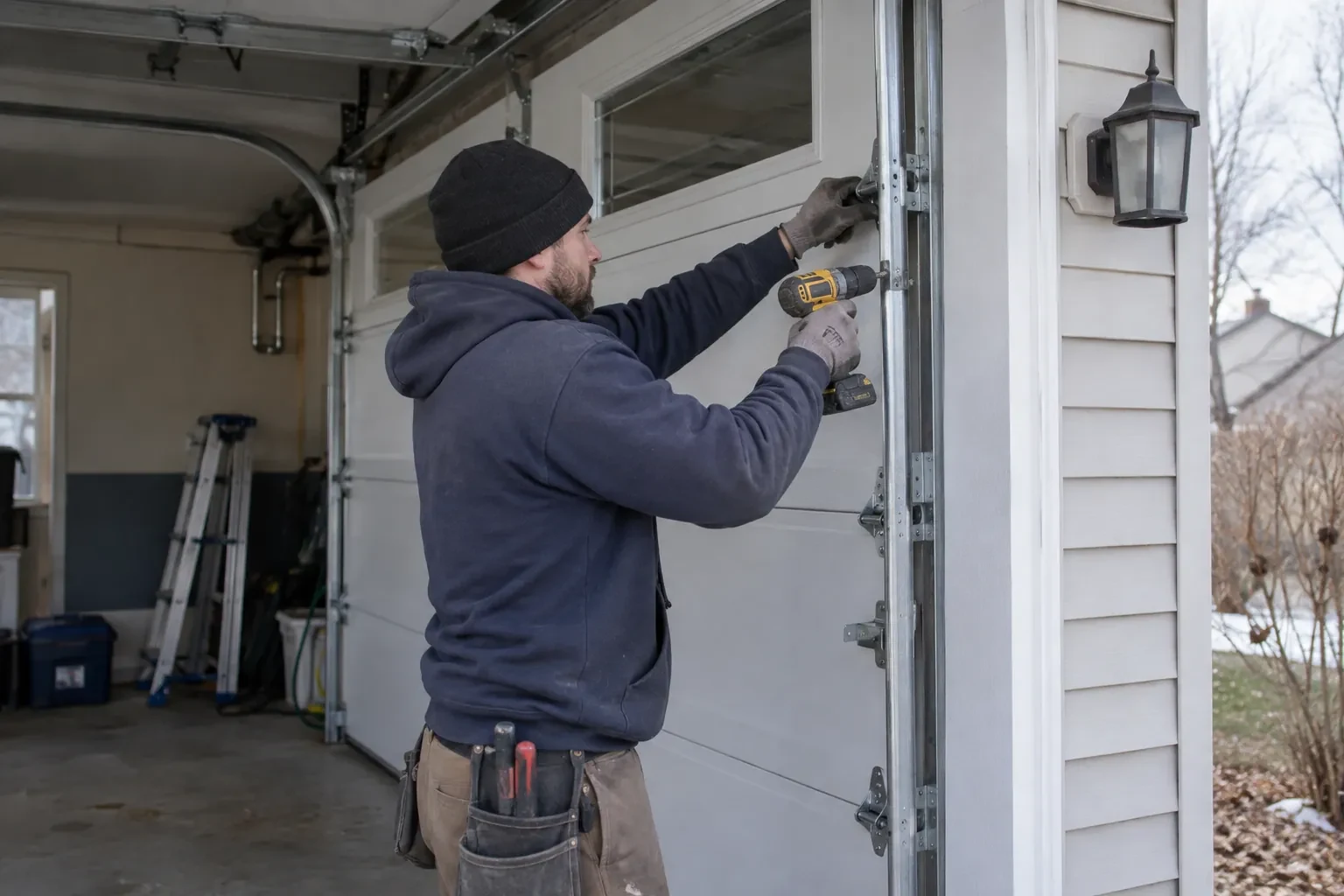
Pressing a hand against one of the middle hinges makes it rock on the panel. The screws turn and turn without ever tightening, and there is a rattle from that spot every time the door settles onto the floor.
There was a sharp crack from the garage, and when you went to look the door had dropped on one side and jammed. A length of cable lies coiled on the floor by the bottom roller.
On cold mornings the door barely makes it up. The motor whines, the door crawls, and once or twice it has given up halfway. By afternoon, with the sun on the garage, it runs almost normally again.
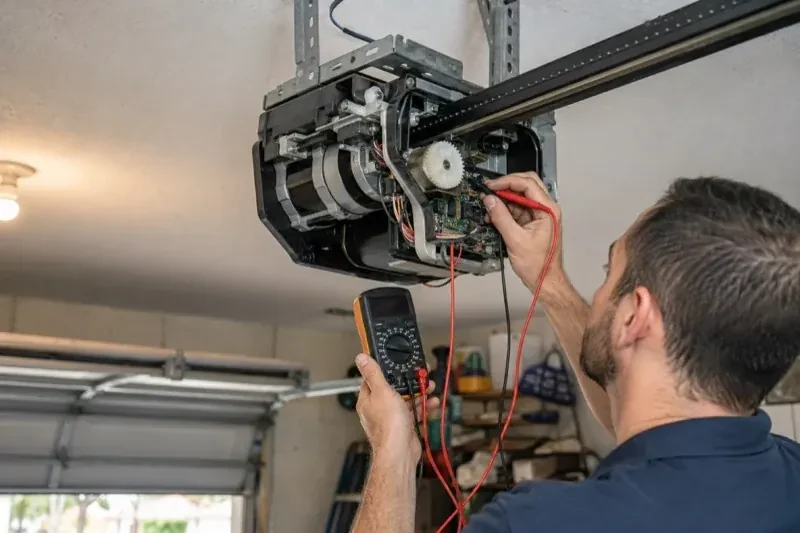
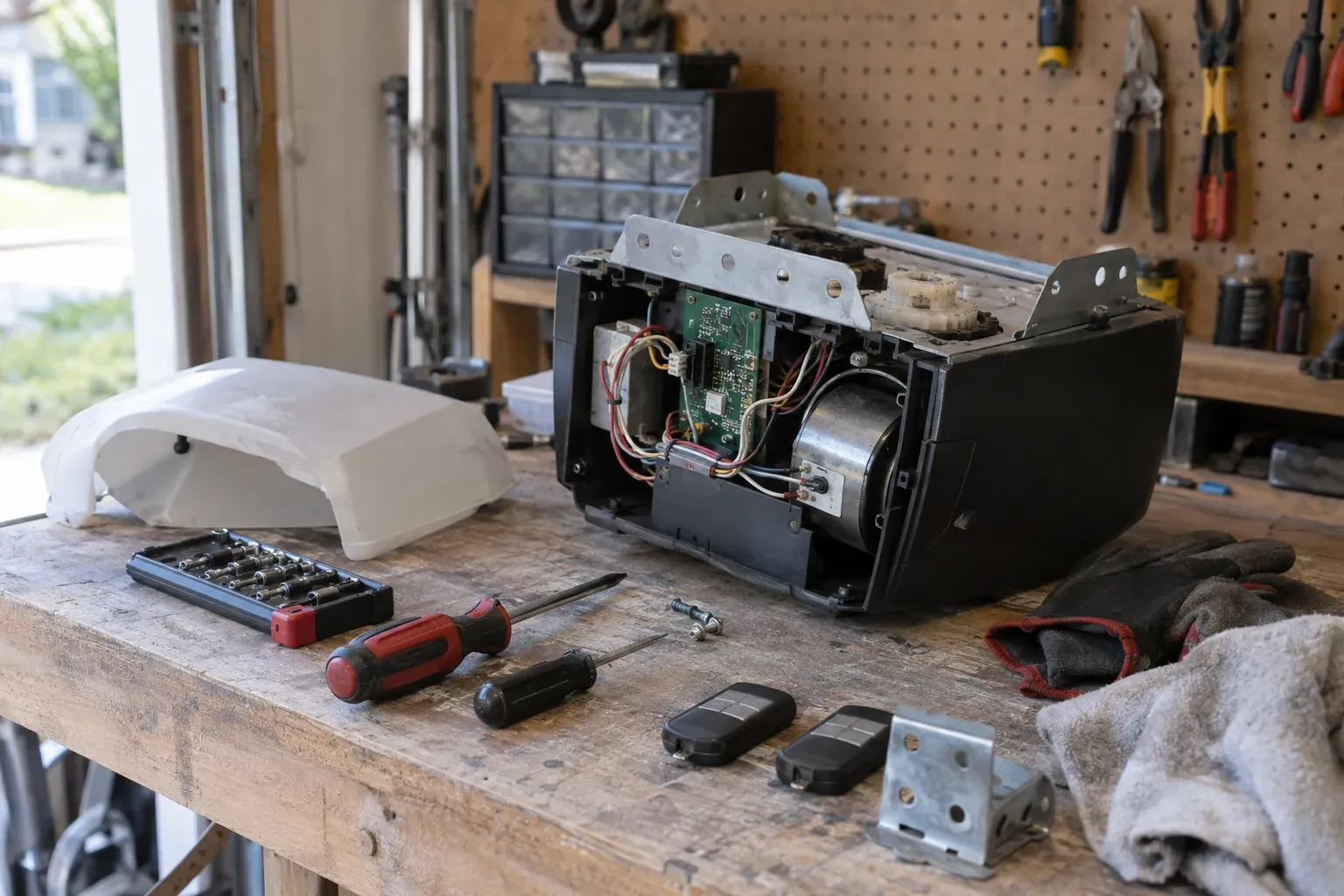
Nothing. No light, no click, no hum from the unit on the ceiling. The remote is dead, the wall button is dead, the keypad is dead. It worked yesterday evening, before the storm knocked the power out for an hour and brought it back with a flicker.
Press the button and the motor hums, but the door stays exactly where it is. Under the housing there is a dusting of white plastic shavings, the sign of a stripped drive gear, and this is the second time it has happened.
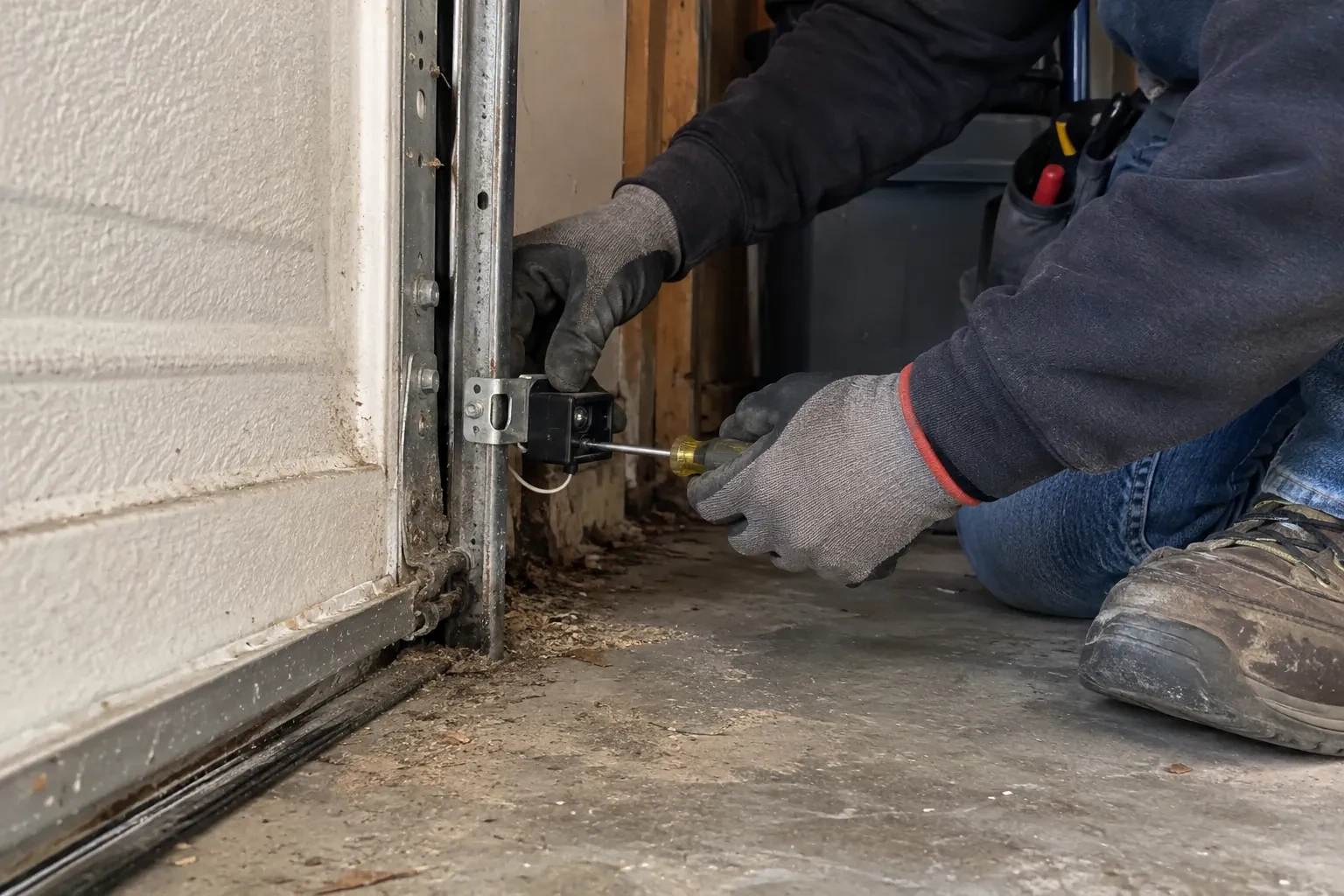
Since shelving went up along the garage wall, the door will not close and both sensor lights are dead. A screw or staple may have gone through the thin wire that runs from the opener to the sensors.
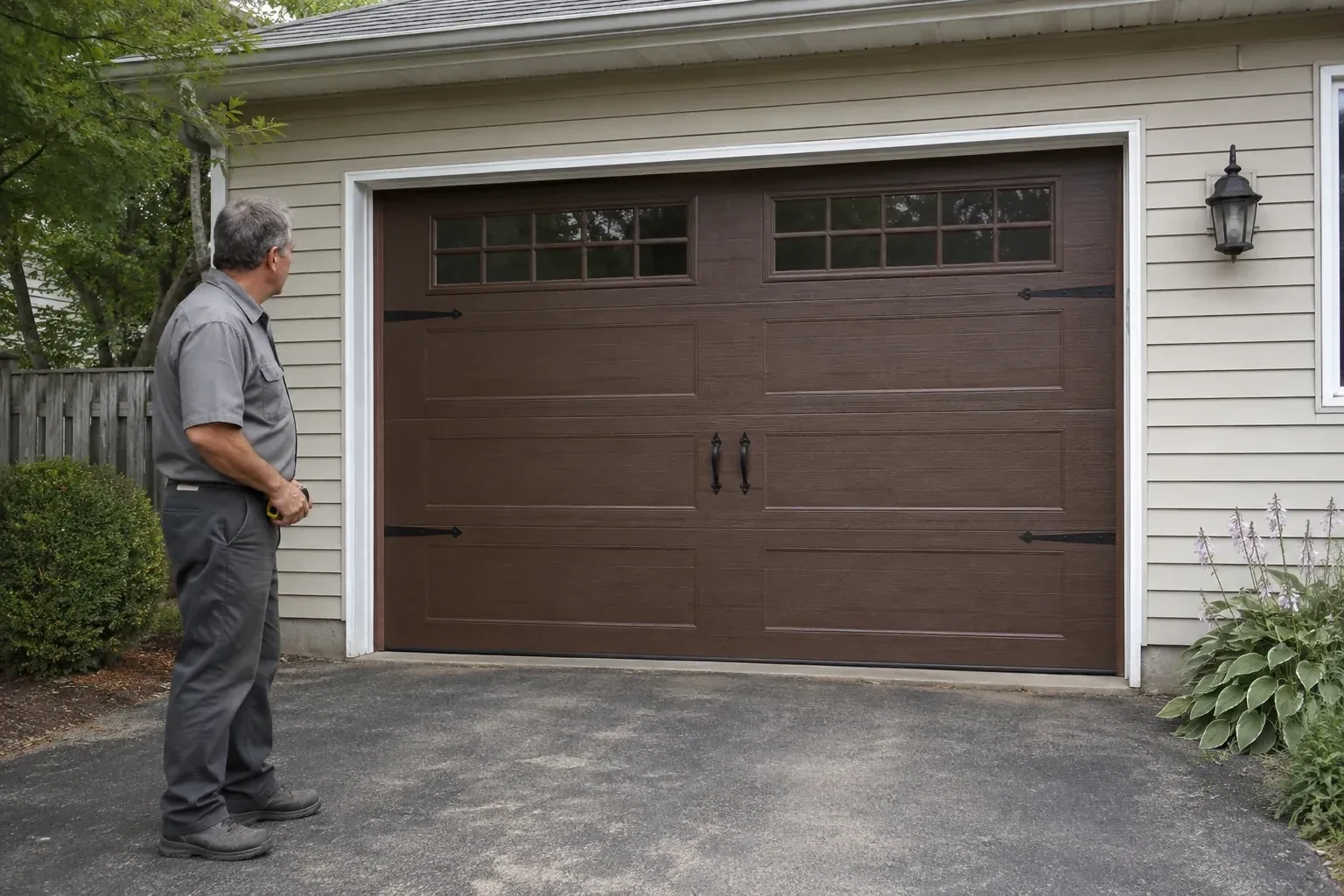
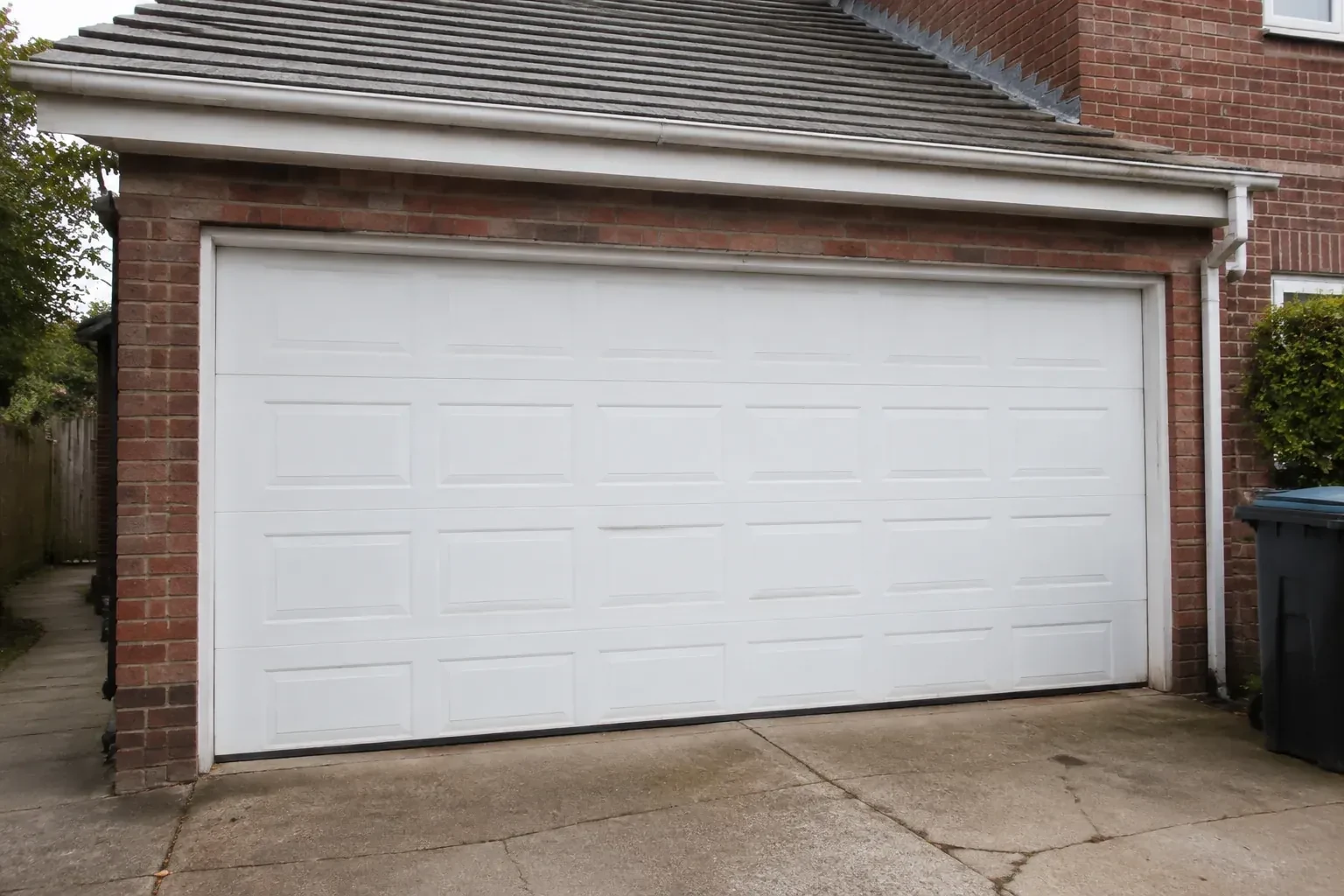
A front elevation update has brought new trim, lighting and a deeper colour palette, leaving the garage door as the remaining piece. Its pattern and finish now need to join the overall composition.
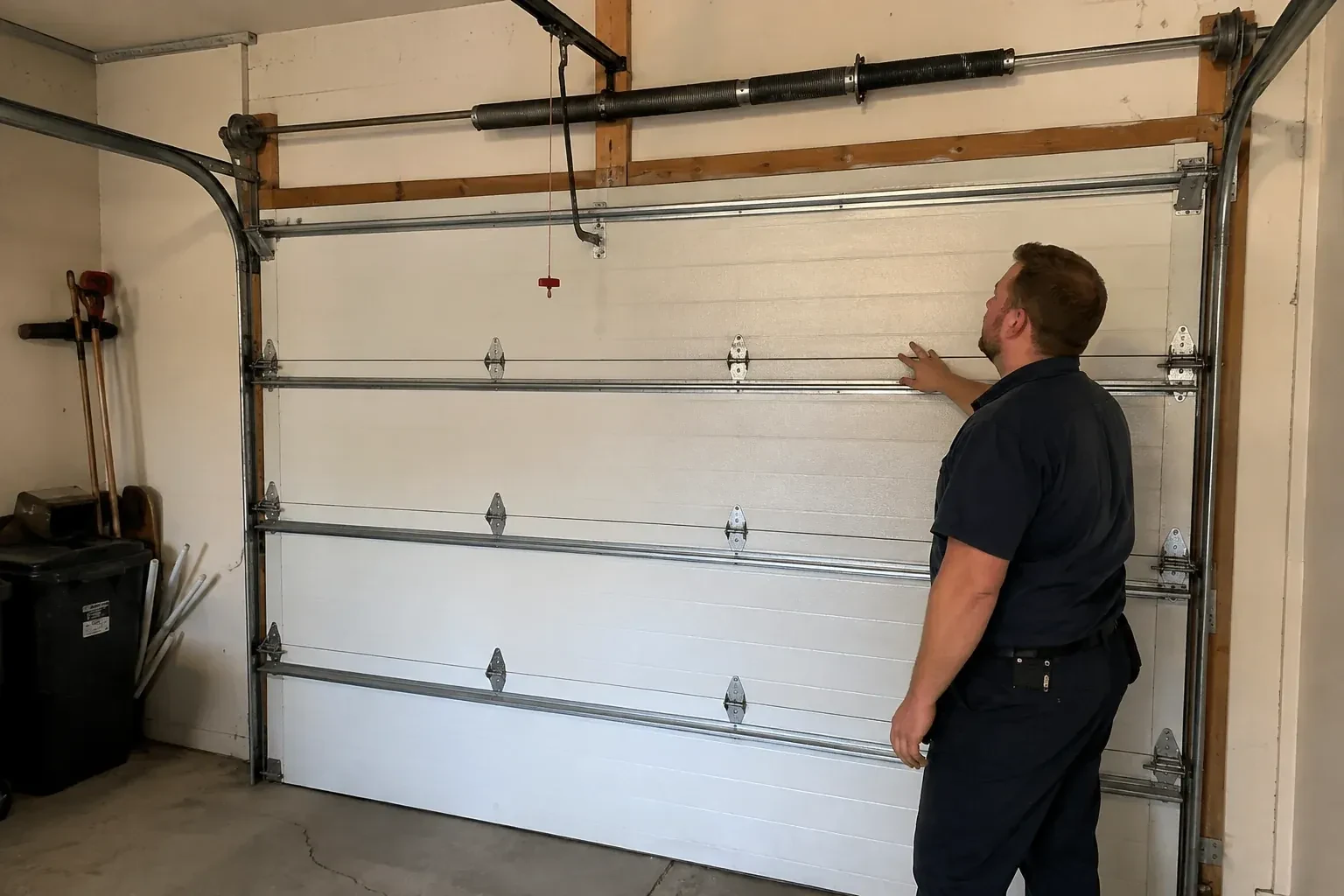
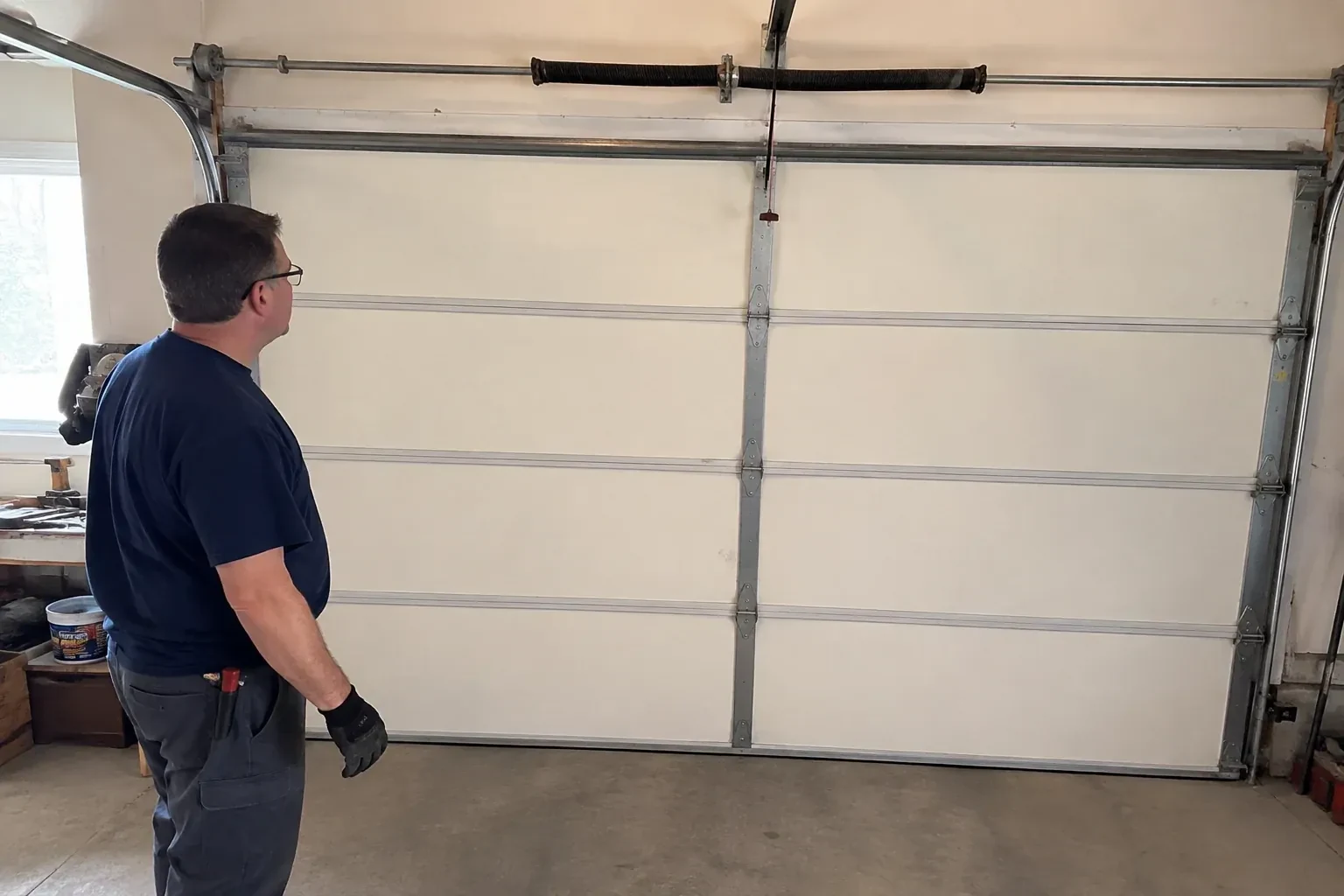
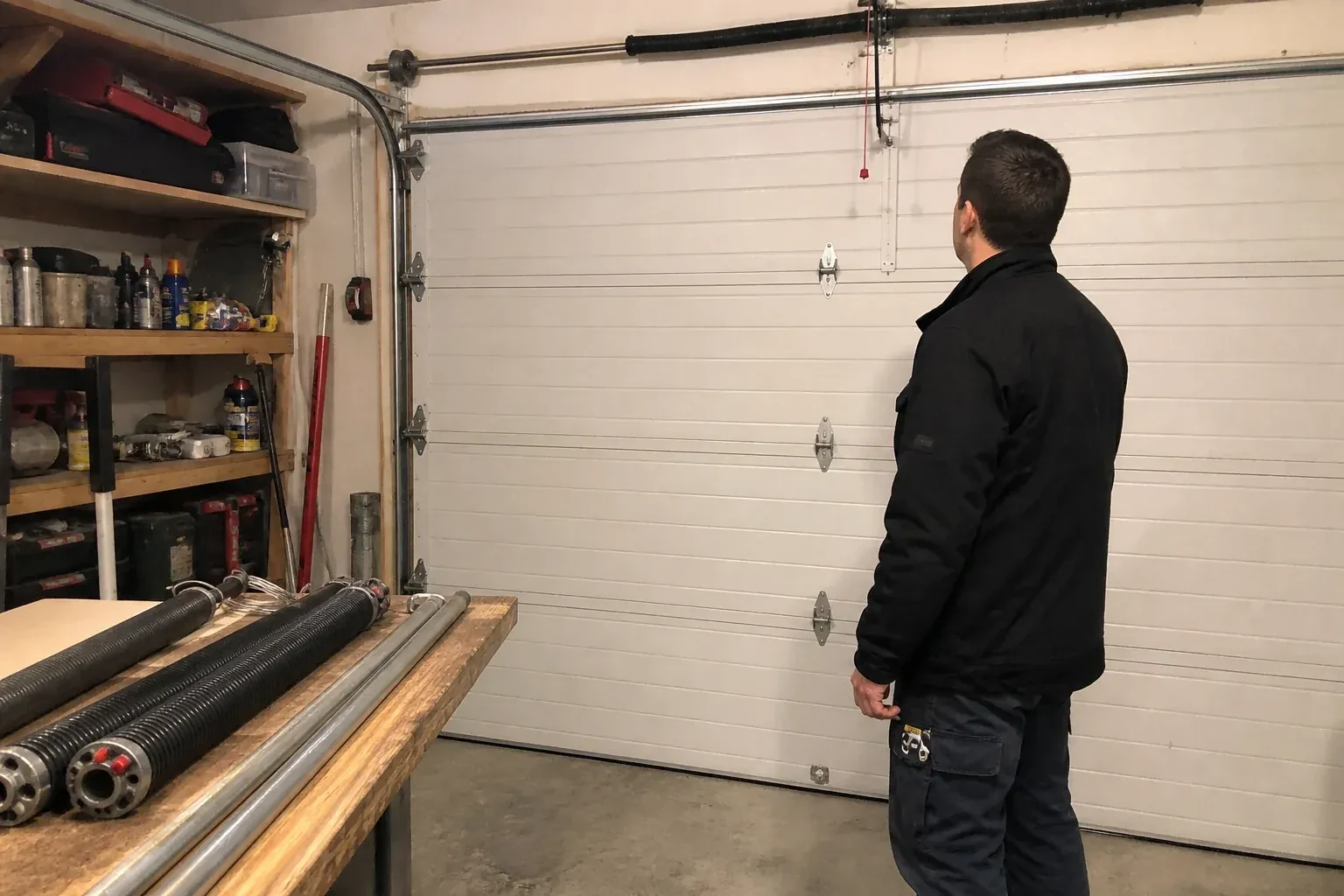
Balanced doors are lighter on everything: the opener, the hinges, the rollers and the arms of anyone who has to lift them in a power cut. The spring and cable work here is how that balance is set and kept.
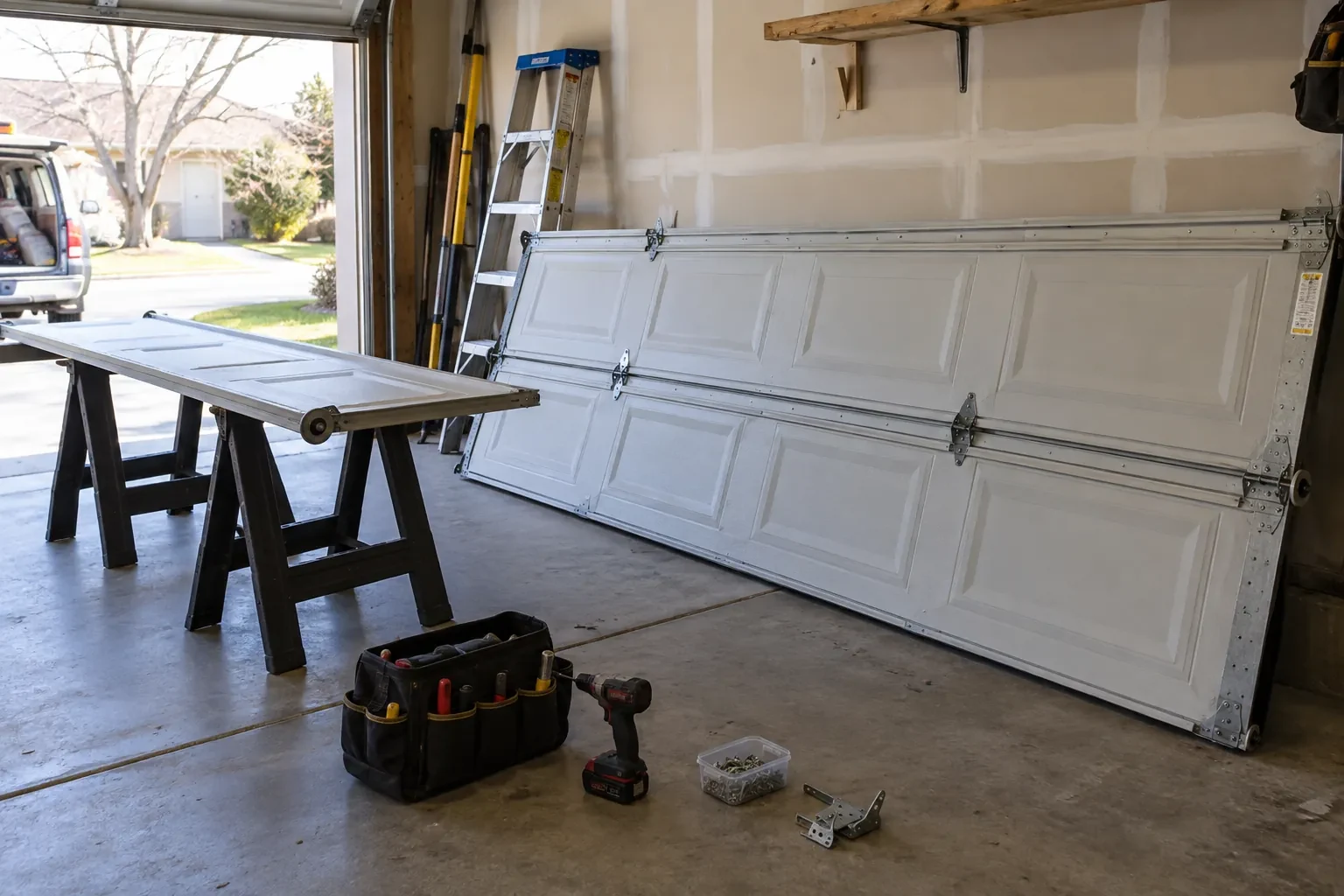
Panel replacement on a door that is still sound belongs in repair. A door where several sections are gone, the tracks are rusted and the springs are past their life belongs here, and we will tell you which case yours is.
WhyGarage door cables carry the weight of the door as tension held by the springs, which is why the work follows a careful, well-rehearsed sequence rather than simply hooking a cable back on.
Why does my door reverse on the way down for no reason?
Most often it is the photo eyes. A sensor knocked slightly out of line, a lens with a film of road grime, a loose wire, or low afternoon sun shining straight into one eye will each break the beam as far as the opener is concerned. The next candidates are a down-force setting that has drifted, a binding roller or a door that has gone out of balance. The inspection checks each in turn.
Should I lubricate the tracks?
No. Tracks should be clean and dry. Rollers are meant to roll along the track on their own bearings, and a film of lubricant on the track collects grit, thickens in the cold and makes the rollers slide and drag instead. Wipe the tracks with a rag and put the lubricant where it belongs: on the hinge pins, the roller bearings, the spring coils and the bearing plates at the ends of the torsion shaft.
Why should the seal only touch the door lightly?
The fin is meant to bend against the door with a small, even deflection. That is enough to seal, and it lets the fin spring clear as the door lifts. Pressed hard, it drags on the door face, folds under on the way down, squeals and wears through well before its time, and it adds load to the opener. Set too far off, it leaves a standing gap. The light touch is the setting that lasts.
Can a light bump from the car damage a hinge?
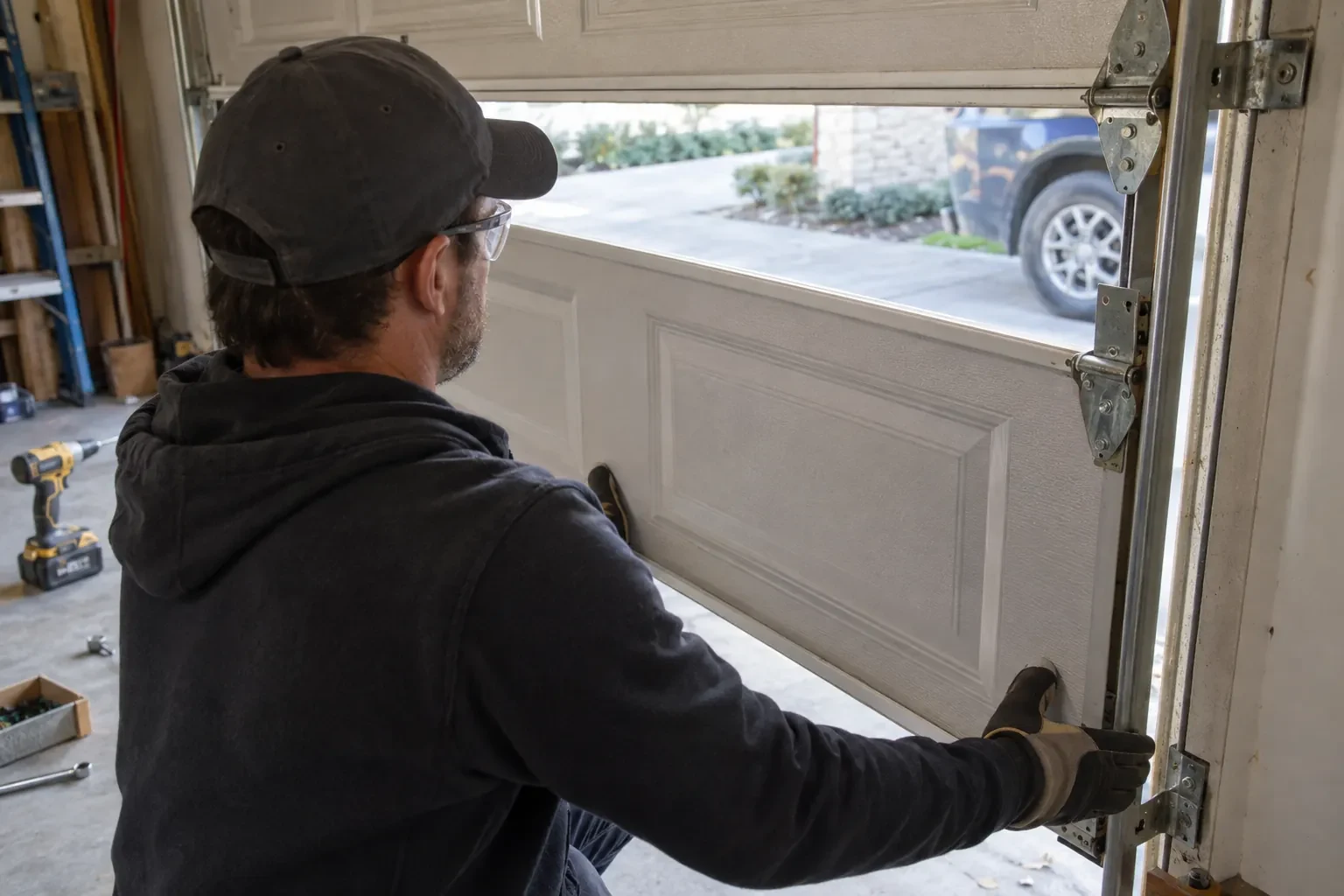
Yes, more often than people expect. The bottom two panels take the contact, and the edge hinge at that joint bends along with the stile behind it, so the panel edges rub and the roller leans. The damage sometimes only shows as a new squeak at the curve. The technician straightens or renews the stile, fits a new hinge and roller, and checks the strut and track on that side.
Should both cables be replaced when only one has failed?
Yes, as a rule. The two cables were fitted together, have flexed around their drums the same number of times and have sat in the same slush, so the survivor is close to the end of its life. A new cable beside a stretched one also makes it harder to set the door level. Two matched cables give an even lift and one visit instead of two.
I am getting a new opener. Should the door be balanced first?
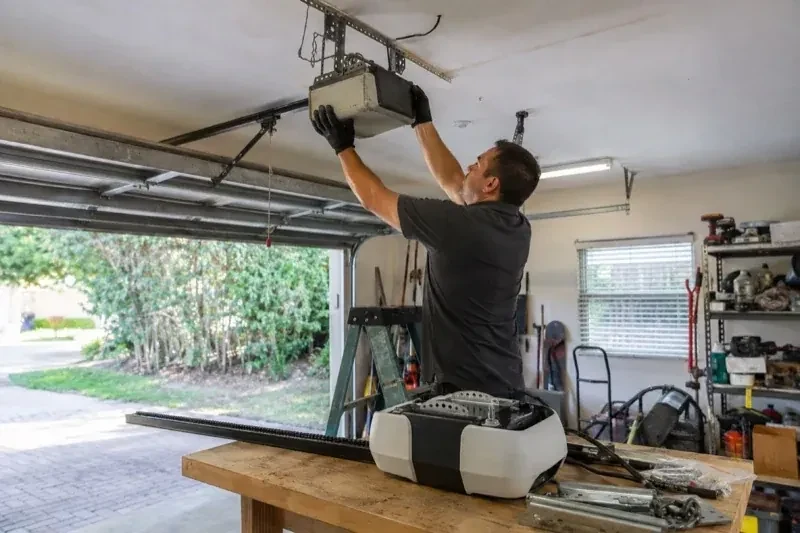
Yes, and installers will usually insist on it. A new opener is set up against the door it meets on the day, so its travel and force settings are only right if the door is already balanced. Fitting a new motor to a heavy door shortens the motor's life and puts the safety reversal out of range. Balancing first means the new opener starts life doing the light work it was designed for.
Should I lubricate the chain, the rail or the track?
Rollers, hinges, bearings and springs benefit from a garage door lubricant once or twice a year. The chain, belt or screw-drive rail is a separate question, since each drive type calls for its own product and schedule from the opener's manual rather than one rule for every unit. The track itself should stay clean and dry, because lubricant there collects grit and makes rollers slide instead of turning. The technician can point out the spots on your door at the end of the visit.
My garage ceiling is low and full of storage. What are my options?
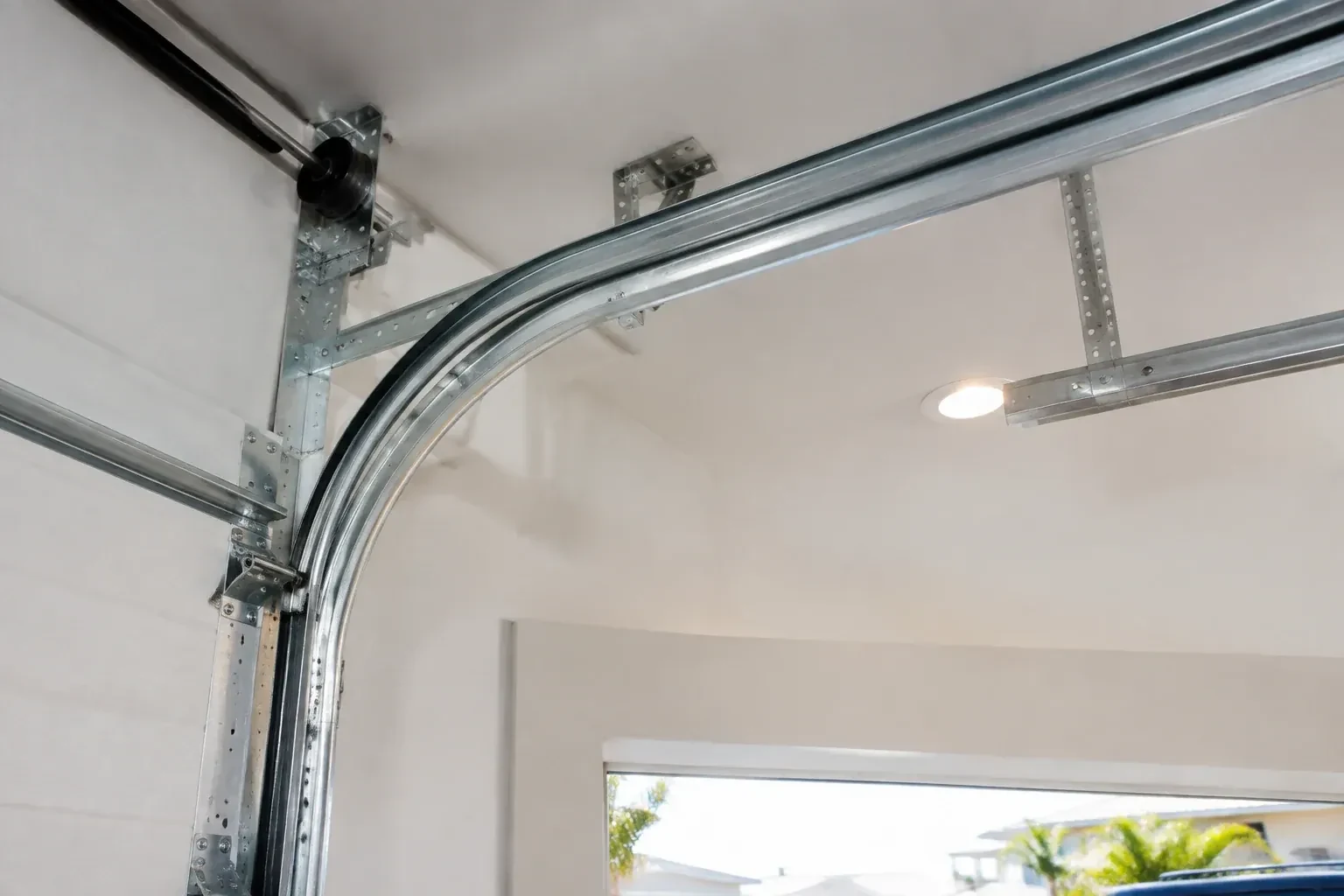
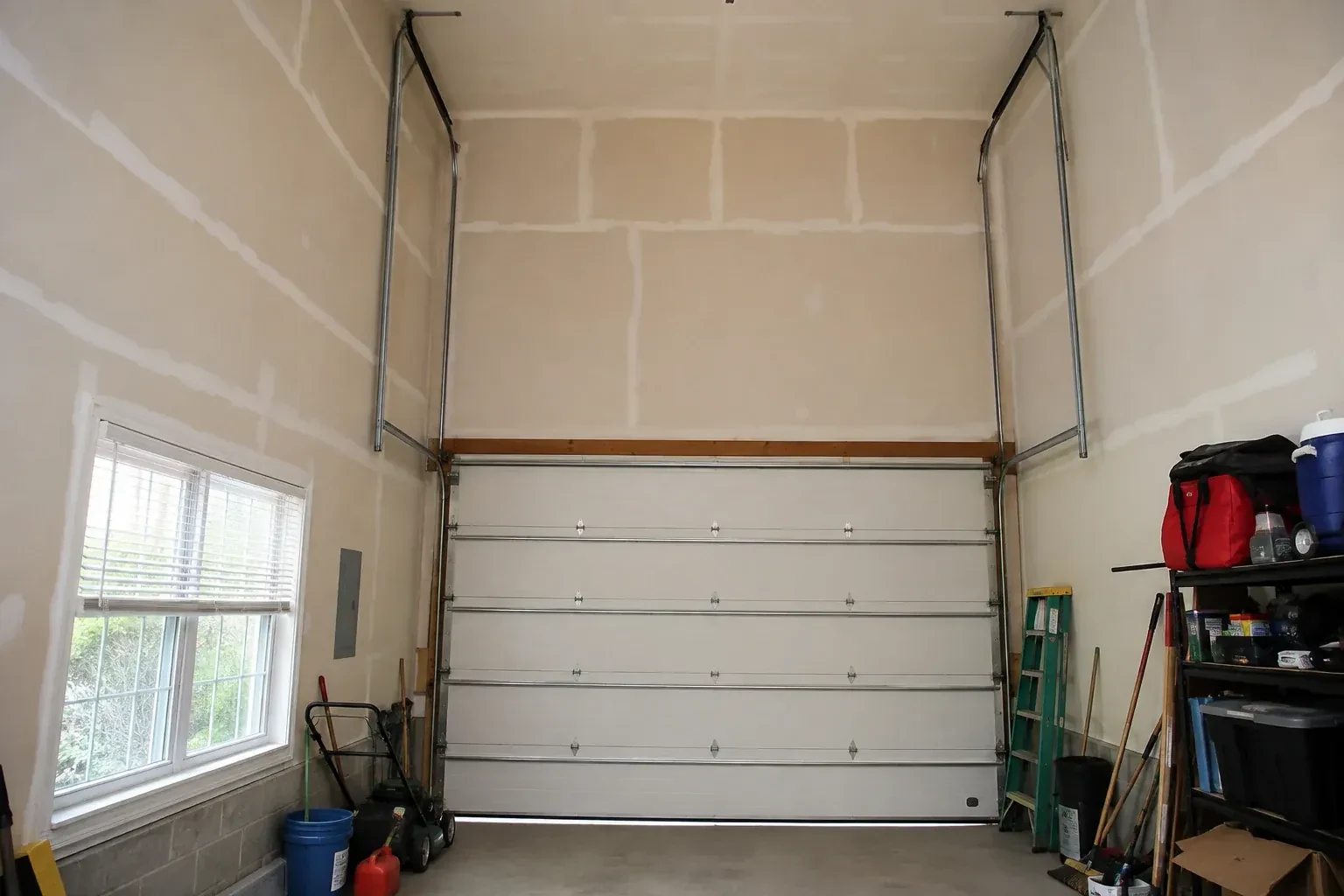
Two good ones. A low-headroom kit lets a standard operator work where the open door sits close to the ceiling. Going further, a jackshaft unit mounts on the wall where the spring shaft ends and drives the door from there, so the whole ceiling stays empty for shelving, a mezzanine or a car lift. That route needs a door on torsion springs and a little clearance beside the shaft, which the technician measures on site.
Will the sensors need replacing or just aligning?
Most visits end in alignment, cleaning and bracket work, because the sensors themselves are hardy. Replacement comes into it when a lens has clouded or crazed, when the housing is split or holds water, an indicator stays dark with the wiring proven good, or the pair is from a different generation than the opener and is never recognised. The technician tests before choosing, so the parts list matches what the door needs.
Which materials are used for carriage-house garage doors?
Common choices include embossed steel sections, insulated steel with composite overlays, and wood or wood-faced sectional construction. They differ in weight, surface depth, grain, moisture response and care. Samples are helpful because photographs can flatten texture and alter colour. The chosen construction also guides spring sizing, reinforcement, fasteners and the kind of finish maintenance expected later.
Request a visit
Businesses in Wilfrid get the same technicians as households, with a schedule built around the hours the door has to be open. We arrive with commercial springs and operator parts, do the noisy work when it disturbs the fewest people, and leave a written note of what was done and what to watch for.