Springs · Beaverton
Garage Door Track Repair or Replacement in Beaverton
The door has started rubbing the frame on the left, leaving a shiny stripe down the weatherstrip.
In plain words
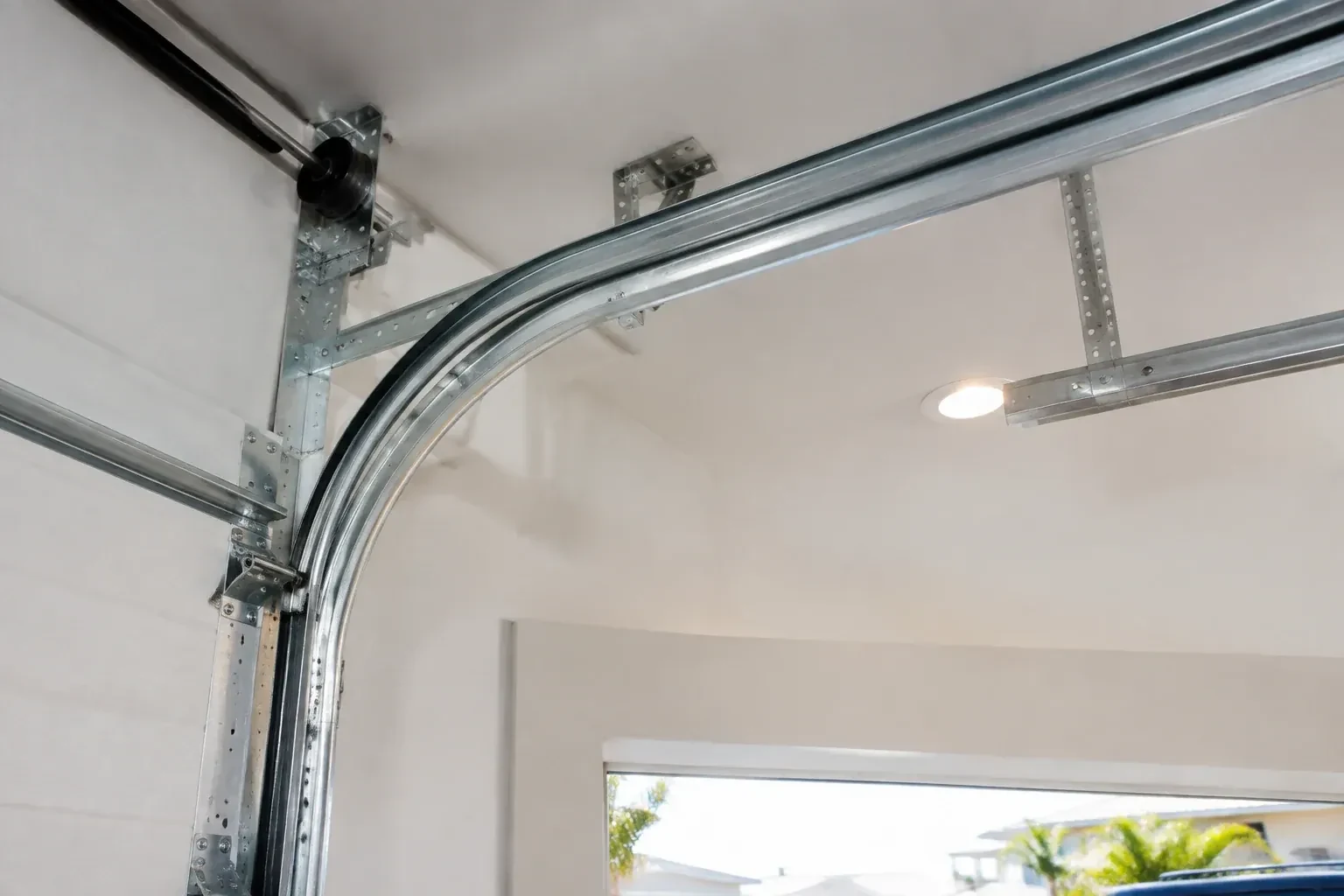
Vertical track is fixed to the jamb in one of two ways, and the assessment begins by reading which one your door has. Bracket-mounted track hangs on a few L-shaped jamb brackets, each lag-screwed into the wood, and can be shifted a little at each bracket to set spacing and plumb. Angle-mounted track uses a full-height continuous angle and is common where sideroom is tight. Either way the vertical run ends at a flag bracket that also carries the horizontal track and, on a torsion door, the spring shaft bearing. Track repair works with those fixings, tightening, replacing or repositioning them so the run sits true.
How the visit goesThe door climbs crooked, one side clearly ahead of the other. Nothing looks broken, but the two tracks sit different distances from the door, and one leans in toward the opening near the top.
Garage Door Track Repair or Replacement
How the visit goes
Rollers, hinges and top fixtures along the path
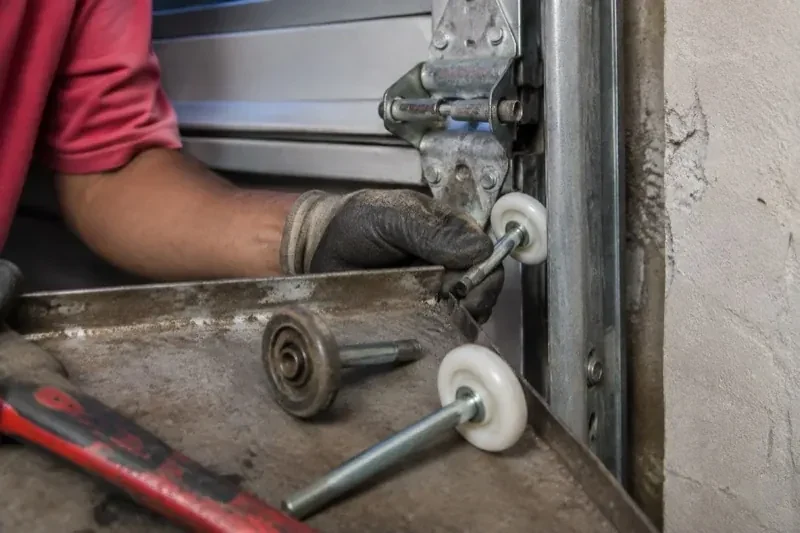
With the door held, the technician works along both sides checking how each roller sits. A roller should rest in the channel without being pinched, and its stem should turn and slide in the hinge or bracket that carries it. A stem that is stuck, a wheel riding up on the lip, or a roller that has popped free are signs of a spread or misaligned section nearby. Worn wheels are also a cause rather than just a casualty, since a roller that no longer rolls drags on the track edge and slowly opens it. The top fixtures are checked for bending, and hinges for splits, so the parts that guided the door into trouble are corrected with the track.
Tension back, balance and opener tests
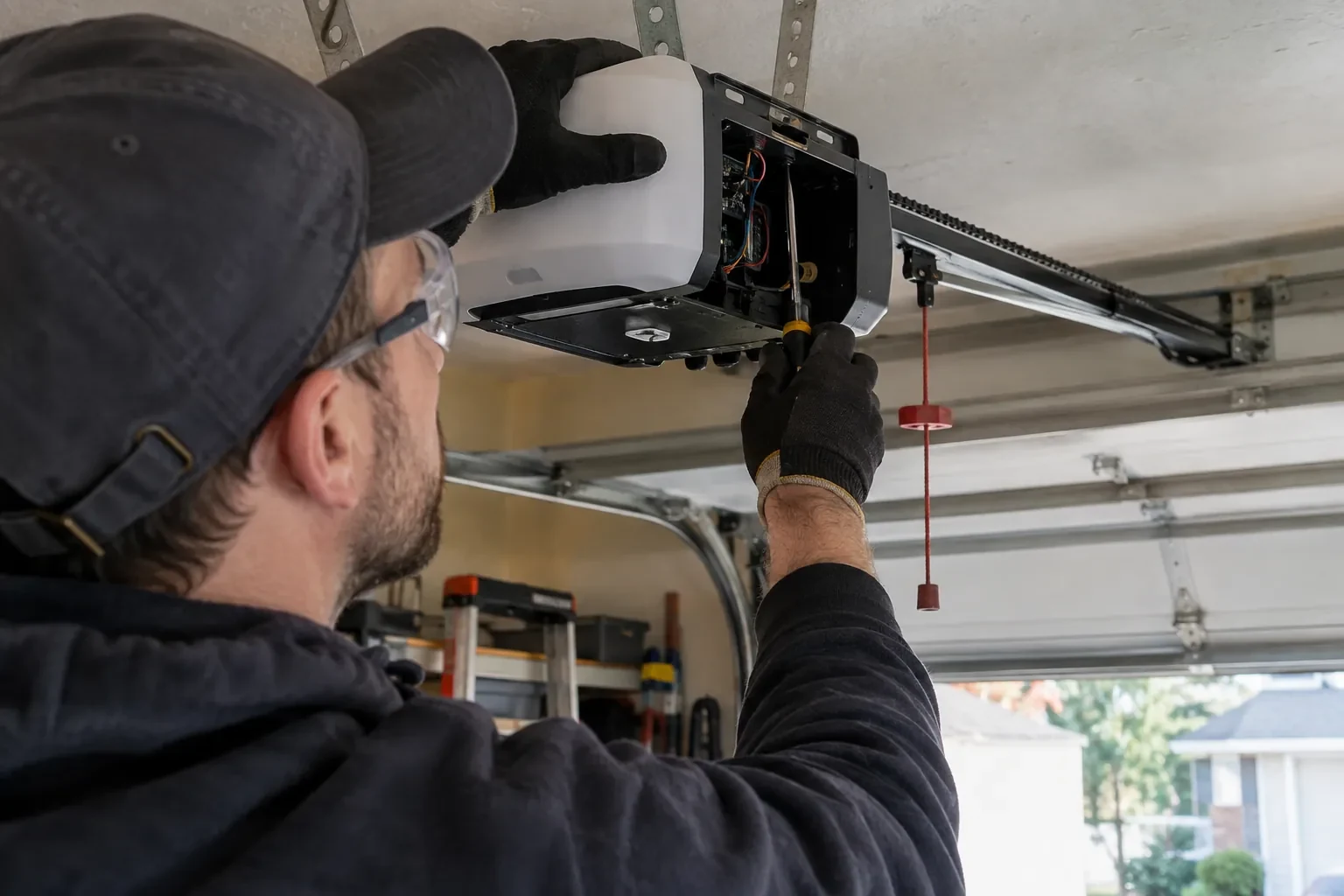
Once the track is fixed and every roller is seated, the springs are wound back to the turns the door calls for and the clamps come off. The technician lifts the door by hand through its full travel, watching each roller through the curve and along the horizontal run for any catch, and checks that the door holds itself at roughly waist height. It is run up and down several times by hand before the opener is reconnected, and the opener's travel limits and force settings are then adjusted to the newly aligned door, with the reversing test done against a block on the floor. You watch the finished door make the trip before the tools are packed.
Protecting the bottom of the track from salt and slush
The lowest foot of vertical track and the bracket beside it are where winter does its damage, so a little attention there pays off. Push slush away from the inside edge of the door rather than letting it pool against the track, and when a mild day comes, rinse or wipe the road salt off the bottom brackets and the channel. A dab of silicone spray on the jamb bracket fasteners in late autumn helps them shed meltwater. Keep the threshold clear of packed ice so the door meets the floor, not a ridge, and the opener never pulls against a stuck door. Those habits are what keep replacement track from meeting the fate of the last set.
Garage Door Track Repair or Replacement
In the van
Track pliers and dead-blow hammer
Jamb lumber and construction screws
Top fixtures
Winding bars and track clamps
Jamb brackets or continuous angle
Garage Door Track Repair or Replacement
What affects the quote
How the door is sitting
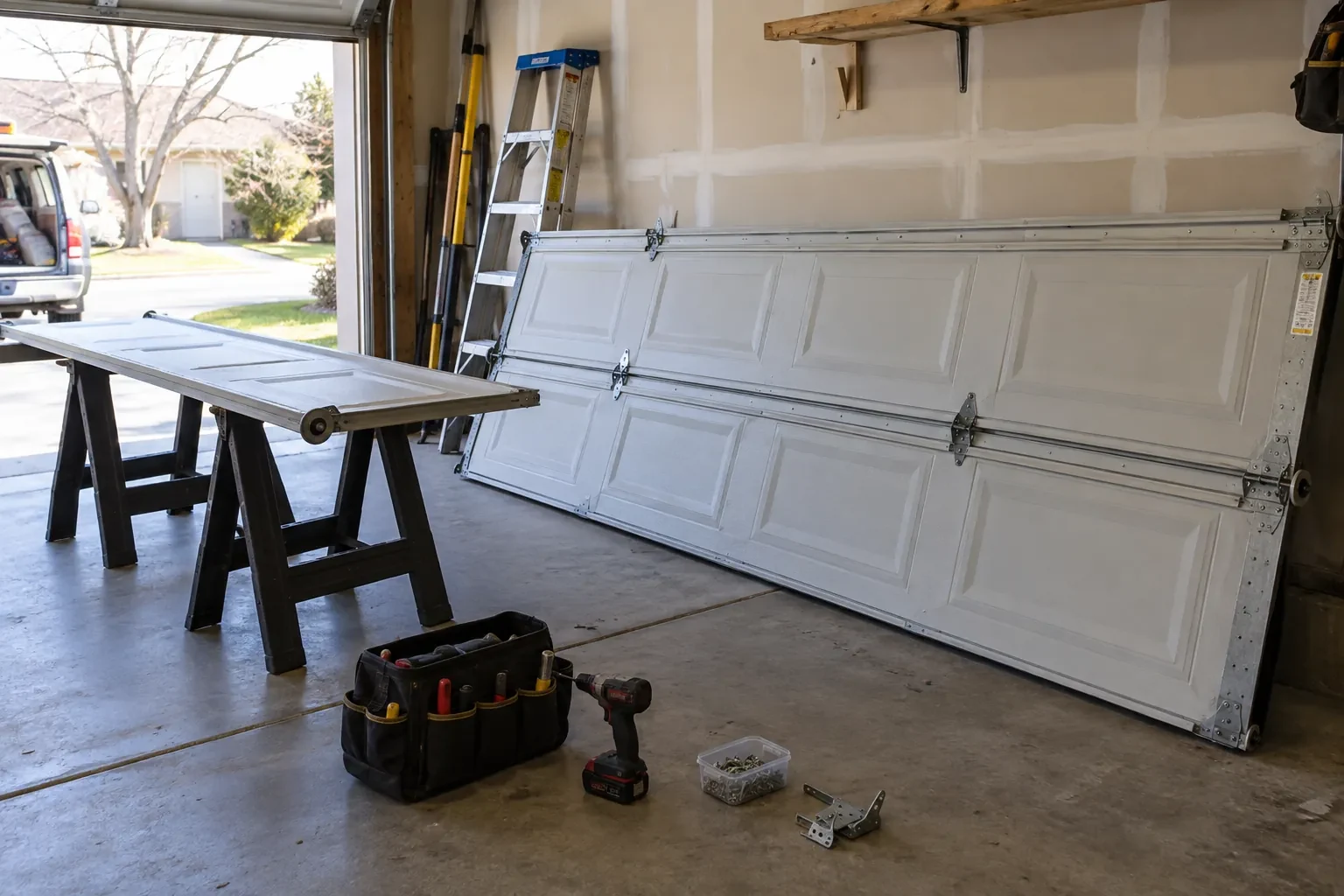
A door resting closed is straightforward. One jammed partway on a bent section, or with rollers out of the channel, has to be supported and freed before the track can be measured.
Which part of the run
A vertical section below the curve is the simplest change. The curve itself, or the horizontal run overhead, involves the flag bracket and hangers and takes longer to set.
Springs that have to be unloaded
Work at the flag bracket or on the curve means winding the torsion springs down and back up. That adds time, and the quote says whether it applies to your repair.
What to have ready
- Is it a single or a double door, and roughly how tall?
- Do you know what caused it, such as a car, a ladder or stored items?
- Do you have the door's manual or a label with its model?
Garage Door Track Repair or Replacement: questions
QuestionsDoes a heavy insulated door need heavier track?
Usually the standard two-inch track handles a residential insulated door well, provided the gauge matches what the door maker specified and the brackets and hangers are properly fixed. Very heavy or oversized doors, and some carriage-style wood doors, are set up on three-inch track or on heavier-gauge two-inch. If a heavier door was hung on the light track from an earlier door, flexing and spreading follow, and the technician will say so.
Why is there a gap between the track and the edge of the door?
That gap is intentional. The rollers sit on stems that reach out from the hinges, and the track stands a set distance from the door so the wheels ride in the channel without the door's edge touching the track. The gap should be equal on both sides and slightly larger at the top of the vertical run, which is the taper that lets the door seal at the stop and release on opening. Unequal gaps are a sign the track has moved.
My door rubs the frame on one side. Is that a track problem?
Often, yes. The vertical track is meant to stand a fraction further from the jamb at the top than the bottom, so the closed door seals on its stop and swings clear as it rises. If a bracket has loosened or the track was set flat to the wood, the door drags along the stop moulding every trip. Resetting the spacing and taper, and tightening the brackets into sound wood, usually ends the rub.
Related services
- Garage Door Hinge ReplacementThe car nudged the door on the way in.
- Garage Door Cable ReplacementSomeone left the snow shovel leaning in the opening and the door came down on it.
- Torsion Spring ReplacementNothing broke outright, but the door has grown heavier each winter, opens more slowly and squeals as it moves.