New Doors · Georgina
Commercial Rolling Door Repair
The rolling door starts upward, then one side rises ahead of the other.
In plain words
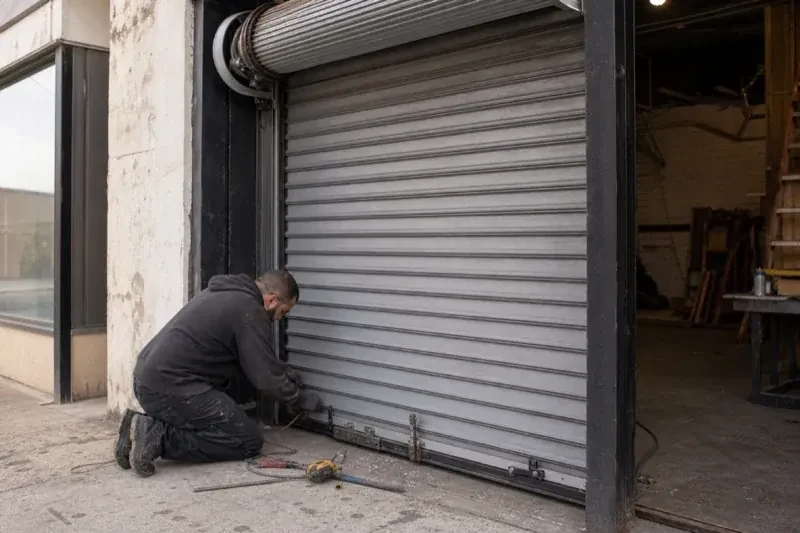
A rolling door that has become unusually heavy or starts to drift is asking for a counterbalance assessment. The barrel assembly commonly contains springs that offset curtain weight, and those parts hold substantial tension even while the door is stationary. The technician secures the curtain, examines brackets, bearings and drive components, then evaluates balance under controlled conditions. Adjustment uses purpose-made winding tools and the identified door instructions. Once the mechanical setting is correct, manual effort is checked across the full travel and any powered operator is tested without asking it to compensate for a poorly balanced door.
How the visit goesA metallic clatter now comes from inside the hood whenever the curtain coils. The sound follows each revolution, the travel has become jerky, and fine metal dust is visible near one bracket and bearing.
Commercial Rolling Door Repair
How the visit goes
Look for weather and impact patterns
Exterior openings collect evidence from their surroundings. Salt staining at the lower guides, packed grit near the sill, torn astragal, rust below a hood seam and polished marks at forklift height each tell a different story. Ice may hold the bottom bar down, while wind can press a broad curtain against its guides and change operating effort during a storm. The technician notes drainage, exposure and recurring traffic contact alongside the mechanical findings. That context helps shape a durable repair and can support practical additions such as guide guards, clearer floor markings or better threshold housekeeping.
Cycle, observe and document the result
The repaired door is returned to service through a measured test sequence. Initial movement is slow and closely observed at the guides, coil, bottom bar, brackets and drive. Several full cycles follow, using the normal control and the manual method where applicable, while the technician listens for repeatable noise and checks stopping positions. Locks, interlocks and protective devices are tested at their proper stage. The handover record identifies parts changed, settings established, functional checks completed and any connected condition assigned to another scope, giving facility staff a practical baseline for future inspections.
Manual operation that staff understand
A repaired hand-chain or emergency-hoist system comes with a simple operating walkthrough. Staff learn where the chain is stored, which direction opens or closes, how the keeper is used and how the powered operator changes over to manual mode for that particular assembly. They are also shown the normal effort and stopping behaviour, useful reference points if balance or a bearing changes later. The chain stays gathered and clear of traffic after use. Facility procedures can name the people authorised to operate it, keeping manual movement deliberate during a power interruption or control-service event.
Commercial Rolling Door Repair
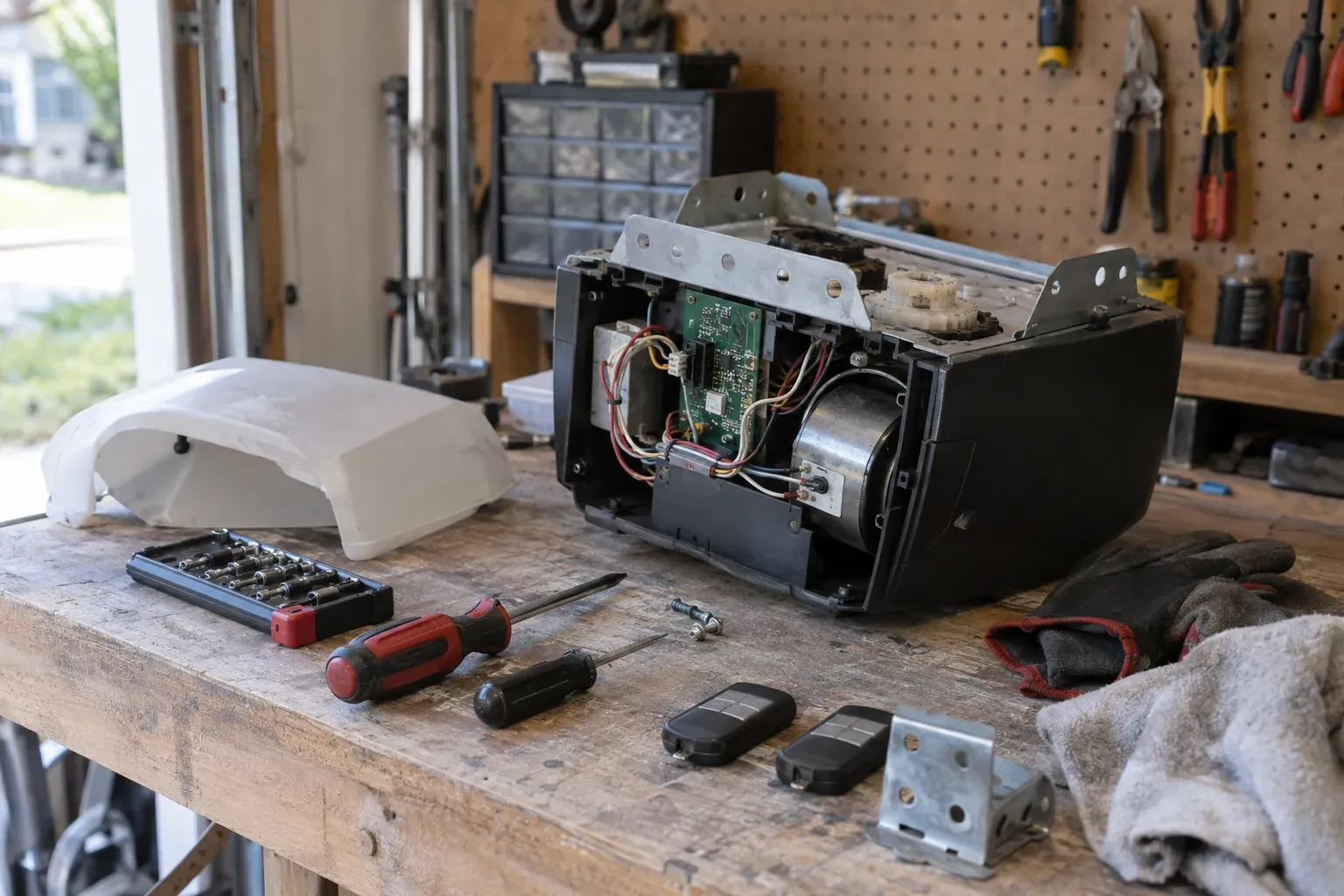
In the van
Bearings and tension wheel
Operator brake and limits
Windlocks and curtain fasteners
Sensing edge and controls
Curtain slats and endlocks
Commercial Rolling Door Repair
What affects the quote
Manual drive components
Direct push-up operation, a hand-chain hoist or another manual drive has its own chain, wheel, reduction and keeper parts. Wear and accessibility determine the tasks included.
Testing and documentation
Normal cycles, manual operation, protective responses, fire-door procedures and facility records vary by assembly. The proposal can name the demonstrations, measurements and written results included at handover.
Controls and interlocks
Three-button stations, key controls, lock interlocks, pass-door interlocks and access-system inputs create different diagnostic paths. The quote identifies which door-side controls are included in testing.
What to have ready
- Is the door push-up, hand-chain or motor operated?
- Was there a recent vehicle, pallet or forklift impact?
- Does winter moisture, ice or salt collect at the sill?
Commercial Rolling Door Repair: questions
QuestionsWhen is operator replacement considered?
A broader operator plan may be considered when major drive or control parts are extensively worn, suitable components are no longer supported, the unit is mismatched to the door or duty, or the desired control arrangement requires a different system. The door's balance, size, cycle pattern, protection devices, power and manual operation all inform that decision.
What information helps before the visit?
Useful details include the opening size, curtain material, manual or powered operation, model labels, current door position, recent impact or weather event and the exact point where travel changes. Photos of the full opening, bottom bar, controls and labels can clarify the system. Mention a fire-protection label at the outset so that scope is recognised.
Why is the bottom bar rising crooked?
An angled bottom bar can point to a shifted curtain, damaged slats, unequal guide friction, a moved barrel, impact at one guide or a counterbalance issue. Measurements at the sill, guides and brackets help separate those causes. Cycling is kept controlled because repeated powered movement can pull a minor tracking problem farther sideways.
Related services
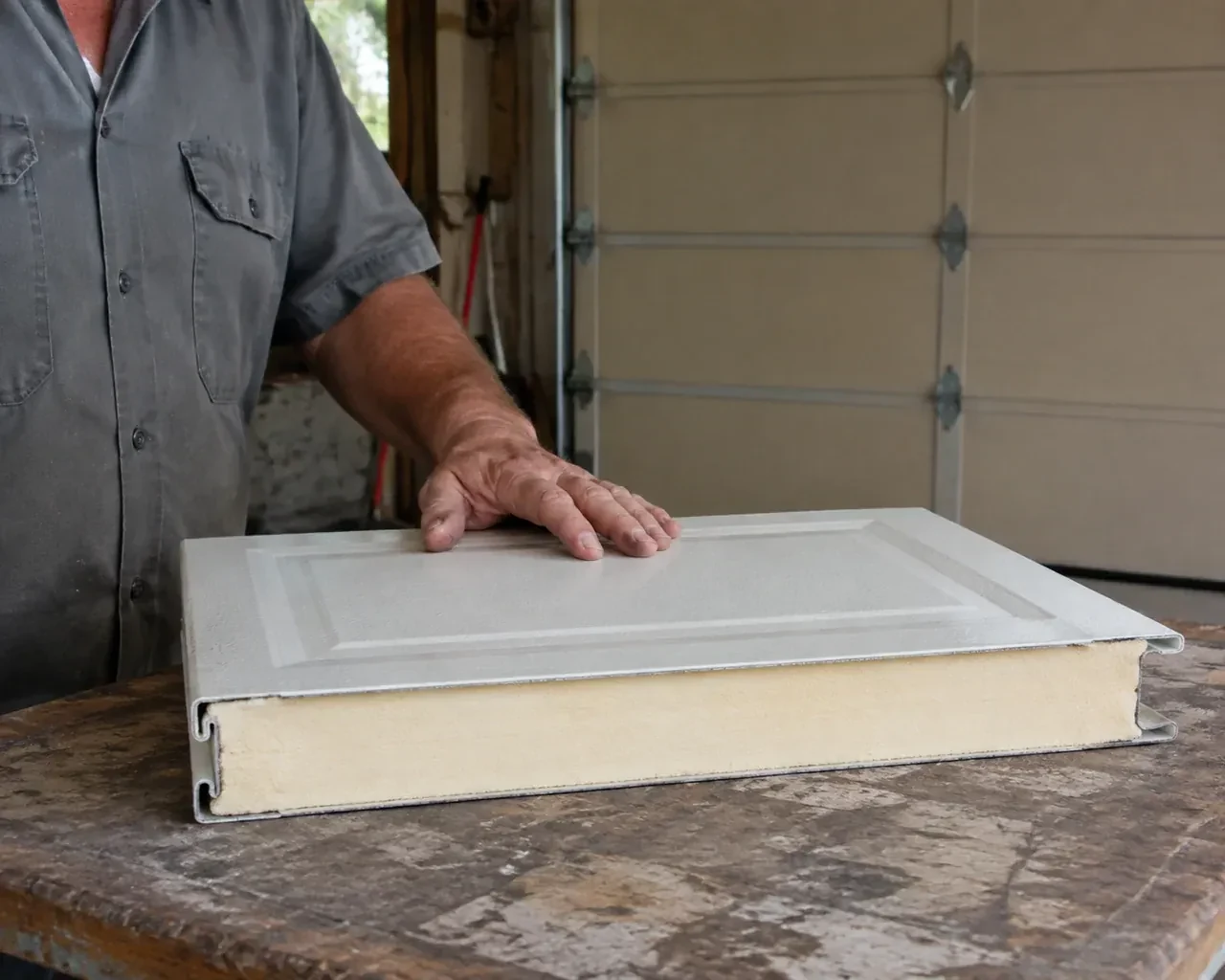
- Insulated Steel Garage Door InstallationYour garage is becoming a workshop, but the thin single-skin door rattles, sweats and lets outdoor temperatures shape the whole room.
- Wind-Rated Garage Door ReplacementNew windows would improve the door's appearance, but they also change the section layout and reinforcement pattern.
- Carriage-House Garage Door InstallationTwo garage openings sit side by side, and small differences in window spacing or decorative hardware would be obvious.