Springs · Beaverton
Garage Door Balance Adjustment in Beaverton
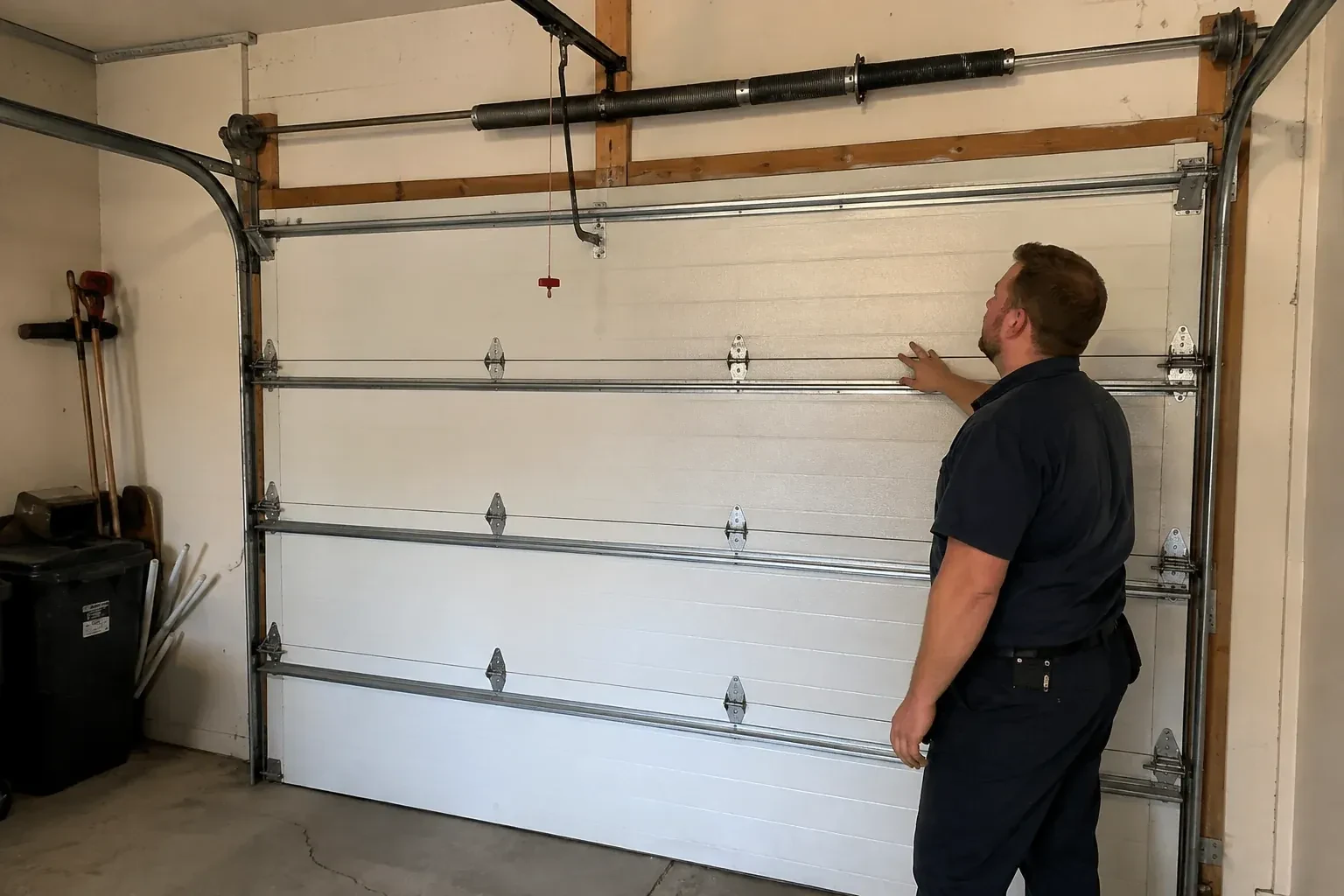
You pulled the red cord to move the door by hand during the power cut, lifted it to about waist height and let go.
In plain words
Older detached garages often have extension springs stretched along each horizontal track rather than a shaft above the door. Balancing these works differently: the tension comes from how far each spring is stretched when the door is closed, and it is set by moving the cable attachment along the track hanger or changing the hook position. Both sides are adjusted equally so the door stays level, and the containment cable running through each spring is checked at the same time. The door is opened and clamped so the springs are relaxed during the work, then tested by hand across its travel until it rests where it is left.
How the visit goesSince the new insulated panels went in, the door feels like a different animal. It closes with a thud, the opener labours where it used to hum, and lifting it by hand takes a proper heave rather than a fingertip.
Garage Door Balance Adjustment
How the visit goes
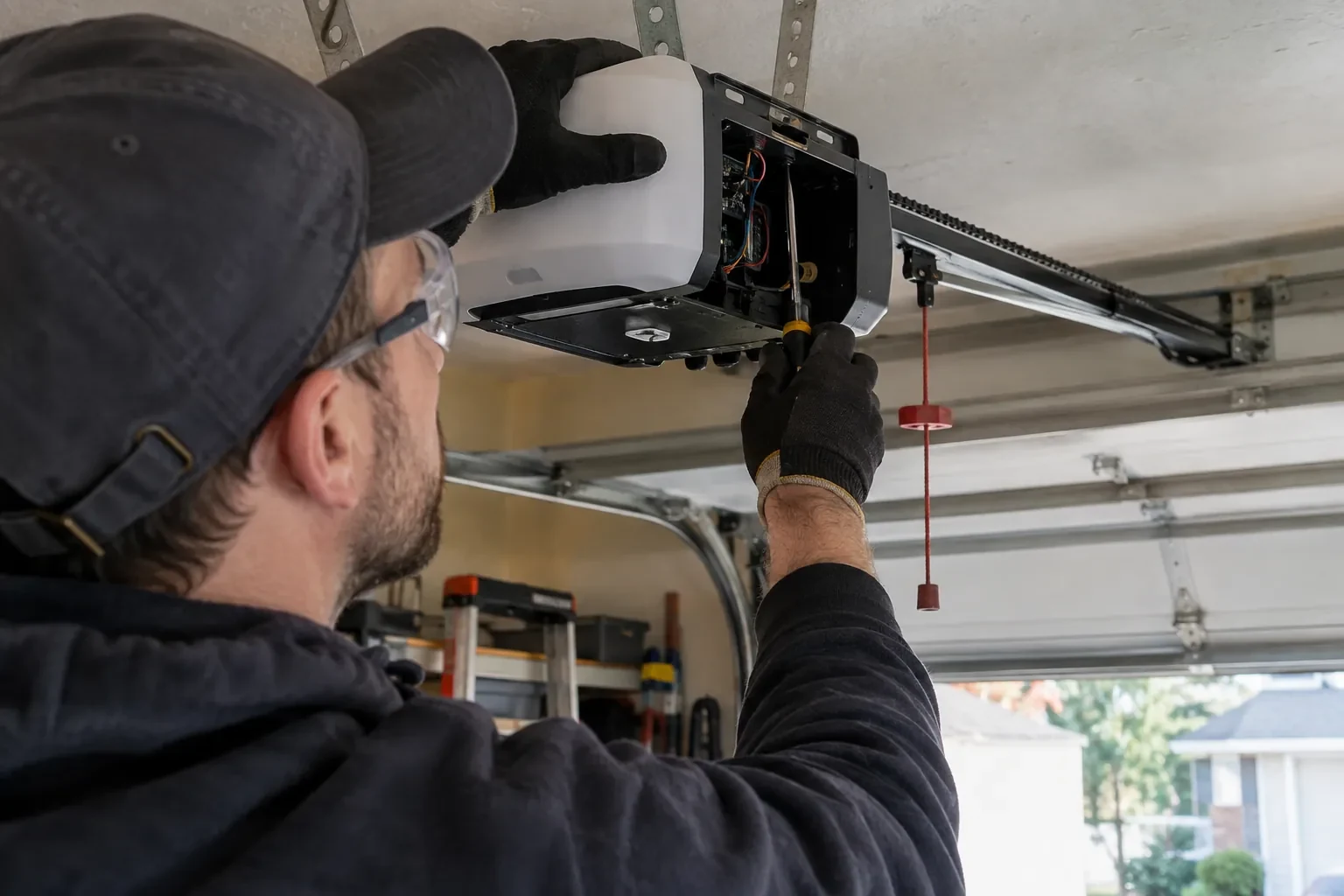
Looking at the opener's settings without touching them yet
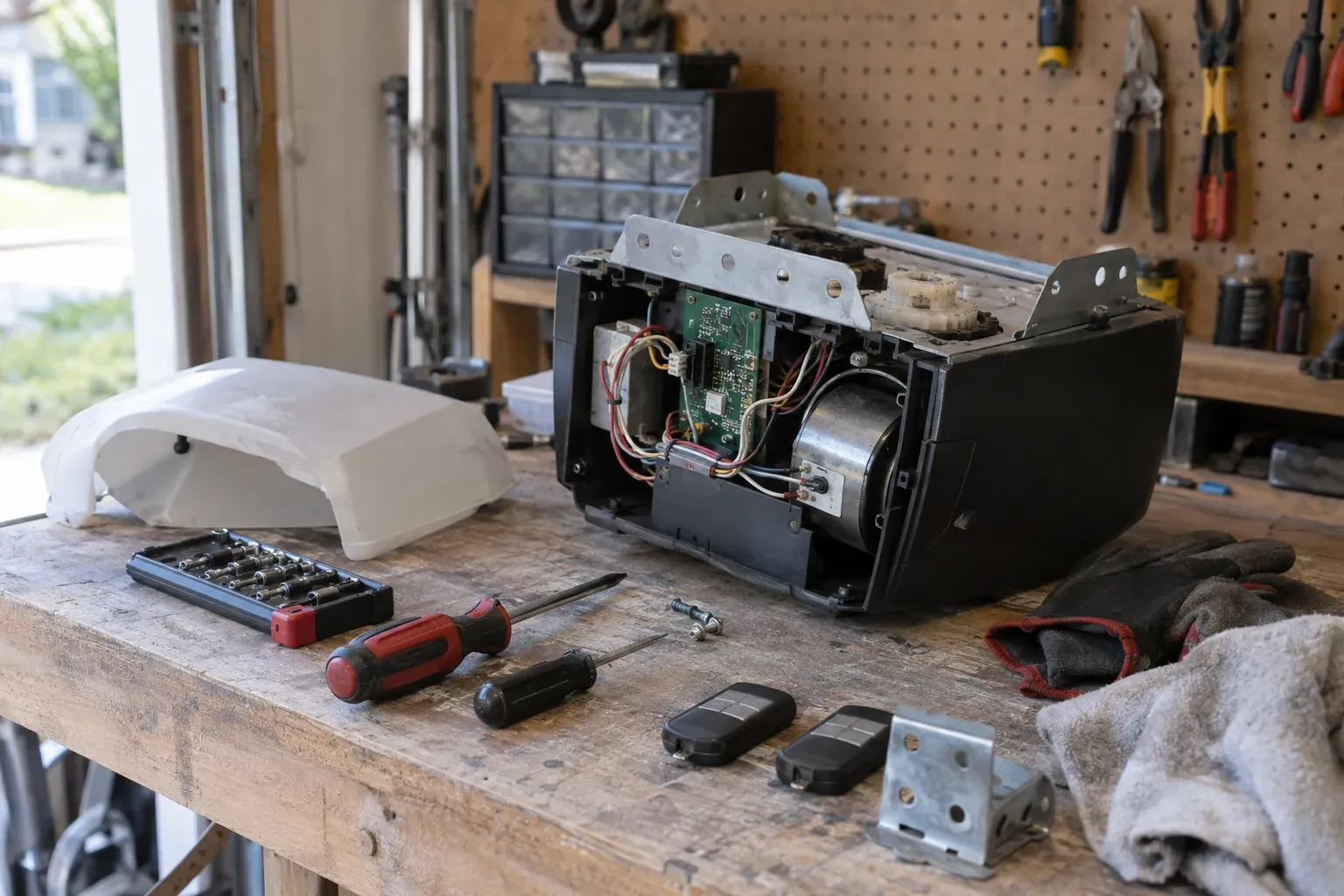
The opener is inspected as a witness rather than a cure. The technician checks its force and travel settings, listens for strain during a powered cycle, and notes whether it reverses near the floor or stalls part way up. A force setting that has been turned up over the years is a strong hint that someone has been compensating for a door that grew heavy. Those settings are left alone for now, because the right order is to balance the door first and then fit the opener to it. Any change made to the opener before the door is corrected would only mask what the door is asking for.
Securing the door before the first turn
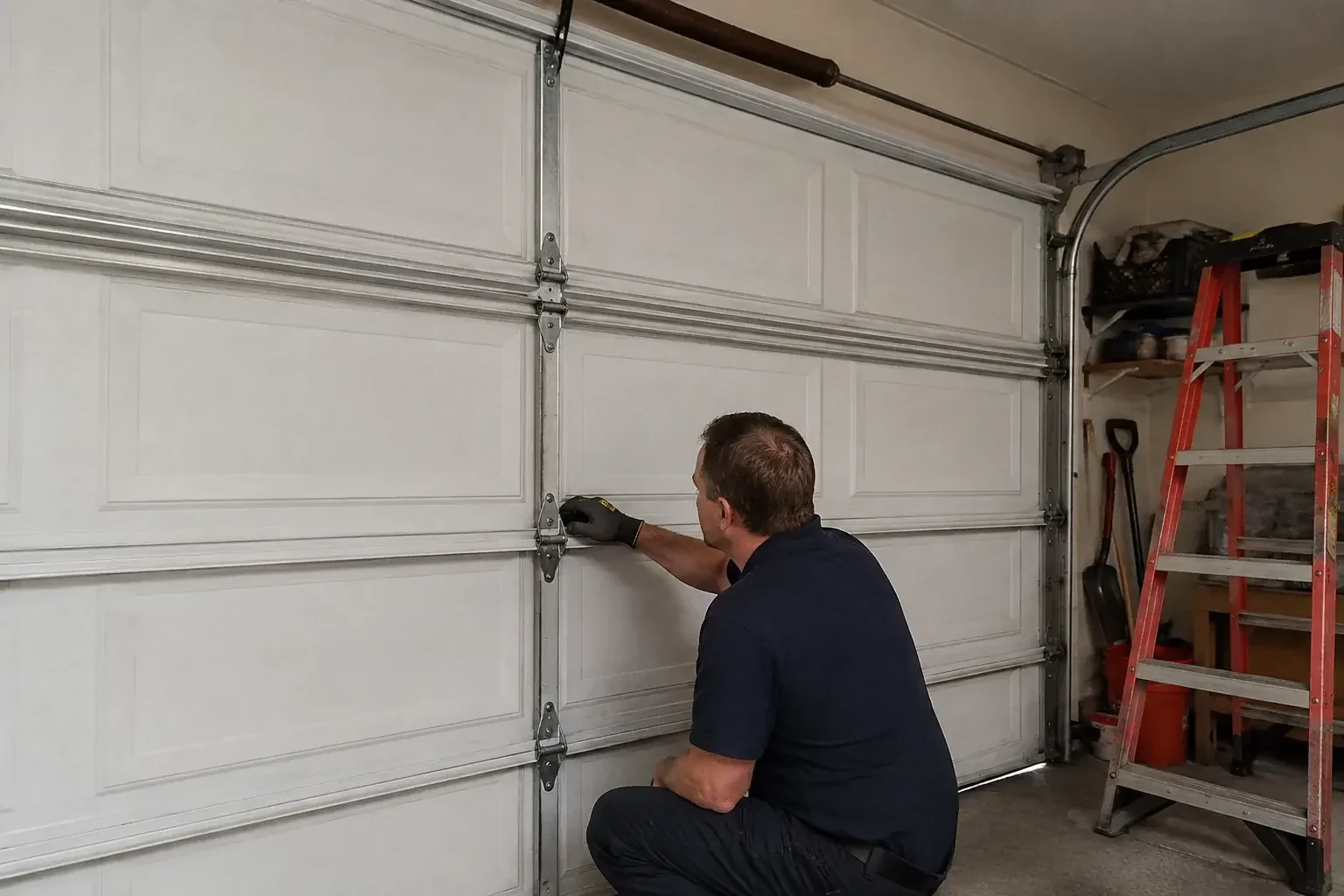
Before any tension changes, the door is made immovable. The technician disconnects the opener, clamps a pair of locking pliers on the track just above a roller so the door cannot rise, and clears the area under the shaft. On a torsion system the springs remain wound while the winding bars are used to add or subtract turns, so nothing has to be fully unloaded for a simple adjustment. On an extension system the door is raised fully and clamped there, which relaxes the springs so the hooks and clips can be moved safely. This setup takes a few minutes and is what makes the adjustment itself calm and controlled.
The seasonal hand test you can do yourself
You can repeat the balance test any time without touching a spring. With the door closed, pull the manual release cord so the trolley disconnects, lift the door by a handle or a safe gripping point to about a metre, and let go gently. A balanced door stays roughly where you leave it; one that creeps up or sinks has drifted and is worth a call before it becomes heavy work for the opener. Reconnect the opener as its manual describes, usually by running it once. Doing this at the start of each season, when the temperature changes, is the simplest way to catch a change early.
Garage Door Balance Adjustment
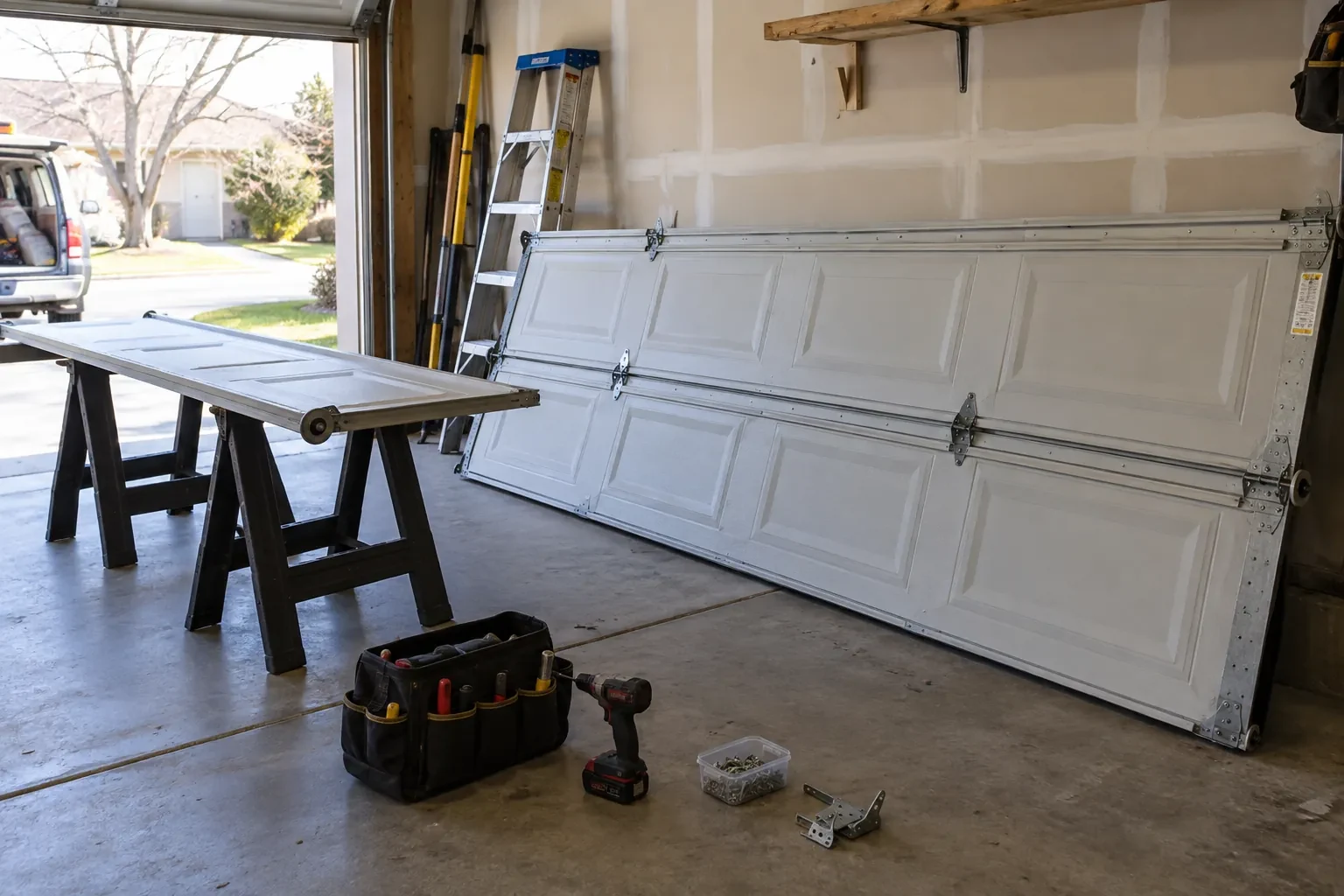
In the van
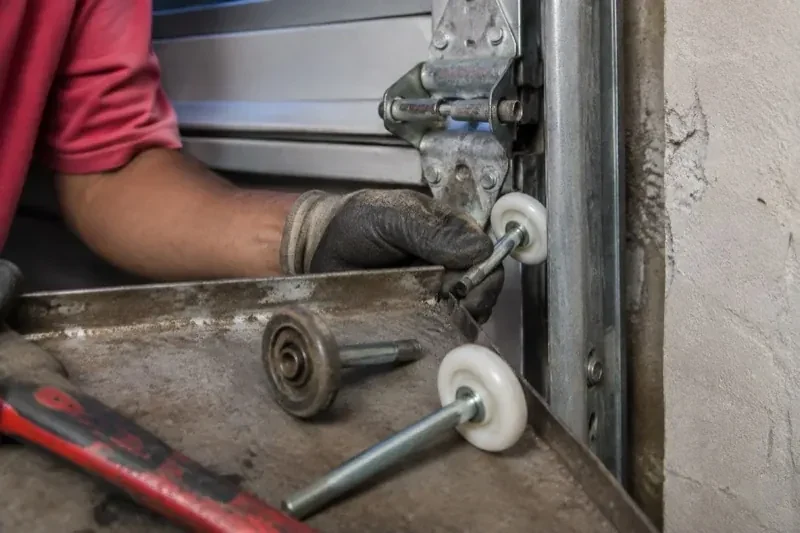
Replacement hinges
Extension springs and S-hooks
Nylon or steel rollers
Winding bars
Cable drums
Garage Door Balance Adjustment
What affects the quote
Door height and lift type
Taller doors and high-lift or vertical-lift hardware carry more spring turns and different drums, so setting and testing them takes longer than a standard seven-foot door.
Single or double door
A double door commonly carries more spring than a single, but the exact count follows the manufacturer's engineered hardware package for that door's weight rather than width alone: one, two or more torsion springs, or one or two extension springs per side. More springs means more adjustment and testing.
Whether a second person is needed to support the door
A heavier double door or one already sitting unevenly is sometimes safer to adjust with a second person steadying it while the springs are reset. That extra pair of hands is called in once the technician sees how the door is behaving on site.
What to have ready
- When were the springs last replaced or adjusted, if you know?
- Has anyone turned up the force setting on the opener?
- Does the door behave differently in cold weather?
Garage Door Balance Adjustment: questions
QuestionsWill I need new springs, or just an adjustment?
The inspection decides, and looks past appearance alone. A spring can look sound, with tight, evenly spaced coils, no rust pitting and no gap, and still be the wrong specification for the door or nearing the end of its service life. The technician checks the spring's specification against the door's weight and history: a spring that checks out is wound and left in service, while one that is undersized, stretched, corroded or close to its cycle life is better replaced. Either path ends in a balanced door.
I am getting a new opener. Should the door be balanced first?
Yes, and installers will usually insist on it. A new opener is set up against the door it meets on the day, so its travel and force settings are only right if the door is already balanced. Fitting a new motor to a heavy door shortens the motor's life and puts the safety reversal out of range. Balancing first means the new opener starts life doing the light work it was designed for.
Can a door with a broken spring be balanced?
A broken spring is replaced rather than adjusted; there is nothing left to wind. On a two-spring door the technician normally replaces both, since the survivor has the same age and cycle count, and then balances the door on the new pair. Until the visit, leave the door closed and avoid running the opener, which is not designed to lift the door's full weight on its own.
Related services
- Garage Door Hinge ReplacementThe car nudged the door on the way in.
- Garage Door Track Repair or ReplacementThe door has started rubbing the frame on the left, leaving a shiny stripe down the weatherstrip.
- Garage Door Cable ReplacementSomeone left the snow shovel leaning in the opening and the door came down on it.