Repairs · Georgina
Off-Track Garage Door Reset
You tapped the door with the bumper while backing in, barely a nudge, and now the bottom corner has swung inward.
In plain words
Older doors and workshop doors tend to come off their tracks for reasons of wear rather than impact. Steel rollers lose their bearings and grind down to the stem, wood jambs dry out and let lag screws spin, back hangs loosen and the horizontal track drifts out of level. A reset on a door like this is partly restoration: worn rollers are replaced as a set, fasteners are moved into sound wood or through-bolted, the horizontal tracks are re-hung square to each other, and hinges that have bent from years of misalignment are swapped. The door comes back quieter and straighter than it has run in years.
How the visit goesA delivery van backed into the shop's overhead door this afternoon. The lower panel is pushed in, the track on that side is kinked, and the door is hanging unevenly with staff unable to close up for the night.
Off-Track Garage Door Reset
How the visit goes
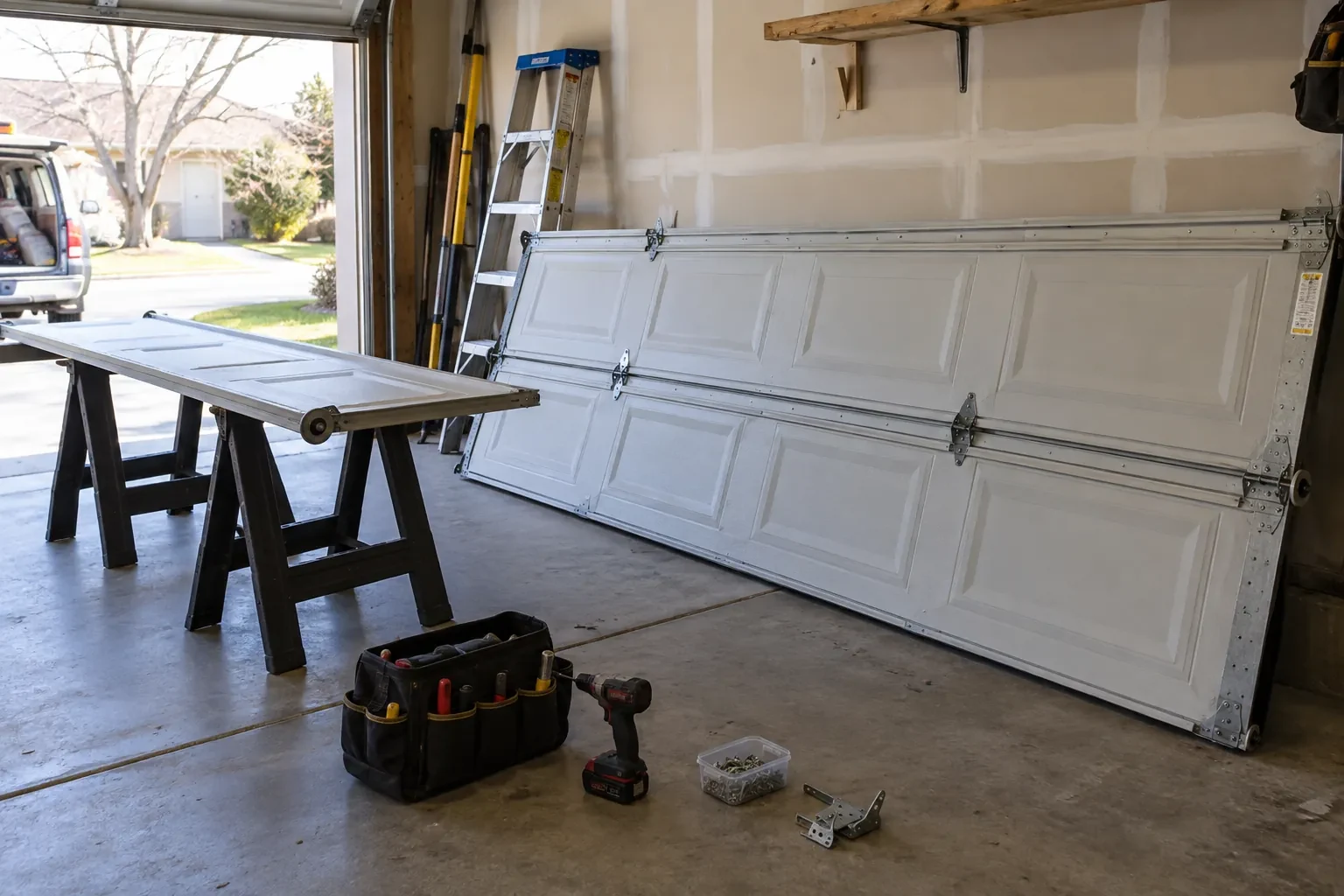
Sections, stiles and hinges after the twist
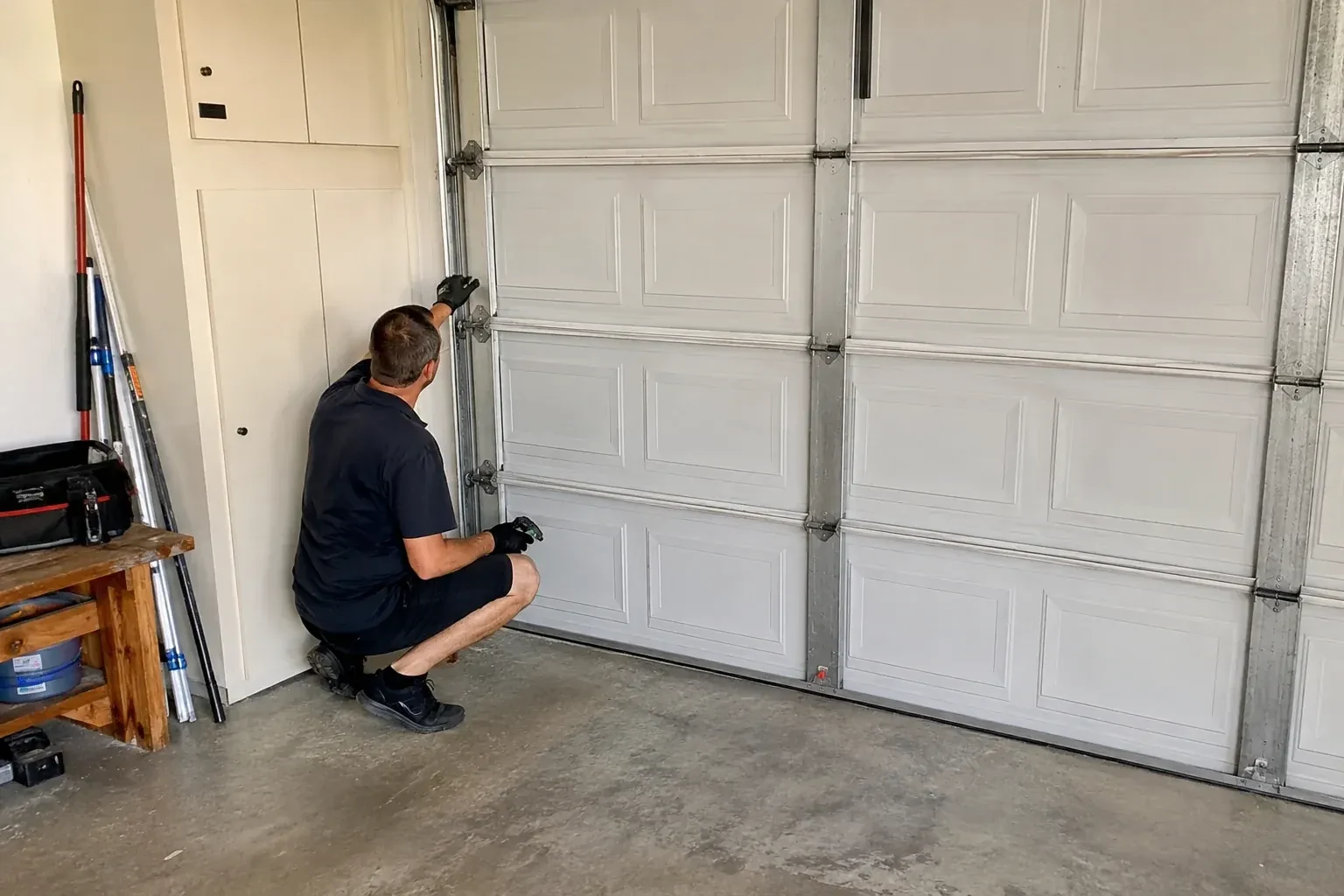
A racked door puts sideways force on parts that only ever expected to move up and down. The technician inspects each graduated edge hinge for bending, each end stile for cracks around the hinge screws, the bottom brackets for distortion and the top fixtures for a stem that has been pushed out of line. Steel sections are checked for creases at the roller positions and wood doors for splitting around hardware. This check separates a door that needs a straight reset from one that needs a hinge or bracket replaced first, so that the rollers go back into a section that can actually hold them.
Taking the weight off before moving anything
Nothing is pulled or lifted while the door is loaded. On a torsion door the technician may wind the spring tension down with winding bars fitted to the cones, working one quarter turn at a time with the set screws controlled, so the sections can be moved without the springs snatching them. On an extension-spring door the load comes off by raising the door fully and securing it, which relaxes the springs. Clamps and props hold every section in place throughout. With the load off, a section that seemed immovable can be shifted a few centimetres by hand, which is all that is needed to bring a roller back.
Getting through winter without a repeat
Freezing weather is the season for crooked doors, and a few habits keep yours straight. Before using the opener on a cold morning, check that the bottom seal has not frozen to the slab; if it has, free it by hand with a gentle push from inside rather than letting the motor pull. Keep the threshold clear of slush and salt, and sweep melted snow away from the door before it refreezes overnight. A silicone wipe on the bottom seal in late autumn stops it bonding to ice. If the door ever lifts and one side looks slack, stop and call rather than cycling it again.
Off-Track Garage Door Reset
In the van
Locking pliers and track clamps
Bottom brackets
Jamb and flag brackets
Track pliers
Torsion spring winding bars
Off-Track Garage Door Reset
What affects the quote
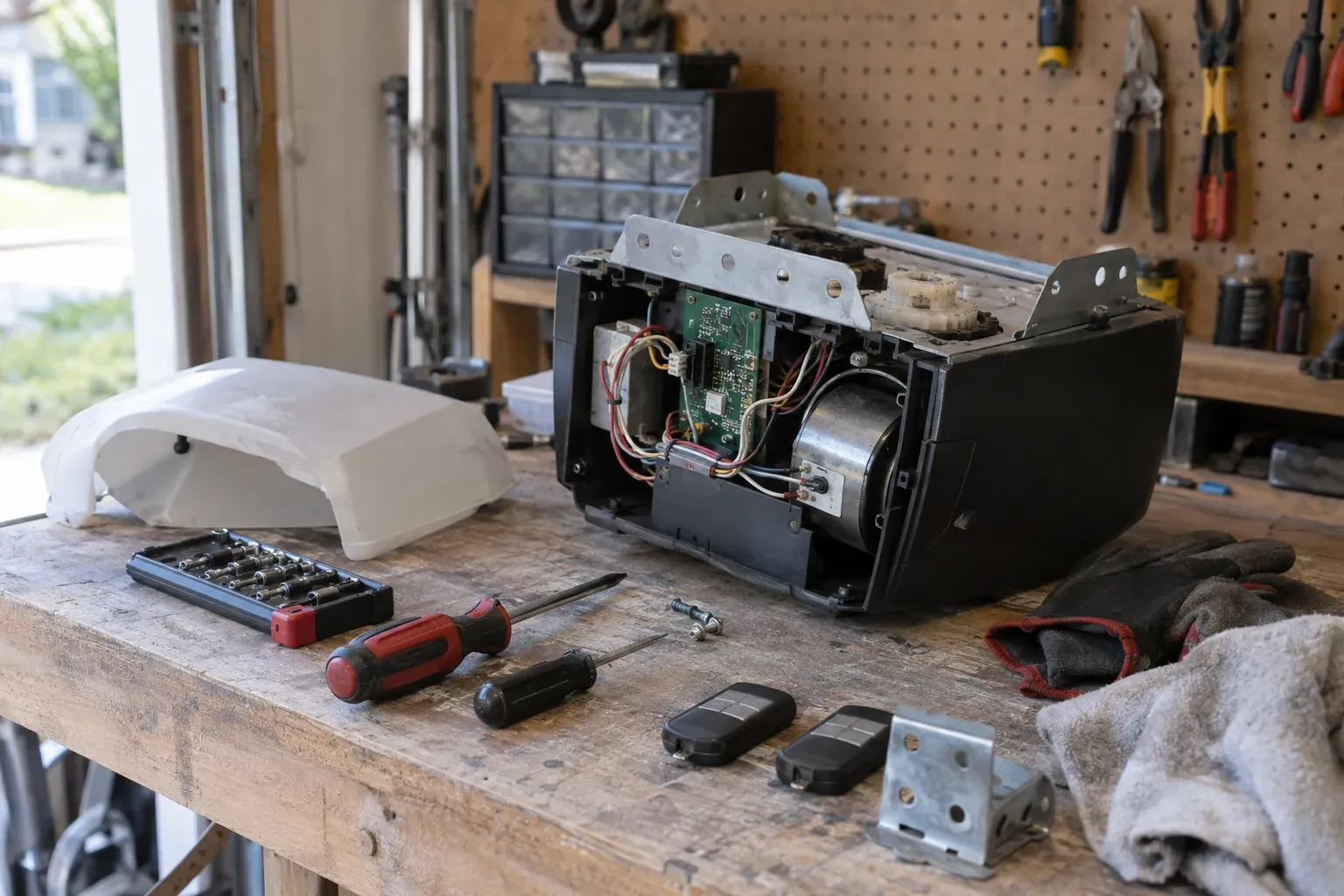
Opener reconnection and adjustment
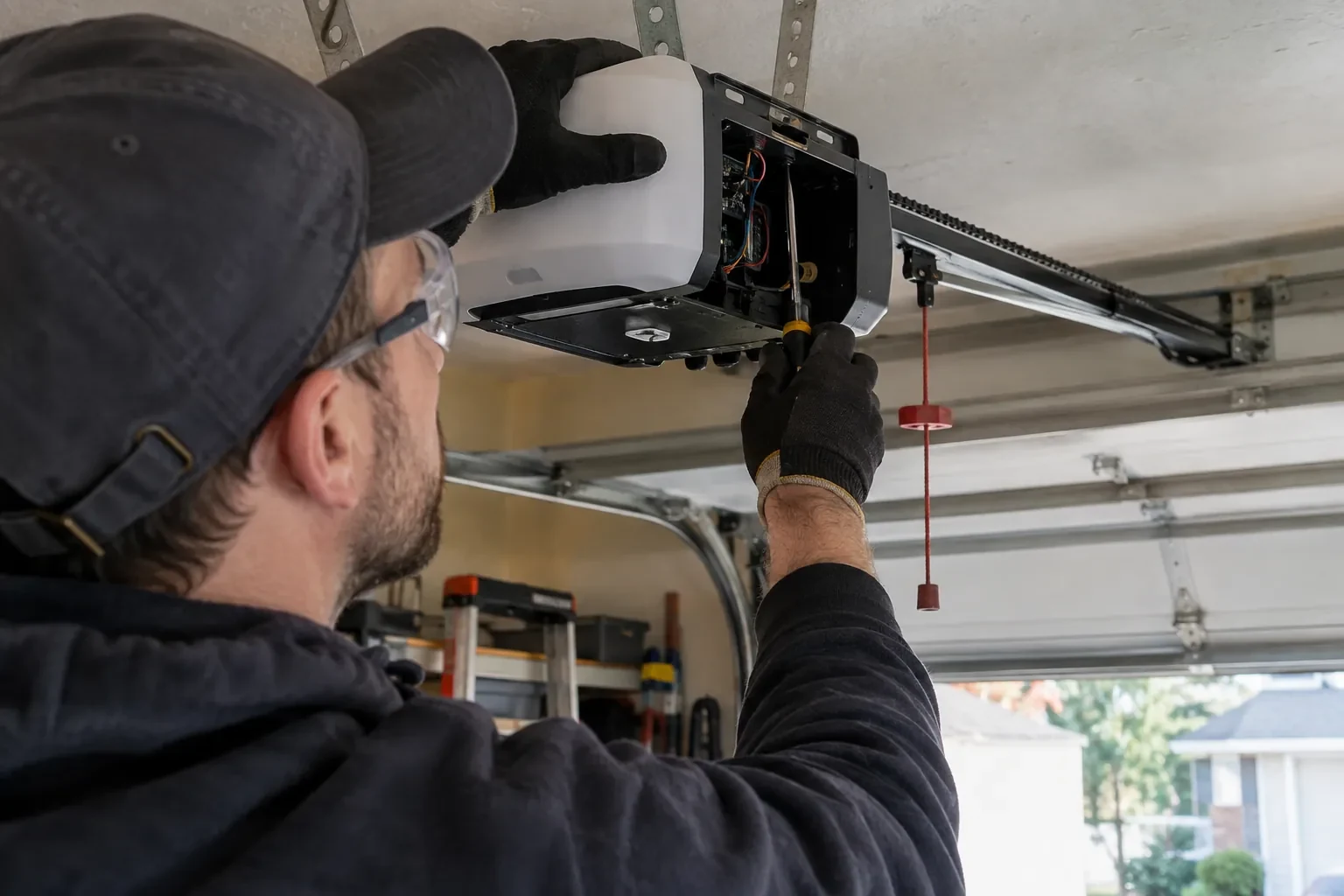
Reconnecting the trolley, resetting travel limits and force, and testing the reversal are normally part of the reset. An opener arm, bracket or reinforcement damaged during the event is an additional item.
How far the door has left its track
One roller out at the bottom of a closed door is a different job from a door racked across the opening with rollers out on both sides. The quote follows the amount of resetting involved.
Size and weight of the door
A double door, an insulated door or a wood door carries more weight on every roller and cable, takes longer to support and reset, and uses heavier hardware. The quote reflects the door in front of the technician.
What to have ready
- Have the rollers been noisy, squealing or wobbling recently?
- Is one side of the door hanging lower than the other?
- Was the door frozen to the floor or was something under it when the opener ran?
Off-Track Garage Door Reset: questions
QuestionsI only tapped the door with the bumper. Why is it off its track?
A sectional door is strong in the direction it travels and surprisingly easy to push sideways at a single roller. A light nudge on the bottom section can flex the track lip enough for the roller to slip out, after which the section twists and the rollers above follow. The good news is that this kind of event usually leaves the cables and springs alone, so the reset is often rollers, a re-formed track lip and a hinge check.
Will the opener need adjusting afterwards?
Sometimes, but not always. Once the door runs true by hand, the trolley is reconnected and the opener is checked against its own travel limits and force; those are only reset if that check shows they have drifted, since many openers need no force change after a repair like this. The reversal is then checked against a block laid in the door's path and by interrupting the photo eyes from a safe distance. If the opener strained hard during the event, its arm and bracket are checked too.
My door has springs along the sides, not above it. Is the reset the same?
The principle is the same but the sequence differs. With side springs the door is first opened all the way and clamped, because that is the position where the springs carry no load; the cables are then checked over their pulleys and evened up at the clips. The technician also checks that a containment cable runs through each spring, which stops a broken spring flying across the garage, and fits one if it is missing.