Openers · Beaverton
Chain-Drive Opener Repair in Beaverton
Halfway up, the door lurches.
In plain words
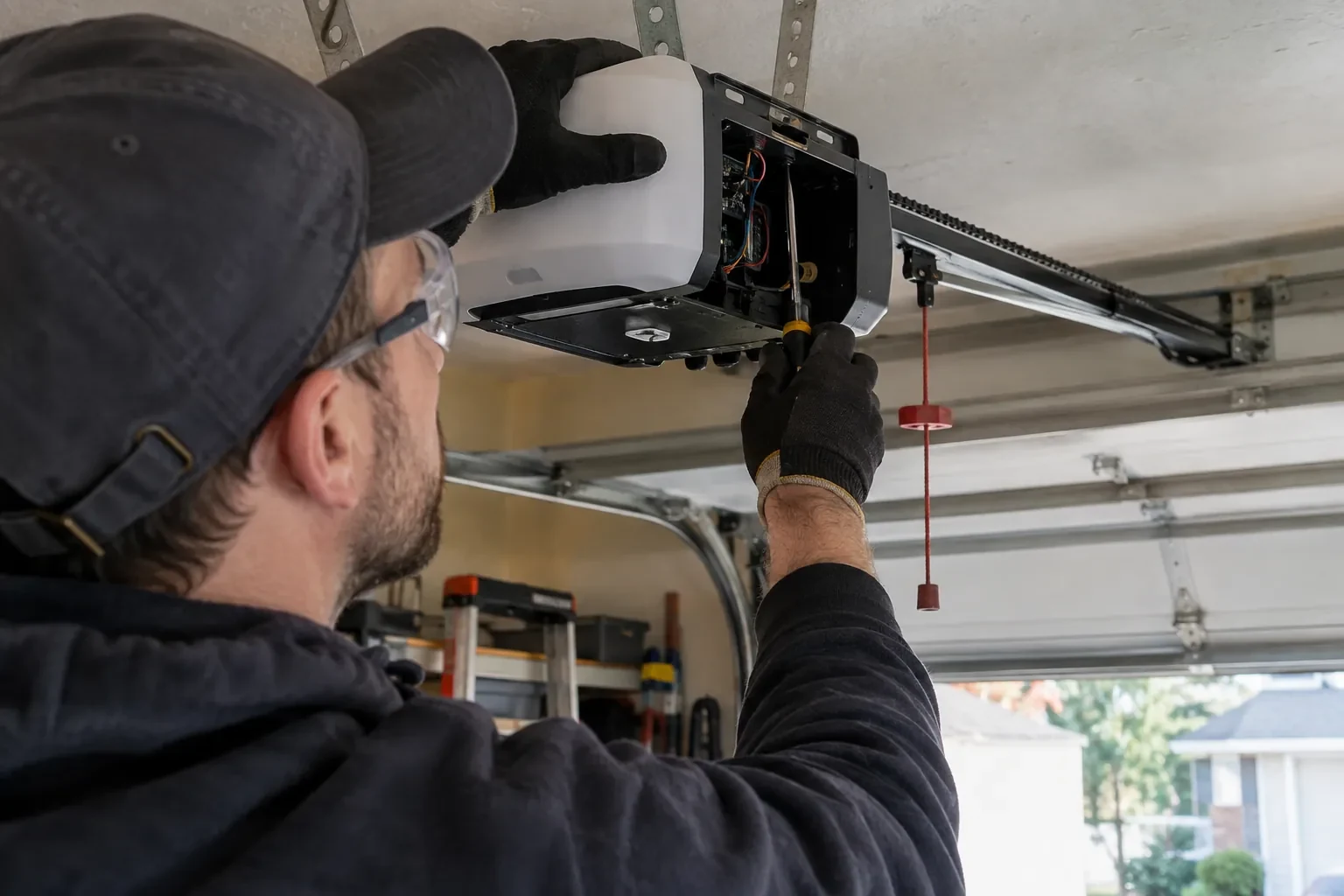
Sometimes nothing is broken and the operator has simply forgotten where the door should stop. Travel limits tell it how far to run in each direction; force settings tell it how much effort is normal, so it can notice an obstruction. When limits drift, a door stops short of the floor, reverses at the bottom or opens partway. When force is set low, the door reverses for no reason; set high, it stops protecting anyone beneath it. A chain-drive repair resets both, by screw on older heads or learn buttons on newer ones, then proves the reversal with a block on the floor.
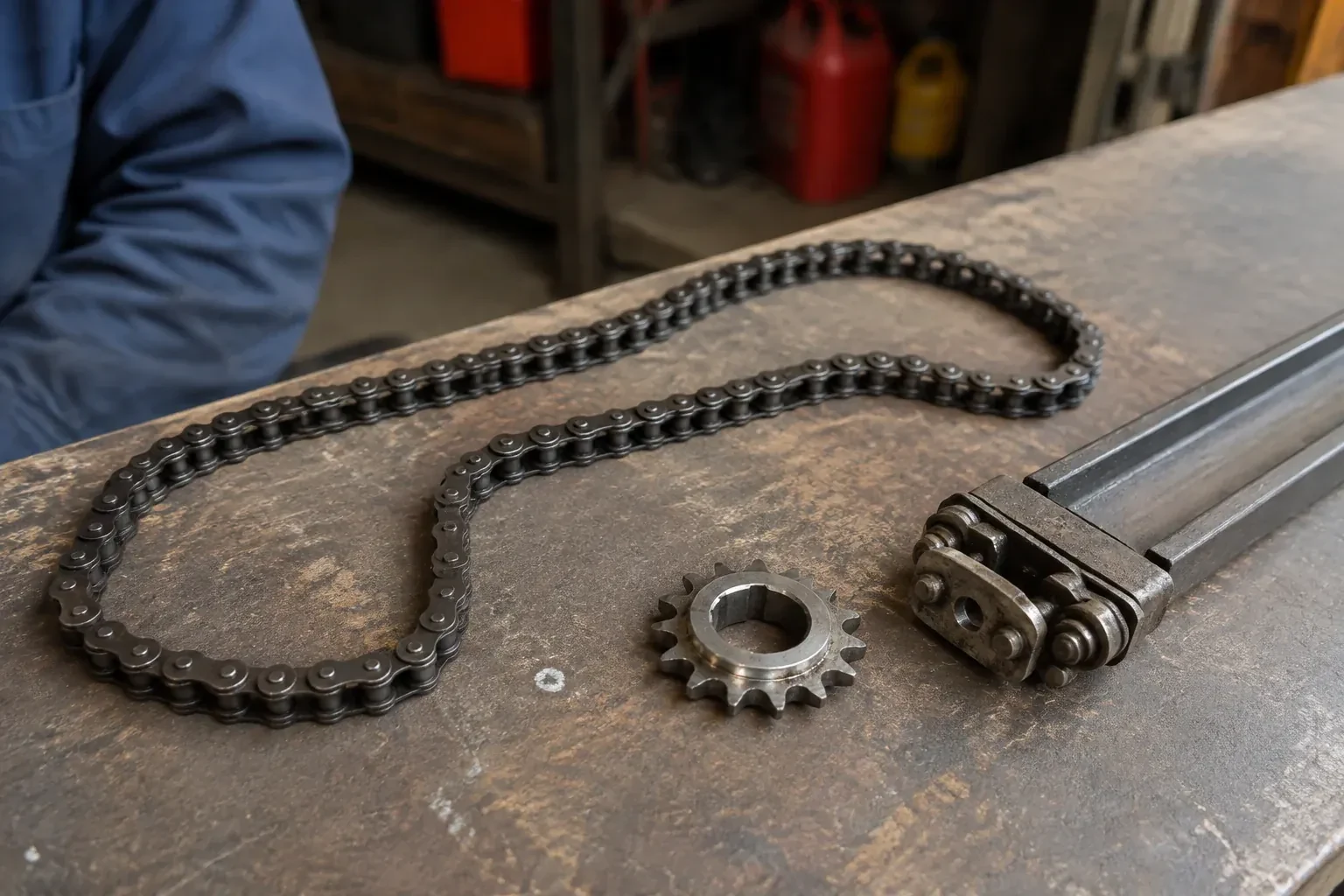
How the visit goesThe chain in the detached garage went orange with rust over the winter, the links are stiff, and the opener strains and groans to pull the door up. By afternoon, once the garage warms, it behaves almost normally.
Chain-Drive Opener Repair
How the visit goes
Sensors, controls and the garage around them
Before the repair begins, the technician confirms the parts that will be tested at the end are in place. The photo eyes should sit no higher than about 15 cm off the floor with steady indicator lights; the wall control at least 1.5 m up and in sight of the door; the red release handle no more than about 1.8 m above the floor; the manual slide lock on the door disabled. The garage itself is noted: whether it is heated, whether the chain shows salt corrosion from vehicles, and whether the head plugs into a nearby receptacle or a draped extension cord. These points shape the repair and the advice that follows it.
Freeing the trolley and renewing the carriage
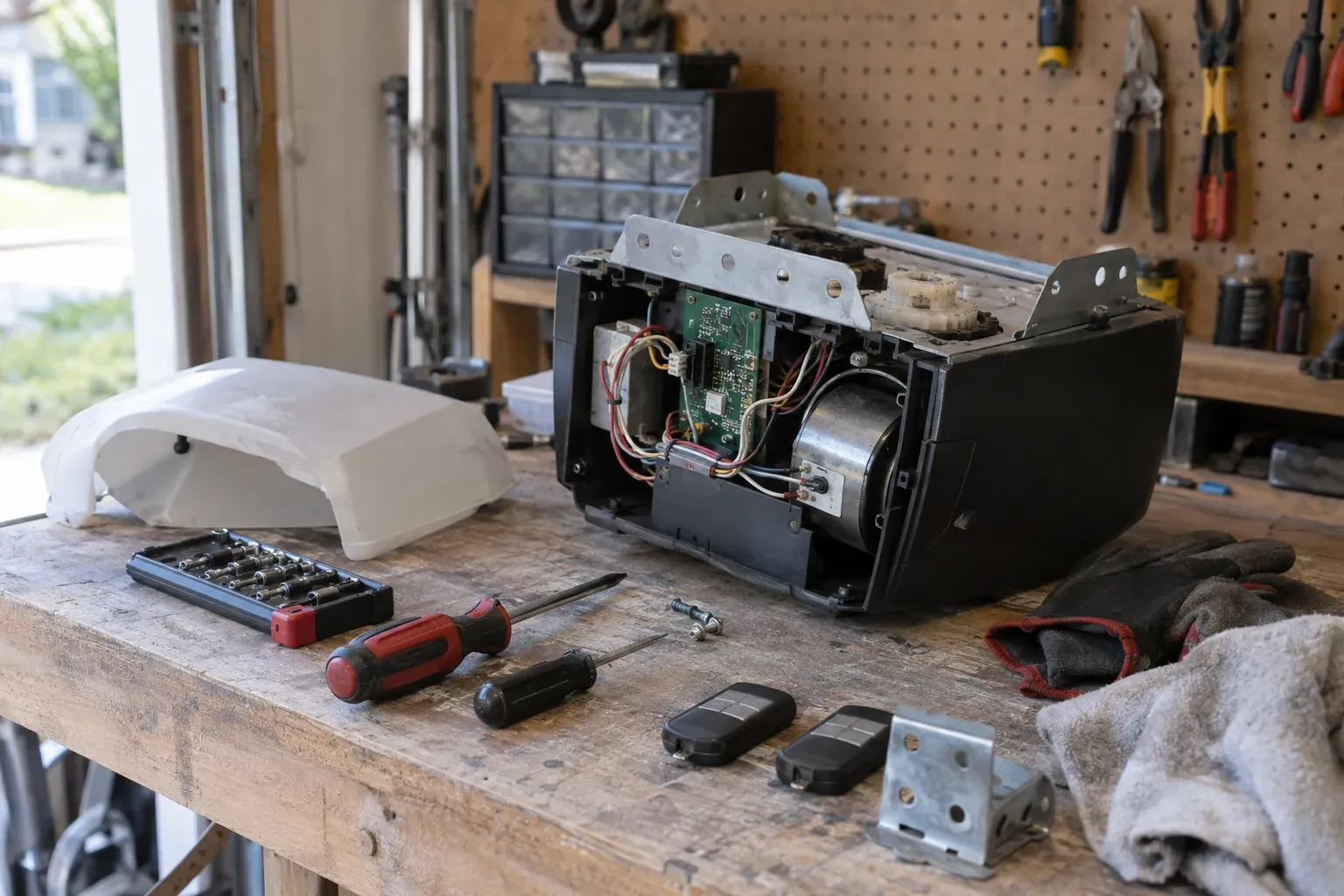
A trolley lodged against the stop bolt is released rather than forced. The door is disconnected at the red handle, the outer tensioner nut is backed off several turns to slacken the chain, and the operator is run so the trolley travels away from the stop under its own drive. The limit is then pulled back so the trolley stops short of the bolt in future. Where the inner or outer trolley shows wear, a cracked latch or a bent release lever, the worn piece is replaced with the model's part and the release is checked to pick the door arm up on the first pass. The chain is re-tensioned to specification afterwards.
A drive that runs true again
What you have afterwards is a chain that sits at its measured height, rides the sprocket without skipping and carries the trolley the full length of a rail that no longer moves. The door starts and stops where it should, meets the floor without bouncing back and opens to its full height. The sound settles to the steady run a chain drive is meant to have, with the slap, clack or grinding gone. The technician shows you the replaced parts so you can see what wore out, and runs the door for you a few times so you know what normal now sounds and looks like.
Chain-Drive Opener Repair
In the van
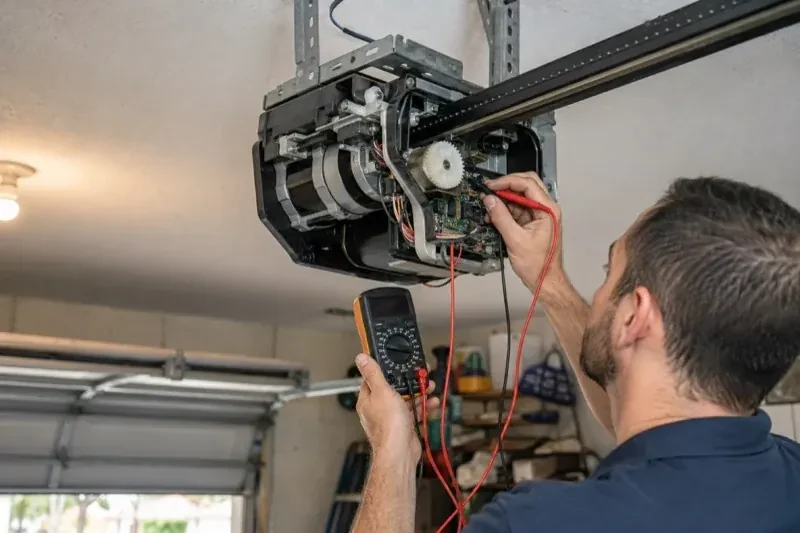
Drive gear and worm gear kit
Roller chain with master link
Inner and outer trolley
Rail hangers and header bracket
Trolley release lever
Chain-Drive Opener Repair
What affects the quote
Rail shape and door height
A T-rail and a square rail take different chains and tension figures, and an 8 ft door runs a longer rail and chain than a 7 ft door, so the length of chain on the quote follows the rail.
A detached or unheated garage
Cold-rated lubricant, a chain replaced rather than freed, and force set for low temperatures are choices made for a garage that sees winter, and they show in the parts and the time.
The gear kit for your model
Drive gear, worm gear and sprocket shaft assemblies are made to fit a particular head, and the kit for an older or less common unit is a different item from the one for a current model.
What to have ready
- Is the chain hanging loose under the rail, or is it rusty or stiff?
- What make and model is on the opener's label, and roughly how old is it?
- Is the trolley stuck at the very end of the rail, near the motor or near the door?
Chain-Drive Opener Repair: questions
QuestionsShould I oil the chain?
Follow the opener's manual, and lean toward less. Many makers ask for the chain to be left dry or given only a very light treatment, because a heavily oiled chain collects grit that grinds the sprocket and drips onto the car. The grease that matters is white lithium on the rail where the trolley runs, renewed every two or three years, and on the gears inside the head, which the technician packs during a repair. Penetrating sprays are kept away from the whole drive.
What does the sprocket do, and how does it wear?
The sprocket is the toothed wheel on top of the motor head that pulls the chain. Every cycle drags the chain over its teeth, and over years the teeth wear thin and hooked, letting the chain ride up and skip under load, often at the same point on the rail each time. A sprocket that has loosened on its shaft lags behind the motor. Worn sprockets are replaced as part of the gear and sprocket assembly.
What should I check before calling?
With the door closed, pull the red handle and try lifting the door by hand; note whether it is heavy or stays up on its own. Look at the chain for slack, rust or a broken link, and at the head for pale shavings. Note whether the motor runs at all, whether the door stops short or reverses, and where the trolley sits on the rail. The model on the head's label and a photo of the rail help too.
Related services
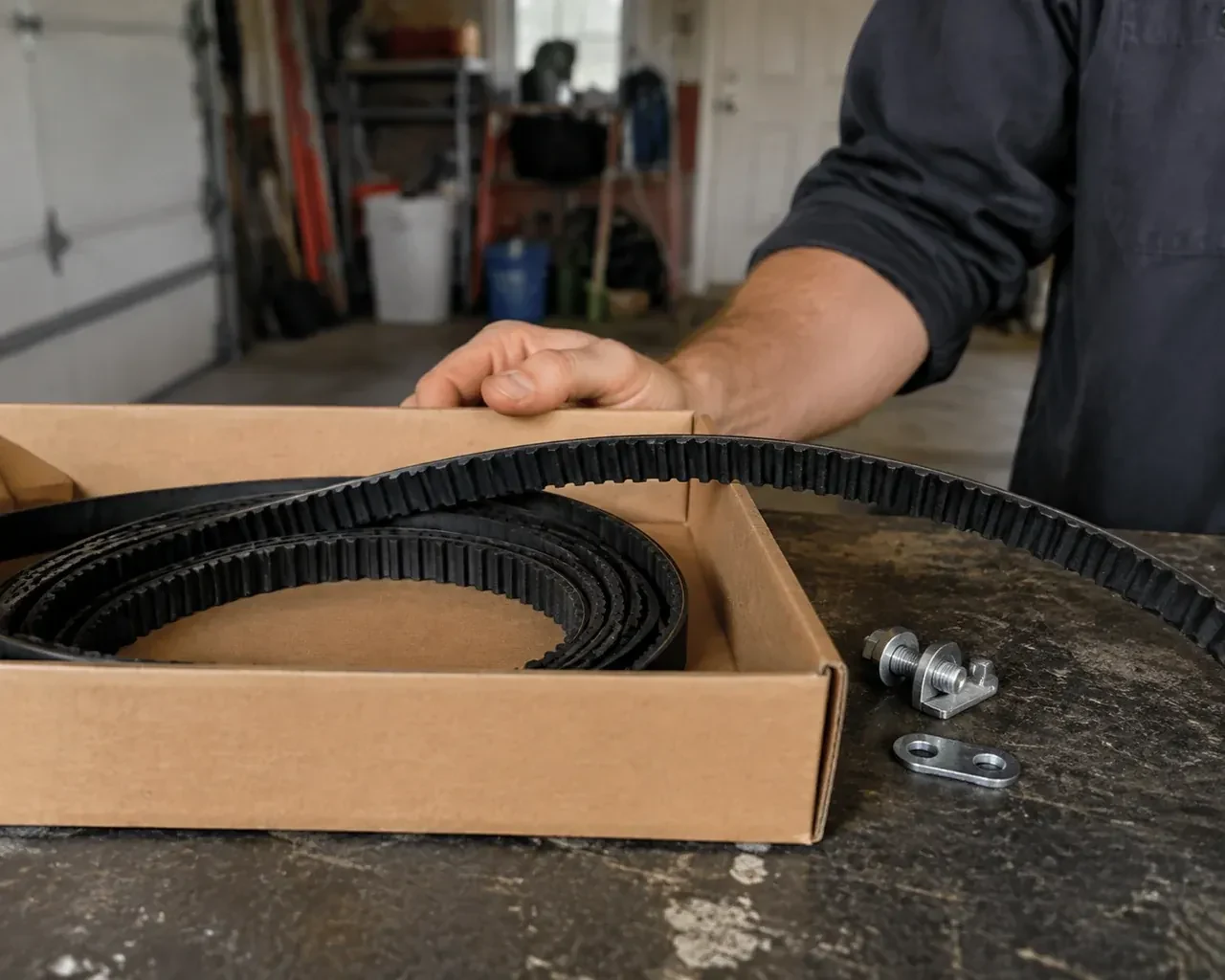
- Belt-Drive Opener RepairThe belt looks fine from a distance, but up close the rubber has cracked across the back in dozens of places and, in one spot, you can see the steel cords showing through.
- Garage Door Opener ReplacementYou want the ceiling back.
- Photo-Eye Sensor Alignment or ReplacementOn bright mornings the door will not close, then by lunchtime it behaves itself.