Springs · Cannington
Garage Door Roller Replacement in Cannington
The door is the one the builder installed and has never had a part changed.
In plain words
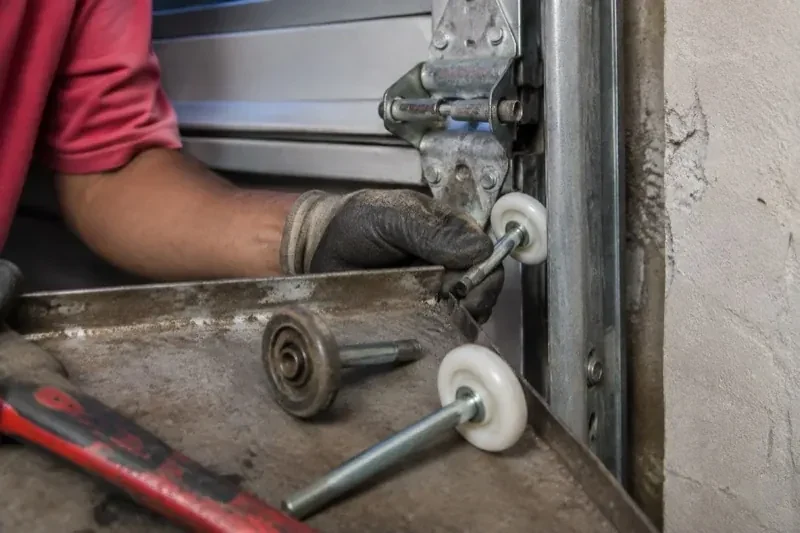
Winter is hard on rollers. Slush carried in on the tires freezes in the foot of the track, wheels skid across the ice instead of turning and wear flat spots, and salt eats into steel stems and bearings at the lowest positions first. By spring a door that was merely a little noisy is juddering. Roller replacement after a hard season puts fresh wheels and bearings under the door, and the technician clears the salt from the lower track and inspects the bottom brackets and cables that share the same wet corner, so the door heads into the next winter in better shape.
How the visit goesA roller near the top corner is riding on the lip of the track rather than inside it, and the section above leans back a little more each week. The door still moves, but it looks one bump away from coming out altogether.
Garage Door Roller Replacement
How the visit goes
Weight and build of the door
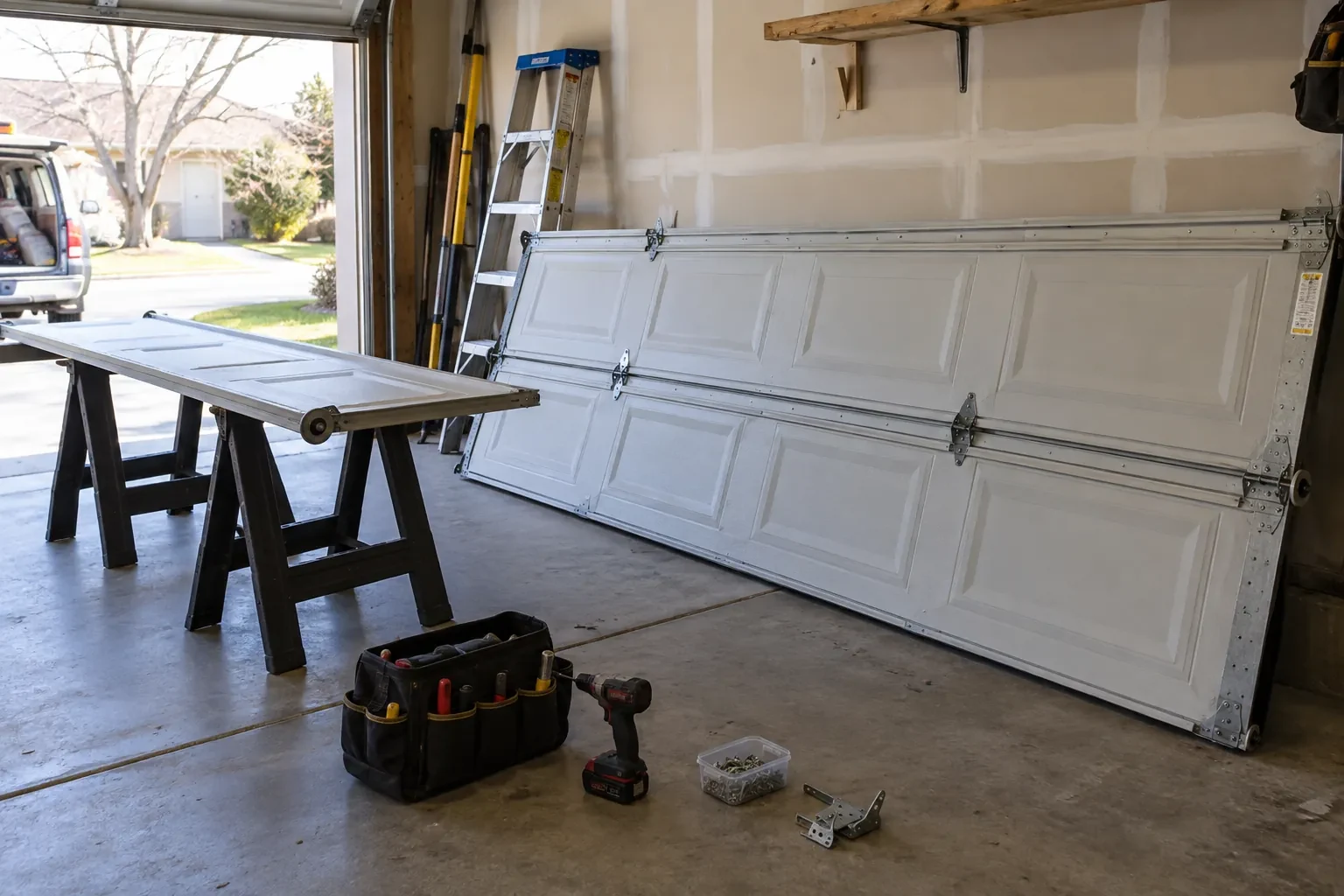
A single-skin steel door, an insulated double-skin door and a solid wood door place very different loads on their rollers, and the top rollers on a heavy door carry the most, since they travel furthest along the horizontal track under load. The technician identifies the door's construction and approximate weight, checks whether the end stiles carry single or double hinges, and looks at the rating of the rollers currently fitted. Many heavier doors left the factory on light plastic wheels intended for the lightest door in the range. Matching the new set's load rating and bearing count to the actual door is what makes the replacement last.
Top rollers and the adjustable fixtures
The top rollers sit in fixtures that slide in and out on the top section rather than in fixed hinges. The technician loosens the fixture, swaps the roller and then sets the fixture position with care, because that adjustment is what pushes the top section snug against the header seal when the door closes and keeps the wheel riding in the track rather than binding against it as the door starts to open. On heavy doors the top rollers do the most work of any on the door, so this is also where a higher load rating or a longer stem earns its place.
Hardware tightened along with the wheels
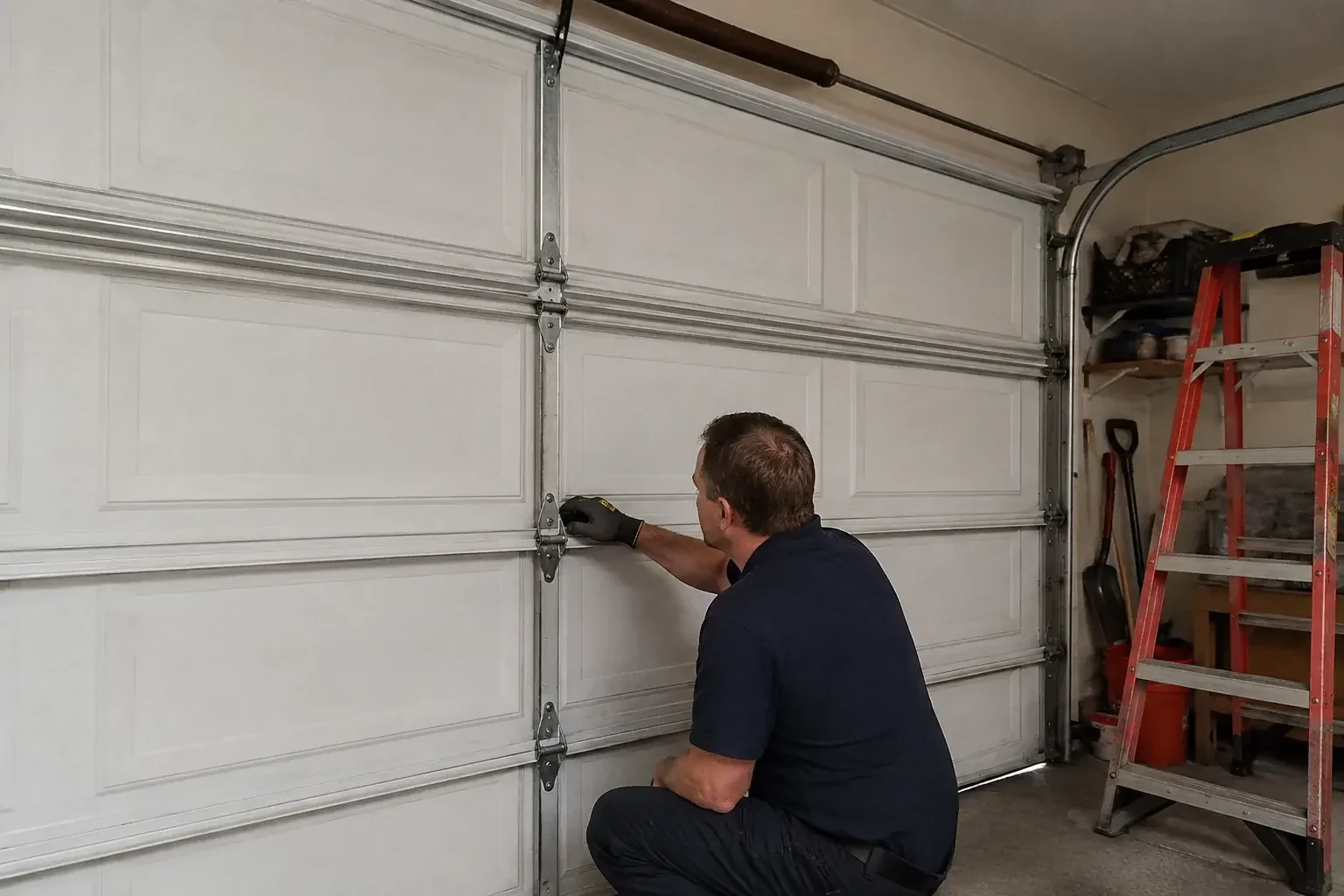
Roller replacement is a natural moment to go over the rest of the door, and you leave with more than new wheels. Every hinge fastener has been checked and snugged, loose jamb brackets have been tightened, worn hinges have been replaced with the correct numbered ones, and the top fixtures and bottom brackets have been inspected and, where corroded or bent, changed. The track has been cleared of salt and grit and squared to the door. This kind of once-over is what industry guidance means by regular service, and it is much of the reason a door feels solid again after the visit.
Garage Door Roller Replacement
In the van
Adjustable top fixtures
1-1/2 inch reversal test block
Jamb bracket fasteners
Replacement numbered hinges
Two-inch nylon ball-bearing rollers
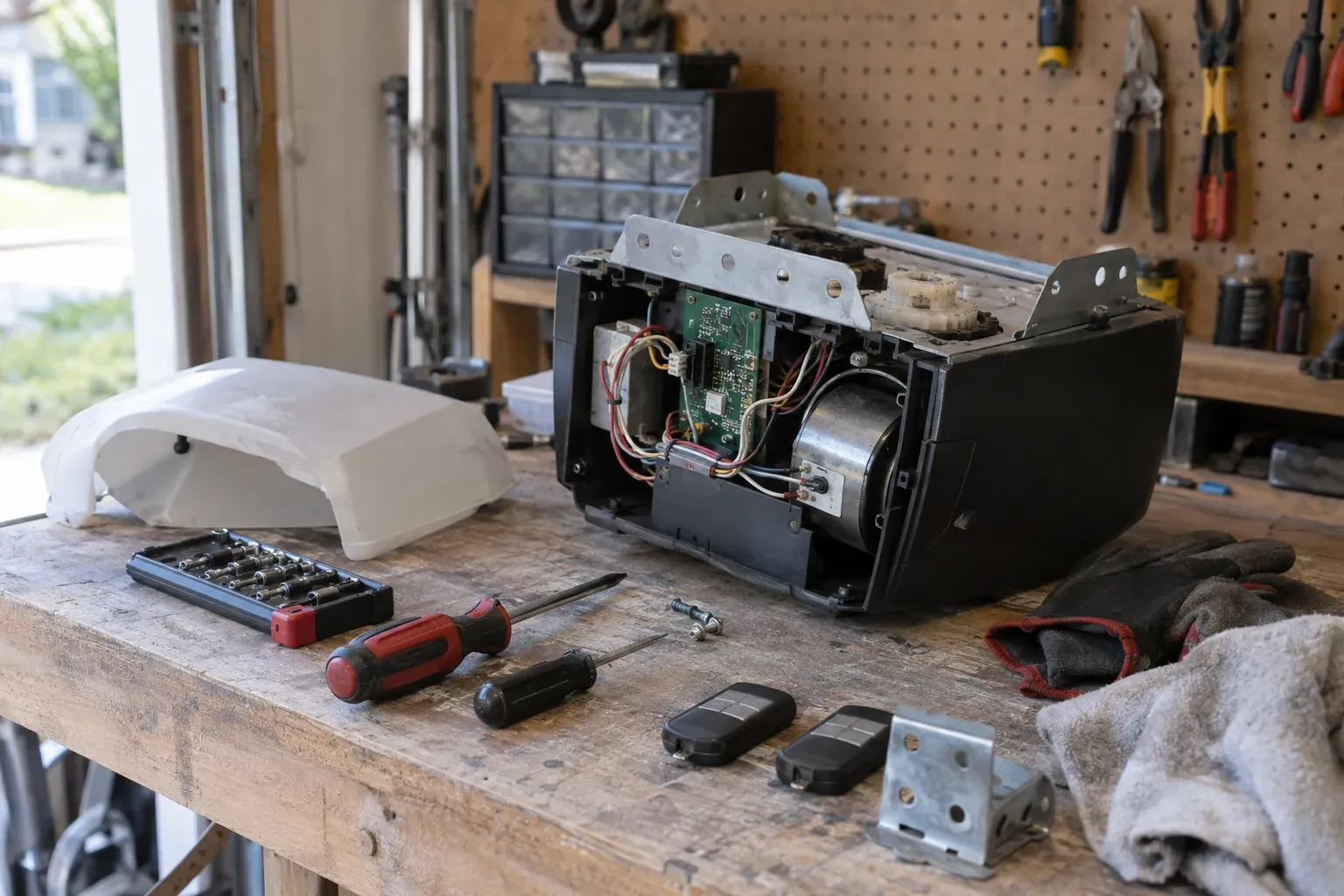
Garage Door Roller Replacement
What affects the quote
Weight and construction of the door
A heavy insulated steel or solid wood door needs higher-rated rollers and takes more care to secure and handle than a light single-skin door, which shows in both parts and time.
Balance adjustment first
If the door drifts when released at halfway, the spring system needs adjusting before new rollers are fitted so they do not wear early; that adjustment is quoted as its own line.
Access around the tracks
Shelving, stored items or a vehicle that must stay in place slow the work along both tracks; clear access from floor to ceiling means less time on site.
What to have ready
- Has the door ever come off its track or been hit by a vehicle?
- Do any wheels look chipped, crooked, or sitting on the lip of the track?
- Is the track the two-inch residential size or a wider commercial track?
Garage Door Roller Replacement: questions
QuestionsWhat is checked after the rollers go in?
The door is run through several cycles with the technician watching each wheel stay seated, then balanced by hand with the opener released to confirm it holds at halfway. The top section is checked for a tight seal at the header, the hinge and bracket fasteners are snugged, and the opener's force and reversal are tested with a 1-1/2 inch block in the door's path. The industry checklist for a residential door covers exactly these points, and they are all part of finishing the job.
How does the technician tell rollers from hinges or track as the cause?
By watching where and when the trouble happens and then checking the parts in that spot. Rollers are spun and wiggled to reveal rough bearings and worn wheels; hinges are checked for cracks, elongated holes and loose bolts; tracks are checked for plumb, dents and spacing. A shudder at the curve tends to be rollers, a pop as sections pivot tends to be a hinge, and a rub the full height of the door tends to be track. Often more than one is involved, and the visit covers them all.
How do worn rollers affect the opener?
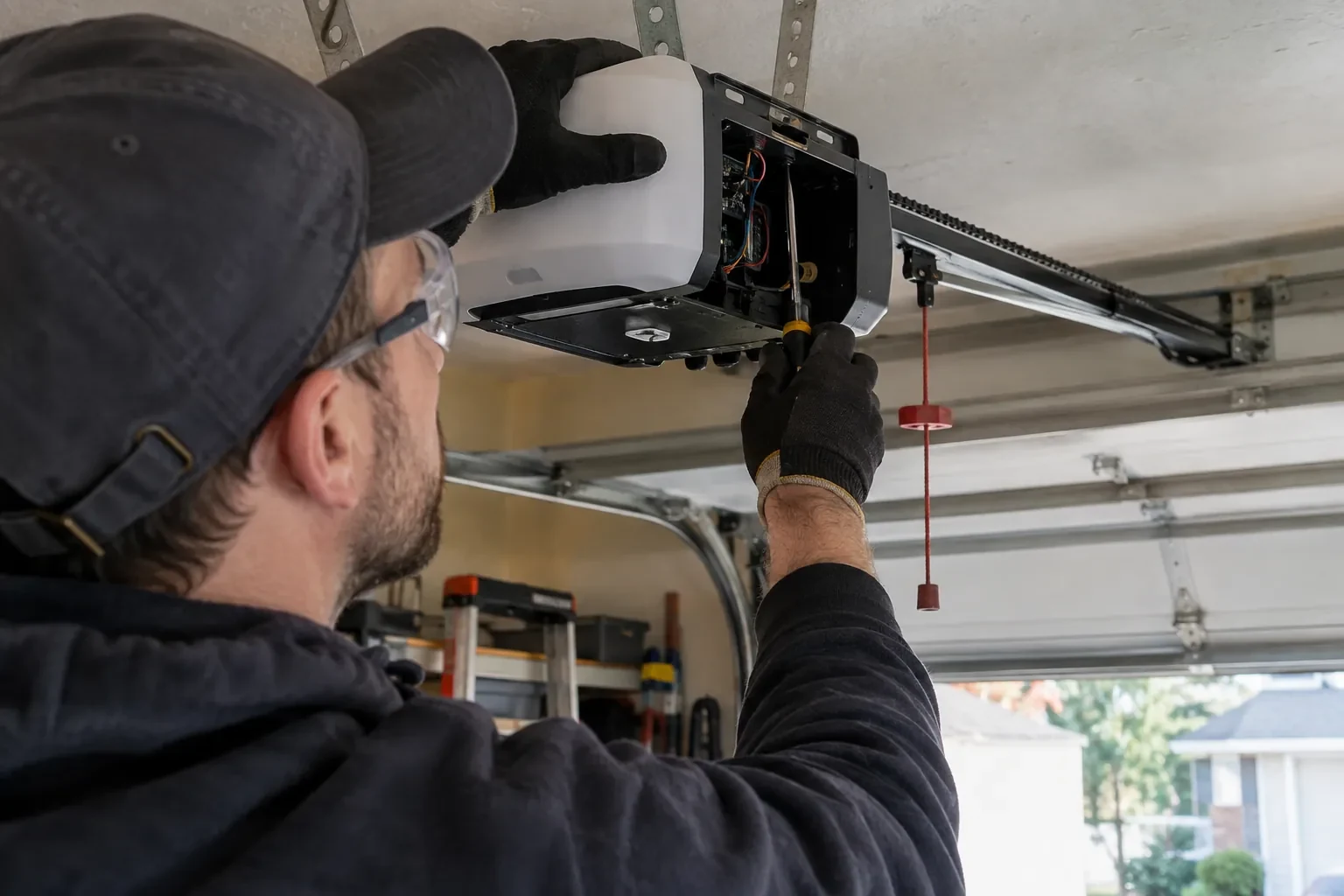
An opener is built to guide a balanced door, and every wheel that binds, wobbles or grinds adds resistance it has to overcome across the whole travel. It works harder, runs hotter, and may trip its force limit or reverse partway through a cycle. After roller replacement the technician confirms the door holds its own weight with the opener released, then checks the opener's force setting and its reversal on a test block, since a door that moves freely often needs those settings reduced.
Related services
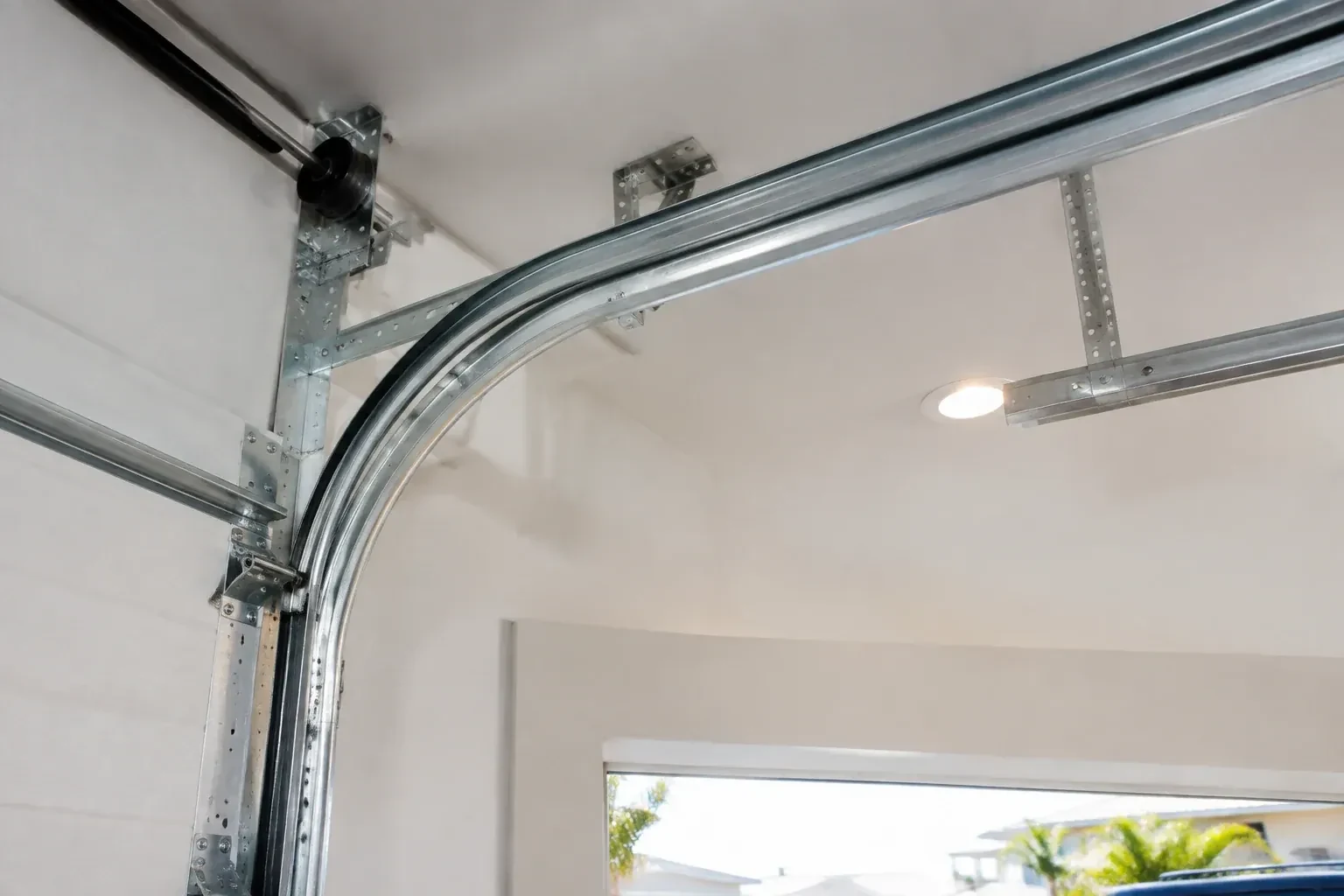
- Garage Door Track Repair or ReplacementThe door has started rubbing the frame on the left, leaving a shiny stripe down the weatherstrip.
- Garage Door Cable ReplacementSomeone left the snow shovel leaning in the opening and the door came down on it.
- Torsion Spring ReplacementNothing broke outright, but the door has grown heavier each winter, opens more slowly and squeals as it moves.