Repairs · Sunderland
Garage Door Perimeter Weatherstrip in Sunderland
Every time the door closes there is a rubbing squeal along one side, and the flexible fin has folded under itself and torn.
In plain words
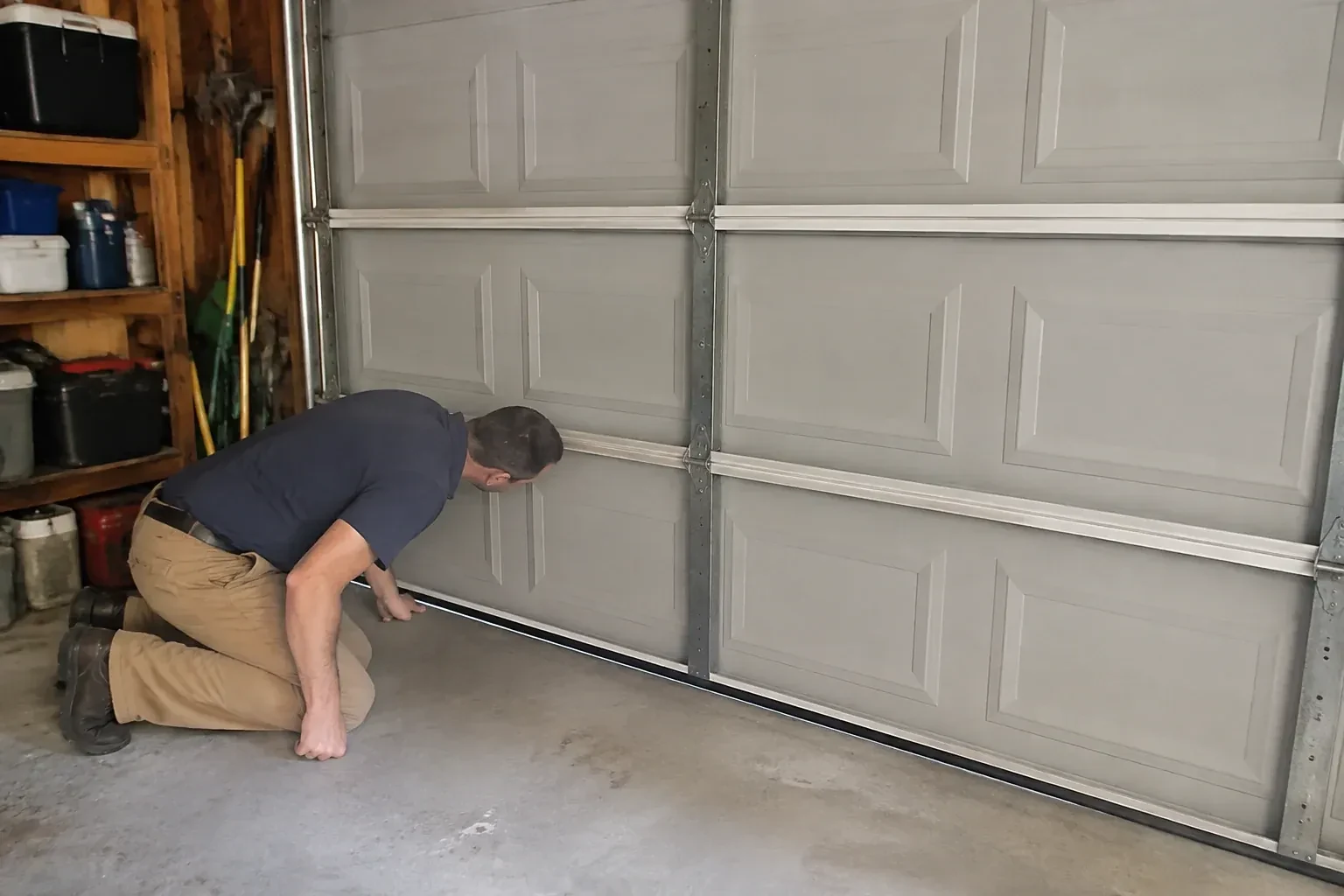
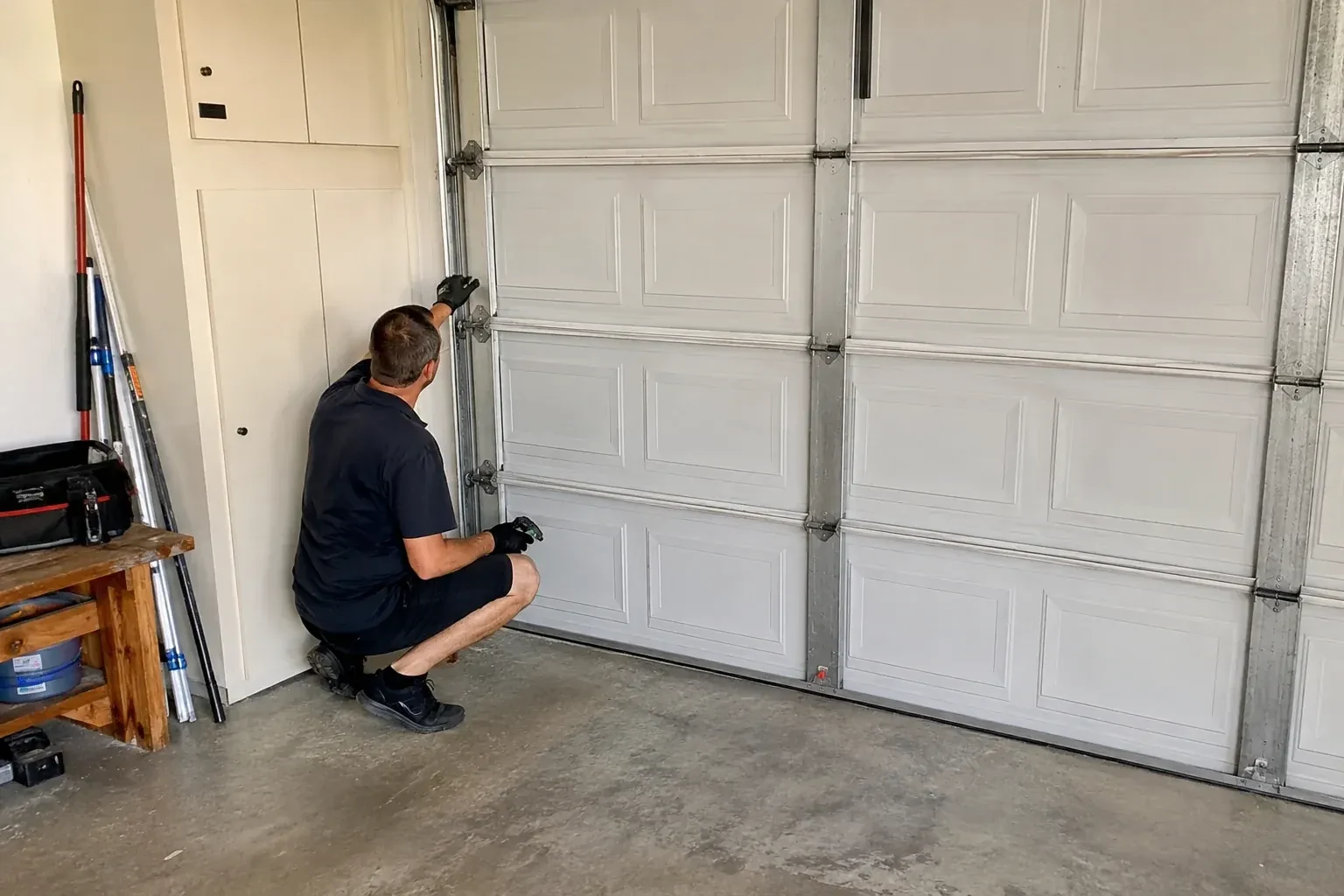
A perimeter seal is only as good as the door it meets, so a technician looks at the door before the seal. If one side shows daylight and the other is tight, the strip may be fine and the door may have drifted: worn rollers, a track bracket that has moved, a top section that bows away from the header. Setting that right first means the new fin can be positioned with the same light contact on every side. Where the door is already square, the seal is fitted straight to it. Either way the result is a door that closes against a continuous line of contact.
How the visit goesThe vinyl strip around the door used to be soft and white. Now it is grey and hard, cracked every few inches, and a piece near the corner snaps off in your fingers. It no longer bends toward the door at all.
Garage Door Perimeter Weatherstrip
How the visit goes
What kind of seal is there now
Openings carry different seals depending on their age and who last worked on them. Many older garages have a painted wood stop with a flexible vinyl fin nailed to its face. Newer installations often have a one-piece vinyl stop with the fin moulded in. Some commercial and premium doors use an aluminum retainer with a slide-in rubber insert, or a brush seal. The technician identifies which is present, whether the rigid part is sound enough to keep, and what the fastening was, because that decides whether a new fin goes onto the existing stop or the whole stop is replaced.
Cycling the door and sealing the joints
Once all three lengths are on, the door is run through several full cycles by hand and then with the opener, while the technician watches each fin for catching, folding or rubbing and listens for a squeal. The daylight test is repeated from inside with the lights off. Any joint between the new stop and the trim or brickmould where water could get behind is caulked with an exterior sealant, and the fin is wiped with a silicone spray to cut the odds of ice bonding it to the door. The old material is bagged and removed, and the household is walked round the finished opening.
Corners that stay closed to pests
With the header and side fins overlapped, the small square holes that mice and wasps used are gone. Keep them that way by checking the four corners each autumn, when animals are looking for warmth, and pressing any lifted corner back into place. The point where the side seal meets the bottom seal on the door is worth a look too, since the bottom seal wears on its own schedule. A clear threshold, with leaves swept away from the door, removes the shelter pests use to work at a corner. Sealing the perimeter is one of the simpler parts of keeping a garage pest-free.
Garage Door Perimeter Weatherstrip
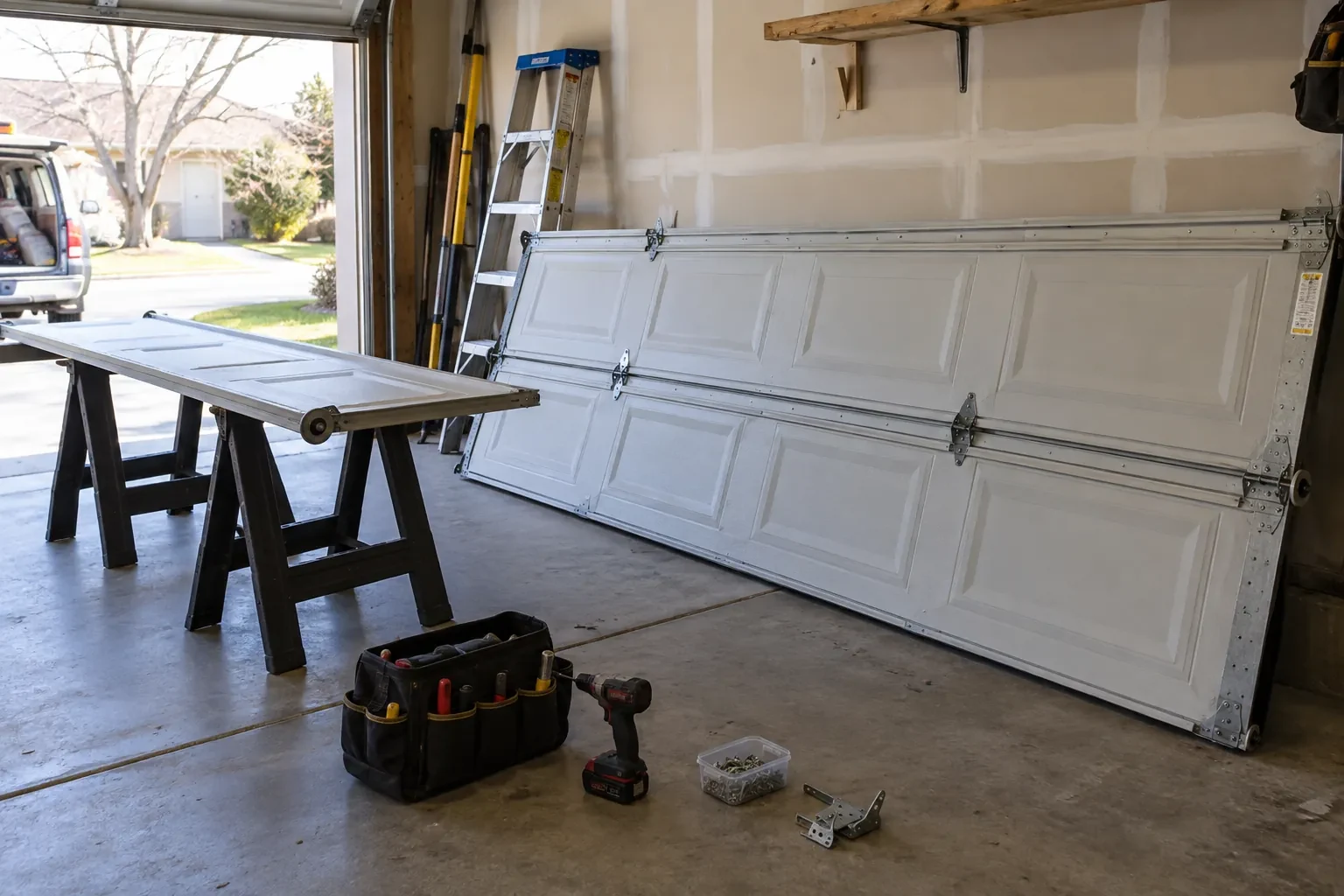
In the van
Flat bar, hammer and nail set
Exterior caulking and gun
Galvanized or stainless trim nails
Epoxy consolidant and exterior primer
Aluminum retainer and rubber insert
Garage Door Perimeter Weatherstrip
What affects the quote
Fin on the existing stop or a one-piece vinyl stop
Nailing a new fin to a sound wood stop uses less material than replacing the stop with a one-piece vinyl moulding, which costs more as a part but needs no paint and does not rot.
Corner detailing
Mitred corners on a one-piece stop, or fitting round an unusual trim profile, take more cutting and fitting than butted corners on a plain jamb.
Doing the bottom seal at the same time
When the bottom seal on the door is also worn, renewing it during the same visit is offered as a separate line and saves the cost of a second call.
What to have ready
- Does the door rub or catch on the seal when it moves?
- Have mice, leaves or water been getting in?
- Where do you see daylight, drafts or snow: sides, top, or corners?
Garage Door Perimeter Weatherstrip: questions
QuestionsMy door was replaced last year. Does the perimeter seal need doing too?
Often, yes. A new door is sometimes fitted against the original wood stop and its old fin, and the new door may sit slightly differently in the opening, so the old seal no longer meets it. If daylight shows at the edges or the fin is hard and cracked, a new seal set against the new door completes the installation and matches the fresh look of the door.
Why should the seal only touch the door lightly?
The fin is meant to bend against the door with a small, even deflection. That is enough to seal, and it lets the fin spring clear as the door lifts. Pressed hard, it drags on the door face, folds under on the way down, squeals and wears through well before its time, and it adds load to the opener. Set too far off, it leaves a standing gap. The light touch is the setting that lasts.
What should I do before the technician arrives?
Move the car out of the garage or well back from the door, and clear anything stored against the jambs inside and any bins, planters or snow piled against them outside. Leave the door closed so the gaps can be seen as they are. If you have noticed where the daylight, drafts or snow come in, or where the mice appear, be ready to point it out.
Related services
- Garage Door Tune-UpSince the first cold snap the door has been sluggish.
- Off-Track Garage Door ResetYou tapped the door with the bumper while backing in, barely a nudge, and now the bottom corner has swung inward.
- Garage Door Panel ReplacementYou misjudged the last metre of the driveway and felt the bumper meet the door.