Repairs · Sunderland
Off-Track Garage Door Reset in Sunderland
You tapped the door with the bumper while backing in, barely a nudge, and now the bottom corner has swung inward.
In plain words
The reason to stop pressing the wall button is that an opener cannot tell a racked door from a heavy one. Each cycle drives the tilted sections harder into the rails, bending hinges, tearing the track from the jamb and stressing the cables that are already out of place. A reset begins by taking the opener out of the picture with the release cord and supporting the door where it sits. From that calm starting point the technician can re-seat rollers and cables in a controlled order, restore alignment and hand you back a door that the opener can move without fighting it.
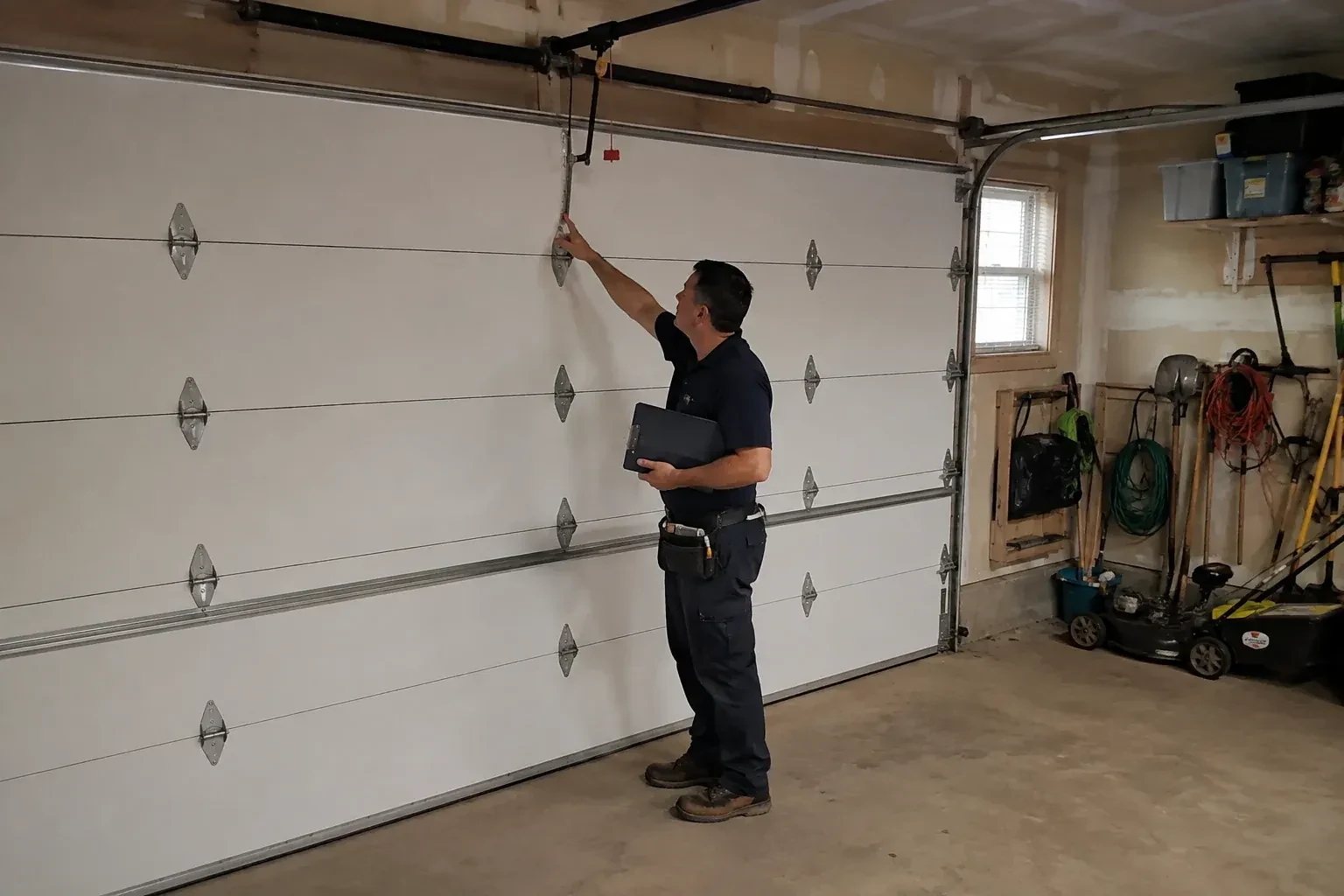
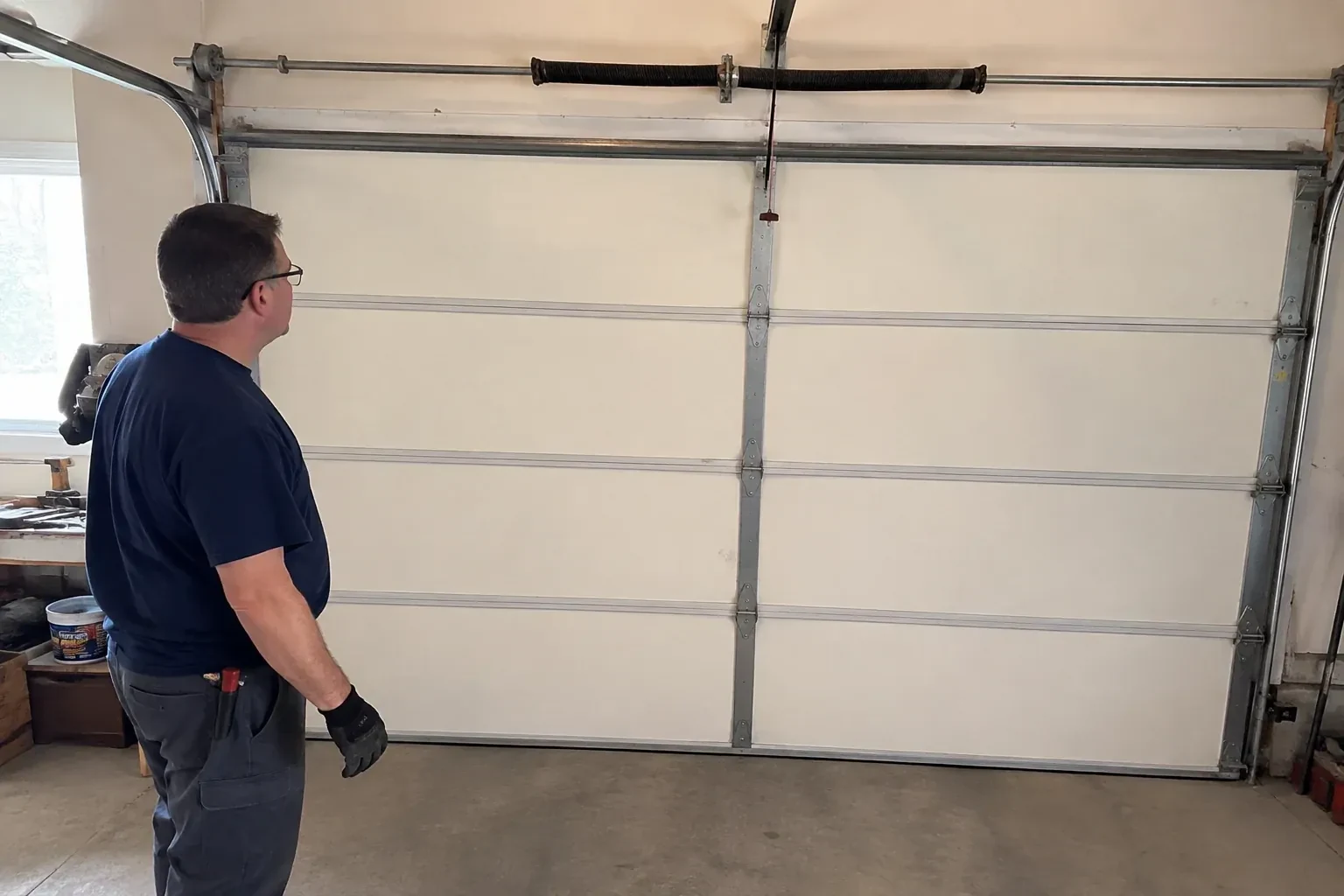
How the visit goesOne side of the door hangs a hand's width lower than the other. A steel cable is drooping in a loop beside the track instead of running tight to the drum, and the whole door looks tilted in the opening.
Off-Track Garage Door Reset
How the visit goes
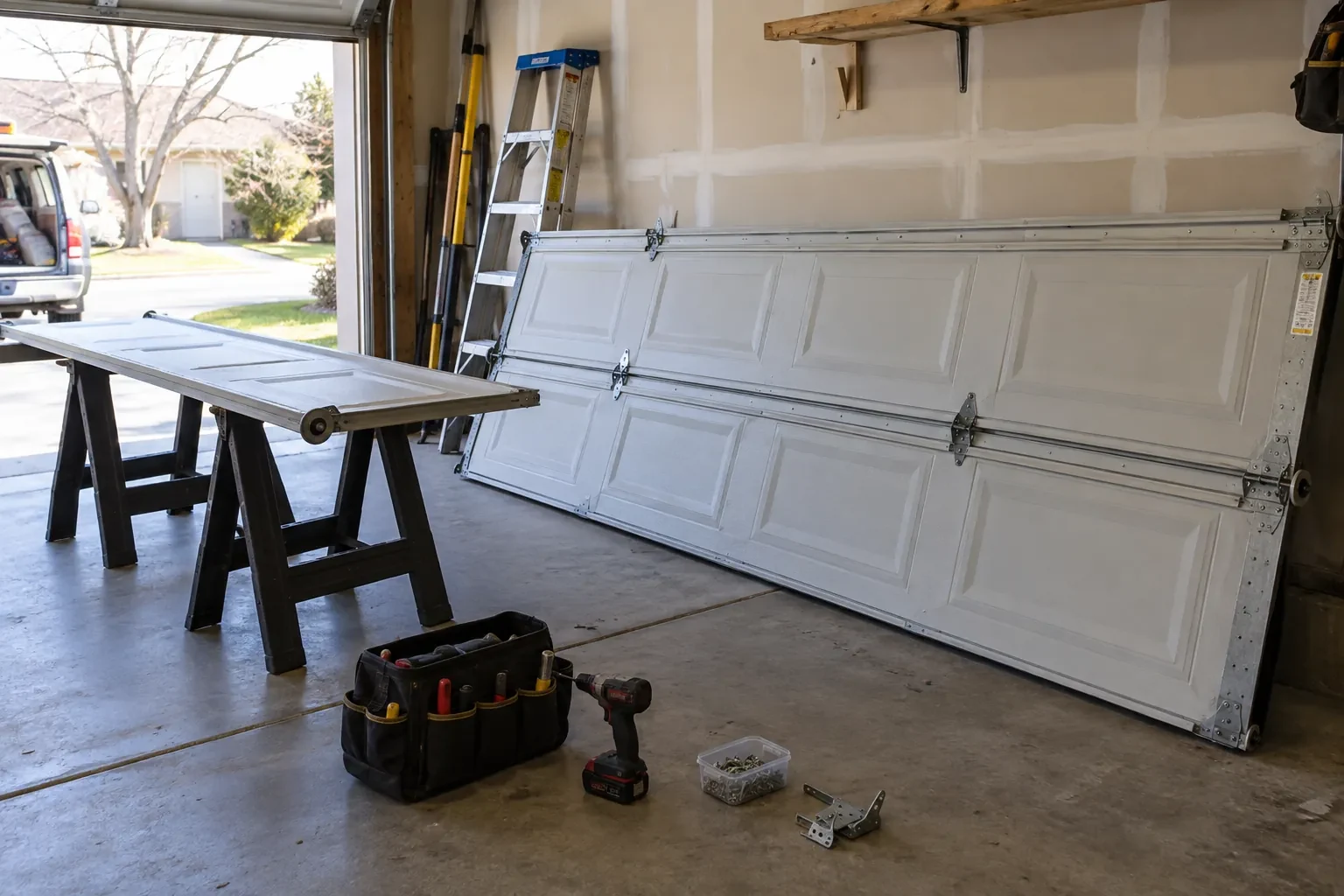
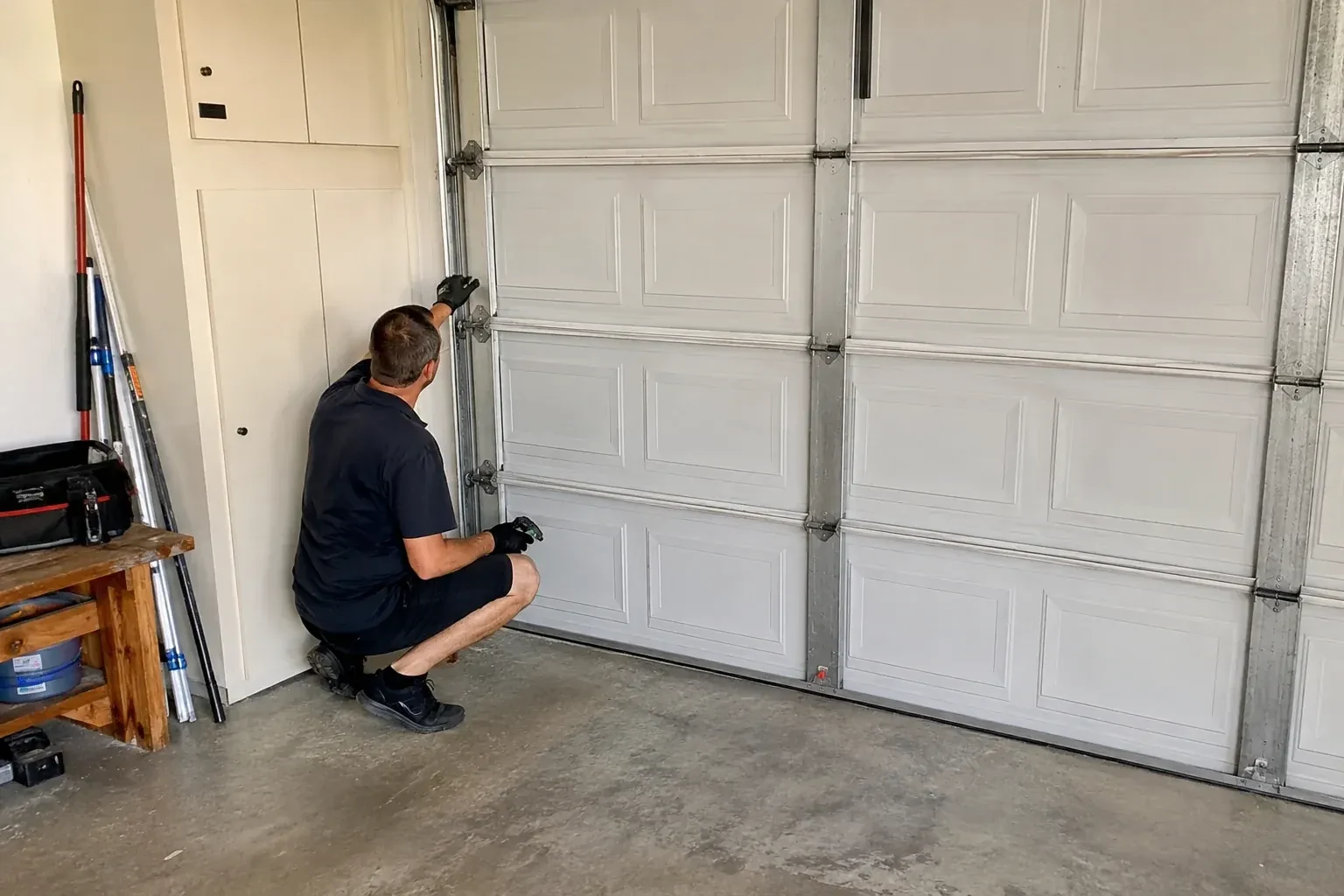
Which rollers left, and at what point in the travel
Where a roller escaped tells a story. A bottom roller pushed out of the vertical track usually means an impact or a jamb bracket that let go. A roller that left at the curve points to worn wheels, a splayed radius or a horizontal track hanging out of line. A top roller out of the horizontal rail often follows a door that racked because one cable dropped. The technician counts the rollers outside their rails, notes which side and which section, and checks whether the sections themselves are still square to each other. That map decides the order in which things are put back.
Guiding the rollers home
With the door supported, each escaped roller is returned to its rail. Where the track lip has spread, it is eased open just enough with track pliers to admit the roller and then squeezed back to its original profile so the wheel sits captive again. Where the track is sound, the section is lifted by its safe gripping points and the roller stem slid into the rail at the open end of the curve or through the vertical track from below. Rollers are seated one section at a time, from the bottom up, checking that each section sits flush against the next before the one above is handled.
Knowing what caused it
The visit closes with a plain explanation of what let the roller go: an impact, a cable that slipped, ice on the threshold, a worn wheel or a bracket that had pulled from the wood. You are told what was reset, what was replaced and what was adjusted, and whether anything was left for a later decision, such as tired springs or a section with a crease that still works but will not improve. Knowing the cause is what lets you prevent a repeat, and it gives you a clear record if the door is ever assessed again or if an insurer asks what a vehicle strike involved.
Off-Track Garage Door Reset
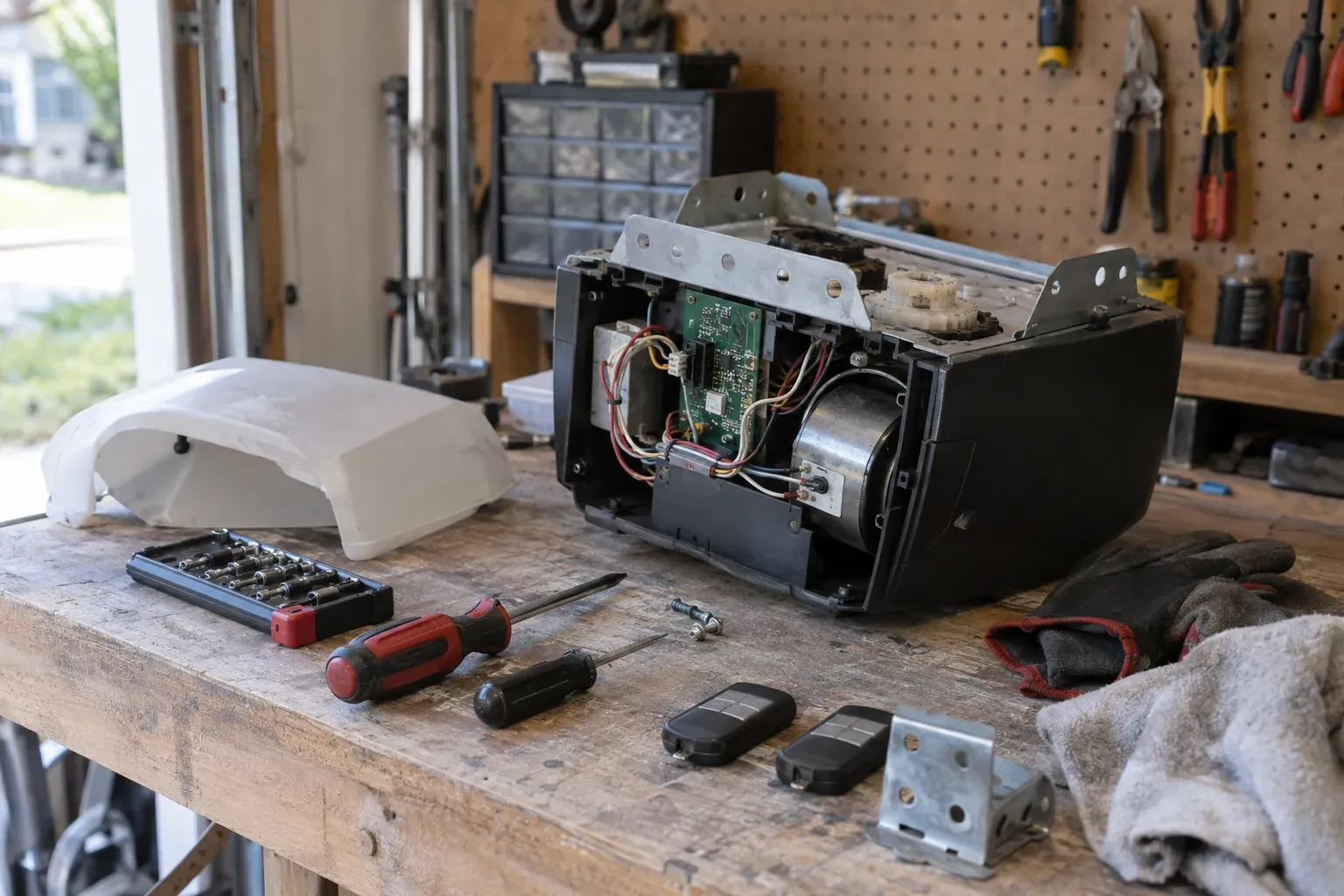
In the van
Locking pliers and track clamps
Bottom brackets
Jamb and flag brackets
Track pliers
Torsion spring winding bars
Off-Track Garage Door Reset
What affects the quote
Size and weight of the door
A double door, an insulated door or a wood door carries more weight on every roller and cable, takes longer to support and reset, and uses heavier hardware. The quote reflects the door in front of the technician.
Track that can be trued versus track that must go
Re-plumbing and tightening existing track is labour only. A crushed or kinked length that has to be cut out and replaced adds the new rail in the door's profile, and the quote says which applies.
Opener reconnection and adjustment
Reconnecting the trolley, resetting travel limits and force, and testing the reversal are normally part of the reset. An opener arm, bracket or reinforcement damaged during the event is an additional item.
What to have ready
- Was the door frozen to the floor or was something under it when the opener ran?
- Did a vehicle or anything else bump the door before this happened?
- Have you unplugged the opener or pulled the red release cord?
Off-Track Garage Door Reset: questions
QuestionsI only tapped the door with the bumper. Why is it off its track?
A sectional door is strong in the direction it travels and surprisingly easy to push sideways at a single roller. A light nudge on the bottom section can flex the track lip enough for the roller to slip out, after which the section twists and the rollers above follow. The good news is that this kind of event usually leaves the cables and springs alone, so the reset is often rollers, a re-formed track lip and a hinge check.
Will the opener need adjusting afterwards?
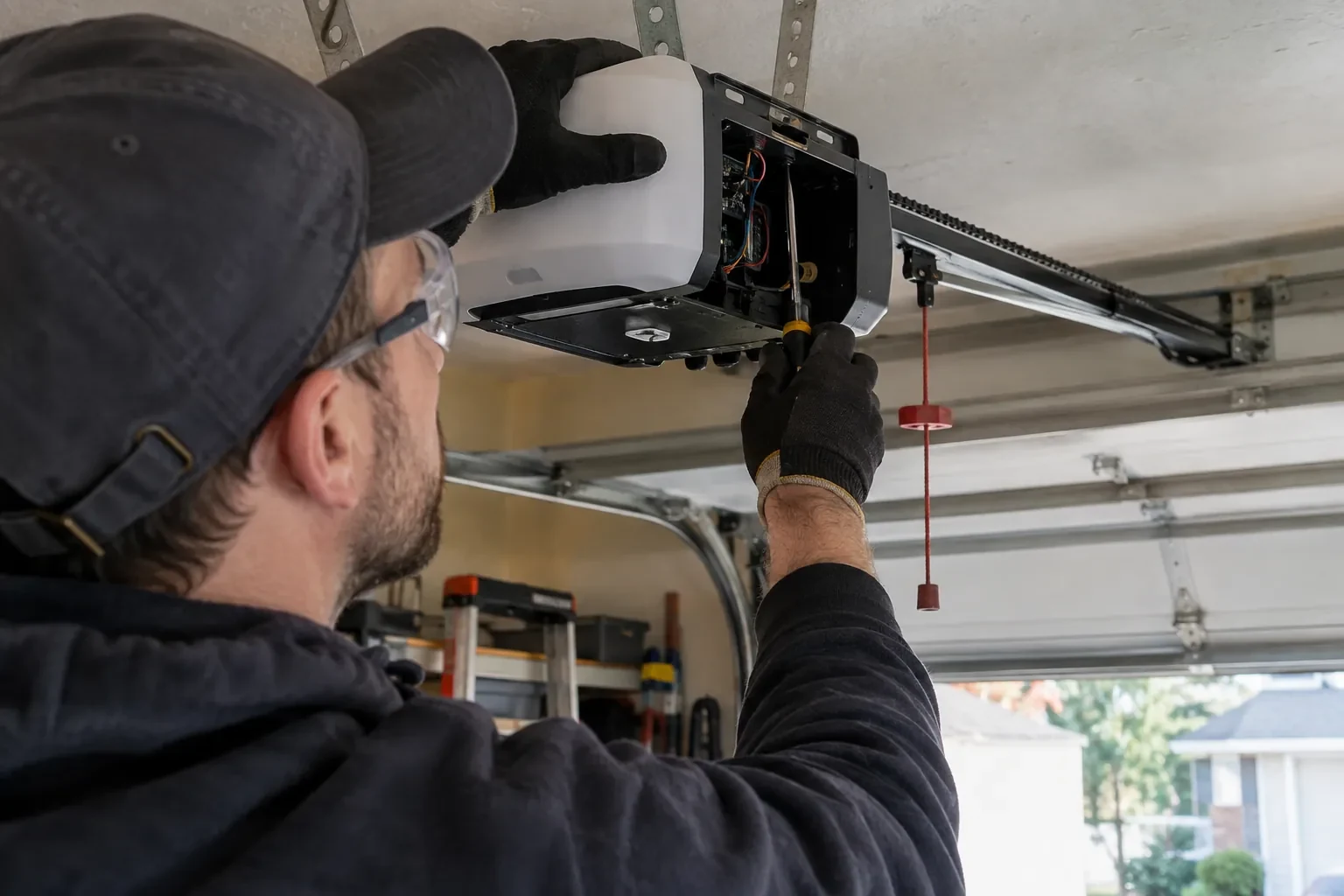
Sometimes, but not always. Once the door runs true by hand, the trolley is reconnected and the opener is checked against its own travel limits and force; those are only reset if that check shows they have drifted, since many openers need no force change after a repair like this. The reversal is then checked against a block laid in the door's path and by interrupting the photo eyes from a safe distance. If the opener strained hard during the event, its arm and bracket are checked too.
My door has springs along the sides, not above it. Is the reset the same?
The principle is the same but the sequence differs. With side springs the door is first opened all the way and clamped, because that is the position where the springs carry no load; the cables are then checked over their pulleys and evened up at the clips. The technician also checks that a containment cable runs through each spring, which stops a broken spring flying across the garage, and fits one if it is missing.