Repairs · Sunderland
Garage Door Tune-Up in Sunderland
Since the first cold snap the door has been sluggish.
In plain words
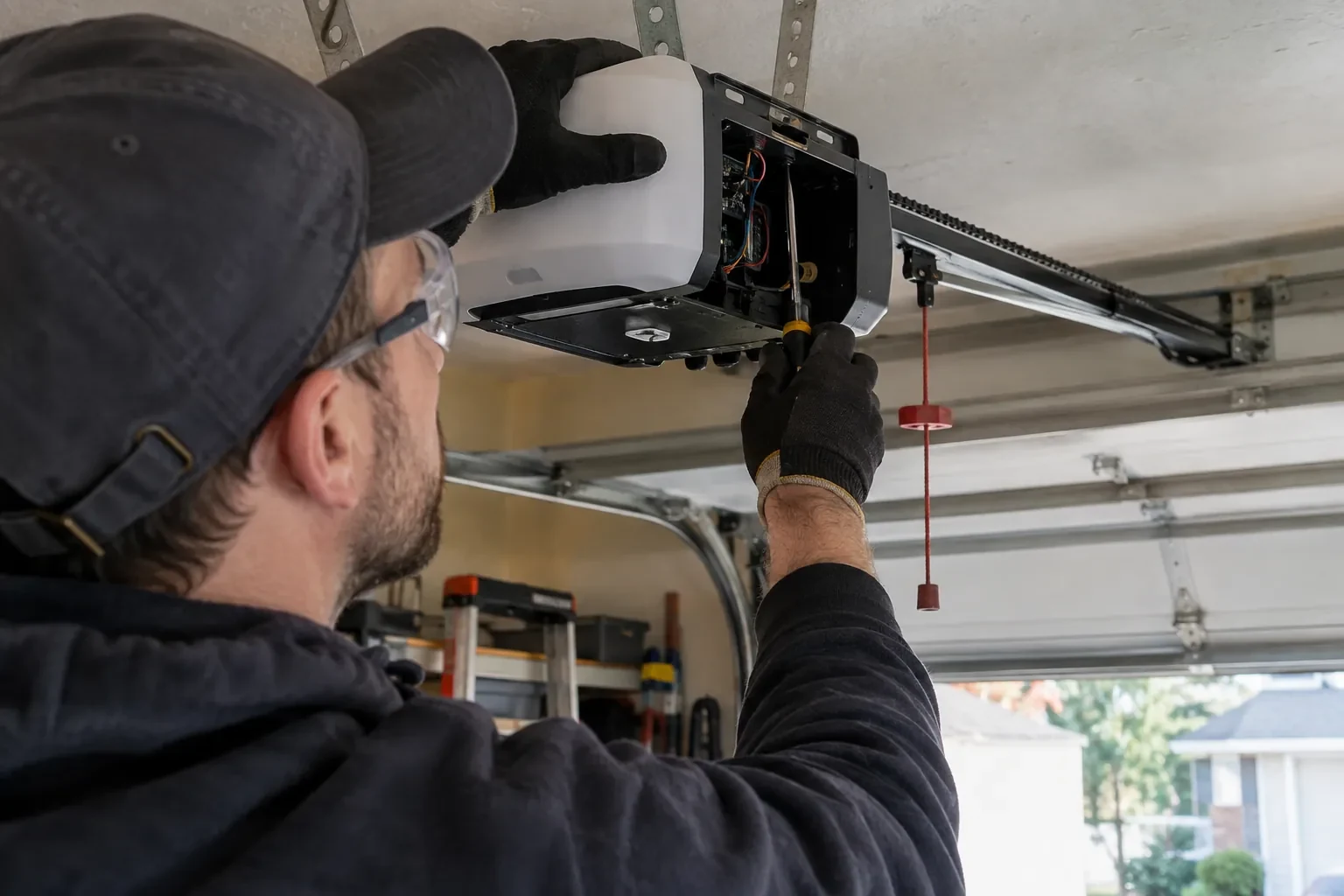
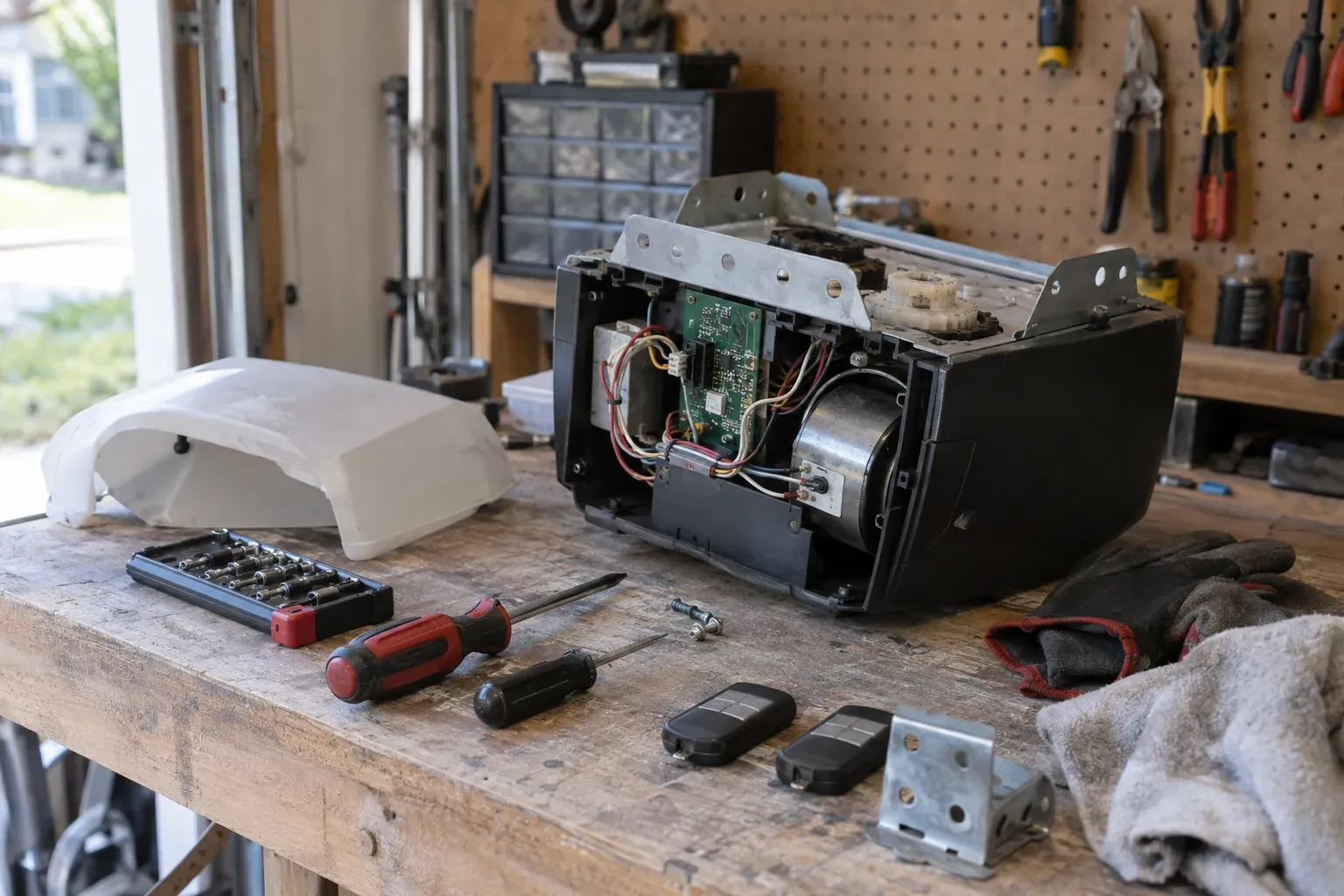
A tune-up is also a safety check of the opener. Openers made since the early 1990s carry two ways of protecting anything in the door's path: photo-eyes near the floor that reverse the door when the beam is broken, and a contact reversal that sends the door back up if it meets resistance. The technician cleans and aligns the sensors, then tests both: an object waved through the beam while the door closes, and a 2x4 laid flat under the centre of the door. A door that reverses cleanly on both is doing what its maker intended, and you learn how to repeat the test yourself each month.
How the visit goesTwice this week the door started closing, stopped a metre from the floor and reopened on its own. One of the little sensor lights near the floor blinks instead of glowing steady, and the wall button has to be held to close it.
Garage Door Tune-Up
How the visit goes
Hardware, bracket by bracket
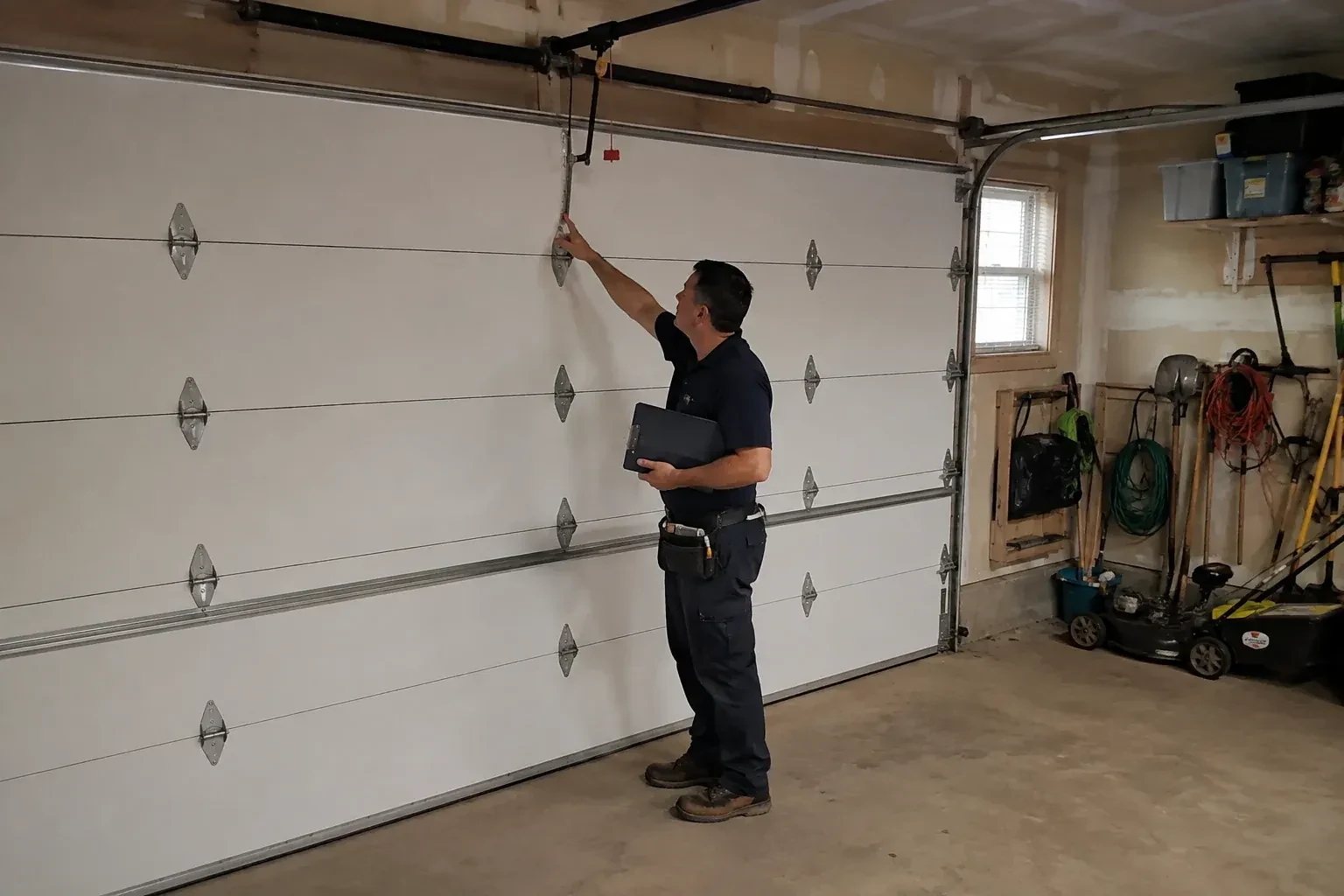
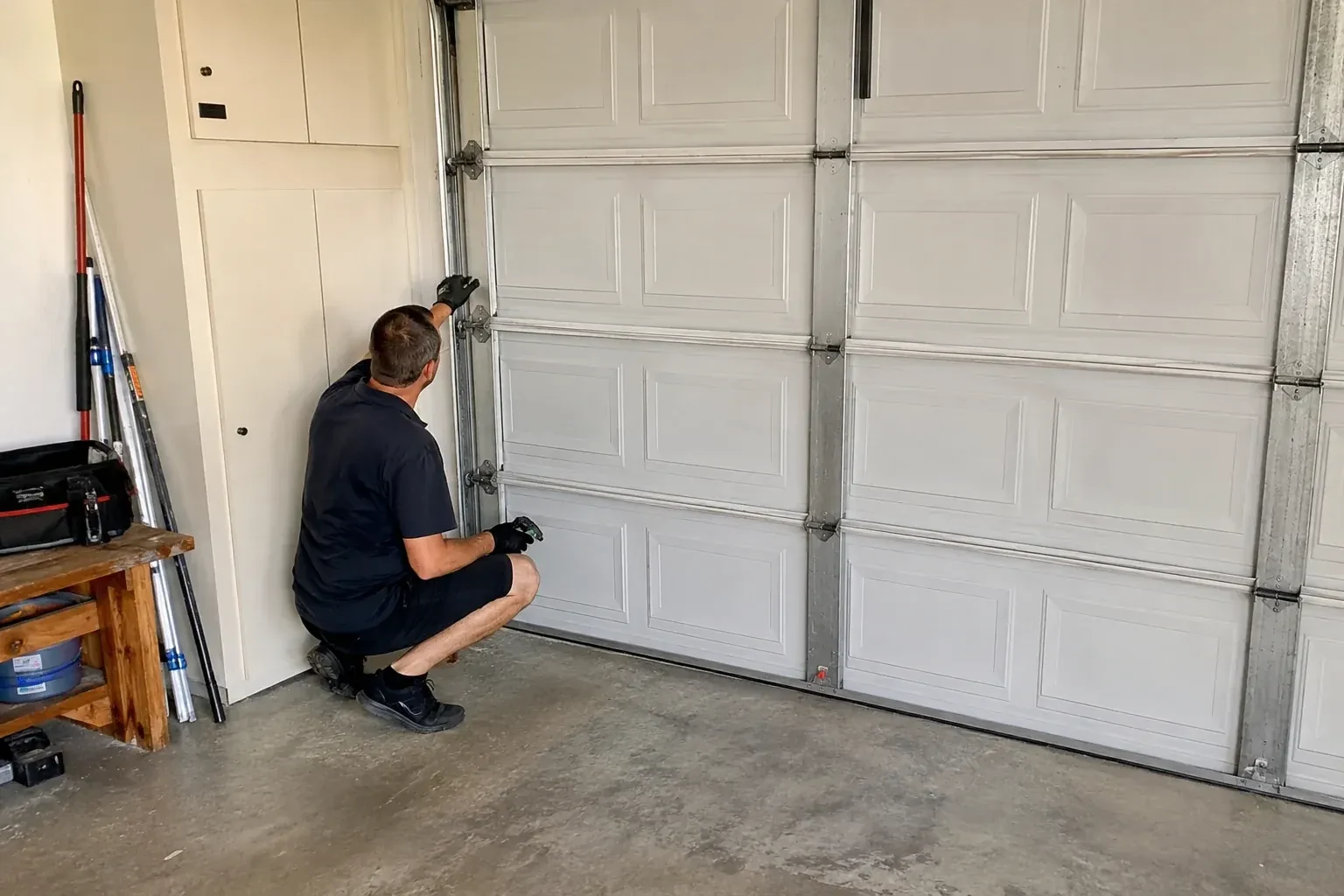
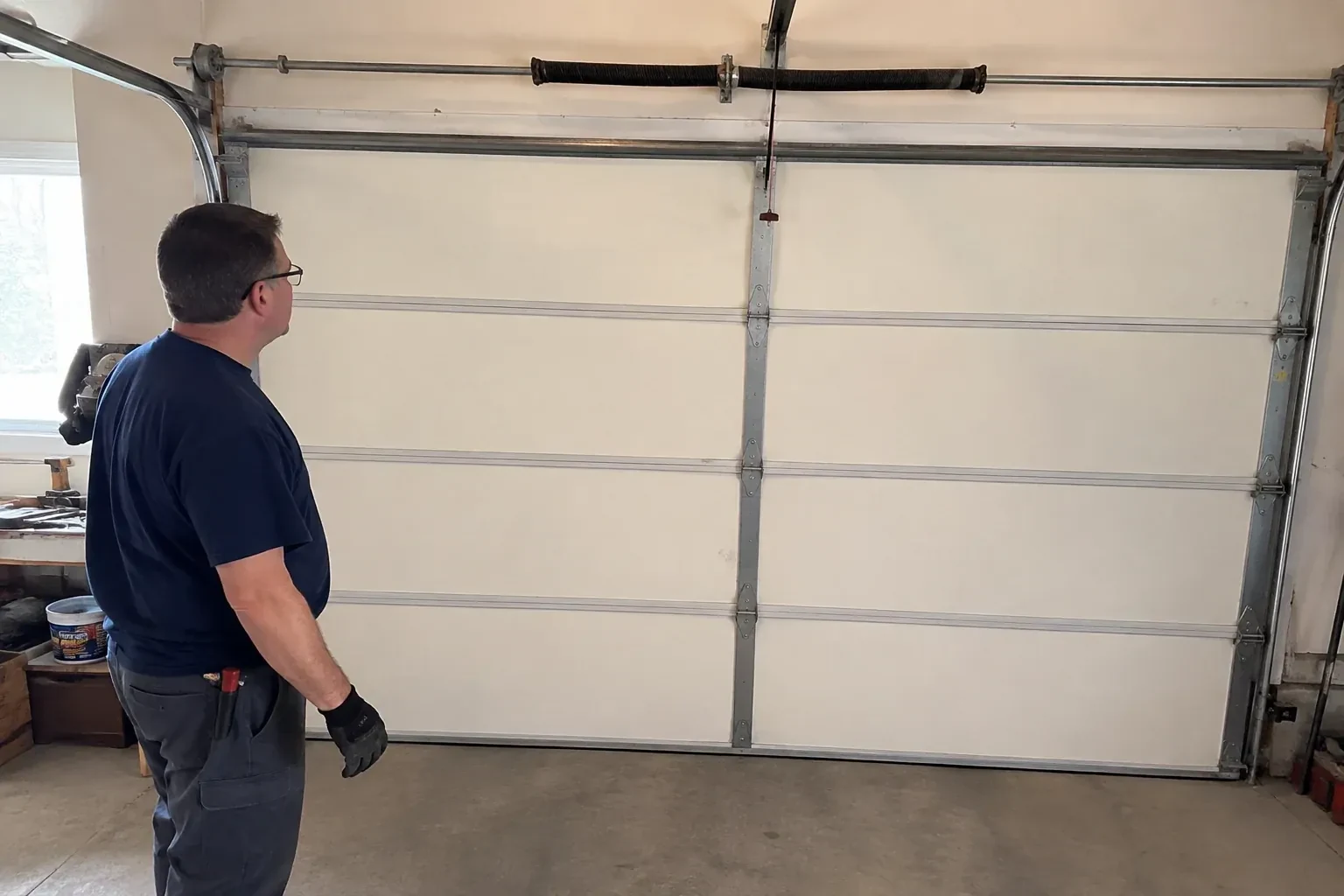
With the door closed and still, the inspection moves along the panels from the bottom up. Bottom brackets and cable attachments are looked at for rust, cracks and cable fraying but not touched, because they hold spring tension. Hinges are checked for cracked knuckles and elongated screw holes. Rollers are spun and wiggled to feel for flat spots, loose stems and worn bearings. Track brackets and lag bolts are tested for movement. At the top, the springs, drums, bearing plates and centre bracket are examined, and the opener's header bracket and the door arm's connection to the top section are confirmed solid. Every loose or worn item is noted before anything is tightened.
Setting travel and force on the opener
The opener has two settings that drift over time: how far the door travels, and how much force it applies before deciding something is in the way. The technician runs the door and adjusts the down travel so the door seals firmly on the floor without bowing the top section or crushing the seal, and the up travel so it stops fully open without the trolley hitting the stop. Force is set as low as will reliably close the door, because a low force setting is what lets the door reverse gently on contact. On a sectional door the arm is kept from passing straight up and down at the closed position, which protects the top section and the rail.
Ready for the cold months
After a fall tune-up the door is set up for the season that tests it hardest. The lubricant on the moving parts stays fluid in the cold rather than thickening into a drag on the opener. The bottom seal and jamb weatherstrip have been treated so they stay flexible below freezing and release from the slab instead of tearing. If the seal ever freezes down on a bad morning, free the ice and dry the area before running the door rather than letting the opener force it; that habit protects the top section better than any force setting. You have been shown the threshold spot where water pools, and clearing snow and ice there becomes part of shovelling the driveway.
Garage Door Tune-Up
In the van
Bottom seal (astragal)
2x4 test block and tape measure
Jamb and header weatherstrip
Photo-eye brackets and wire
Silicone spray for seals
Garage Door Tune-Up
What affects the quote
Track alignment
Tightening track bolts is included. A track that has been pulled out of line or dented by a vehicle needs straightening or a section replaced, and that is quoted as its own repair.
Bottom seal and weatherstrip
Treating existing seals is part of the tune-up; replacing a torn bottom seal or renewing hardened jamb weatherstrip is additional material and time, quoted by the length involved.
Age of the door and opener
Older hardware may need fasteners in sizes no longer standard, and an opener without photo-eyes prompts a conversation about entrapment protection that is quoted separately from the tune-up.
What to have ready
- Is the door worse in cold weather or after rain?
- Can you lift the door by hand with the opener disconnected, and does it stay up?
- Is the door a single or a double, and what is it made of?
Garage Door Tune-Up: questions
QuestionsHow often should a garage door be tuned up?
Once a year suits most attached garages here, ideally in the fall before cold weather thickens lubricant and stiffens seals. Door and opener makers suggest lubrication every three to six months and a homeowner balance check and reversal test every month, so an annual professional visit sits on top of that light routine. A lightly used door in a detached garage may go longer; a heavily used one, or one exposed to salt spray, benefits from a spring check too.
Should I lubricate the tracks?
No. Tracks should be clean and dry. Rollers are meant to roll along the track on their own bearings, and a film of lubricant on the track collects grit, thickens in the cold and makes the rollers slide and drag instead. Wipe the tracks with a rag and put the lubricant where it belongs: on the hinge pins, the roller bearings, the spring coils and the bearing plates at the ends of the torsion shaft.
What kind of doors and openers do you service?
Residential sectional doors of every common construction: steel, insulated steel, aluminum and glass, wood and composite, single and double width, with torsion springs above the header or extension springs beside the horizontal tracks. Openers of all the usual types are covered too, including chain drive, belt drive, screw drive and wall-mounted jackshaft units. If the door is a one-piece tilt-up or a commercial rolling door, mention that when booking so the right hardware comes along.
Related services
- Off-Track Garage Door ResetYou tapped the door with the bumper while backing in, barely a nudge, and now the bottom corner has swung inward.
- Garage Door Panel ReplacementYou misjudged the last metre of the driveway and felt the bumper meet the door.
- Garage Door Bottom Seal ReplacementThe gap under the door is a finger wide at one end and nothing at the other.