Springs · Sunderland
Garage Door Hinge Replacement in Sunderland
The car nudged the door on the way in.
In plain words
Hinges come in different thicknesses, and the visit is a chance to fit the right one. Steel gauge runs backwards: a larger number means thinner metal, so an 18-gauge hinge suits a light single door while 14-gauge is the heavier residential standard and 11-gauge is commercial stock. A heavy insulated double door, a door used many times a day, or a door whose hinges keep cracking at the knuckle benefits from moving up a gauge. The technician also checks that the hinge width and hole pattern match the door's stiles, since patterns vary between makers. You leave with hinges suited to the door's weight.
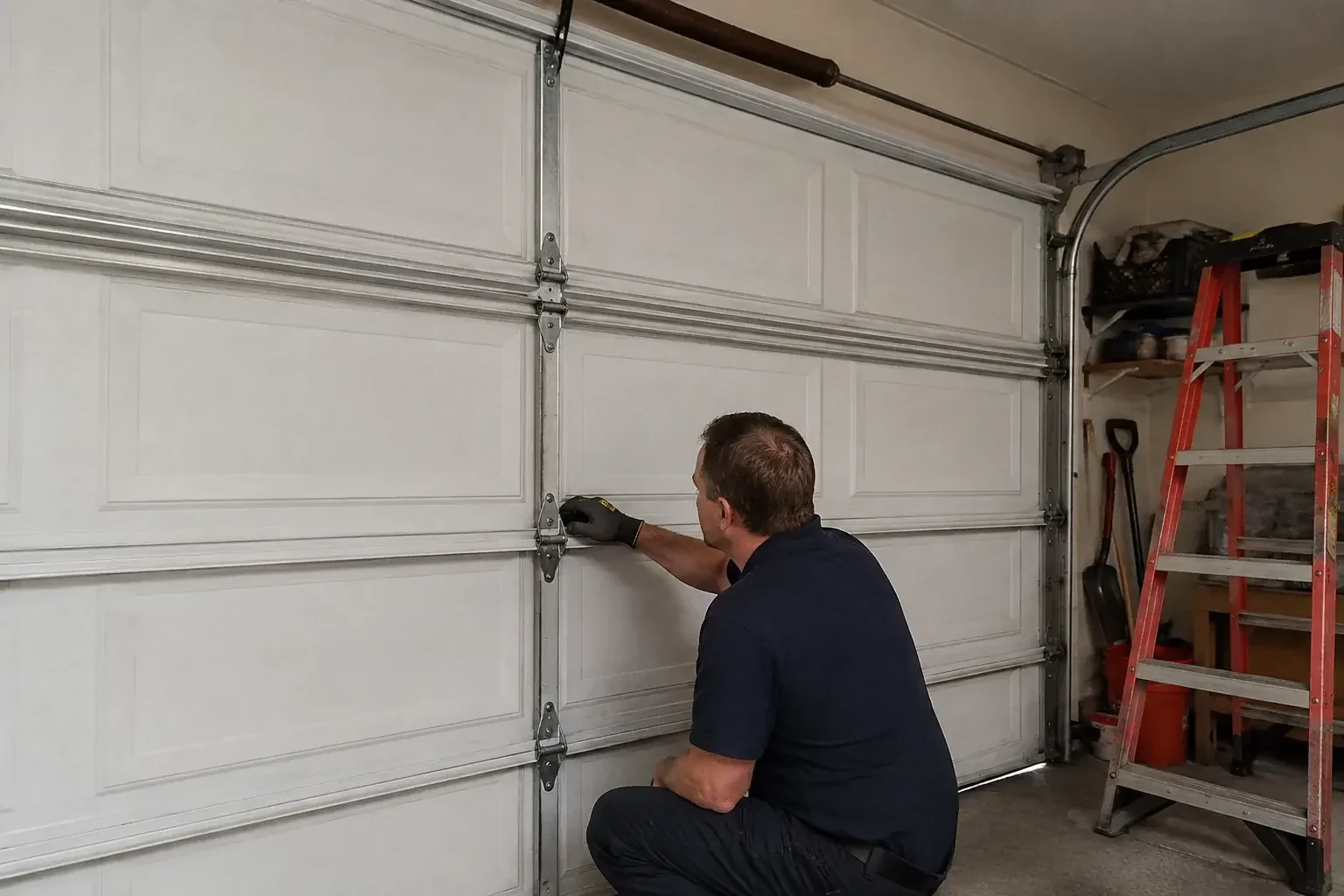
How the visit goesPressing a hand against one of the middle hinges makes it rock on the panel. The screws turn and turn without ever tightening, and there is a rattle from that spot every time the door settles onto the floor.
Garage Door Hinge Replacement
How the visit goes
Panel stiffness, struts and the hinge count
Wide doors depend on their centre hinges and struts to keep each panel flat. The technician counts the hinges on each joint against the door's width, since a double door with only one centre hinge, or a wide panel with no strut, flexes on every cycle and pulls at its hinge screws. The steel around each hinge is checked for hairline cracks or oil-canning, and a wood door for splits along the grain near the fasteners. Where a strut is missing or a joint is short a hinge, adding one is discussed as part of the plan, because stiffening the panel is what keeps the new hinges tight.
Hinge work after an impact
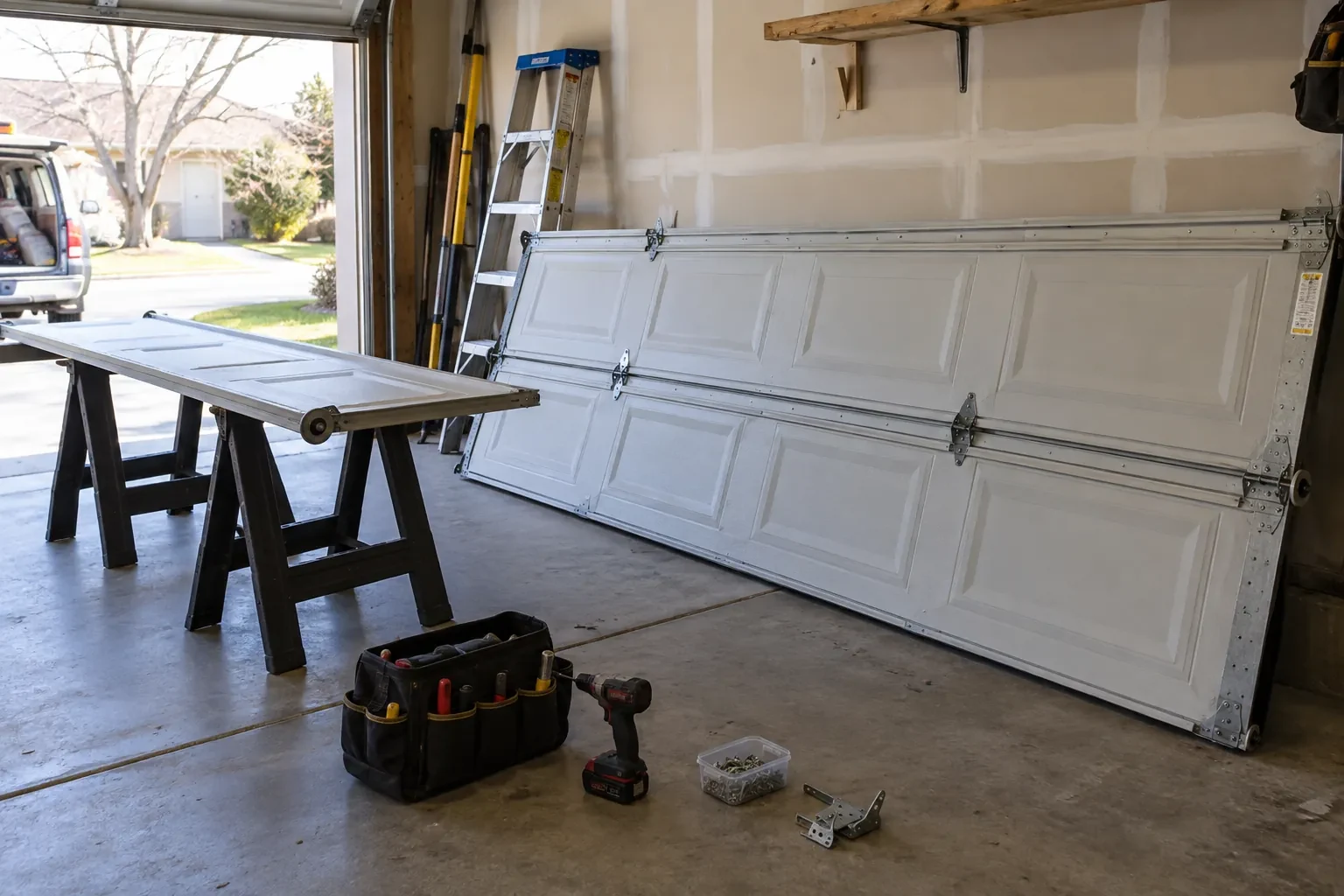
When a bumper or a bin has hit the door, the hinge is often bent along with the stile behind it. The technician removes the damaged hinge, straightens the stile with a dolly or fits a support plate where the steel has creased, and checks that the panel edges no longer touch when the joint flexes. A strut is added or straightened if the panel has bowed. The new edge hinge goes on with its roller, and the door is run through the curve by hand to confirm the panels turn without rubbing. Where a section itself is buckled, that is discussed as a separate decision.
The balance test you can do yourself
You can confirm the door is balanced without touching a spring. With the door closed, pull the opener's release cord, lift the door by its handle to about waist height and let go gently. It should stay roughly where it is. A door that sinks or climbs on its own is telling you the springs are out of step with the door's weight, and a door dragged by the opener is what wears hinges early, so book an adjustment. Reconnect the opener the way its manual describes, usually by running it once. Doing this each season keeps both the hinges and the opener working lightly.
Garage Door Hinge Replacement
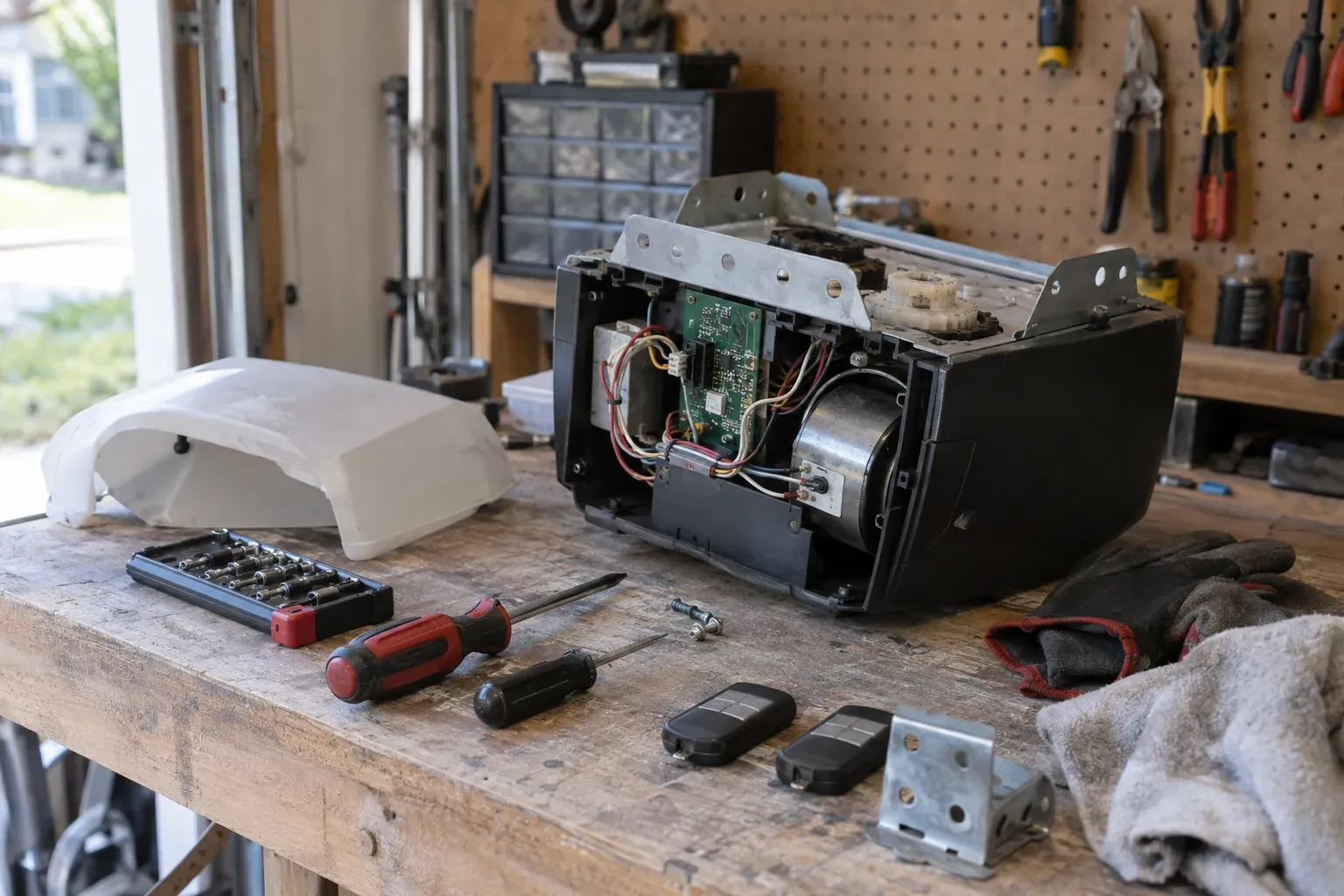
In the van
Replacement rollers
Hinge support plates
Track clamps or locking pliers
Numbered galvanized edge hinges
Flashlight and level
Garage Door Hinge Replacement
What affects the quote
Door width and panel count
A tall or double door has more joints and more hinges per joint, so a full-door hinge refresh on a double is a bigger job than the same work on a single.
Adding a strut to a wide door
A wide panel without a strut flexes and loosens its hinges. Fitting one is an optional item that stiffens the panel and protects the new hinges from the same movement.
Supporting the panel while hinges are changed
A heavy insulated panel needs to be braced while its hinges are off, so it does not sag or twist out of place mid-repair. Lighter steel or wood panels usually need no extra support, and the technician decides which applies once the panel is in front of them.
What to have ready
- Has a car, bin or anything else bumped the door recently?
- Is the door closed, open or stuck partway right now?
- Where does the pop, click or gap appear, and roughly how high up?
Garage Door Hinge Replacement: questions
QuestionsWhat is the difference between an edge hinge and a centre hinge?
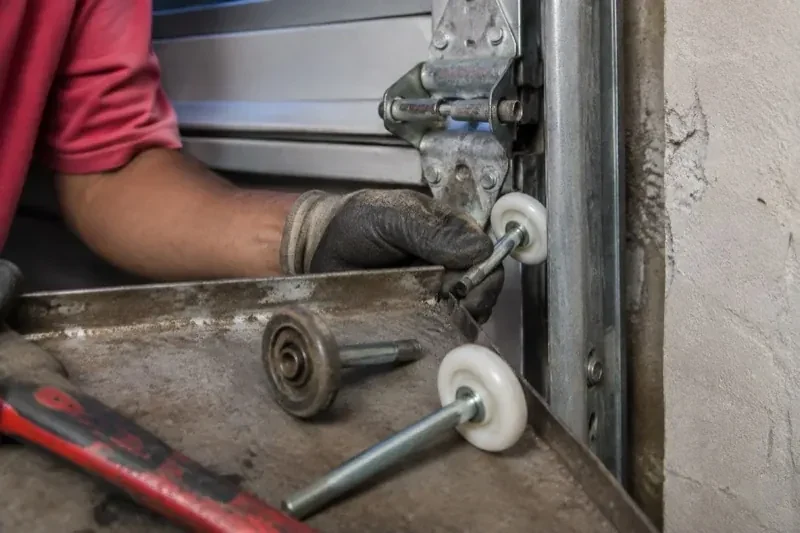
An edge hinge sits at the end of the joint on the end stile and does two jobs: it links the panels and it holds the roller that runs in the track, which is why it is numbered for its position. A centre hinge sits on an intermediate stile in the middle of the door, links the panels only, and carries no roller. Both let the panels pivot as the door folds around the curve.
Can a light bump from the car damage a hinge?
Yes, more often than people expect. The bottom two panels take the contact, and the edge hinge at that joint bends along with the stile behind it, so the panel edges rub and the roller leans. The damage sometimes only shows as a new squeak at the curve. The technician straightens or renews the stile, fits a new hinge and roller, and checks the strut and track on that side.
What are the hinges made of?
Stamped galvanized steel, formed into two leaves joined by a pin or a rolled tube. The zinc coating is what resists rust in a garage that sees wet cars and salt, and it is why a scratched or bent hinge starts to brown at the damaged spot. Edge hinges include a tube that holds the roller stem. Thickness is given as a gauge, most residential hinges being 14 or 18.
Related services
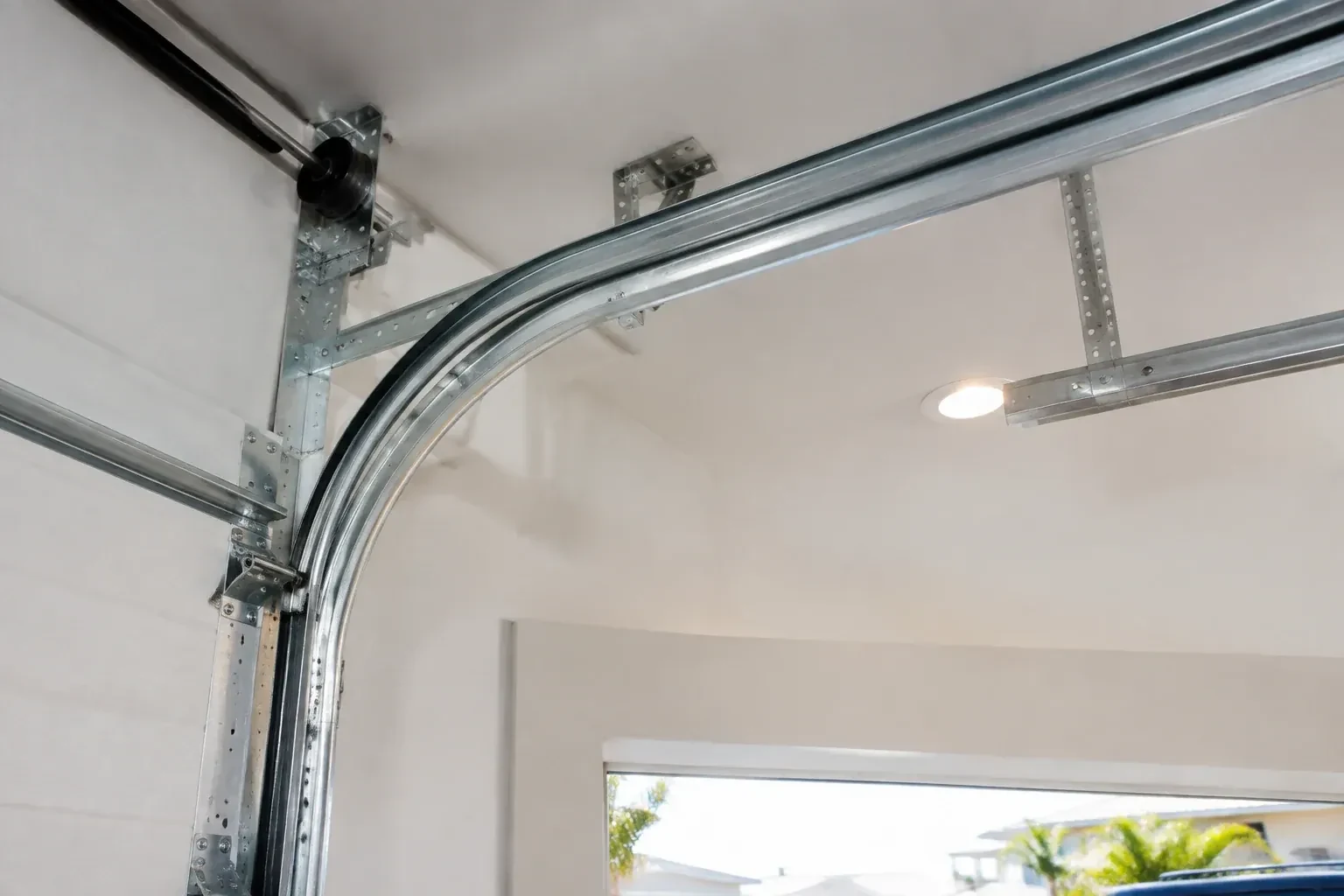
- Garage Door Track Repair or ReplacementThe door has started rubbing the frame on the left, leaving a shiny stripe down the weatherstrip.
- Garage Door Cable ReplacementSomeone left the snow shovel leaning in the opening and the door came down on it.
- Torsion Spring ReplacementNothing broke outright, but the door has grown heavier each winter, opens more slowly and squeals as it moves.