Repairs · Pefferlaw
Garage Door Tune-Up in Pefferlaw
Since the first cold snap the door has been sluggish.
In plain words
Most of a tune-up's noise reduction comes from lubrication, and its value comes from putting the lubricant where it belongs. Hinge pins, steel roller bearings, spring coils, the bearing plates at the torsion shaft ends and the lock all get a silicone- or lithium-based garage door lubricant. The tracks do not; a coated track collects grit and makes rollers slide rather than roll. Nylon tires stay dry too, though an exposed nylon-roller bearing gets a touch where its maker calls for it. Rubber seals get a silicone spray and never a petroleum product. Done this way, the door runs quieter and the parts last longer.
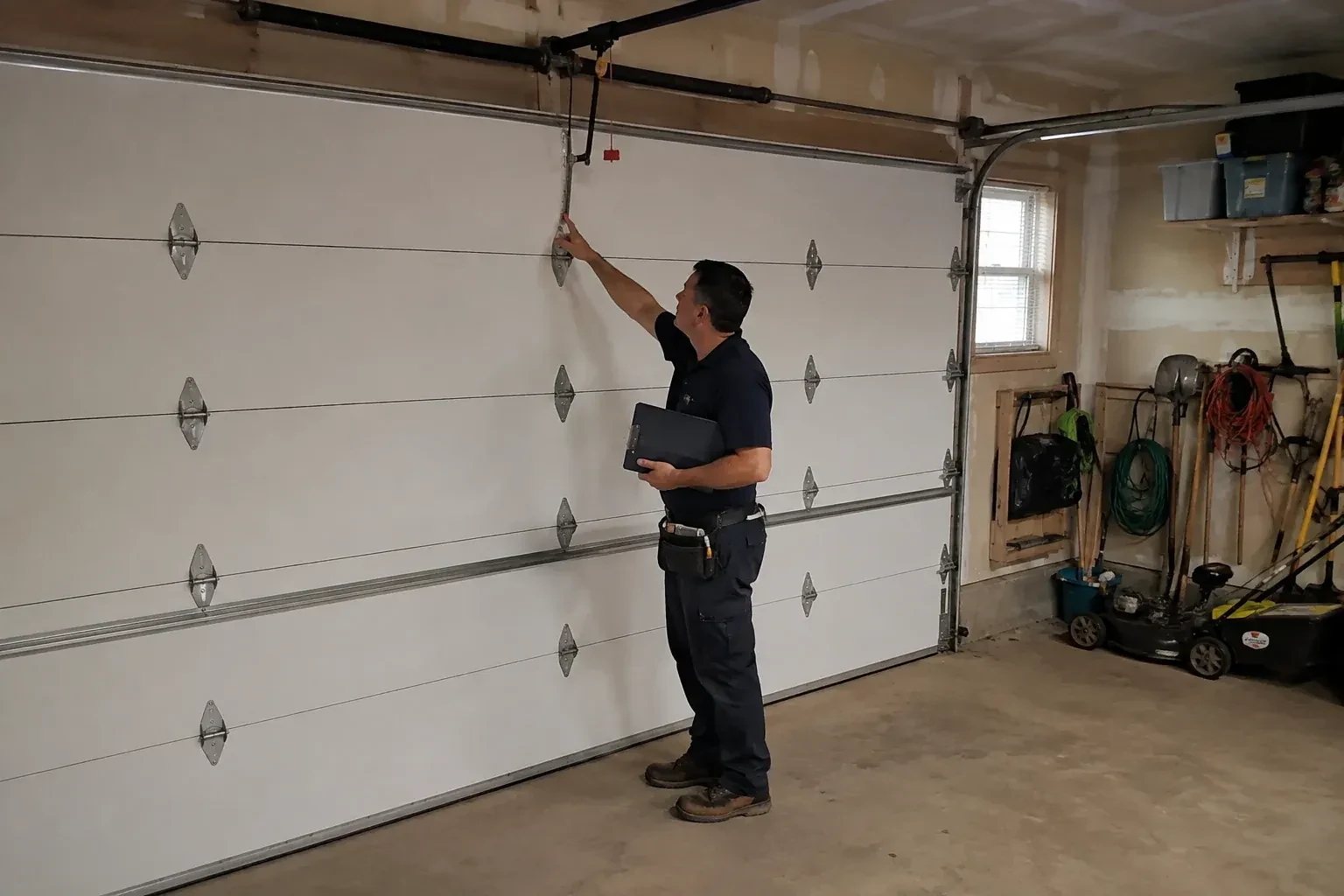
How the visit goesHalfway up, the door shudders. The sections seem to catch for a moment, the whole assembly shakes, then it carries on as if nothing happened. You have started holding your breath at that spot each time.
Garage Door Tune-Up
How the visit goes
The opener's connections and safety devices
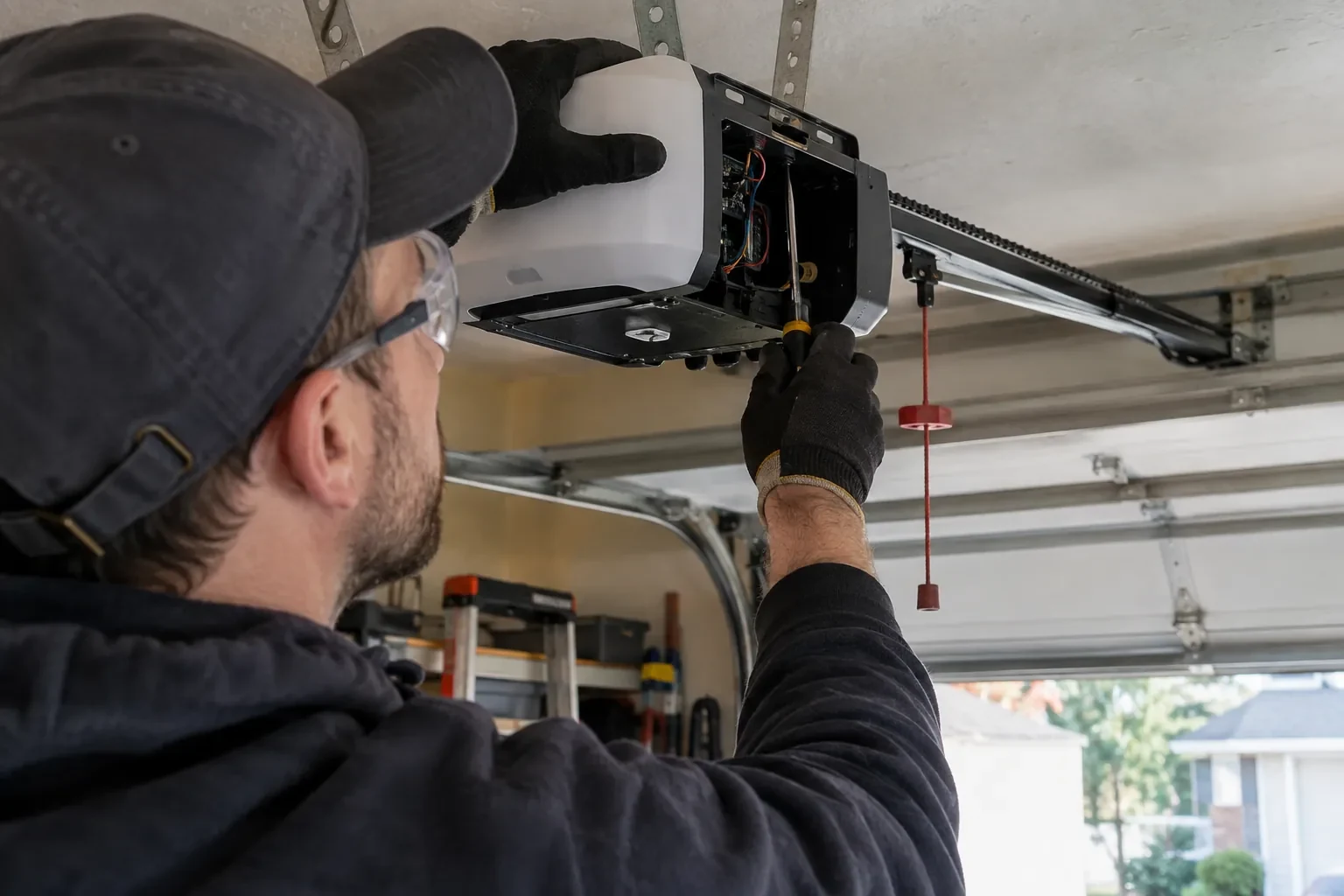
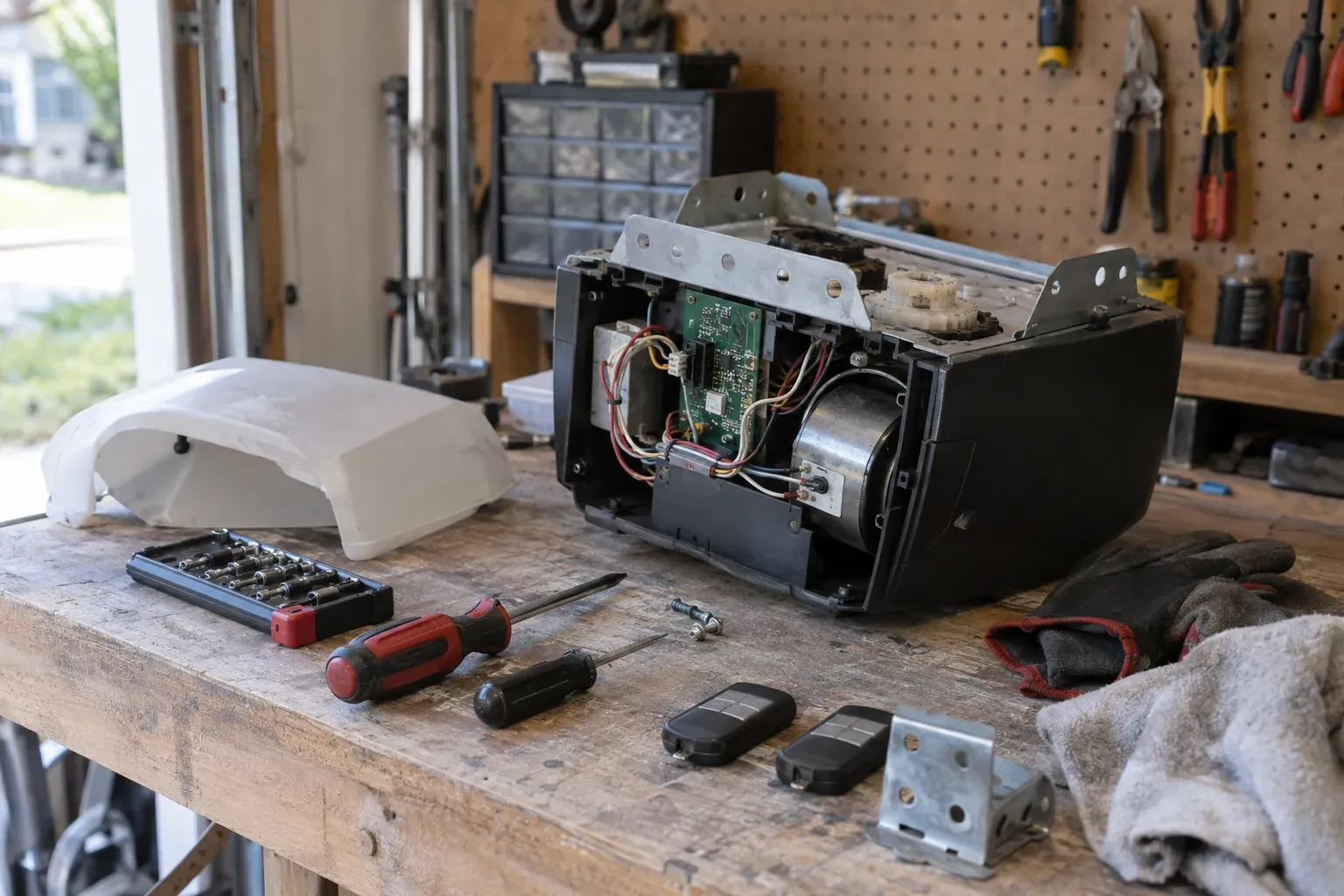
The opener is inspected as part of the door system, not as a separate appliance. The technician checks that the rail is firmly attached at the header and the ceiling hangers, that the chain or belt has the right sag, that the trolley and door arm are not worn or bent, and that the arm sits at the angle the manufacturer intends when the door is closed. Photo-eyes are located and their height measured, since the beam belongs no higher than about 15 centimetres off the floor. Indicator lights are read: steady means aligned, blinking means the pair are not seeing each other. The wall control and the red manual release are confirmed present and reachable.
Lubricating the right points and skipping the wrong ones
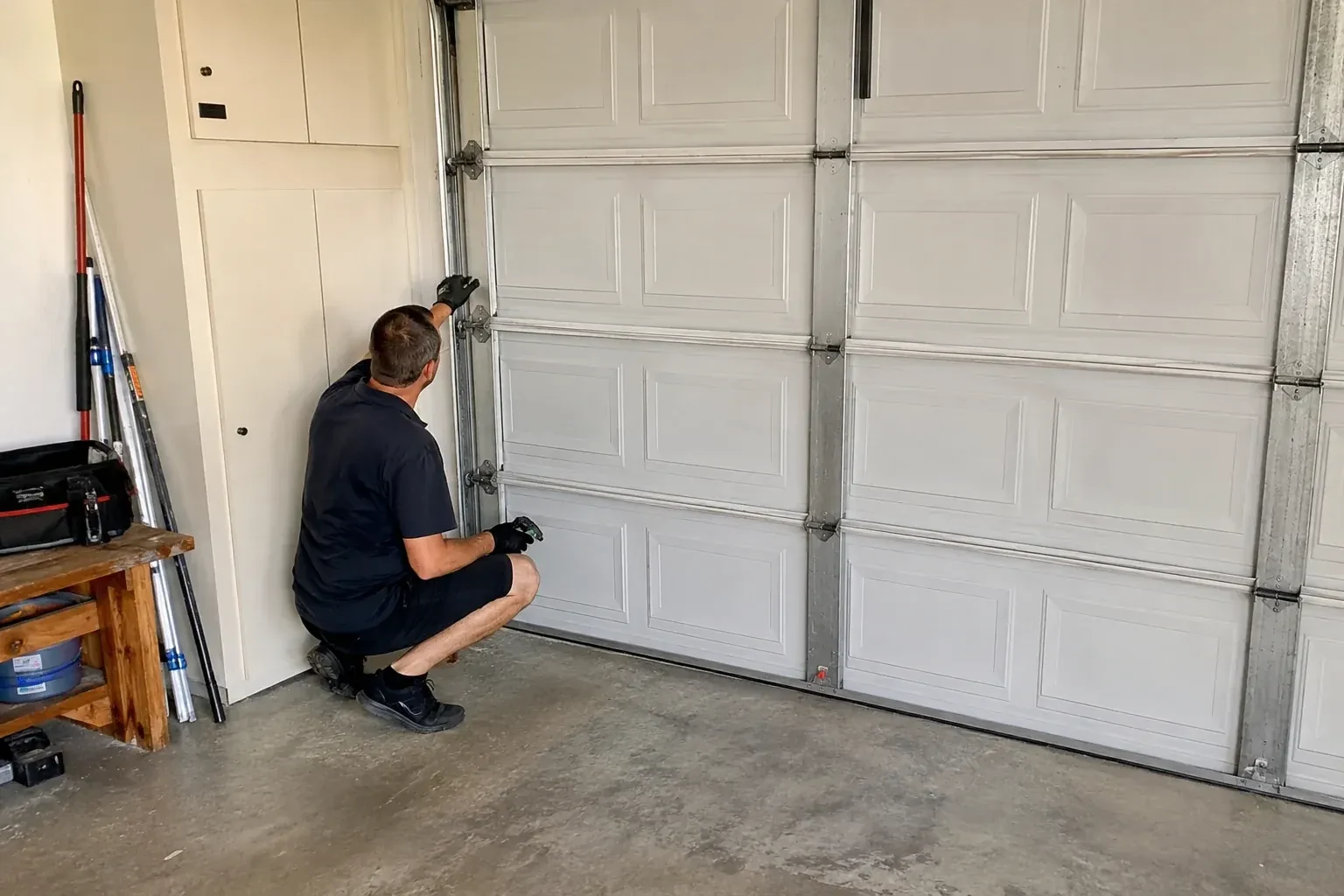
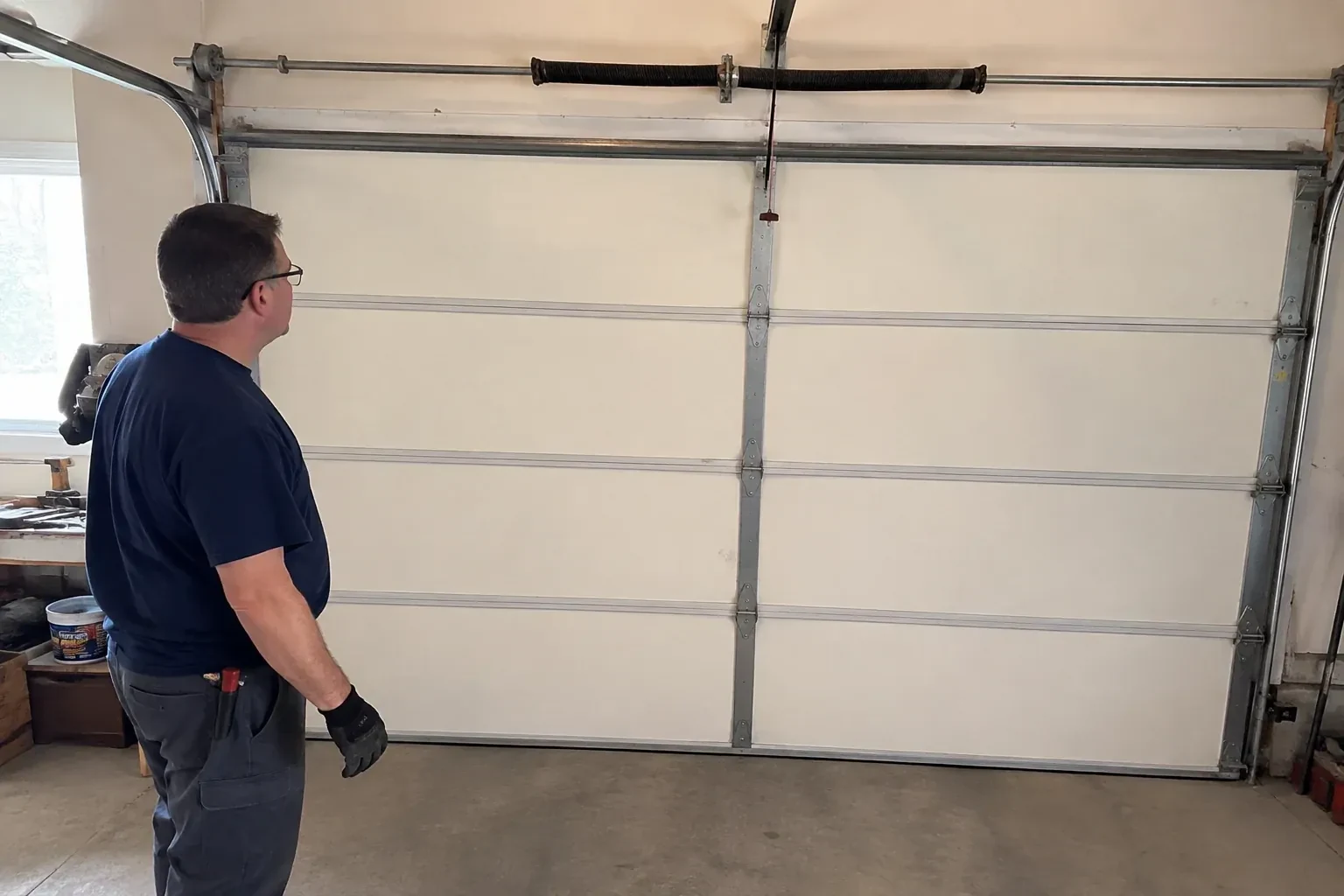
Each moving joint gets a small amount of silicone- or lithium-based lubricant: hinge pins, steel roller bearings, spring coils, the bearing plates at the torsion shaft ends, the centre bearing and the lock. The technician works the door a few centimetres by hand so the lubricant spreads into the bearings. What is not lubricated matters just as much: track surfaces are wiped clean and left dry so rollers roll rather than slide on a film that gathers grit. Nylon tires are left untreated, though an exposed nylon-roller bearing gets lubricant where its maker calls for it. The chain or belt is handled only as the opener maker directs, and excess is wiped off so it never drips onto a vehicle.
Knowing what to listen for next
Part of the handover is a short lesson in the door's language, so the next change registers. A squeak returning means the hinge pins want lubricant. A new rattle at the top of travel means a screw is loosening and is worth a look. A door that starts to sink when lifted by hand is springs losing tension. A loud bang from the garage with the door then feeling very heavy is a broken spring, and the door stays closed until it is replaced. A door that reverses on its own with no obstruction is a sensor or force issue. With these signs in mind you can describe a problem precisely and decide whether it needs a call.
Garage Door Tune-Up
In the van
Bottom seal (astragal)
2x4 test block and tape measure
Jamb and header weatherstrip
Photo-eye brackets and wire
Silicone spray for seals
Garage Door Tune-Up
What affects the quote
Age of the door and opener
Older hardware may need fasteners in sizes no longer standard, and an opener without photo-eyes prompts a conversation about entrapment protection that is quoted separately from the tune-up.
Photo-eye and wiring work
Cleaning and realigning sensors is routine. A bent bracket, a chafed wire or a sensor that has failed means a part or a rewire, which is named separately.
Door construction and weight
A heavy wood or insulated steel door works its hardware harder than a light aluminum one, and the balance check and fastener work take a little longer on the heavier door.
What to have ready
- Has the door been struck by a vehicle or damaged in a storm?
- Can you lift the door by hand with the opener disconnected, and does it stay up?
- Are the remotes, wall button and keypad all working as expected?
Garage Door Tune-Up: questions
QuestionsHow often should a garage door be tuned up?
Once a year suits most attached garages here, ideally in the fall before cold weather thickens lubricant and stiffens seals. Door and opener makers suggest lubrication every three to six months and a homeowner balance check and reversal test every month, so an annual professional visit sits on top of that light routine. A lightly used door in a detached garage may go longer; a heavily used one, or one exposed to salt spray, benefits from a spring check too.
Should I lubricate the tracks?
No. Tracks should be clean and dry. Rollers are meant to roll along the track on their own bearings, and a film of lubricant on the track collects grit, thickens in the cold and makes the rollers slide and drag instead. Wipe the tracks with a rag and put the lubricant where it belongs: on the hinge pins, the roller bearings, the spring coils and the bearing plates at the ends of the torsion shaft.
What kind of doors and openers do you service?
Residential sectional doors of every common construction: steel, insulated steel, aluminum and glass, wood and composite, single and double width, with torsion springs above the header or extension springs beside the horizontal tracks. Openers of all the usual types are covered too, including chain drive, belt drive, screw drive and wall-mounted jackshaft units. If the door is a one-piece tilt-up or a commercial rolling door, mention that when booking so the right hardware comes along.
Related services
- Off-Track Garage Door ResetYou tapped the door with the bumper while backing in, barely a nudge, and now the bottom corner has swung inward.
- Garage Door Panel ReplacementYou misjudged the last metre of the driveway and felt the bumper meet the door.
- Garage Door Bottom Seal ReplacementThe gap under the door is a finger wide at one end and nothing at the other.