Repairs · Georgina
Garage Door Tune-Up
Since the first cold snap the door has been sluggish.
In plain words
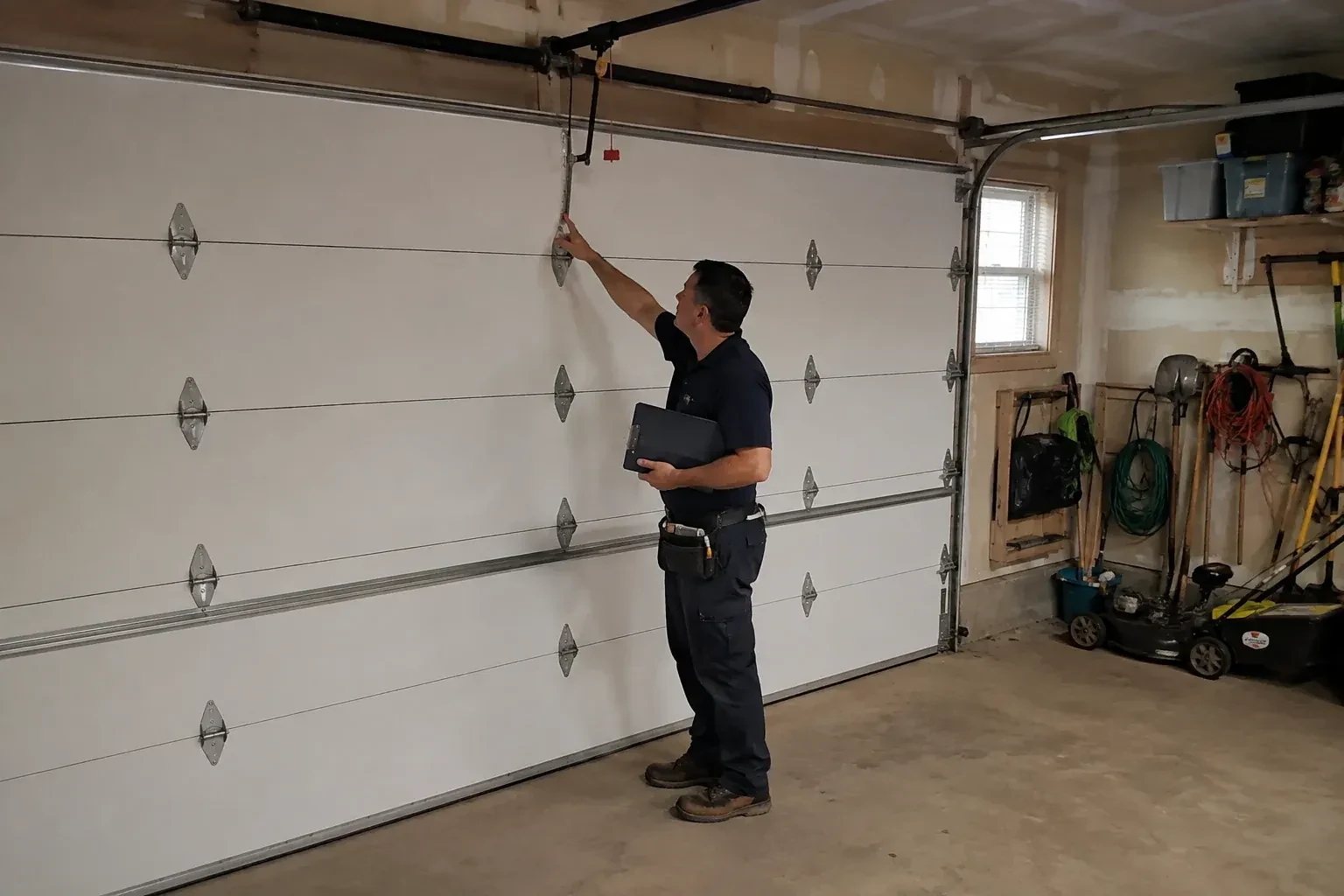
Garage doors here live through a wide swing of seasons, and a tune-up before winter pays for itself in smooth mornings. Cold thickens tired lubricant and stiffens steel, so a door that ran fine in September can groan in January. Rubber seals go hard, meltwater freezes the bottom seal to the slab, and road salt works on the lower hardware. The fall visit replaces old lubricant with a low-temperature product, treats the seals with silicone and checks the threshold, since a door frozen to the slab should be freed and dried rather than forced by the opener.
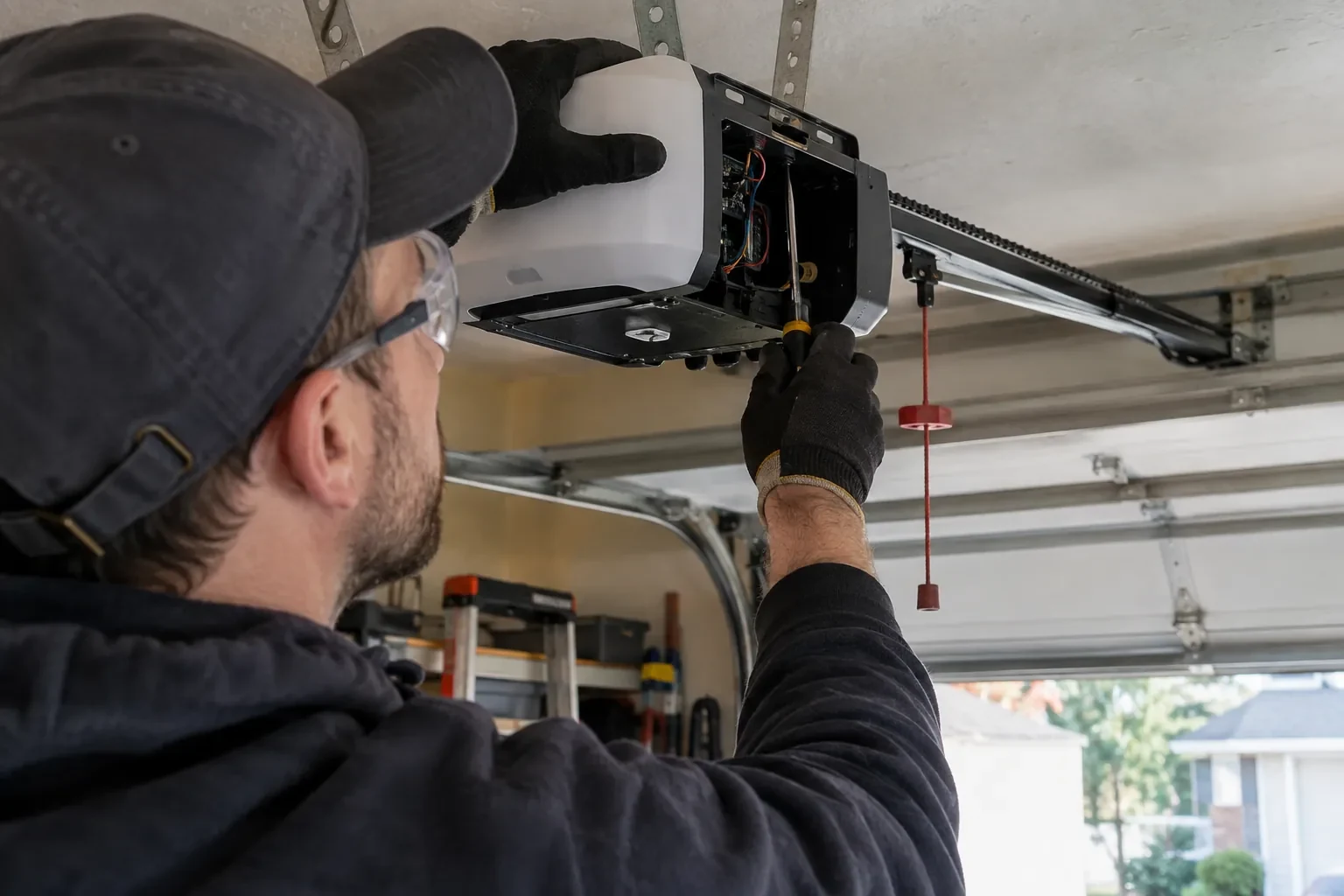
How the visit goesTwice this week the door started closing, stopped a metre from the floor and reopened on its own. One of the little sensor lights near the floor blinks instead of glowing steady, and the wall button has to be held to close it.
Garage Door Tune-Up
How the visit goes
Seals, weatherstrip and the threshold
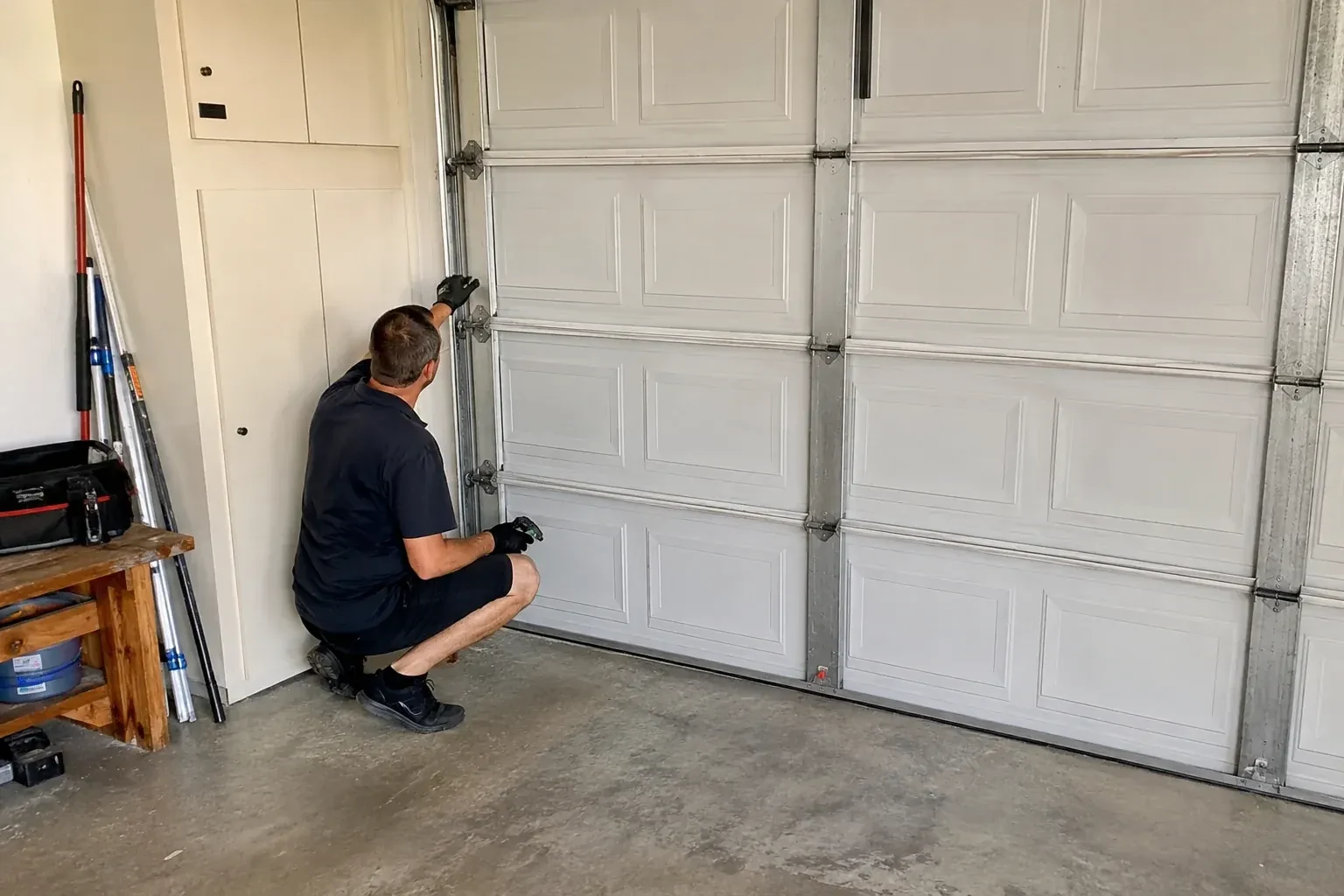
The bottom seal is checked along its whole length for tears, flattening and stiffness, and the threshold is looked at for the low spots where water pools and freezes. The jamb and header weatherstrip are pressed to see whether the rubber or vinyl still flexes or has gone hard, and the technician notes any daylight showing when the door is closed. Because the opener's travel limit decides how firmly the door presses onto its seal, the two are read together: a crushed seal often means the down limit is set too far, and a gap often means the door is stopping early. This part of the check matters most before winter.
Small adjustments with a big effect
A few minutes of fine adjustment often change the character of a door. A vertical track that has crept inward is eased back so the rollers run in the centre of the channel. A horizontal track that has sagged on its hanger is brought level so the door does not drop into the curve. A strut on a wide top section is checked and tightened so the panel stops flexing when the opener pulls on it. The lock bar is aligned with its slot, or disabled on an opener-driven door so it can never be engaged against the motor. None of these are repairs; they are corrections that let the existing parts work as designed.
Care between visits
A tuned door stays tuned longer with a little attention from you. Every few months, put a small amount of the same silicone- or lithium-based garage door lubricant on the hinge pins and roller bearings and work the door a few times. Wipe the tracks clean and leave them dry. Keep the photo-eye lenses clear of dust and cobwebs, and keep bins and bicycles from leaning on their brackets. Rinse the door and the lower hardware after winter and treat the seals with silicone spray. Listen once a month as the door runs; a new sound is easier to address early. Anything to do with springs, cables or bottom brackets is left for the technician.
Garage Door Tune-Up
In the van
Bottom seal (astragal)
2x4 test block and tape measure
Jamb and header weatherstrip
Photo-eye brackets and wire
Silicone spray for seals
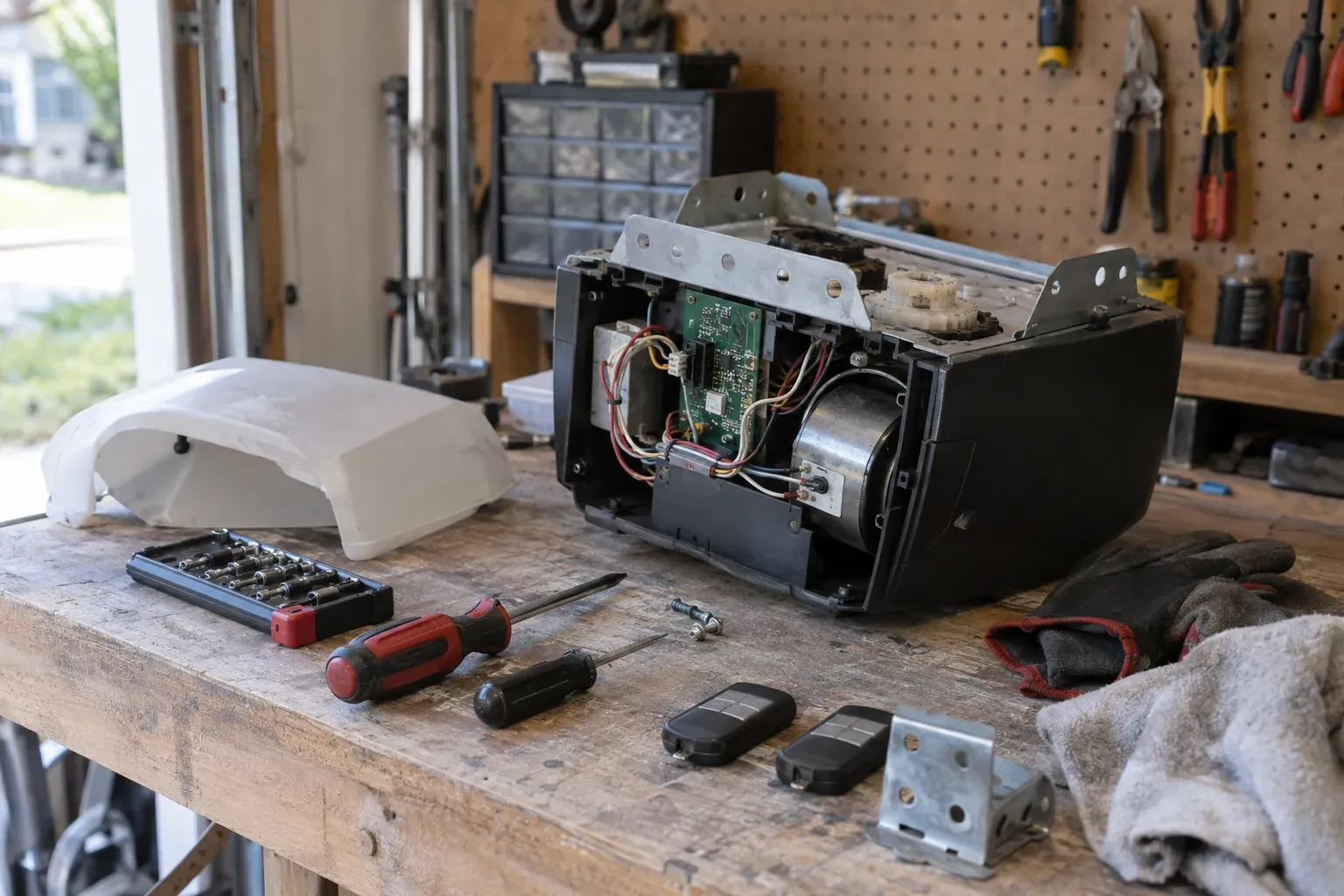
Garage Door Tune-Up
What affects the quote
Photo-eye and wiring work
Cleaning and realigning sensors is routine. A bent bracket, a chafed wire or a sensor that has failed means a part or a rewire, which is named separately.
Age of the door and opener
Older hardware may need fasteners in sizes no longer standard, and an opener without photo-eyes prompts a conversation about entrapment protection that is quoted separately from the tune-up.
Number of doors
Two or three doors on the same property are usually serviced in one visit, and the second and third door are quoted at a different rate from the first because the travel is shared.
What to have ready
- Is the door worse in cold weather or after rain?
- What have you noticed: noise, shaking, hesitation, slamming, or reversing on its own?
- Can you lift the door by hand with the opener disconnected, and does it stay up?
Garage Door Tune-Up: questions
QuestionsHow often should a garage door be tuned up?
Once a year suits most attached garages here, ideally in the fall before cold weather thickens lubricant and stiffens seals. Door and opener makers suggest lubrication every three to six months and a homeowner balance check and reversal test every month, so an annual professional visit sits on top of that light routine. A lightly used door in a detached garage may go longer; a heavily used one, or one exposed to salt spray, benefits from a spring check too.
Should I lubricate the tracks?
No. Tracks should be clean and dry. Rollers are meant to roll along the track on their own bearings, and a film of lubricant on the track collects grit, thickens in the cold and makes the rollers slide and drag instead. Wipe the tracks with a rag and put the lubricant where it belongs: on the hinge pins, the roller bearings, the spring coils and the bearing plates at the ends of the torsion shaft.
What kind of doors and openers do you service?
Residential sectional doors of every common construction: steel, insulated steel, aluminum and glass, wood and composite, single and double width, with torsion springs above the header or extension springs beside the horizontal tracks. Openers of all the usual types are covered too, including chain drive, belt drive, screw drive and wall-mounted jackshaft units. If the door is a one-piece tilt-up or a commercial rolling door, mention that when booking so the right hardware comes along.
Related services
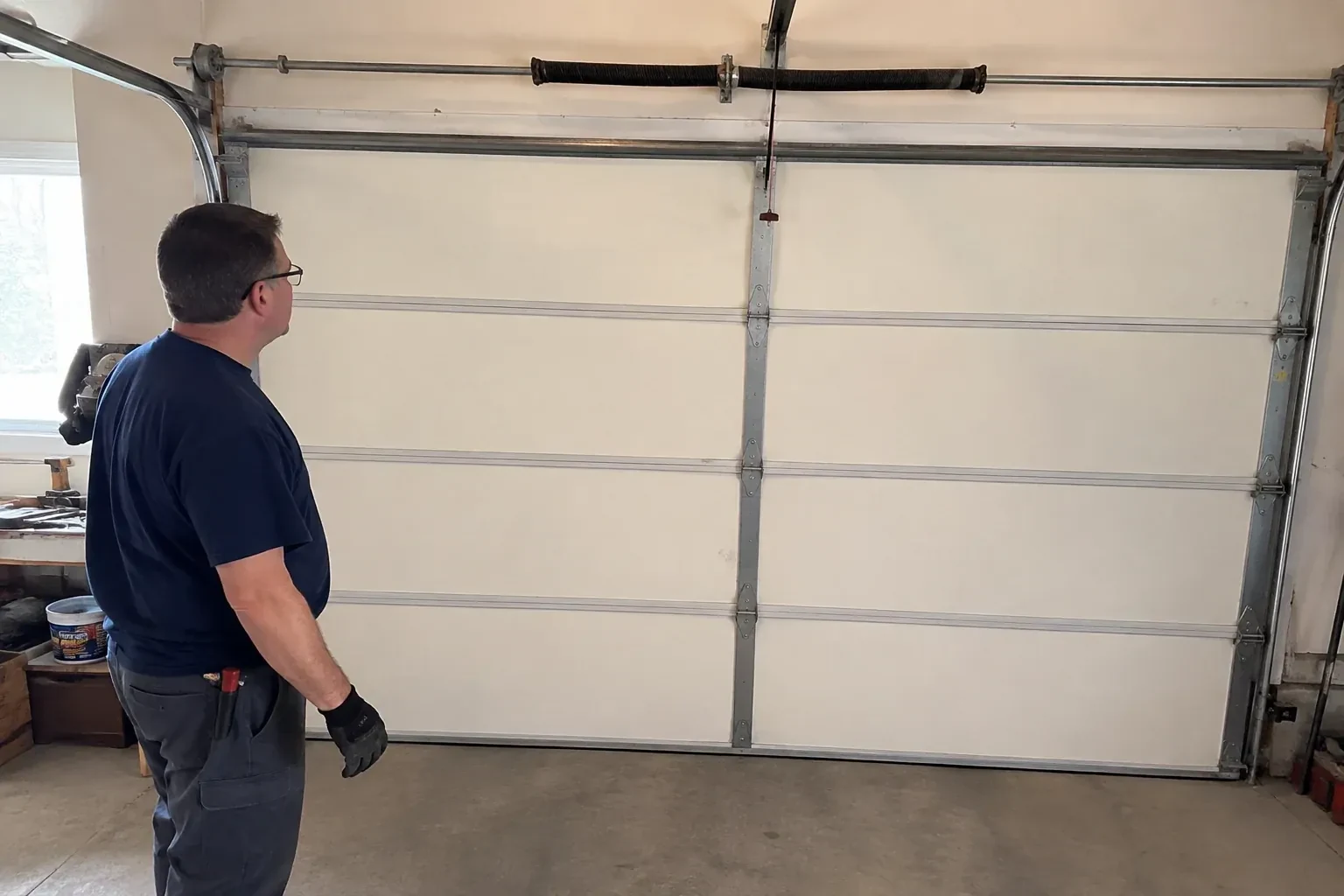
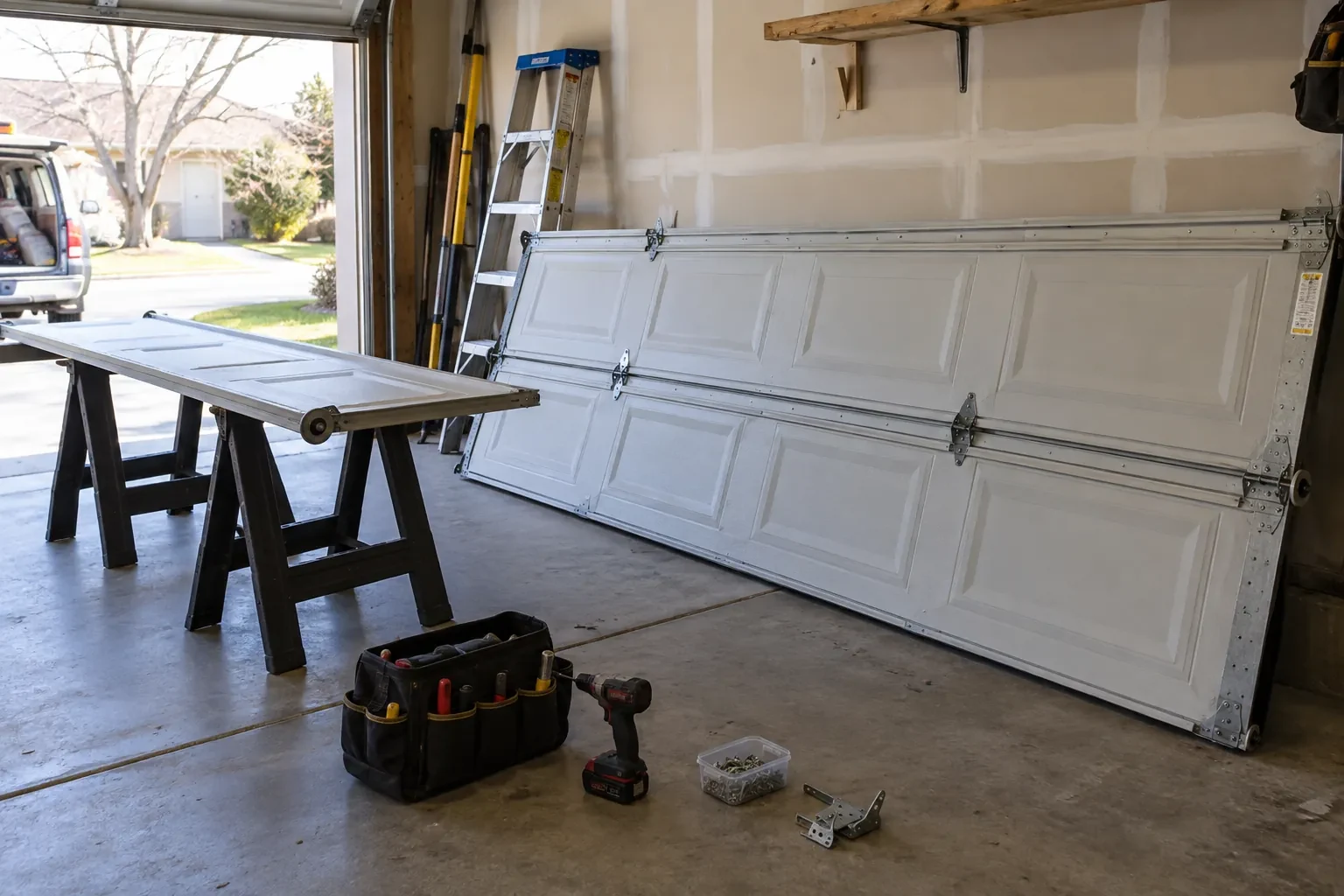
- Off-Track Garage Door ResetYou tapped the door with the bumper while backing in, barely a nudge, and now the bottom corner has swung inward.
- Garage Door Panel ReplacementYou misjudged the last metre of the driveway and felt the bumper meet the door.
- Garage Door Bottom Seal ReplacementThe gap under the door is a finger wide at one end and nothing at the other.