Repairs · Port Bolster
Off-Track Garage Door Reset in Port Bolster
You tapped the door with the bumper while backing in, barely a nudge, and now the bottom corner has swung inward.
In plain words
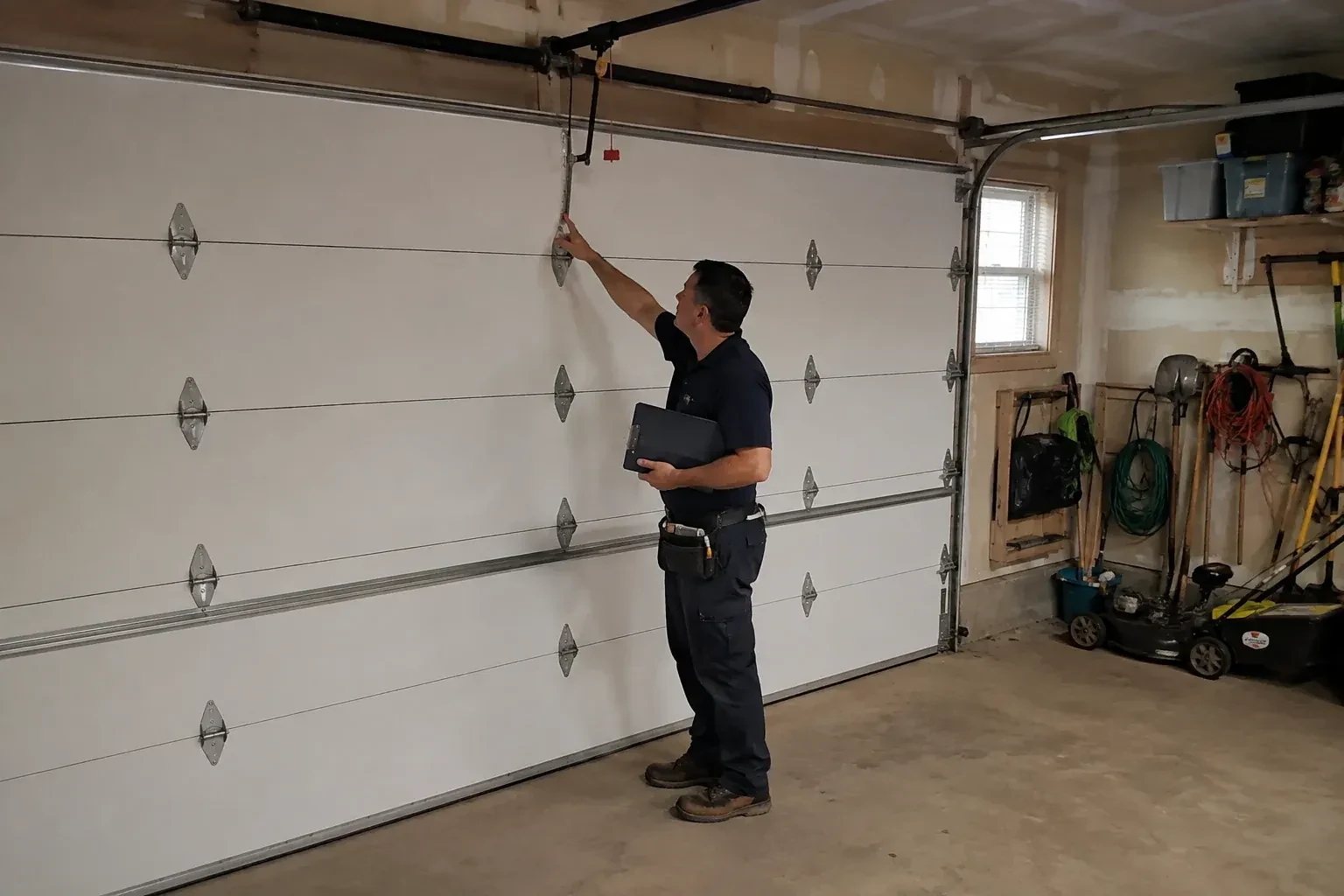
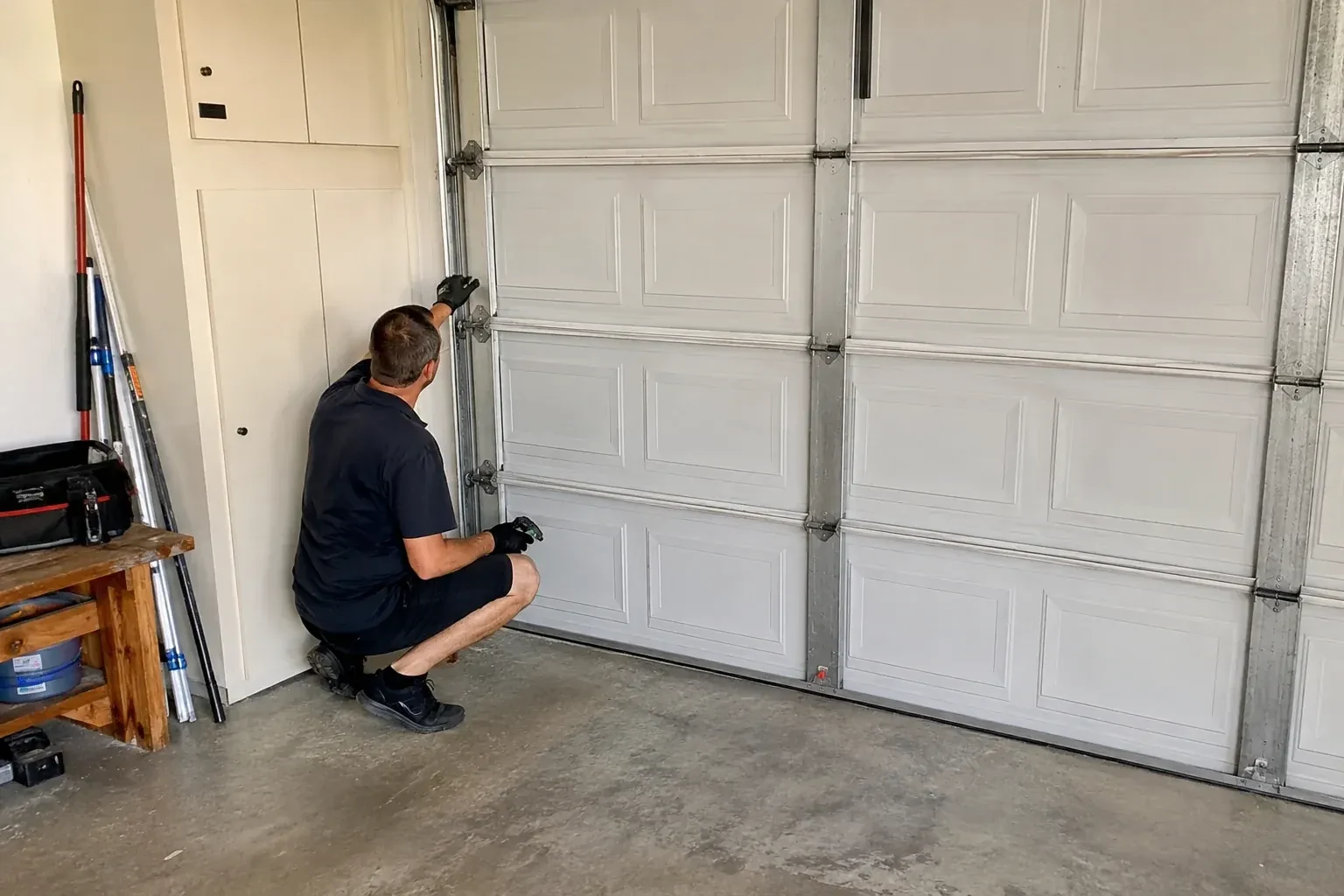
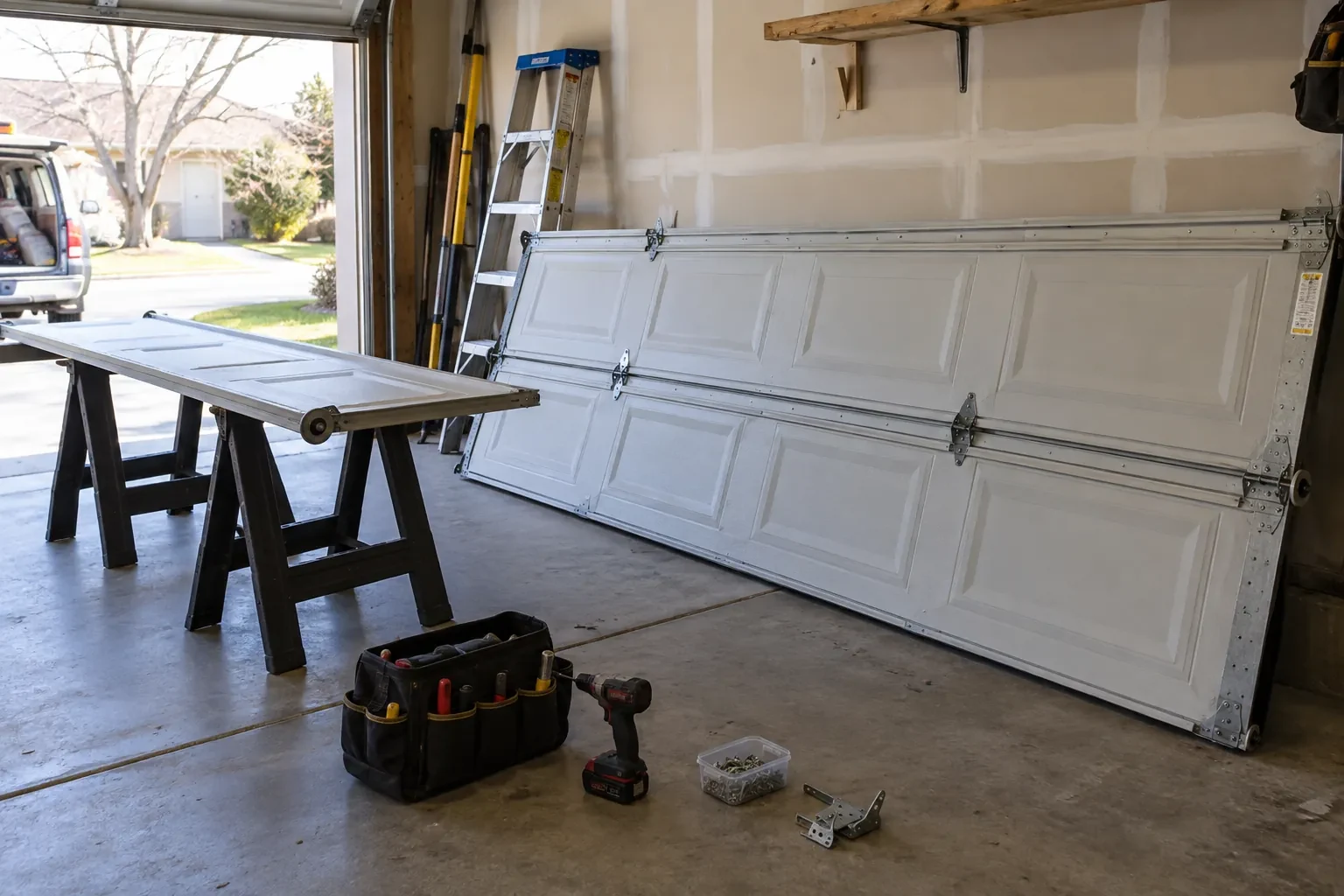
An off-track reset is the visit that puts a crooked, jammed or hanging garage door back onto its rails. Sectional doors ride on rollers inside a pair of curved steel tracks, and when a roller escapes, the door racks sideways and jams. The technician first makes the door safe by disconnecting the opener and clamping the sections so nothing can slide, then works out what let the roller go. The rollers are guided back into the track, any cable that jumped its drum is re-seated, the track is trued against the wall, and the door is run by hand and then by opener to confirm it travels straight.
How the visit goesThe morning after a thaw the opener groaned, the door stayed stuck to the icy floor for a second, then lurched up crooked. It stopped halfway with a grinding scrape and has not moved since.
Off-Track Garage Door Reset
How the visit goes
Cables, drums and the shape of the drop
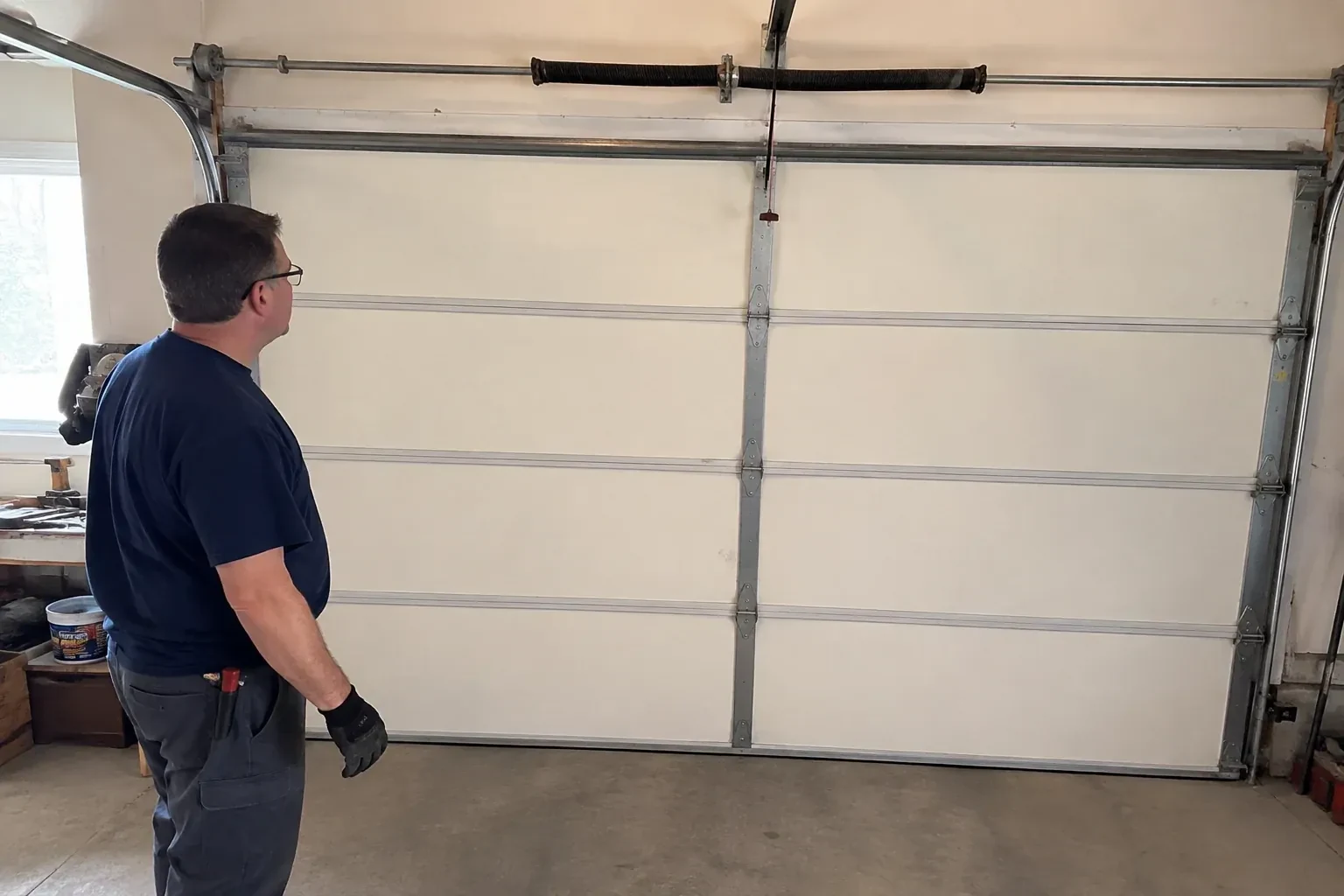
Both lifting cables are traced from the bottom brackets up to their drums. The technician looks for a cable hanging in a loop, wound crossed on its drum, frayed near the bottom bracket where salt collects, or missing altogether. The drums are checked for set screws that have slipped on the shaft. If one side of the door sits lower, the cable on that side is nearly always the reason, and the springs will have to be handled before the door can be levelled. Finding this early keeps the reset from becoming a series of surprises once the rollers are back in.
Running the door by hand
Before the opener comes back into the picture the door is proven manually. The clamps come off, the technician lifts the door slowly from the bottom, watching each roller pass through the curve and along the horizontal rail, and listening for any scrape that would mean a tight spot. At the halfway point the door is let go and should hold there with little drift. It is raised fully and must stay up. Then it is lowered and must close level along the floor. Any drag, sway or roller lift at this stage is fixed now, because the opener would only hide it until the next event.
Lubricating the right parts, and not the track
Twice a year, hinge pins, roller bearings and the coils of torsion springs get a light application of a garage-door silicone spray or white lithium grease, wiped so nothing drips. Nylon rollers without bearings are left dry. The tracks themselves are only ever wiped clean with a damp cloth: lubricant on the rail collects grit and lets the rollers skid rather than turn, which is a slow route back to a worn wheel and an escaped roller. Household penetrating oils are avoided because they attract dust. This small routine keeps the freshly reset door running as quietly as it does on the day of the visit.
Off-Track Garage Door Reset
In the van
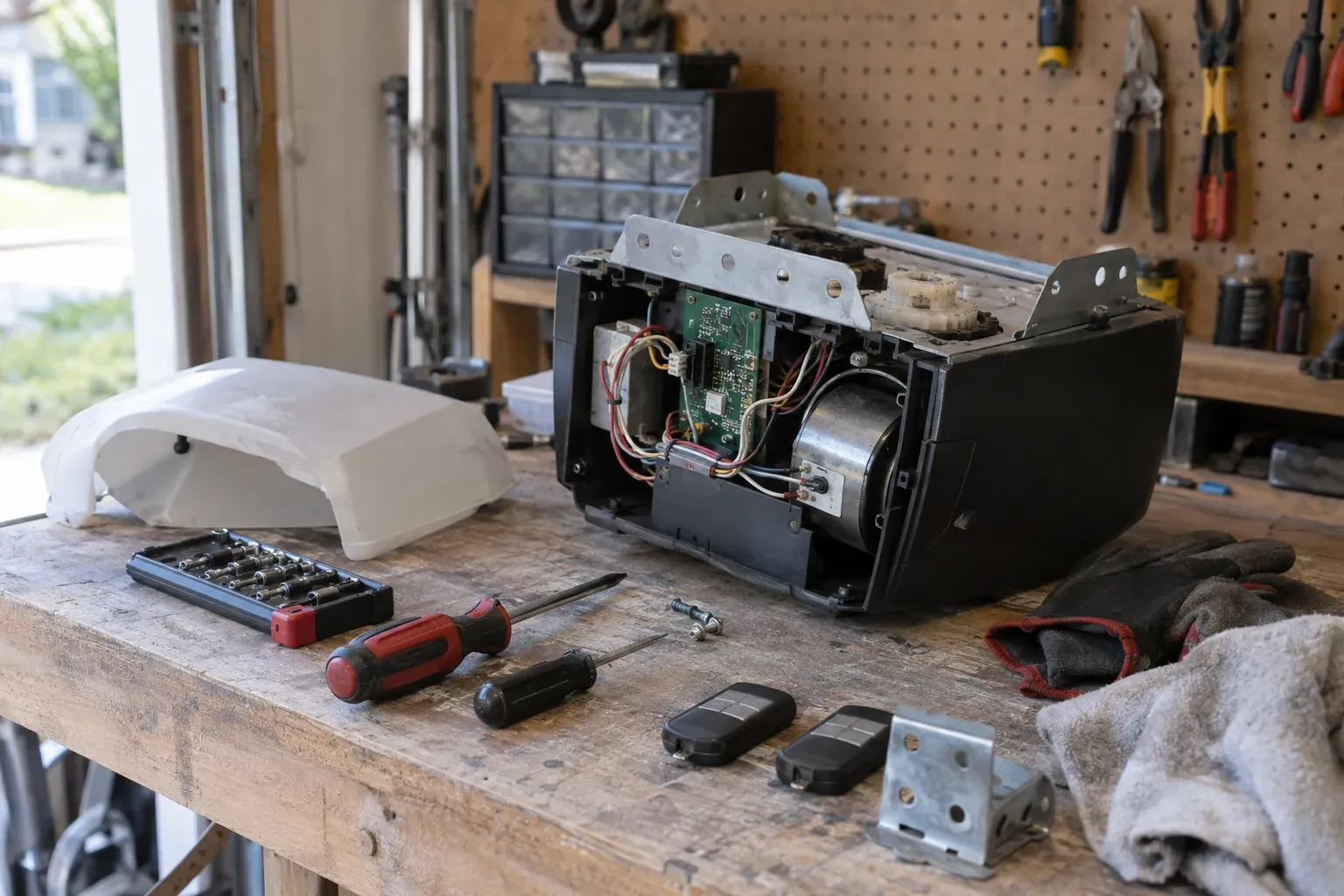
Locking pliers and track clamps
Bottom brackets
Jamb and flag brackets
Track pliers
Torsion spring winding bars
Off-Track Garage Door Reset
What affects the quote
Older or unusual hardware
Low-headroom track, high-lift track, an old wood door with obsolete hinges or a commercial door with heavy-gauge rail may need parts that are ordered or adapted, which is explained in the estimate.
Size and weight of the door
A double door, an insulated door or a wood door carries more weight on every roller and cable, takes longer to support and reset, and uses heavier hardware. The quote reflects the door in front of the technician.
Condition of the jamb and fasteners
Lag screws that spin in dry or split wood are moved to sound framing or replaced with longer fasteners or through-bolts. If the jamb itself needs a repair or a sister piece, that is named as an extra item.
What to have ready
- Does the track look bent, or have screws pulled out of the wall?
- Are the springs mounted above the door or stretched along the sides?
- Is one side of the door hanging lower than the other?
Off-Track Garage Door Reset: questions
QuestionsI only tapped the door with the bumper. Why is it off its track?
A sectional door is strong in the direction it travels and surprisingly easy to push sideways at a single roller. A light nudge on the bottom section can flex the track lip enough for the roller to slip out, after which the section twists and the rollers above follow. The good news is that this kind of event usually leaves the cables and springs alone, so the reset is often rollers, a re-formed track lip and a hinge check.
Will the opener need adjusting afterwards?
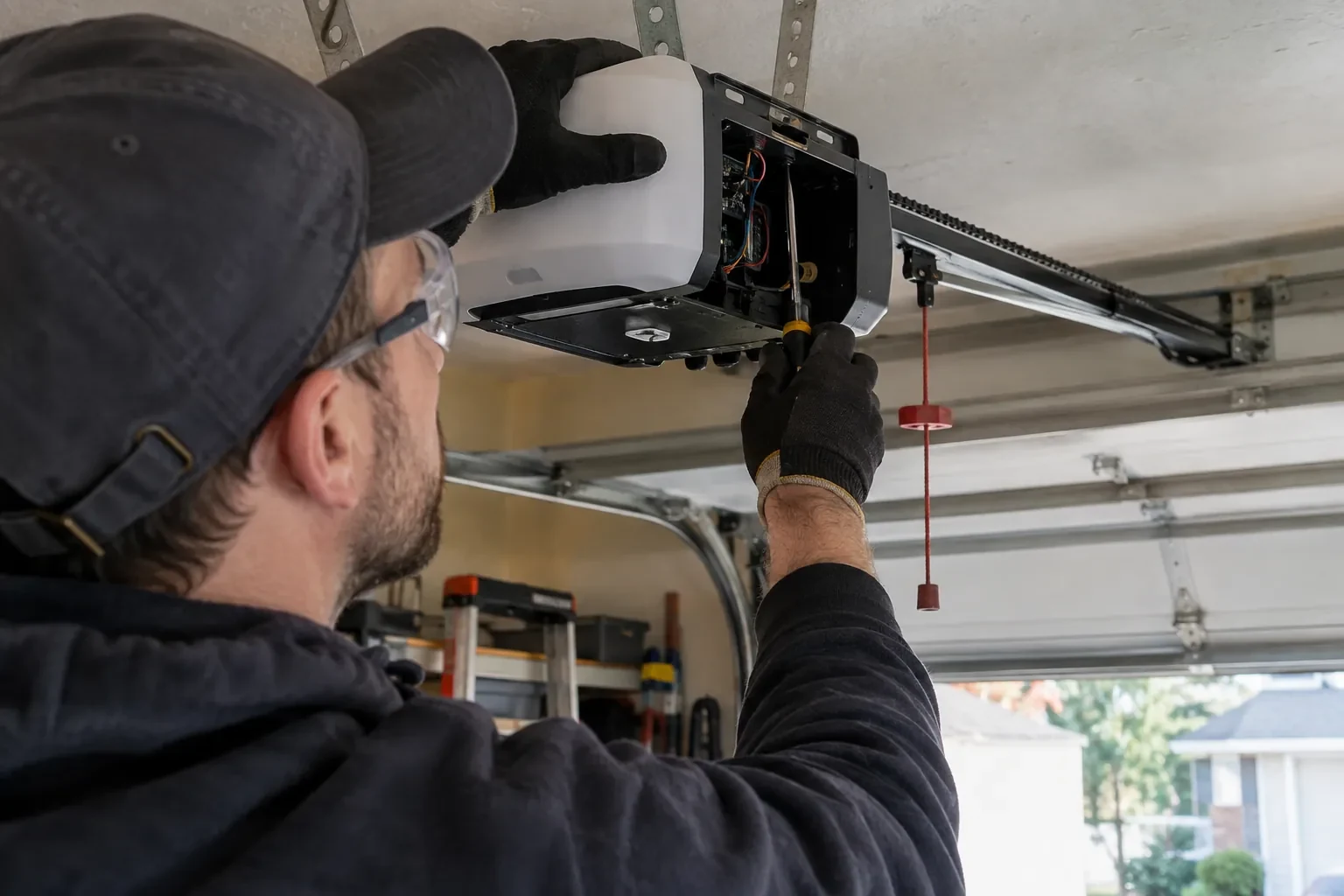
Sometimes, but not always. Once the door runs true by hand, the trolley is reconnected and the opener is checked against its own travel limits and force; those are only reset if that check shows they have drifted, since many openers need no force change after a repair like this. The reversal is then checked against a block laid in the door's path and by interrupting the photo eyes from a safe distance. If the opener strained hard during the event, its arm and bracket are checked too.
My door has springs along the sides, not above it. Is the reset the same?
The principle is the same but the sequence differs. With side springs the door is first opened all the way and clamped, because that is the position where the springs carry no load; the cables are then checked over their pulleys and evened up at the clips. The technician also checks that a containment cable runs through each spring, which stops a broken spring flying across the garage, and fits one if it is missing.