Springs · Wilfrid
Garage Door Hinge Replacement in Wilfrid
The car nudged the door on the way in.
In plain words
Winter puts the lowest hinges through the most. Slush and road salt land on the bottom two joints, and the salt eats into the galvanizing where the leaf meets the pin. A bottom seal frozen to the slab is the other winter classic: the opener pulls on the top panel, the door stays put, and the hinges and top fixtures take a wrench they were never built for. Hinge replacement puts new galvanized steel on the worn joints, straightens or renews anything bent in the tug, and ends with two habits, a clear threshold and a wipe of the low hardware, that keep the new set sound.
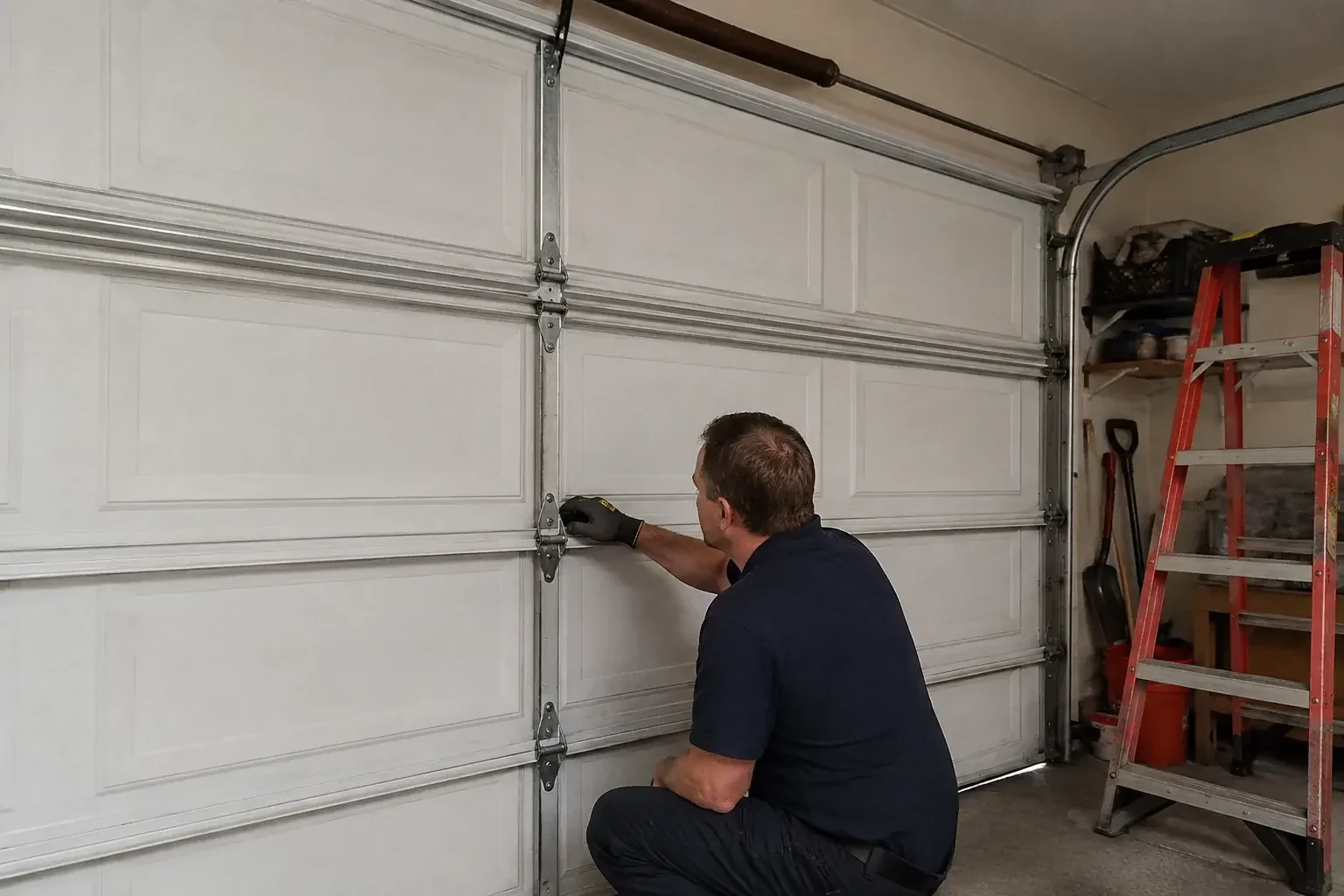
How the visit goesPressing a hand against one of the middle hinges makes it rock on the panel. The screws turn and turn without ever tightening, and there is a rattle from that spot every time the door settles onto the floor.
Garage Door Hinge Replacement
How the visit goes
The holes and the stile behind them
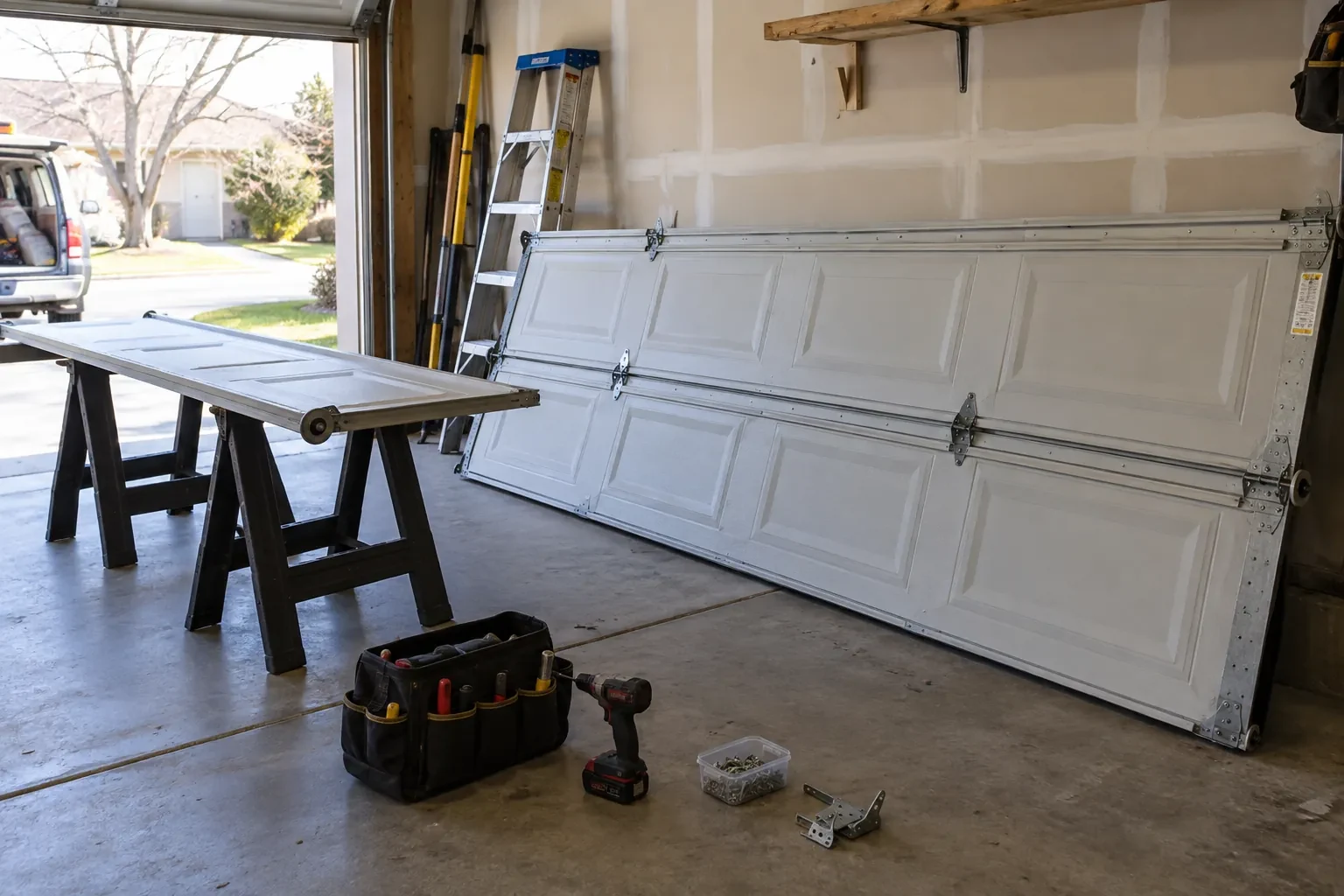
A hinge only holds if its fasteners do. The technician tests each screw for grip and looks at the stile it threads into: the folded steel channel at the panel edge on a steel door, the hinge support plate behind the skin where one is fitted, or the solid timber of a wood door. Holes that have stretched, rusted or torn are noted, because a new hinge on a stripped hole rocks just like the old one. Where the metal is thin or the wood is soft, the plan changes from screws to a through-bolt with a nut and washer, or a backer plate that spreads the load across fresh material.
Swapping a centre hinge
A centre hinge carries no roller, so its exchange is the simplest part of the day. The screws into the upper and lower panels are backed out, the old hinge lifted off, and the stile checked for damage around the holes. The new hinge, a 1 in most cases since centre hinges share that geometry, is placed on the same hole pattern, and new hex-head self-drilling screws are driven into the stile or the support plate behind it. If the old holes are tired, the technician moves the hinge slightly to fresh metal within the stile or bolts through with a nut and washer, then confirms the joint closes tight with no gap.
Learning the door's new sound
A well-hinged door has a sound, a steady rumble with no clicks, and it is worth getting to know it. A new pop or click at a fixed height points at a hinge or roller at that joint. A grinding note from one end suggests a roller bearing. A rattle when the door settles onto the floor is often a loose centre hinge screw. Because you now know what the door sounds like when everything is tight, a change stands out early, while it is a screw or a single hinge rather than a bent panel. A phone recording of the healthy door is a handy reference.
Garage Door Hinge Replacement
In the van
Replacement rollers
Hinge support plates
Track clamps or locking pliers
Numbered galvanized edge hinges
Flashlight and level
Garage Door Hinge Replacement
What affects the quote
Track or balance problems found
If the inspection shows a track out of line or a door out of balance behind the hinge failure, correcting it is explained and priced on its own alongside the hinge work.
Damage to the stile or panel
After an impact, straightening a stile, fitting a support plate or adding a strut comes with the hinge work and is quoted as separate items so you can see each one.
Gauge and grade of the replacement
Standard 14-gauge hinges are priced differently from heavy 11-gauge parts, and moving a heavy insulated door up a gauge is an upgrade named as its own line in the quote.
What to have ready
- Is the door closed, open or stuck partway right now?
- Is the door steel, wood or insulated steel?
- Has a car, bin or anything else bumped the door recently?
Garage Door Hinge Replacement: questions
QuestionsWhat is the difference between an edge hinge and a centre hinge?
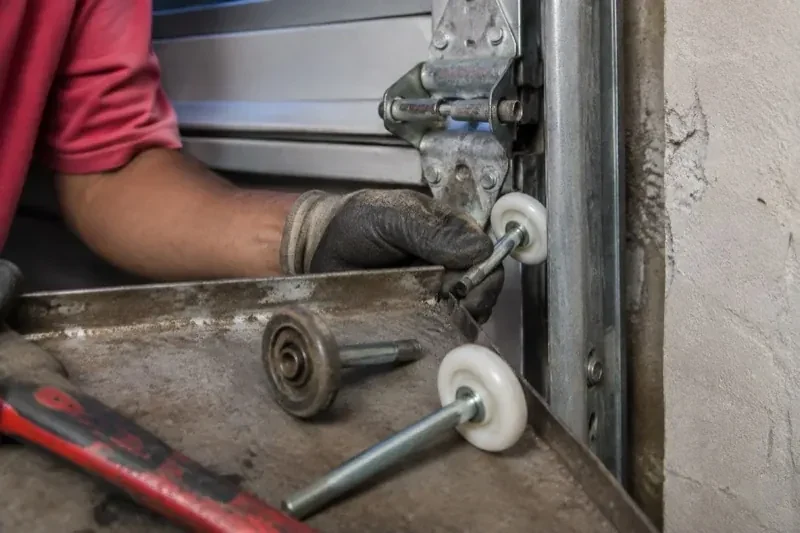
An edge hinge sits at the end of the joint on the end stile and does two jobs: it links the panels and it holds the roller that runs in the track, which is why it is numbered for its position. A centre hinge sits on an intermediate stile in the middle of the door, links the panels only, and carries no roller. Both let the panels pivot as the door folds around the curve.
Can a light bump from the car damage a hinge?
Yes, more often than people expect. The bottom two panels take the contact, and the edge hinge at that joint bends along with the stile behind it, so the panel edges rub and the roller leans. The damage sometimes only shows as a new squeak at the curve. The technician straightens or renews the stile, fits a new hinge and roller, and checks the strut and track on that side.
What are the hinges made of?
Stamped galvanized steel, formed into two leaves joined by a pin or a rolled tube. The zinc coating is what resists rust in a garage that sees wet cars and salt, and it is why a scratched or bent hinge starts to brown at the damaged spot. Edge hinges include a tube that holds the roller stem. Thickness is given as a gauge, most residential hinges being 14 or 18.
Related services
- Garage Door Track Repair or ReplacementThe door has started rubbing the frame on the left, leaving a shiny stripe down the weatherstrip.
- Garage Door Cable ReplacementSomeone left the snow shovel leaning in the opening and the door came down on it.
- Torsion Spring ReplacementNothing broke outright, but the door has grown heavier each winter, opens more slowly and squeals as it moves.