Openers · Wilfrid
Garage Door Opener Diagnosis and Repair in Wilfrid
Nothing.
In plain words
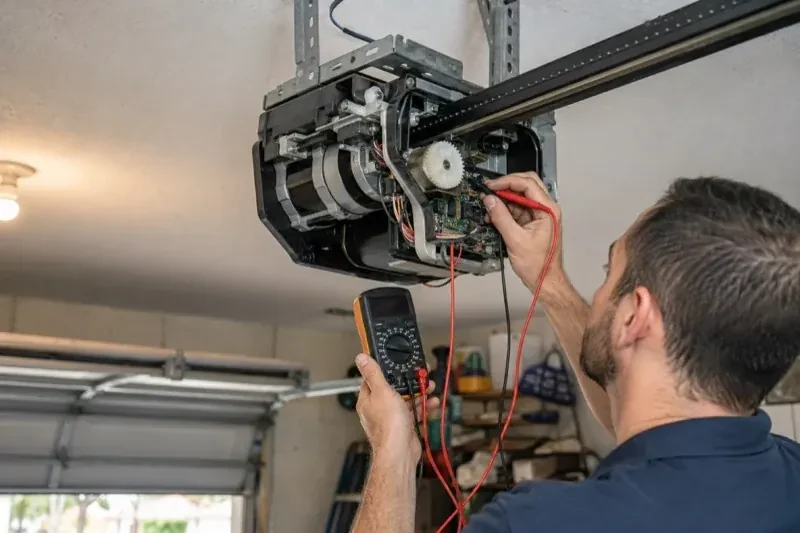
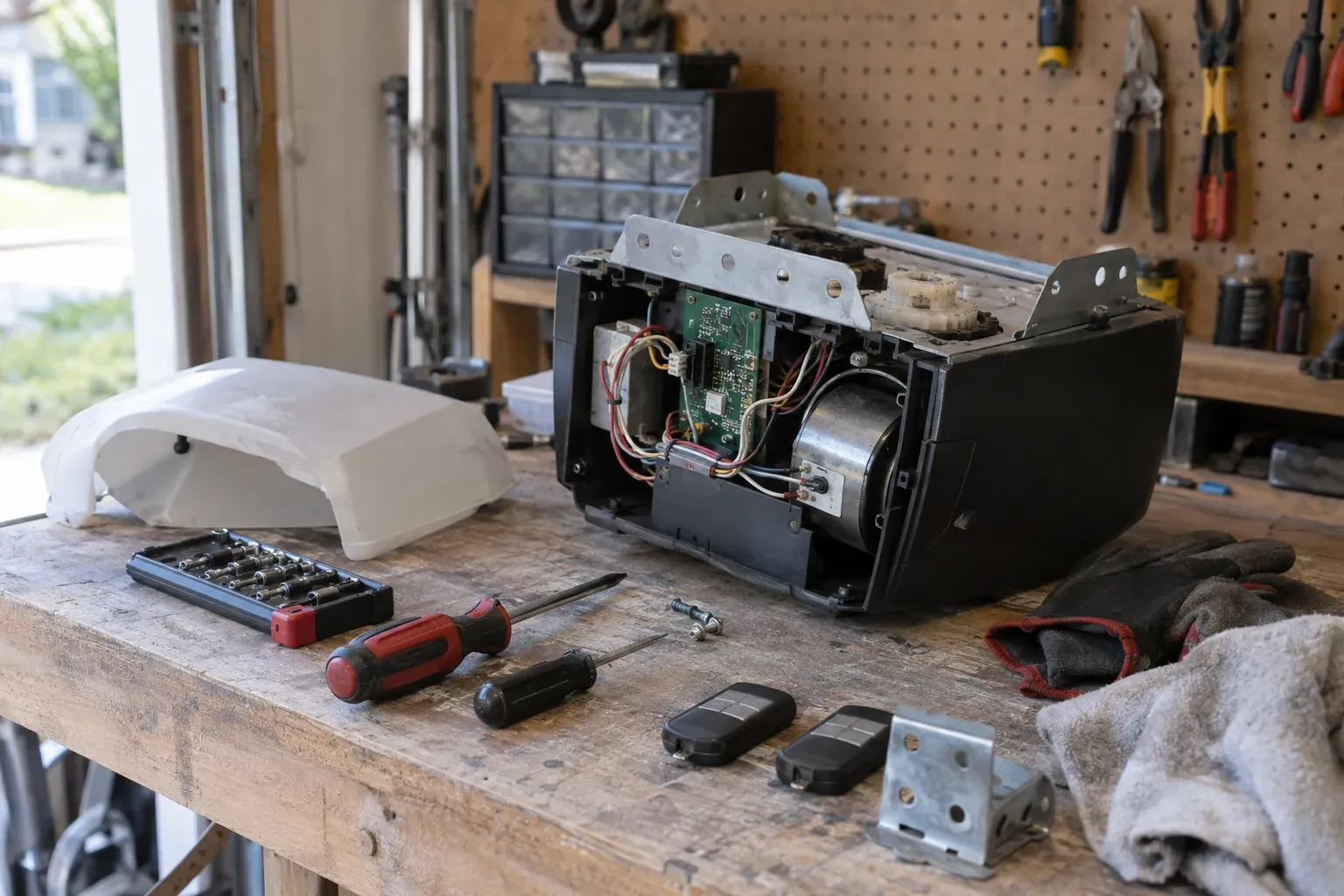
Garage door opener diagnosis is a fault-finding visit with a fixed order of tests. The technician confirms power at the ceiling receptacle, tries each control on its own, checks the safety sensors and their indicator lights, examines the drive train from motor to trolley, and reads any flash code the unit is showing. Only then is a part named, because a dozen different faults look identical from the driveway and guessing at the part costs you a second visit. When the cause is a small component, the repair is made while the technician is there; when it is not, you get a clear account of what comes next.
How the visit goesNothing. No light, no click, no hum from the unit on the ceiling. The remote is dead, the wall button is dead, the keypad is dead. It worked yesterday evening, before the storm knocked the power out for an hour and brought it back with a flicker.
Garage Door Opener Diagnosis and Repair
How the visit goes
What the blinking lights are saying
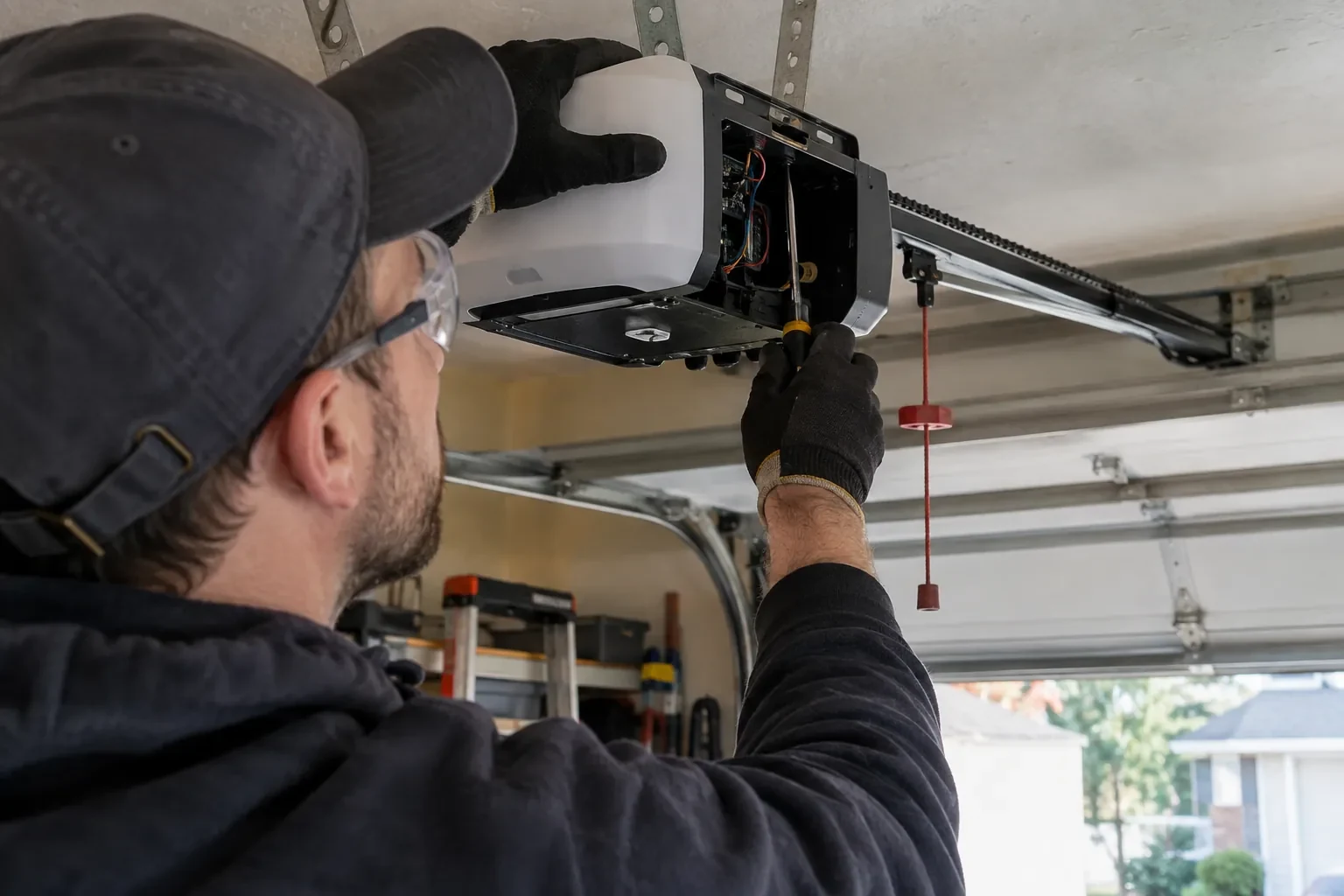
Many openers describe their own fault. The head unit flashes its light bulbs, or an up arrow and a down arrow, in a numbered pattern, and some display a code on the wall control. The technician counts the pattern, identifies the exact model from its label, and matches the two on the manufacturer's chart: one family of codes means the sensor circuit is open or obstructed, another means the motor was told to move and nothing turned, another means the door needed more force than the limit allows. The code narrows the search; a hands-on test then confirms it, because a wiring fault can imitate a sensor fault.
When replacement is the honest answer
Sometimes the diagnosis points past repair. A head unit from before photo eyes were standard, a board no longer manufactured, a motor burnt out in a housing whose gear train is also worn, or a chain-drive unit that has already had two gear kits are all cases where replacing the opener serves you better than another patch. The technician sets out what was found, why repair is a poor fit, and what a modern unit offers: a belt or direct drive for quiet, battery backup for outages, and the safety features the standard requires. The choice remains yours, and the door is left safe in the meantime.
A record you can keep
You receive a plain account of the visit: the model and serial of the opener, what the symptom turned out to be, which parts were replaced, what the travel and force settings are now, and anything noticed for the future, such as rollers approaching the end of their life or a spring nearing its cycle count. Keep this with the house papers. It makes a later service call shorter, it tells a buyer the door has been looked after, and it gives you the model number ready when a remote needs replacing or a code needs looking up.
Garage Door Opener Diagnosis and Repair
In the van
Remote batteries (coin and cylinder cells)
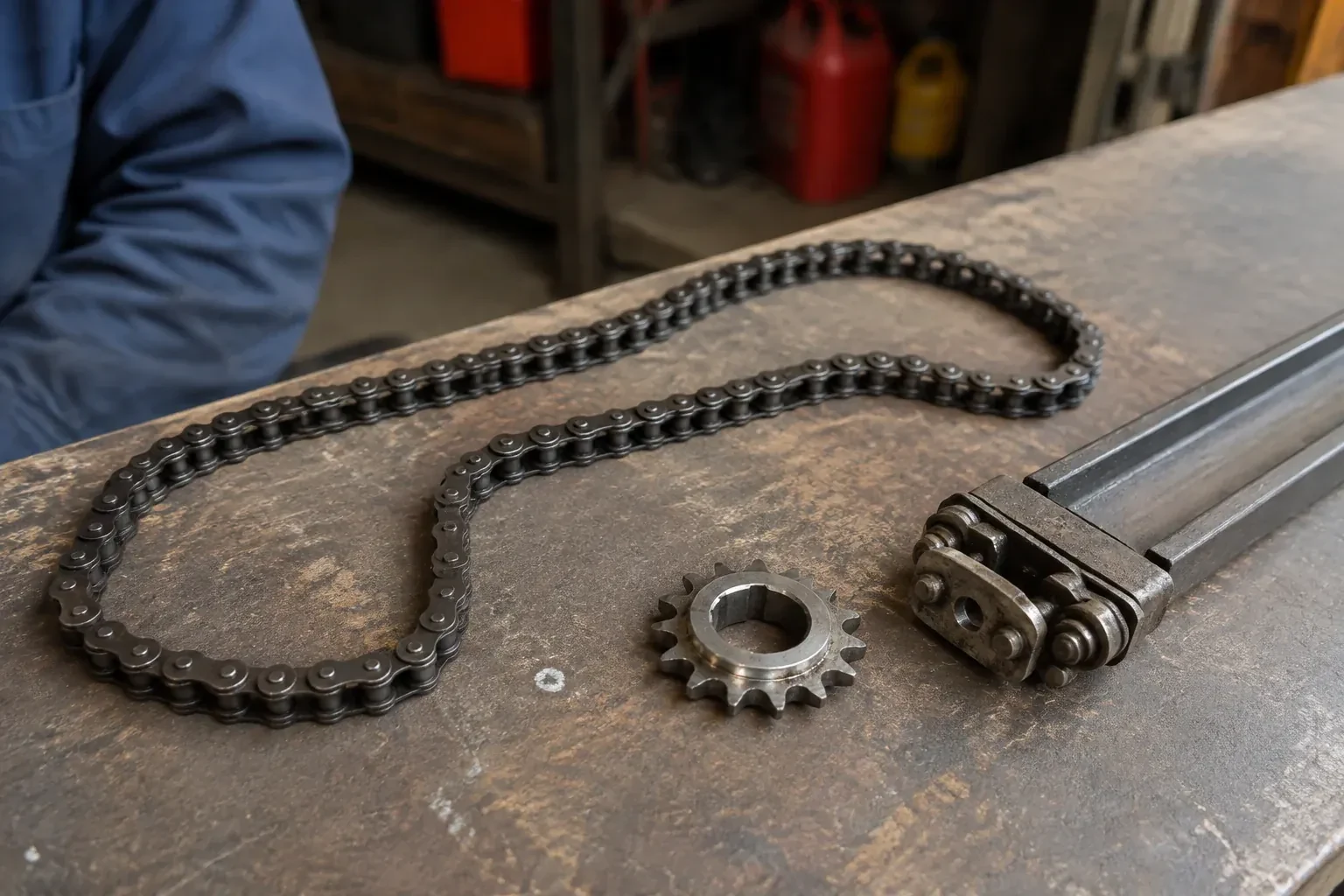
Trolley and carriage
Photo-eye sensor pair
Travel limit switch or RPM sensor
Logic board or receiver
Garage Door Opener Diagnosis and Repair
What affects the quote
Connected features
A unit with a network module, door-position sensor or hub may need its pairing restored or a module replaced, which is quoted as its own step alongside the mechanical repair.
Sensor realignment versus replacement
Straightening a bracket and cleaning a lens is a small task. Replacing the sensor pair and running new wire along the wall and ceiling is a larger one, and the quote names which applies.
Condition of the mounting
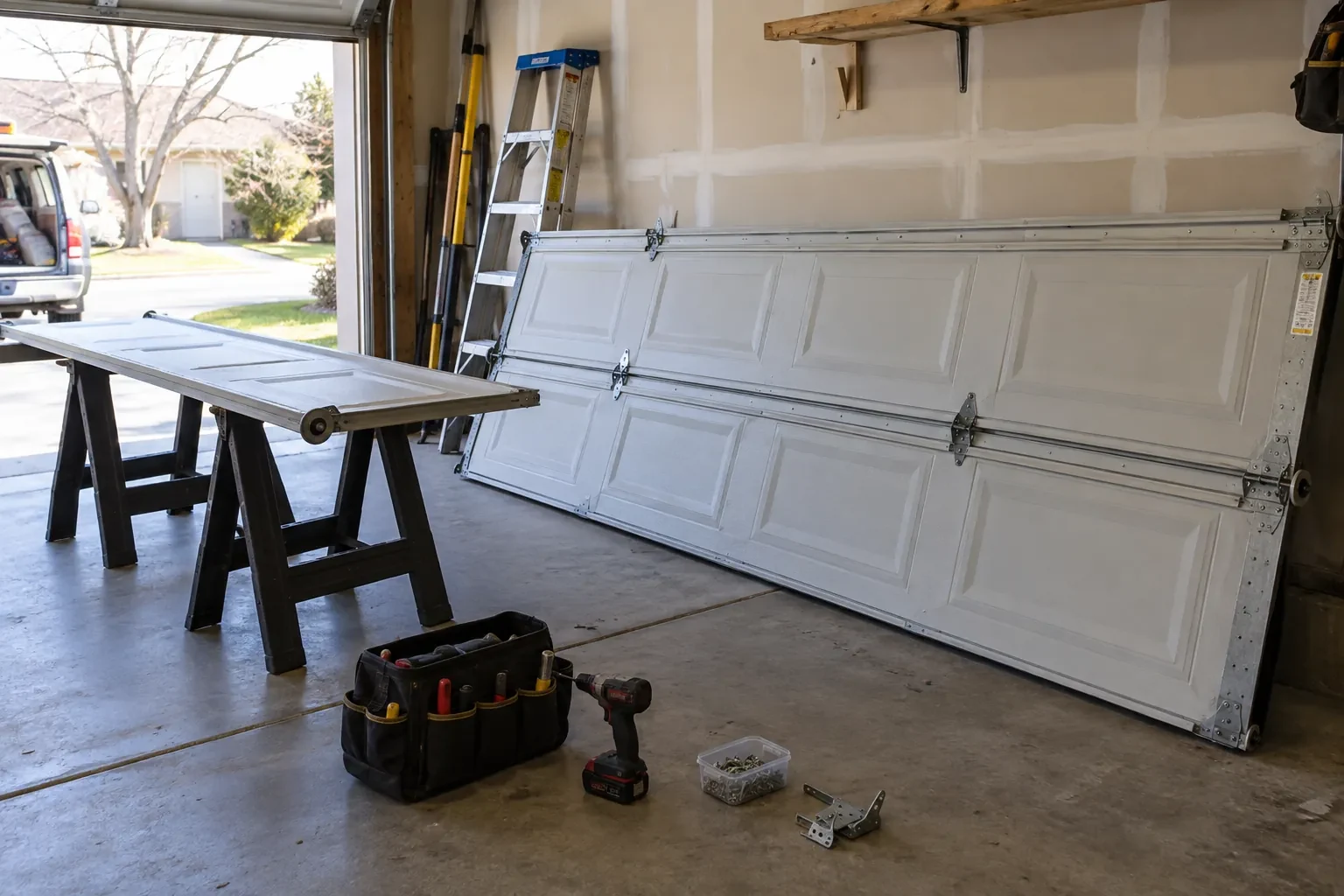
A rail that has sagged, a header bracket pulling out of the wall, or ceiling angle iron that has loosened must be re-secured before the opener is set up, and that hardware work is itemized.
What to have ready
- Did anything happen just before: a power outage, a storm, new bulbs, a bump?
- Roughly how old is the opener, and is the model label readable?
- Are the two small lights on the sensors near the floor steady, flickering or off?
Garage Door Opener Diagnosis and Repair: questions
QuestionsMy opener has no photo eyes. Can it be kept in service?
Openers without an external sensor date from before 1993, when photo eyes or an equivalent device became part of the operator standard. The door industry's own inspection checklist and consumer safety regulators both recommend replacing such units rather than repairing them, because the contact-reversal feature alone is a weaker protection for anyone or anything under the door. A diagnosis on one of these units usually ends with a replacement recommendation, explained plainly.
Should I lubricate the chain, the rail or the track?
Rollers, hinges, bearings and springs benefit from a garage door lubricant once or twice a year. The chain, belt or screw-drive rail is a separate question, since each drive type calls for its own product and schedule from the opener's manual rather than one rule for every unit. The track itself should stay clean and dry, because lubricant there collects grit and makes rollers slide instead of turning. The technician can point out the spots on your door at the end of the visit.
The motor hums but the door stays put. What is usually wrong?
A hum with no movement means the motor is receiving power but something is stopping it turning, or stopping its turn from reaching the door. On AC units a failed start capacitor is the common cause; on chain-drive heads a stripped nylon drive gear is the other. Less often the trolley has simply been released from the carriage. Each of these is a routine repair once identified, and the hum is one of the more helpful sounds an opener makes.
Related services
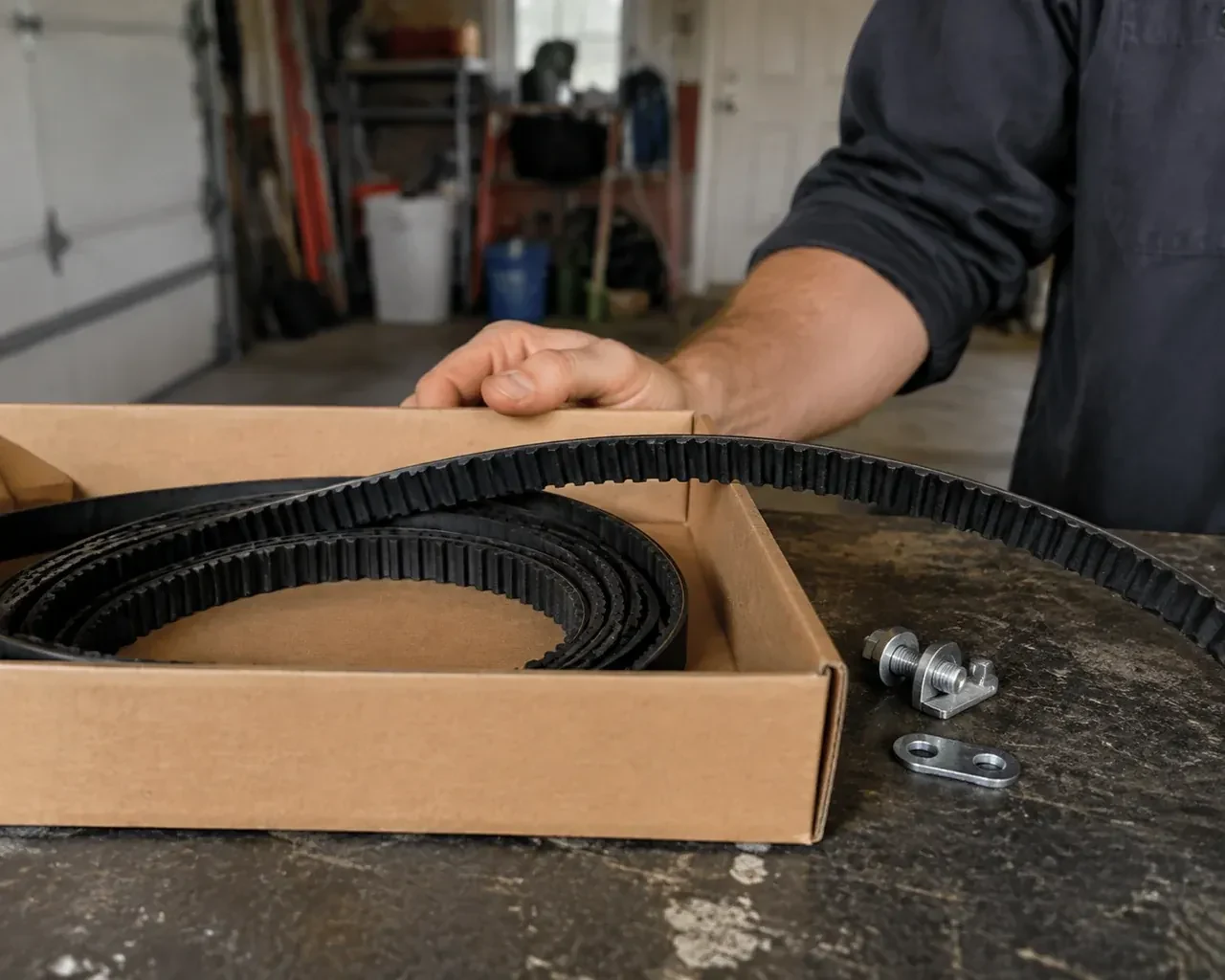
- Belt-Drive Opener RepairThe belt looks fine from a distance, but up close the rubber has cracked across the back in dozens of places and, in one spot, you can see the steel cords showing through.
- Garage Door Opener ReplacementYou want the ceiling back.
- Photo-Eye Sensor Alignment or ReplacementOn bright mornings the door will not close, then by lunchtime it behaves itself.