New Doors · Derryville
Commercial Rolling Door Repair in Derryville
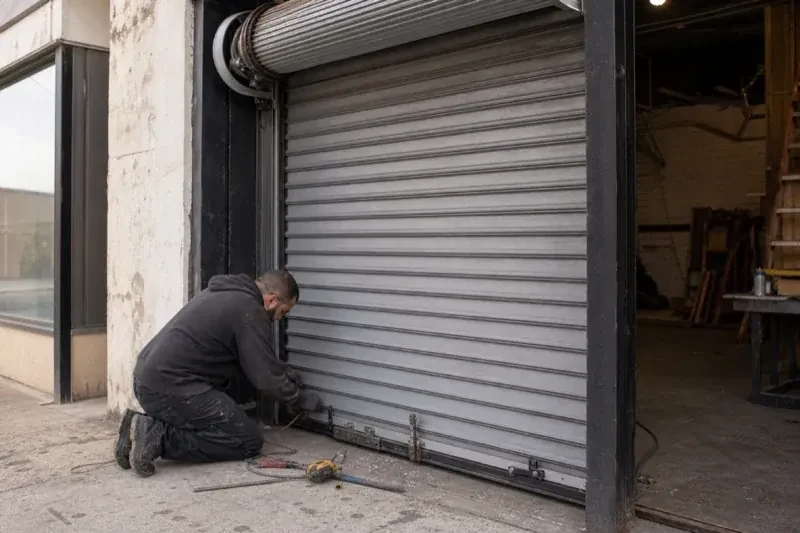
The rolling door starts upward, then one side rises ahead of the other.
In plain words
The useful decision is not simply repair versus replacement; it is which path fits the identified curtain, structure, duty and operating system. Localised slat, guide, seal, chain or control faults often support a component repair. Widespread curtain distortion, repeated impacts, worn major assemblies or an operator that no longer suits the door's use may justify a broader plan. Measurements, model information, fire-rating status and the condition of connected parts make that choice concrete. The quote can then separate the current authorised work from optional improvements such as added vehicle detection, guarding or revised controls.
How the visit goesThe rolling door starts upward, then one side rises ahead of the other. Its bottom bar sits on an angle, several slats scrape the guide, and the opening is no longer clear enough for normal shipping traffic.
Commercial Rolling Door Repair
How the visit goes
Read the curtain from bottom to coil
The curtain reveals how the door has been travelling. The bottom bar is checked for level, twist, impact marks and even contact with the sill. Moving upward, the inspection follows interlocking slats or sheet material, endlocks and windlocks for dents, separation, missing fasteners, polished rub marks or sideways shift. At the hood, the technician observes how the material enters the coil and whether it stacks evenly on the barrel. These clues show whether a damaged section can be renewed locally or whether distortion has spread far enough to affect guides, brackets and counterbalance.
Set controls and protective response
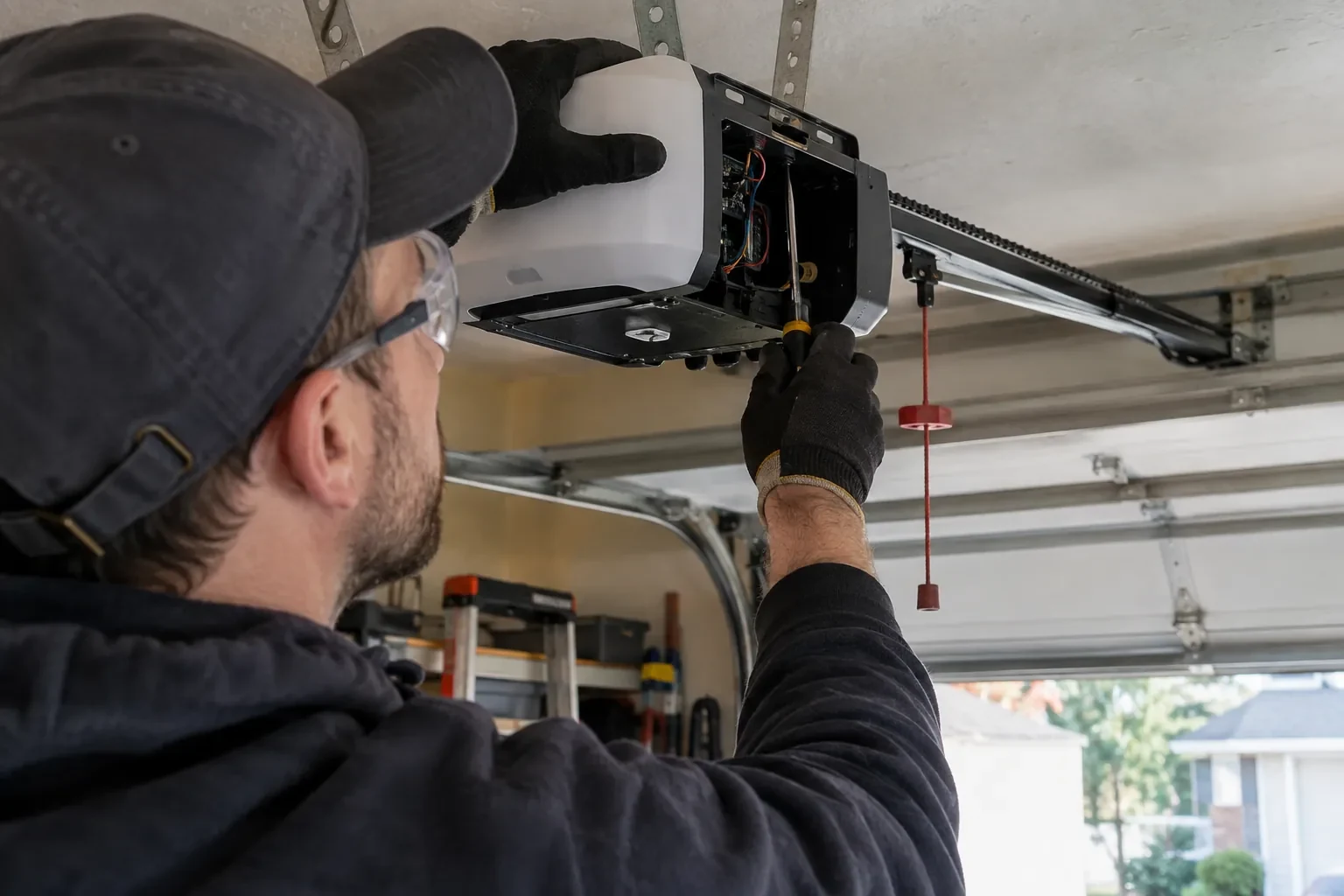
Control and protection devices are returned to their documented roles. Photoelectric sensors are aligned and secured at the required position for the operator system, sensing edges are inspected for full-length response, and damaged cables or connectors included in the scope are renewed. Key stations, three-button controls and access inputs are checked without retaining private codes. During testing, an intentional beam obstruction or edge activation is introduced in a controlled manner to observe the operator's response. Vehicle-detection accessories are tested separately from entrapment-protection devices so each function is understood and recorded accurately.
Controls with clear, separate functions
The handover distinguishes the wall station, key control, access input, photoelectric protection, sensing edge and any vehicle-detection accessory. Each device is demonstrated according to its role, and staff see the applicable response during a controlled test. Sensor lenses remain visible and clean, cables stay protected, and stored materials are kept outside the beam path. Private access codes are retained by the facility rather than written in a service record. With the functions separated clearly, a blocked beam can be handled as a housekeeping clue while an unusual operator response can be reported with useful detail.
Commercial Rolling Door Repair
In the van
Bearings and tension wheel
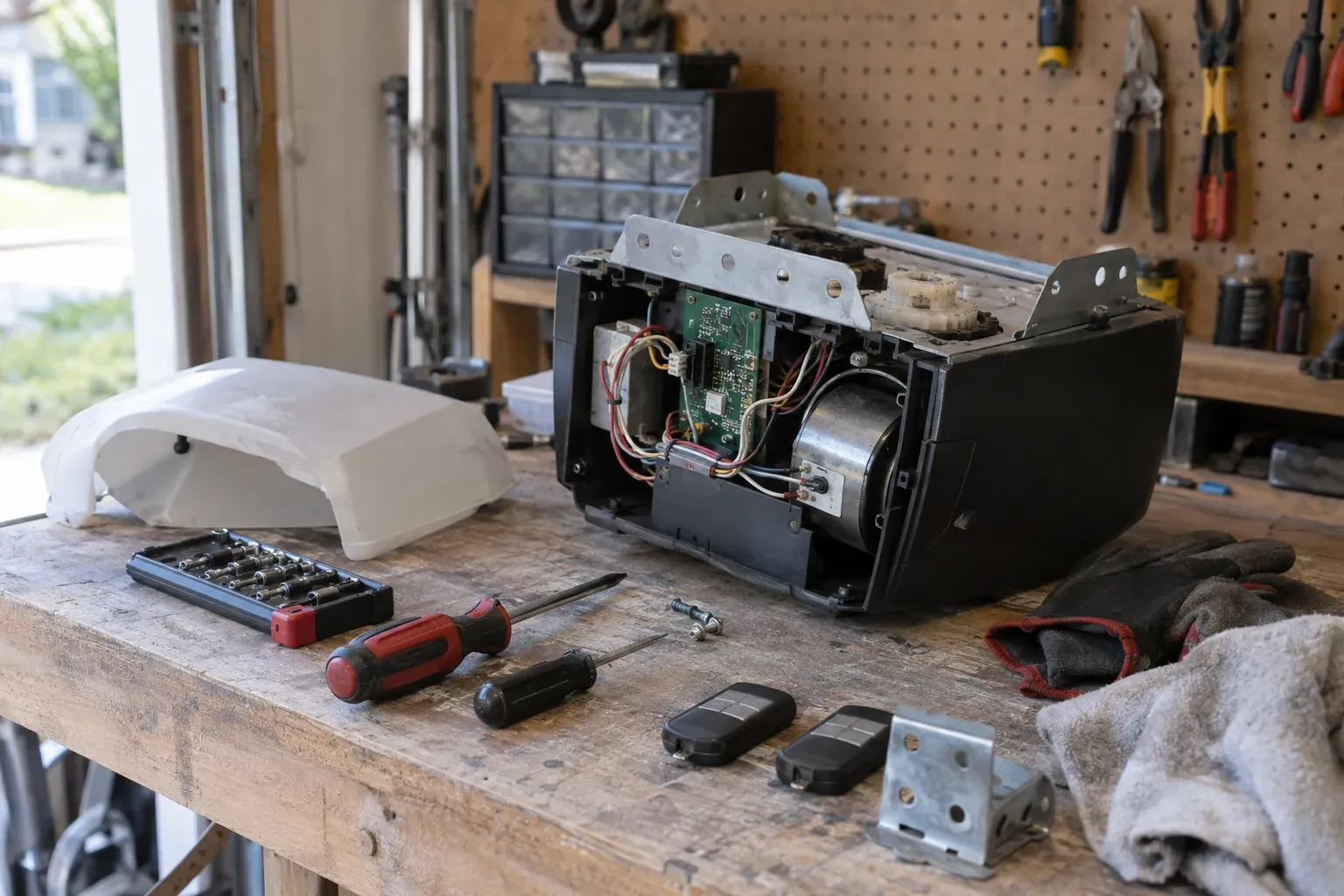
Operator brake and limits
Windlocks and curtain fasteners
Sensing edge and controls
Curtain slats and endlocks
Commercial Rolling Door Repair
What affects the quote
Access above the opening
Ceiling height, hood location, stored goods, mezzanines and nearby services affect safe reach to brackets, barrel and operator. Lifts, platforms and material-handling arrangements are planned accordingly.
Extent of curtain damage
One serviceable slat differs from a distorted group that has pulled endlocks sideways or damaged the coil. Material, profile, finish and number of affected curtain pieces guide the scope.
Protective device scope
Photoelectric sensors, sensing edges, light arrays and vehicle-detection accessories serve defined roles. Quantity, mounting, wiring condition and operator requirements determine repair and test work.
What to have ready
- Which slats, guides or bottom-bar areas look damaged?
- Are any indicator lights showing on the operator or controls?
- Has manual effort, noise or travel changed gradually?
Commercial Rolling Door Repair: questions
QuestionsWhen is operator replacement considered?
A broader operator plan may be considered when major drive or control parts are extensively worn, suitable components are no longer supported, the unit is mismatched to the door or duty, or the desired control arrangement requires a different system. The door's balance, size, cycle pattern, protection devices, power and manual operation all inform that decision.
What information helps before the visit?
Useful details include the opening size, curtain material, manual or powered operation, model labels, current door position, recent impact or weather event and the exact point where travel changes. Photos of the full opening, bottom bar, controls and labels can clarify the system. Mention a fire-protection label at the outset so that scope is recognised.
Why is the bottom bar rising crooked?
An angled bottom bar can point to a shifted curtain, damaged slats, unequal guide friction, a moved barrel, impact at one guide or a counterbalance issue. Measurements at the sill, guides and brackets help separate those causes. Cycling is kept controlled because repeated powered movement can pull a minor tracking problem farther sideways.
Related services
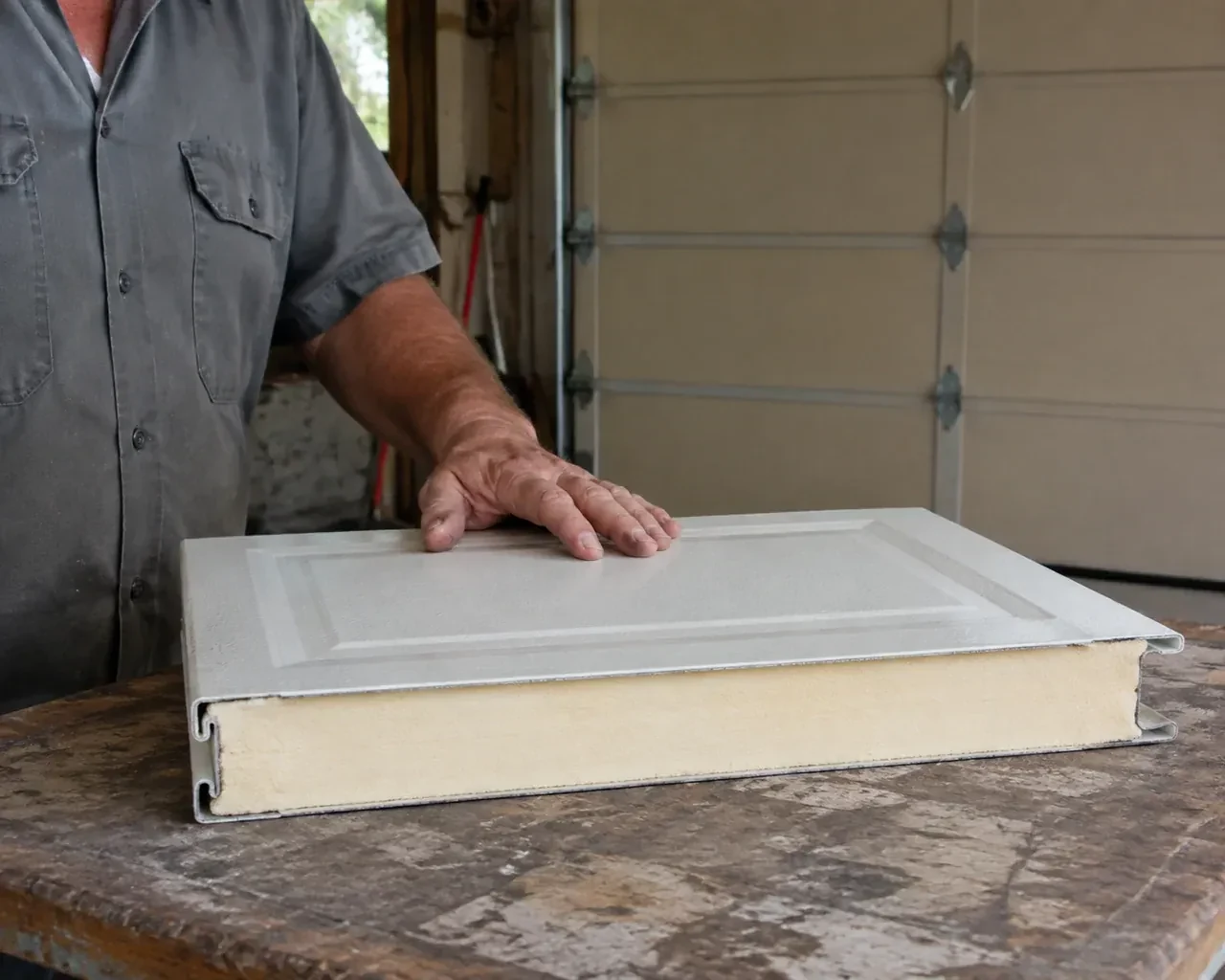
- Insulated Steel Garage Door InstallationYour garage is becoming a workshop, but the thin single-skin door rattles, sweats and lets outdoor temperatures shape the whole room.
- Wind-Rated Garage Door ReplacementNew windows would improve the door's appearance, but they also change the section layout and reinforcement pattern.
- Carriage-House Garage Door InstallationTwo garage openings sit side by side, and small differences in window spacing or decorative hardware would be obvious.