Openers · Briars Park
Emergency Release Repair in Briars Park
It is the coldest morning of the year.
In plain words
The operator standard for residential openers in this country asks for a manual release that is coloured red, easy to tell apart from the rest of the mechanism, and reachable from the floor, with the handle no more than about 1.8 metres up. The reason is plain: in an outage or emergency, someone who has never touched the opener must be able to find and use it. Emergency release repair brings an opener back to that standard when the handle has gone missing, been tied out of reach, or was left too high after a door change, and leaves the household knowing what the red handle is for.
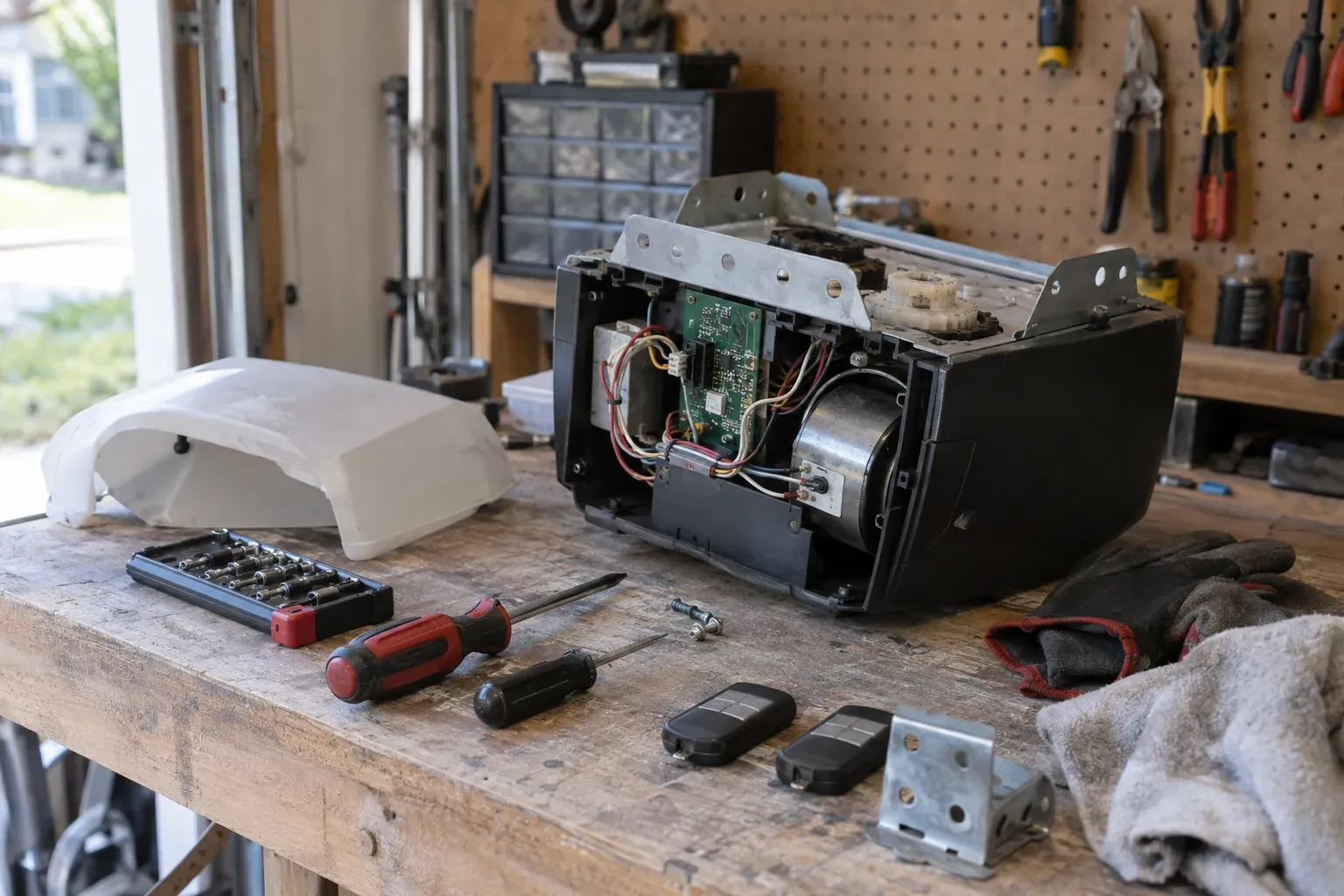
How the visit goesAfter a week of lifting the door by hand you pressed the button, hoping it would catch. Instead the motor grinds, the trolley thumps against the end of the rail, and the little lever that should snap back stays stubbornly upright.
Emergency Release Repair
How the visit goes
The outside key release, if there is one
Many detached garages and some attached ones have a small keyed cylinder, set in the top section on a sectional door or at mid-height on others. The technician checks whether one is fitted, whether the key is available, and whether the cylinder turns and pulls out as designed. Behind it, a cable runs to the trolley lever; it is traced for kinks, stretch, a detached end or a route that snags on a section joint as the door bends. In winter the cylinder is checked for salt crust and ice. Where the garage has no other door, this release is the way in when the opener is silent, so its condition is treated as part of the same job.
Reconnecting and proving the latch
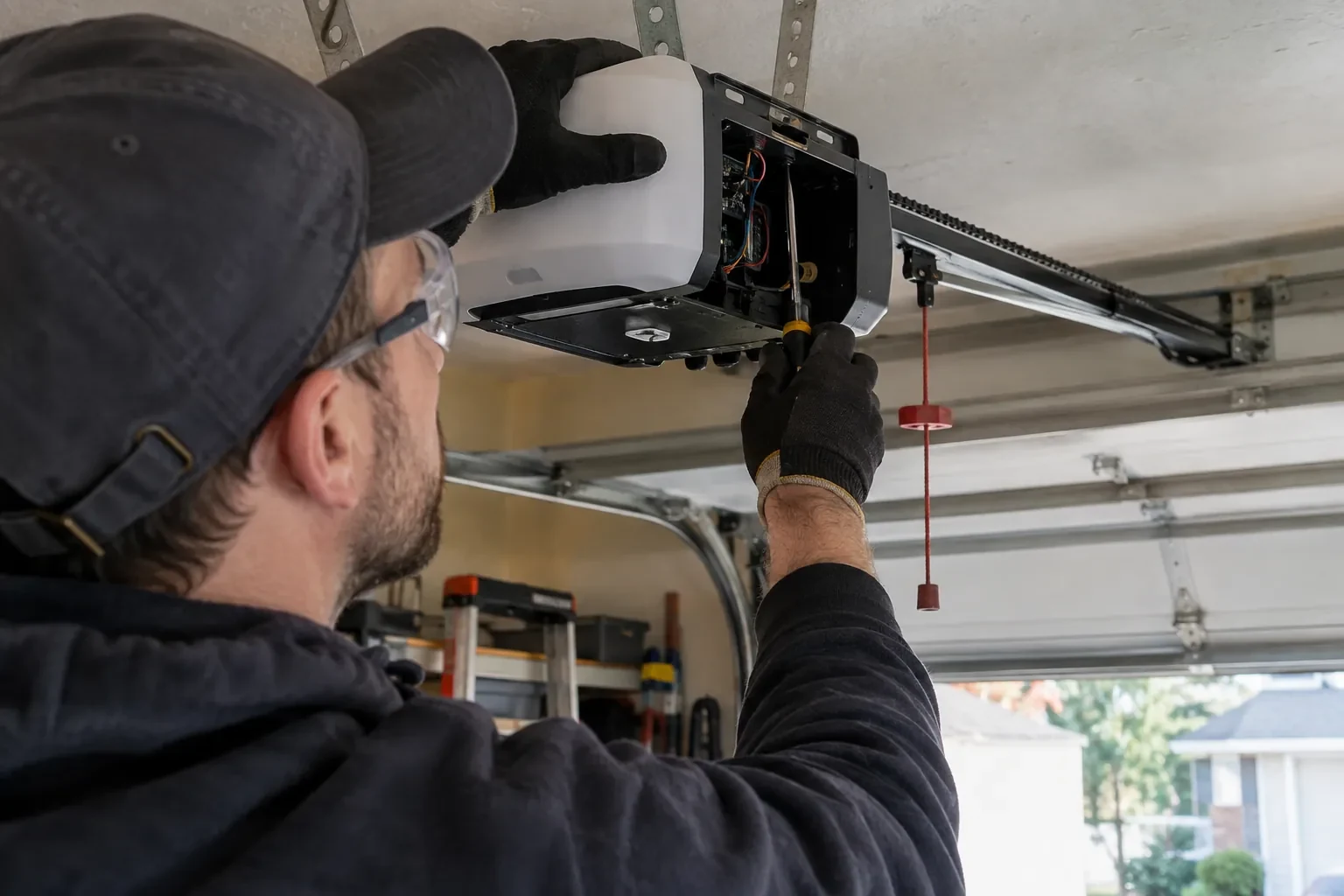
Reconnection is done the way the maker describes for that unit. On most rails the cord is pulled toward the opener so the lever drops back to horizontal, then the opener is run and the trolley picks up the carriage with an audible click on the next cycle; on others the trolley re-latches when the door is lifted until it meets the carriage. The technician watches the join through a full open and close, then pulls the release and reconnects again to be sure the sequence repeats. You are shown what the click sounds like and what a trolley that has only half-latched looks like, so you can tell the two apart.
Through the winter
A release serviced in autumn is set up for the season the household is most likely to need it. The cord is rope that stays supple in the cold, the outside cylinder has been cleaned and lubricated, and the door has been proven to lift by hand with the bottom seal freed rather than frozen. Keep snow and ice cleared from the threshold so a manual lift is not working against a seal stuck to the slab, and keep the slide bolt or manual lock handy for nights when the door is in manual mode. A door that moves by hand is a door that gets you out.
Emergency Release Repair
In the van
Garage door lubricant
Release cable and clips
Outside key release kit (lock, cable, keys)
Release lever and spring
Hole saw for the top section
Emergency Release Repair
What affects the quote
Outside key release: repair or new
Renewing a cylinder, cable or keys on an existing outside release is one line; cutting the door and fitting a complete kit where none exists is another, and both are named separately.
Number of doors and openers
A double garage with two openers, or a house with a detached garage as well, means two releases to check and possibly two sets of parts, and the quote counts each.
Cord, lever or trolley
A rope and handle is the smallest item; a lever and spring sits in the middle; a complete trolley or carriage assembly is the larger part, and the diagnosis says which one you need.
What to have ready
- Do you lose power often, and would battery backup interest you?
- Is there a small keyed lock near the top of the door outside, and do you have its key?
- How does the door feel when you lift it by hand: light, heavy, or does it drift?
Emergency Release Repair: questions
QuestionsHow long does an emergency release repair take?
A cord and handle, a lever spring or a trolley freed from the stop bolt is a modest part of an hour, including the balance test and reversal tests. Replacing a trolley or fitting an outside key release takes longer, since the drive is slackened and re-tensioned or a hole is cut in the door. If the balance test finds the springs need work first, that is a separate piece of the visit, and you are told before it starts.
The motor hums and the trolley is jammed at the end of the rail. What happened?
The trolley has been driven into the stop bolt or stop tab, usually because the travel limit let it run too far. The technician frees it by pulling the release, slackening the chain or belt a few turns, running the motor so the trolley walks off the stop, then correcting the travel limit and re-tensioning the drive. The reversal tests are repeated afterwards, since the limits were changed.
Is the red handle safe with children around?
The handle has to be reachable from the floor, so it is not a thing to hide. What keeps children safe is understanding and habit: explain that the handle is for adults and for outages, keep remotes out of small hands, and mount the wall control about a metre and a half up. Never rely on balance alone if a child does pull it; keep the doorway clear and treat the release as an adult tool, which is one more reason the balance test matters.
Related services
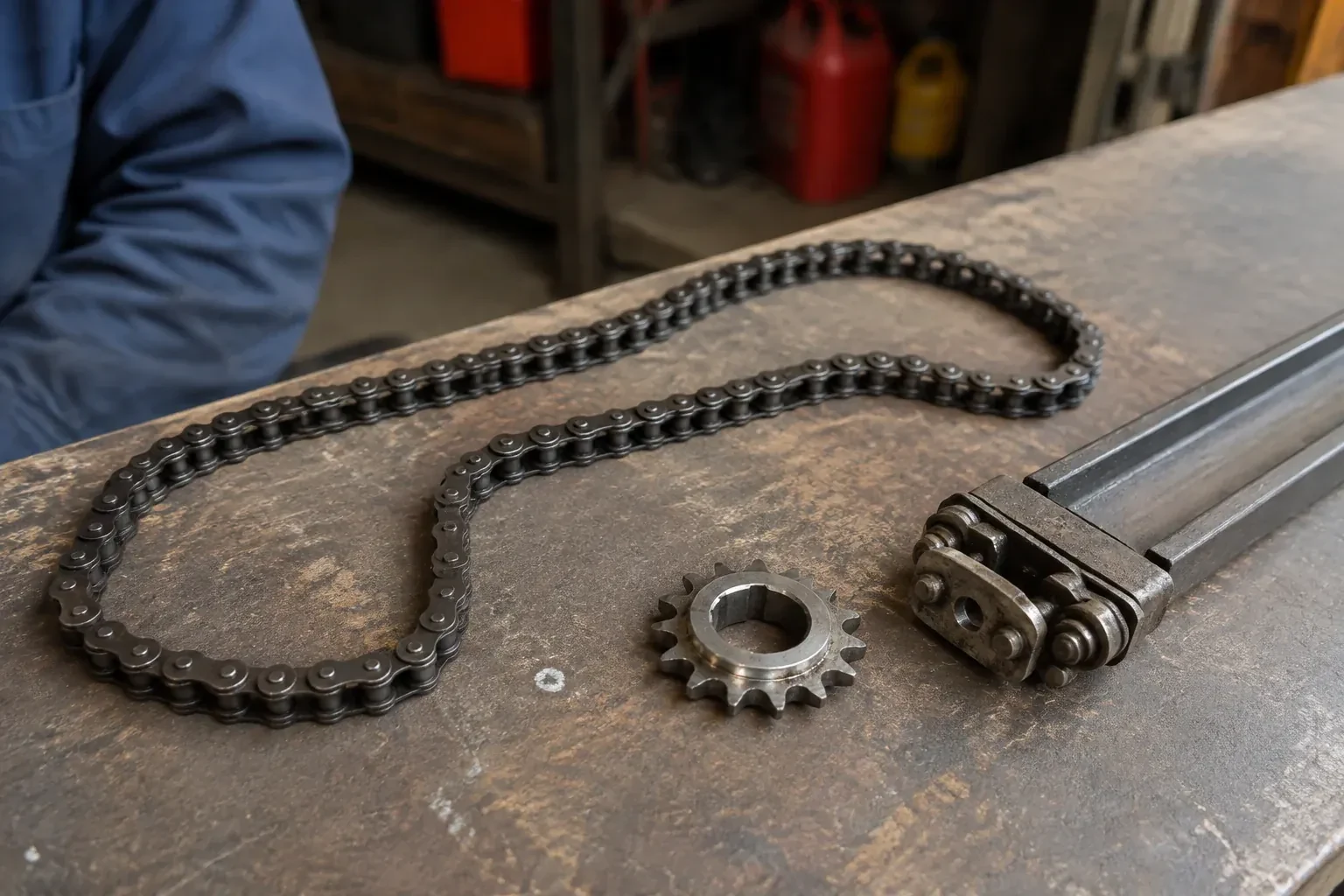
- Chain-Drive Opener RepairHalfway up, the door lurches.
- Belt-Drive Opener RepairThe belt looks fine from a distance, but up close the rubber has cracked across the back in dozens of places and, in one spot, you can see the steel cords showing through.
- Garage Door Opener ReplacementYou want the ceiling back.