Repairs · Sunkist Beach
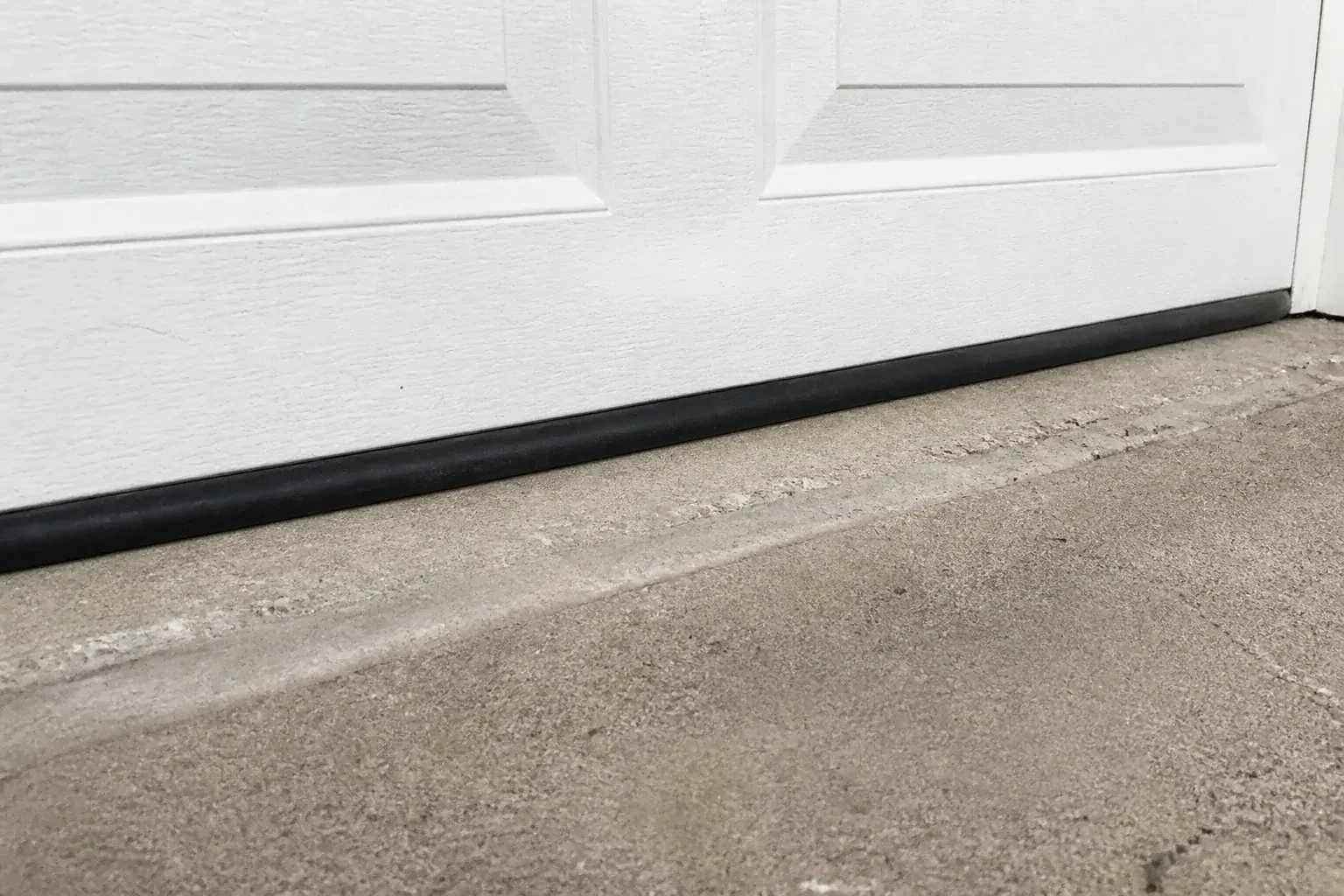
Garage Door Bottom Seal Replacement in Sunkist Beach
The gap under the door is a finger wide at one end and nothing at the other.
In plain words
In this climate the bottom seal lives a hard life. Meltwater from the car pools at the threshold and freezes the seal to the slab, and the next press of the remote tears it or drags it out of its channel. Road salt stiffens the vinyl and eats the aluminum retainer; deep cold turns a supple strip rigid. Replacement puts a cold-rated profile on a sound retainer, sized to meet the floor without over-compressing, and the technician shows how a wipe of silicone each autumn and a clear threshold keep the new strip from bonding to the ice. The door closes softly onto rubber again, not onto a frozen ridge.
How the visit goesThe garage doubles as a workshop, and with the heater running the floor near the door stays cold and the draft finds your ankles at the bench. When the wind is up you can feel the air moving under the door.
Garage Door Bottom Seal Replacement
How the visit goes
How the opener meets the floor
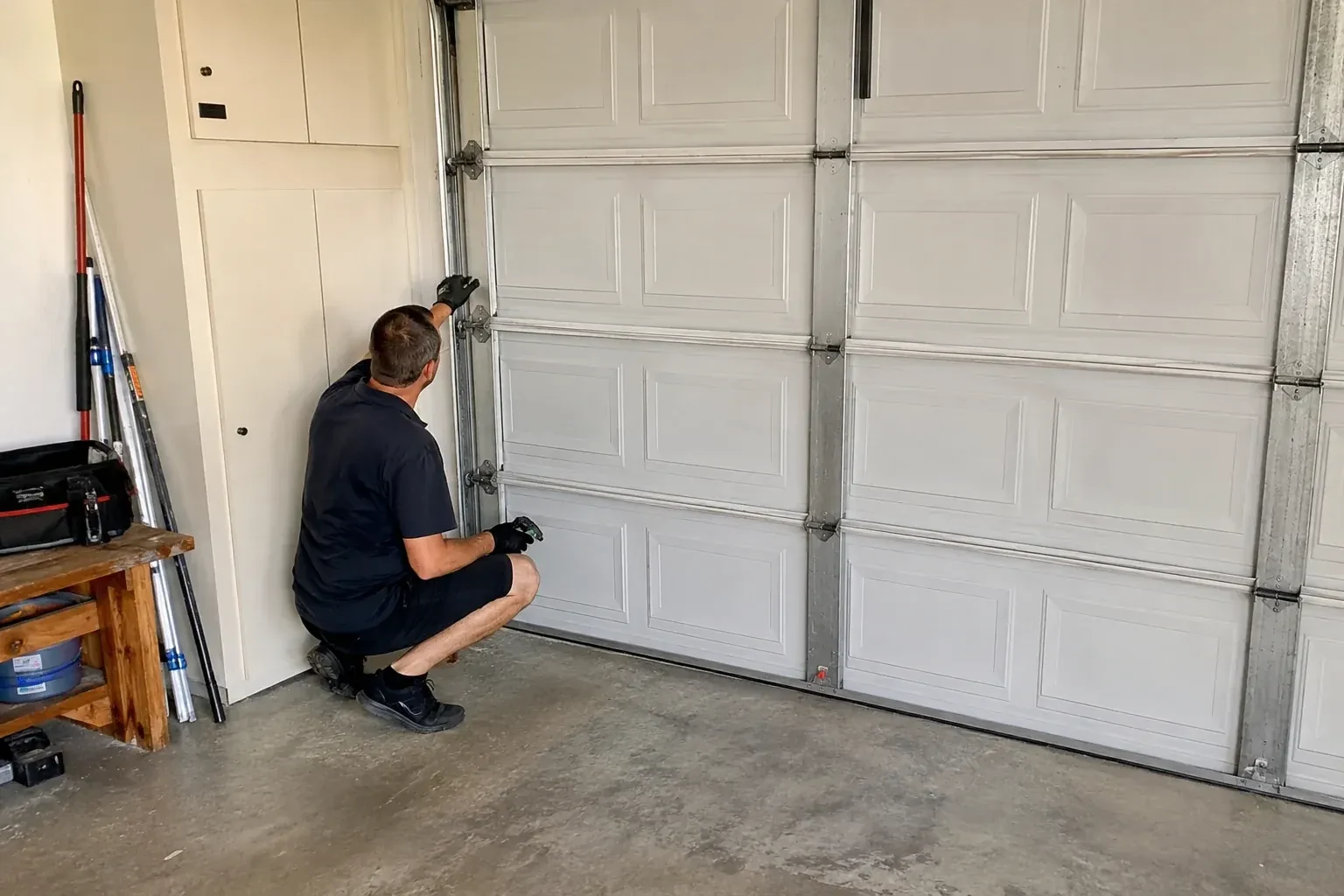
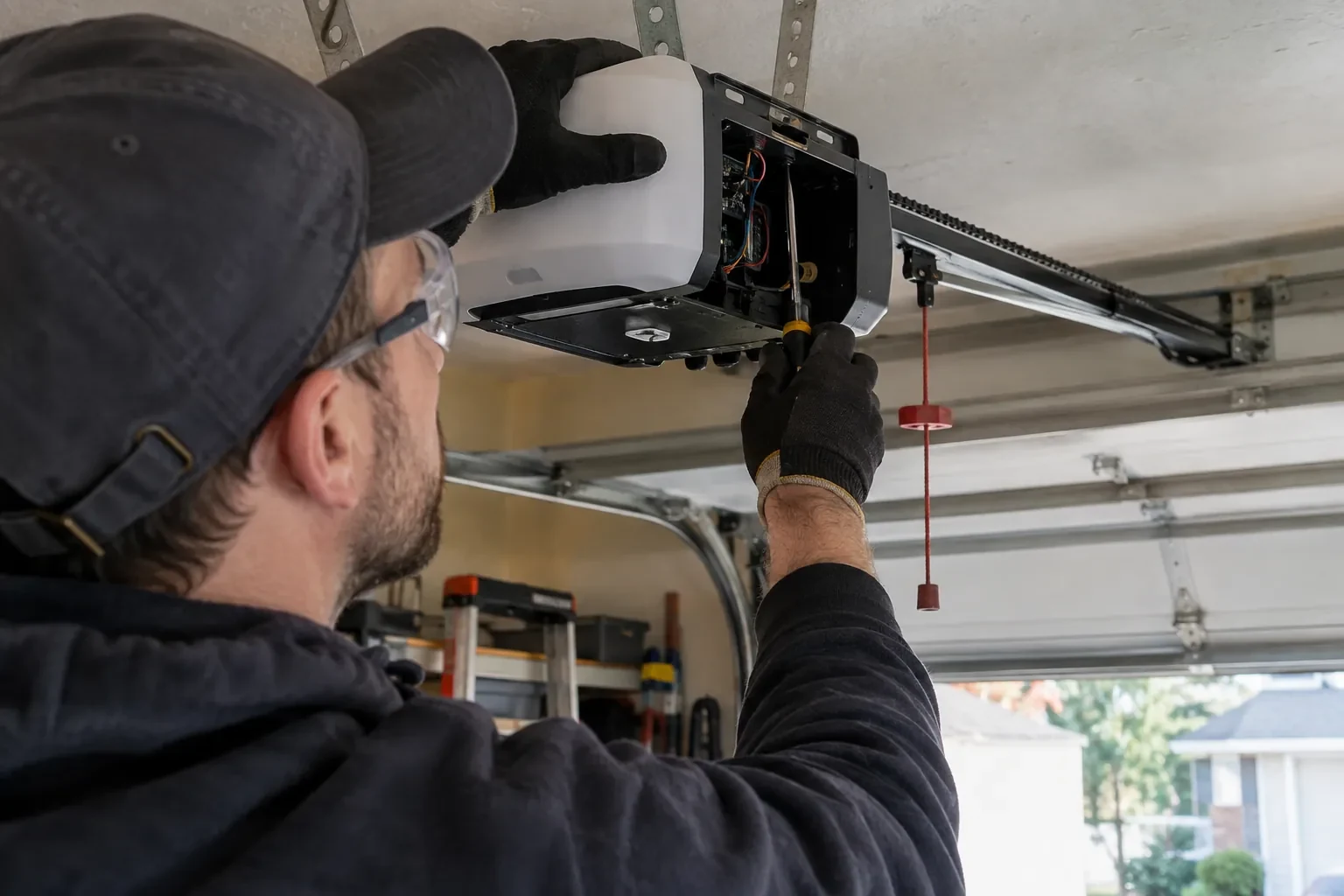
Before the old seal comes off, the technician watches the door close under power. Where the door stops, how firmly it lands, and whether the bottom section flexes as it settles all show how the down limit and force are set. A door that stops short leaves a gap regardless of the seal; one set to press hard flattens a new seal in a season and can bow the section. The current settings are noted so they can be reset once the new, taller strip is in place, and the photo eyes and reversing behaviour are checked at the same time so the finished door is tested against a known starting point.
Feeding the seal into the retainer
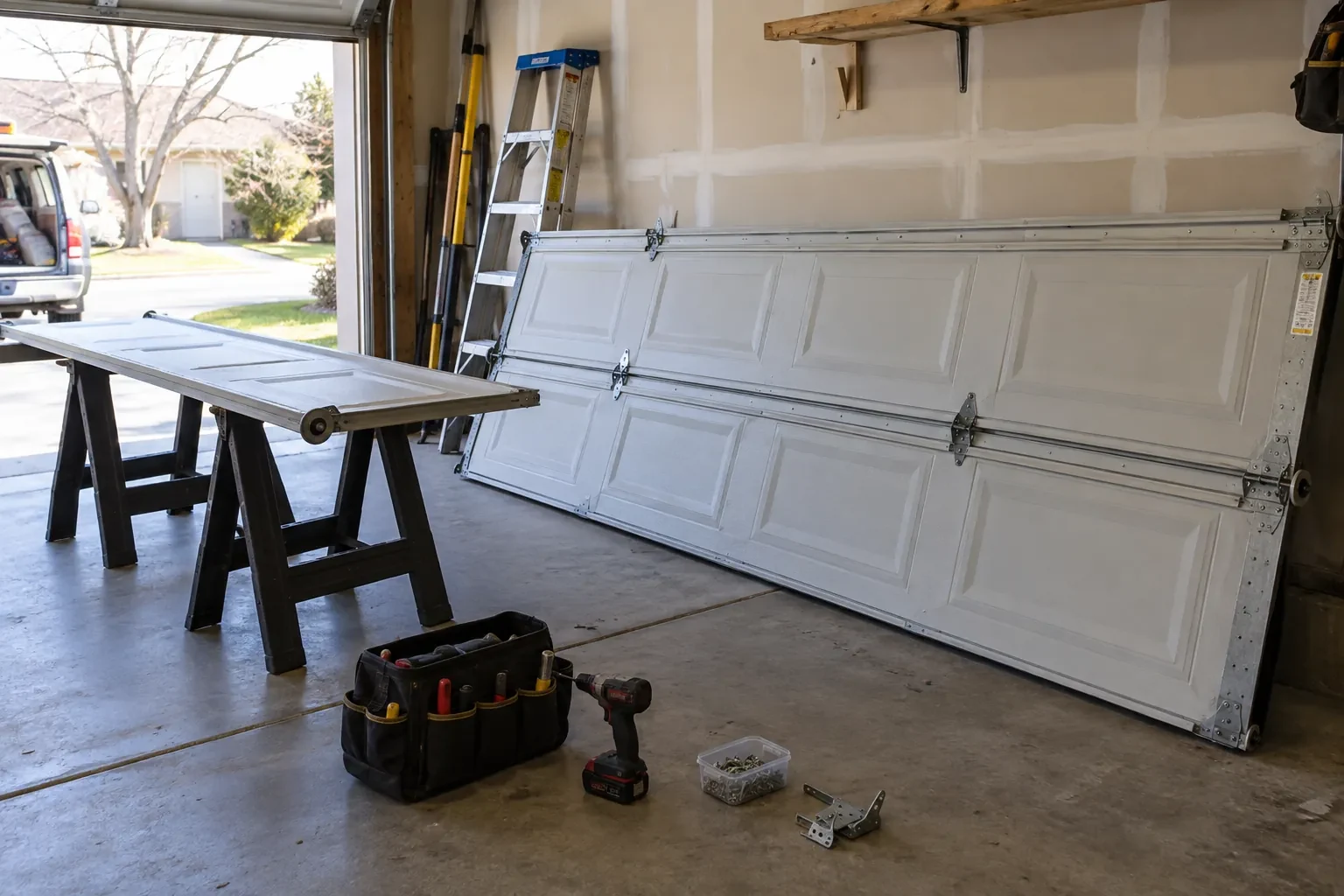
Both edges of the new seal are started into their channels together at one end of the door. A spray of soapy water or silicone on the edges lets the strip glide, and the technician works it across in stages, pulling gently from the front end and feeding from the other so the seal is never stretched, since a stretched seal shrinks back and leaves a gap later. Once it is across, the bulb is checked to hang evenly with no twists. The ends are trimmed flush with the door and folded up into the channel or capped, so water running along the seal drains out rather than into the section.
Keeping the new seal from freezing down
The habit that does the most for a bottom seal in a cold climate is a wipe of silicone spray along the seal face each autumn and again mid-winter. It leaves a film that meltwater struggles to bond to, so the strip lifts off the slab cleanly on a frosty morning. Avoid petroleum-based sprays, which soften vinyl. If the door does freeze to the floor, leave the remote alone: free the seal by hand with gentle warmth from a hair dryer or by working a plastic scraper along the line, then run the door. A minute of patience keeps the new seal whole.
Garage Door Bottom Seal Replacement
In the van
Wire brush and scraper
T-style bottom seal
Aluminum bottom seal retainer
Seal end caps
Bulb or U-style bottom seal
Garage Door Bottom Seal Replacement
What affects the quote
Condition of the old seal
A supple strip slides out in a minute. One that has hardened and seized in its channel, or been torn and frozen into the corners, has to come out in pieces, which takes longer.
Material chosen
Standard vinyl, cold-flexible rubber and silicone are priced differently. Where the door faces the weather, the technician explains what the step up buys in flexibility and working life.
Door width
A single door takes a shorter length of seal than a double, and the widest doors need more time to feed the strip evenly across. The quote starts from the width measured on the day.
What to have ready
- Is the door steel, wood, or insulated with a plastic bottom cap?
- Is there a car or storage inside that needs moving before the visit?
- Can you send a photo of the end of the bottom section showing the retainer?
Garage Door Bottom Seal Replacement: questions
QuestionsHow do I look after the new seal?
Wipe it clean of salt and grit a few times a year, and give it a light coat of silicone spray each autumn so meltwater has nothing to bond to. Keep petroleum products and solvents away from it, since they soften vinyl. Clear ice and packed snow from the threshold before running the door in winter. Once a season, look under the closed door for daylight. That is the whole routine.
Why does the seal freeze to the floor, and what should I do when it does?
Snow melts off the car, runs to the low point at the door and refreezes overnight around the seal. When that happens, leave the remote alone, since the opener will tear the strip or pull the door out of level. Free the seal by hand with gentle warmth along the line or by working a plastic scraper under it, then run the door. A film of silicone on the seal each autumn largely prevents it.
What does a new bottom seal do about water coming in?
It closes the gap between the door and the slab so rain and meltwater meet a continuous barrier. Where the driveway slopes toward the garage, or the slab edge has dipped, the seal alone is working against gravity, and a threshold seal glued to the floor adds a lip that turns water back toward the drive. The technician looks at where the water comes from and recommends the combination that suits your threshold.
Related services
- Garage Door Tune-UpSince the first cold snap the door has been sluggish.
- Off-Track Garage Door ResetYou tapped the door with the bumper while backing in, barely a nudge, and now the bottom corner has swung inward.
- Garage Door Panel ReplacementYou misjudged the last metre of the driveway and felt the bumper meet the door.