Repairs · Brock
Garage Door Safety Inspection in Brock
It has been a hard winter.
In plain words
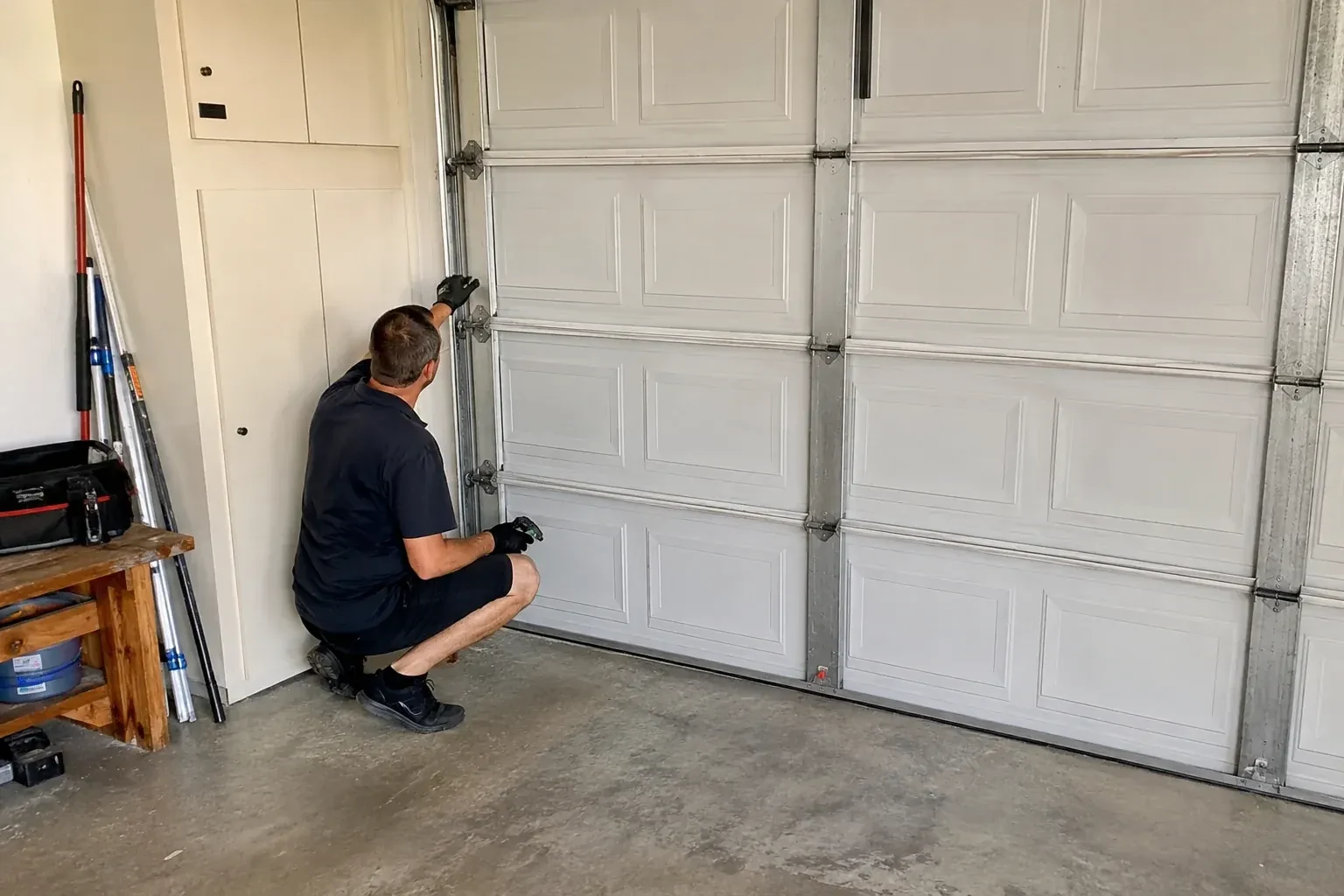
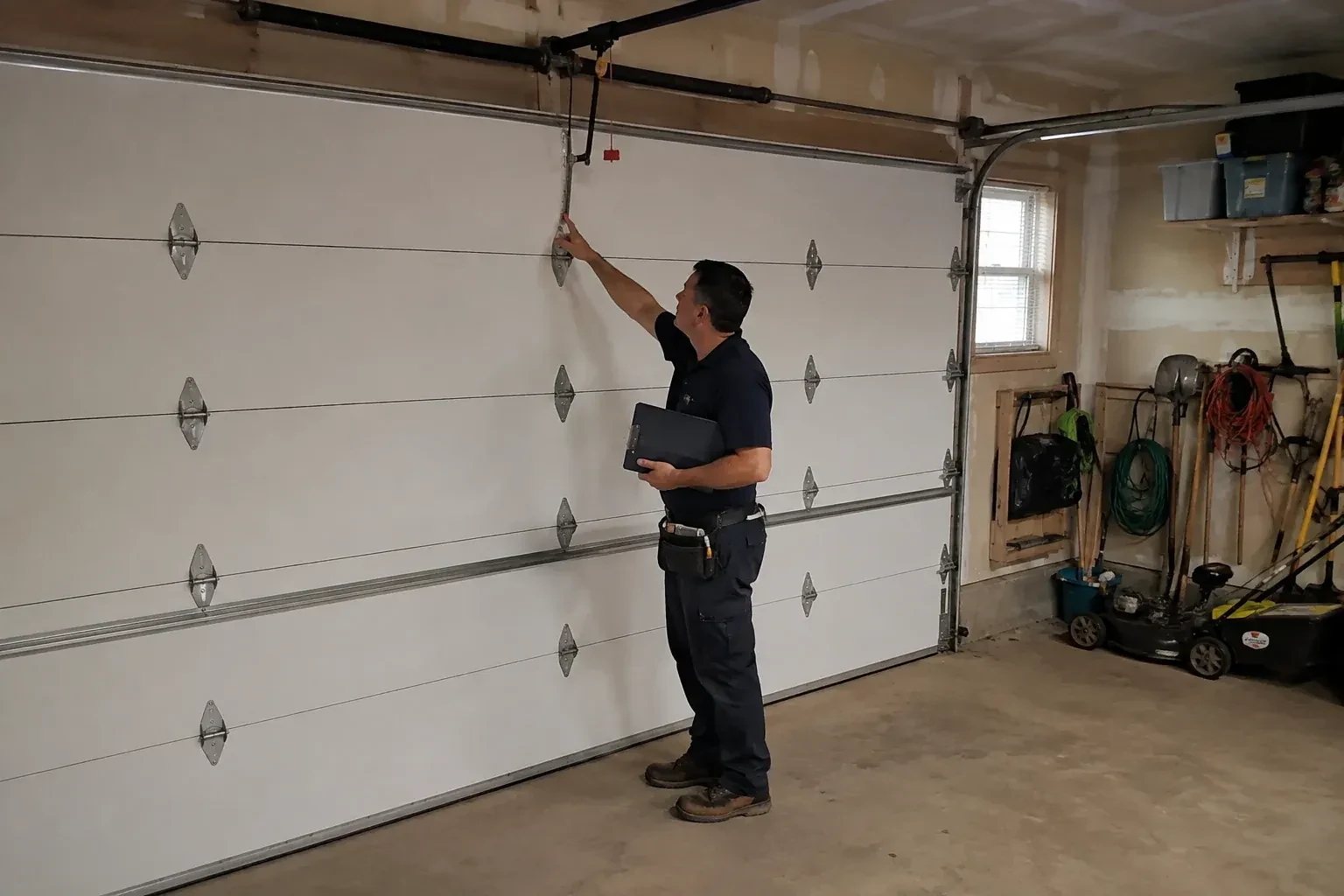
A garage door safety inspection is a systematic look at everything that moves the door and everything meant to stop it. The technician identifies the door and opener from their labels, then examines the sections, hinges, rollers, tracks, springs, cables, drums, brackets and seals, watches a full cycle, tests the door's balance by hand, and runs the reversal and photo-eye tests the opener manual calls for. Nothing tensioned is adjusted during the inspection. What you receive is a dated record of the door's condition, with anything that needs attention sorted by how soon it matters.
How the visit goesYou moved in three months ago. The door works, but nobody can say how old the springs are, when anyone last looked at it, or whether the little sensors by the floor have ever been tested.
Garage Door Safety Inspection
How the visit goes
Putting a name to the door and the opener
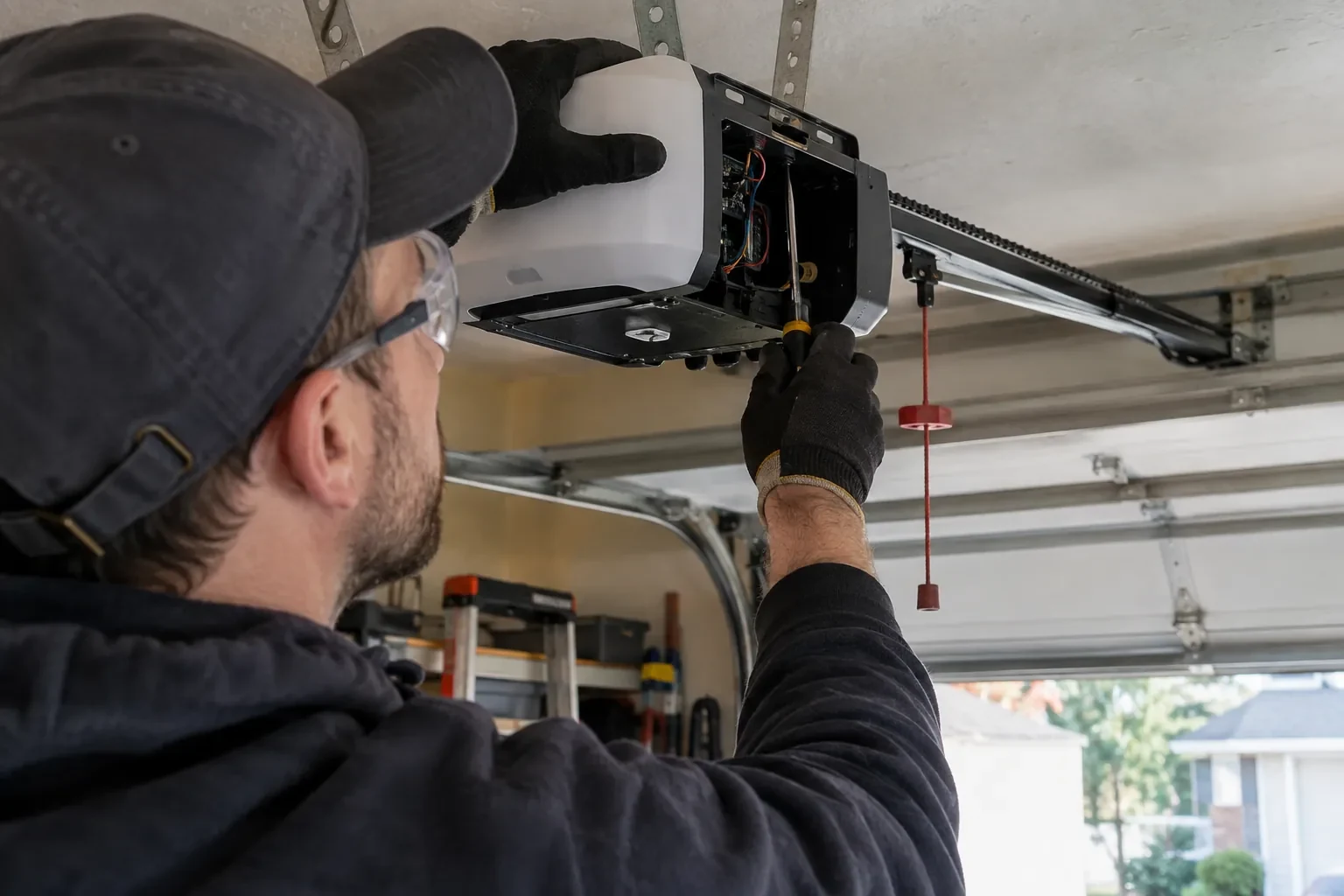
The first thing the technician does is read labels. The door's model tag is usually on the inside of an end stile or the bottom section, and the opener's is on the motor head; between them they tell the technician the door's weight class, the lift hardware it was built with and the exact test procedure the opener maker publishes. That matters because reversal settings, photo-eye mounting heights and force limits differ between models and generations. Writing the model numbers down at the start also means the report is tied to a specific door, so the next person to look at it, years from now, starts from the same page.
Sorting the findings at the door
Before packing up, the technician walks you through what was found, in front of the door so each item can be pointed at. Findings are sorted into four groups: in good order, maintenance, planned repair, and stop-use. For each repair, you hear what the part does, why it matters and roughly what the work involves, so you can decide in your own time. If anything falls into the stop-use group, you are shown the reason and the door is left in a safe position with the opener disconnected until that item is corrected. The written record follows, with the model numbers, the measurements and the photographs.
A baseline for the next inspection
The most useful thing about a first inspection is the second one. With the model numbers, spring dimensions, cable condition, seal gaps and photo-eye heights on record, the next technician can measure the same points and tell you what has moved rather than starting from nothing. For most households an annual visit fits, with a look in early spring after the salt season a natural choice. A door that carries a lot of traffic, an older door, or one in a rental where nobody watches it closely may suit a check each season. Whatever the interval, the report you are holding is the reference the next one will be read against.
Garage Door Safety Inspection
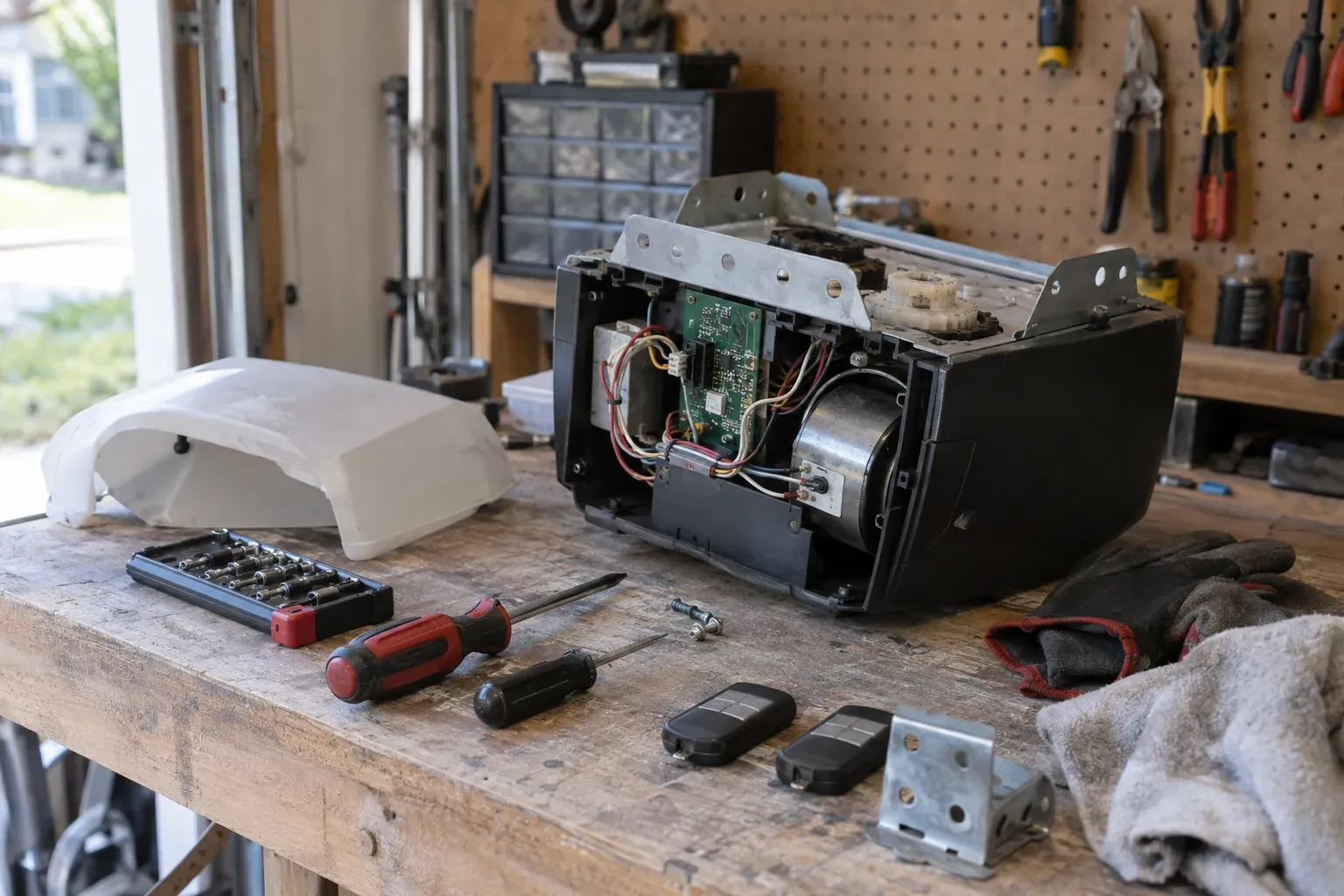
In the van
Flat 2x4 test board
Silicone garage-door lubricant
Lens cloth and cleaner
Socket set and nut drivers
Remote and keypad batteries
Garage Door Safety Inspection
What affects the quote
Single or double door
A double door is wider and heavier and commonly adds centre hinges and reinforcement a single door does not carry, with a heavier counterbalance to test, so it takes longer to walk and to write up; section count itself follows the door's height rather than its width.
Findings that change the scope on the day
If a stop-use item turns up, securing the door and explaining the correction takes extra time on the visit. That, and any work you approve, is quoted separately before it starts.
Distance to the property
Travel is part of every visit. A property across town and one at the end of a rural road involve different driving time, and the quote reflects the trip.
What to have ready
- Do you have the door and opener manuals?
- Have you tried lifting the door by hand, and how did it feel?
- How many remotes, keypads and wall buttons operate the door?
Garage Door Safety Inspection: questions
QuestionsIs the inspection a repair visit?
It is a look and a record first. Small maintenance items such as lubrication, cleaning and aligning the photo eyes and tightening fasteners can be done on the spot if you wish. Anything involving spring tension, cables, drums, worn rollers or damaged sections is written up with a clear explanation and quoted as its own job, so you decide with the full picture in front of you.
Why does my door reverse on the way down for no reason?
Most often it is the photo eyes. A sensor knocked slightly out of line, a lens with a film of road grime, a loose wire, or low afternoon sun shining straight into one eye will each break the beam as far as the opener is concerned. The next candidates are a down-force setting that has drifted, a binding roller or a door that has gone out of balance. The inspection checks each in turn.
What exactly gets looked at during the inspection?
The whole system, not just the opener. Sections, hinges, rollers, tracks and their fasteners; springs, cables, drums and bottom brackets; the bottom seal and perimeter weatherstrip; the opener head, rail, arm and mounting; the photo eyes, contact reversal, wall control, remotes, keypad and manual release; and the warning labels. Each is examined, and the door is tested both by hand and under power.
Related services
- Off-Track Garage Door ResetYou tapped the door with the bumper while backing in, barely a nudge, and now the bottom corner has swung inward.
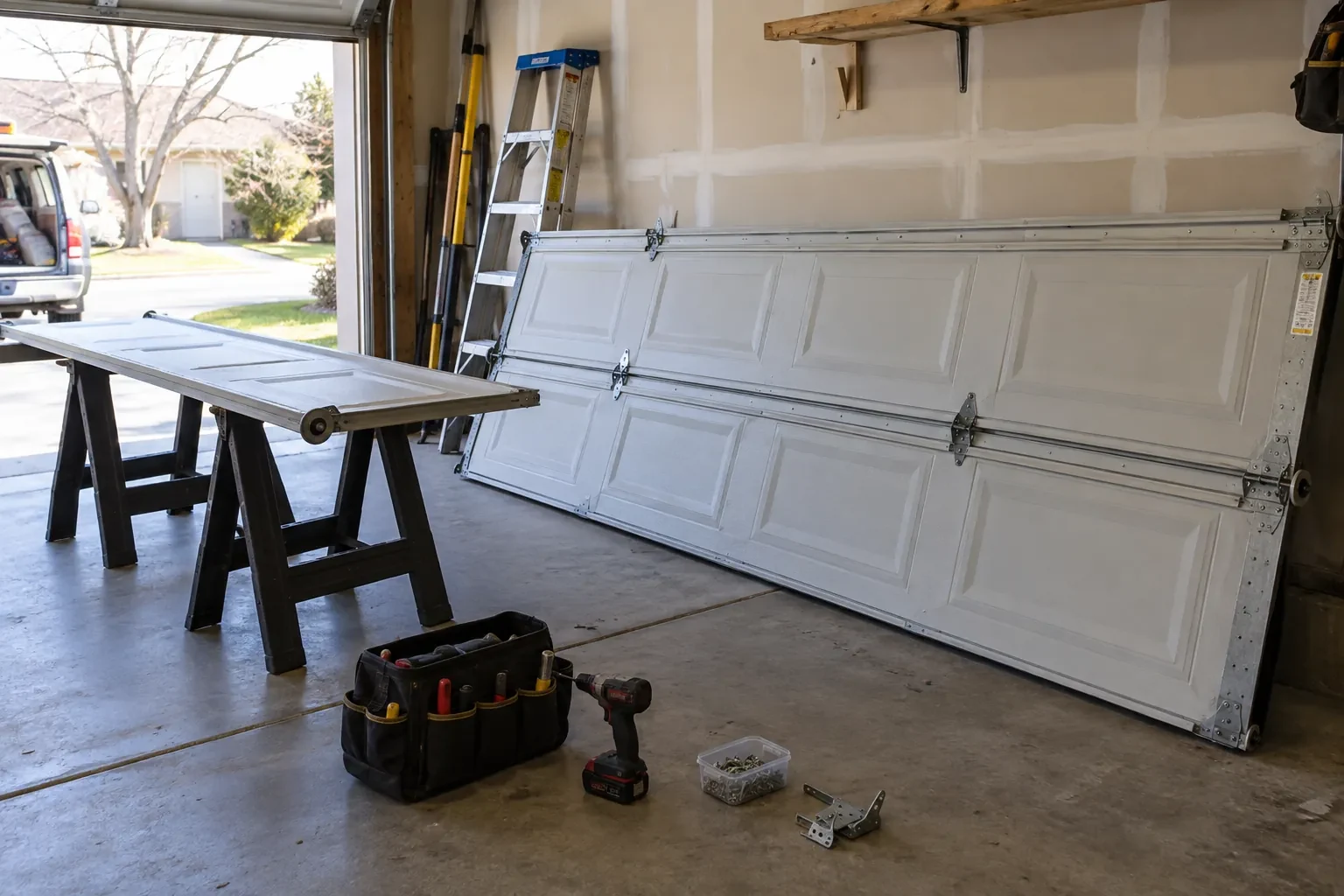
- Garage Door Panel ReplacementYou misjudged the last metre of the driveway and felt the bumper meet the door.
- Garage Door Bottom Seal ReplacementThe gap under the door is a finger wide at one end and nothing at the other.