New Doors · Virginia Beach
Commercial Sectional Door Repair in Virginia Beach
Cold weather has exposed a widening gap below the closed door.
In plain words
Impact repair is more than flattening a dented panel. The damaged section may have transferred force into an end stile, hinge, roller carrier, vertical track or jamb attachment. The repair therefore follows the load path from the contact point into the supporting hardware. A replacement section or reinforcement is matched to the door construction, track spacing is restored, and every affected connection is tightened or renewed. Final cycling confirms that the repaired door follows the curve cleanly and seats evenly at the opening.
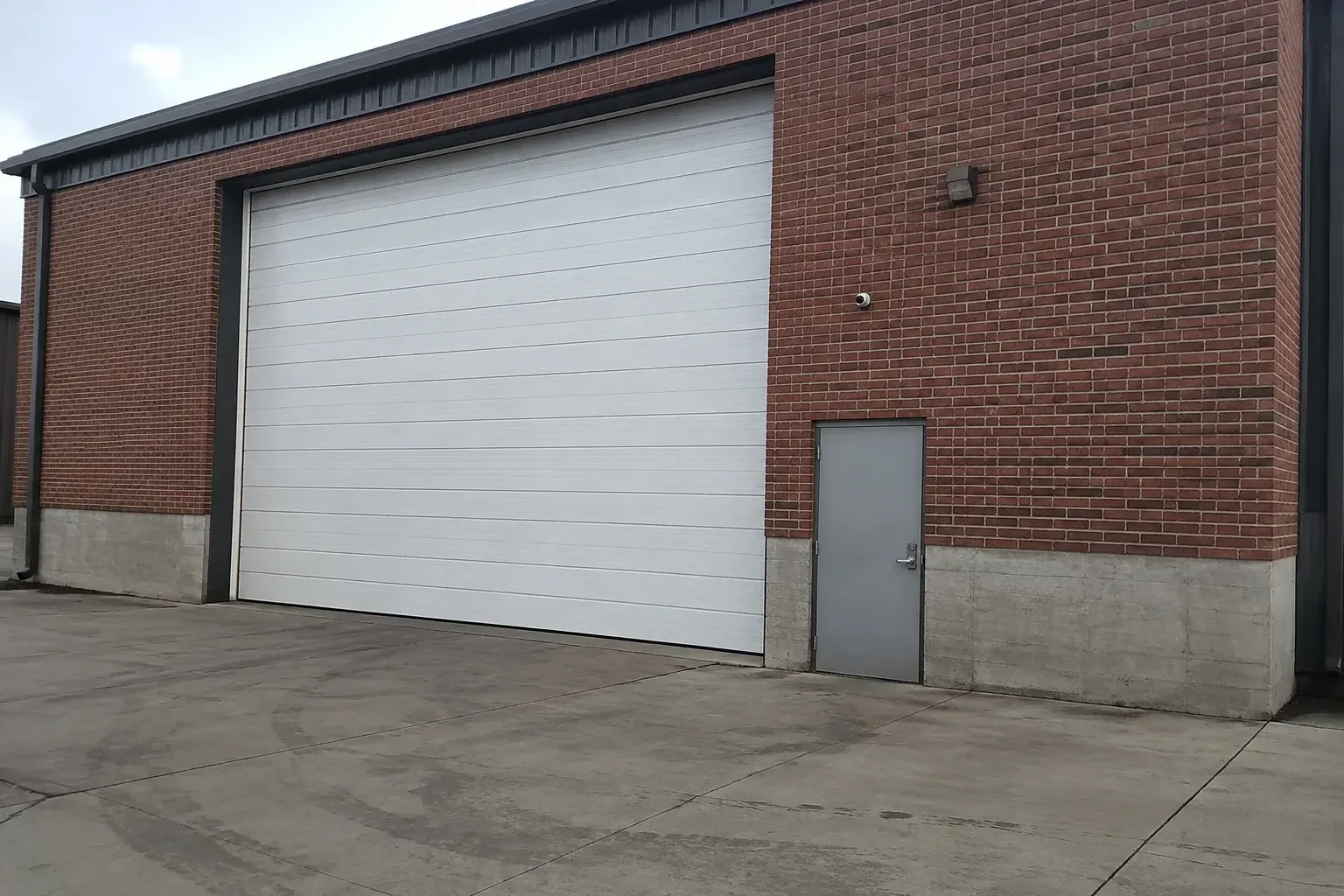
How the visit goesA forklift clipped the bottom panel while backing through the bay. The section is creased near an end stile, the lower roller rubs the track, and daylight now shows along one corner when the door closes.
Commercial Sectional Door Repair
How the visit goes
Following sound to its source
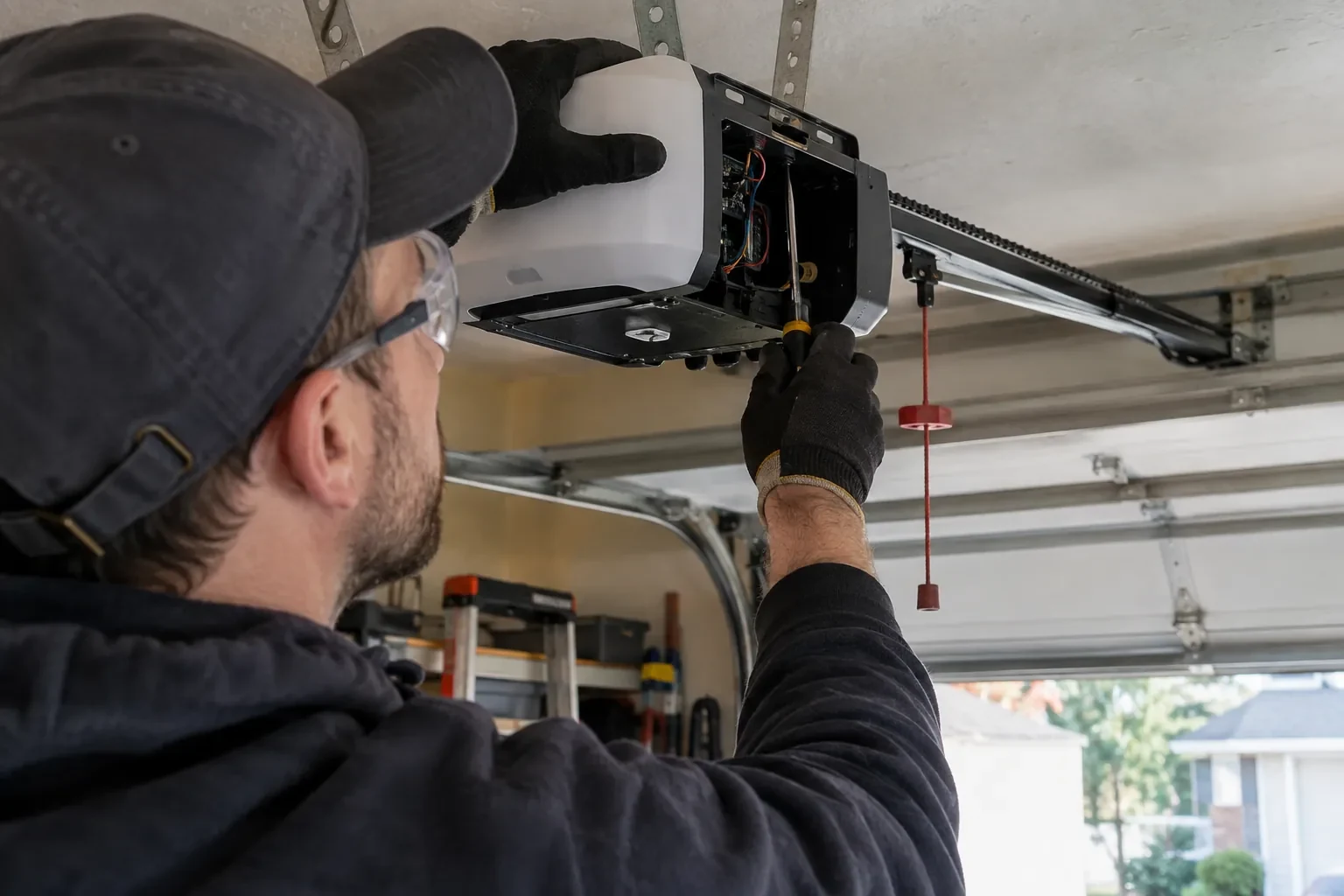
Noise is assessed by location, timing and character. A controlled cycle shows whether a knock occurs at a hinge, a roller entering the curved track, a bearing on the shaft or the operator drive. The technician watches for metal dust, polished rub marks, loose fasteners, roller play and track movement while listening. Door speed and vibration are compared through the vertical and horizontal portions of travel. This approach keeps several sounds from being treated as one problem and identifies the component producing each repeatable rattle, scrape or growl.
Controlling the door before repair
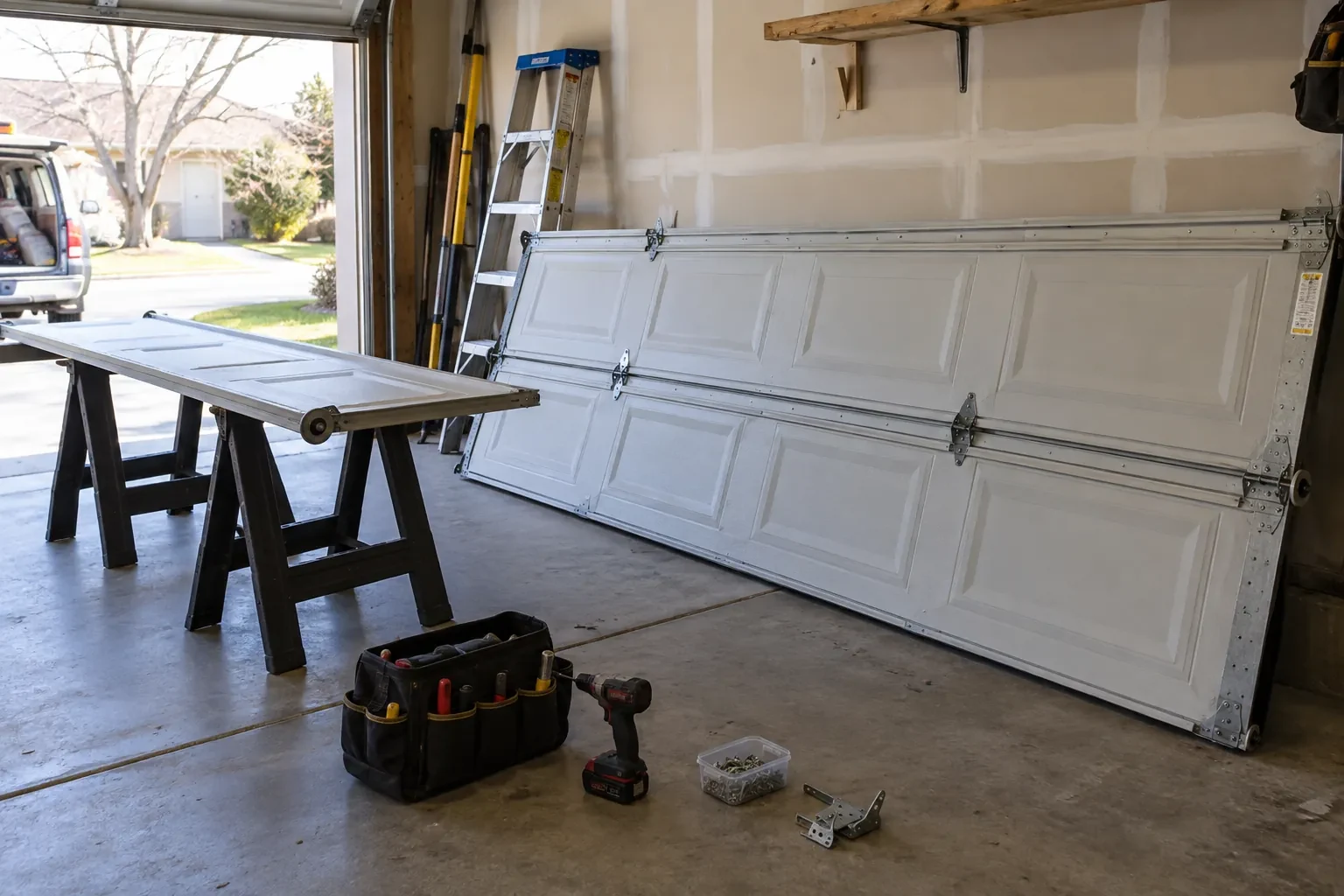
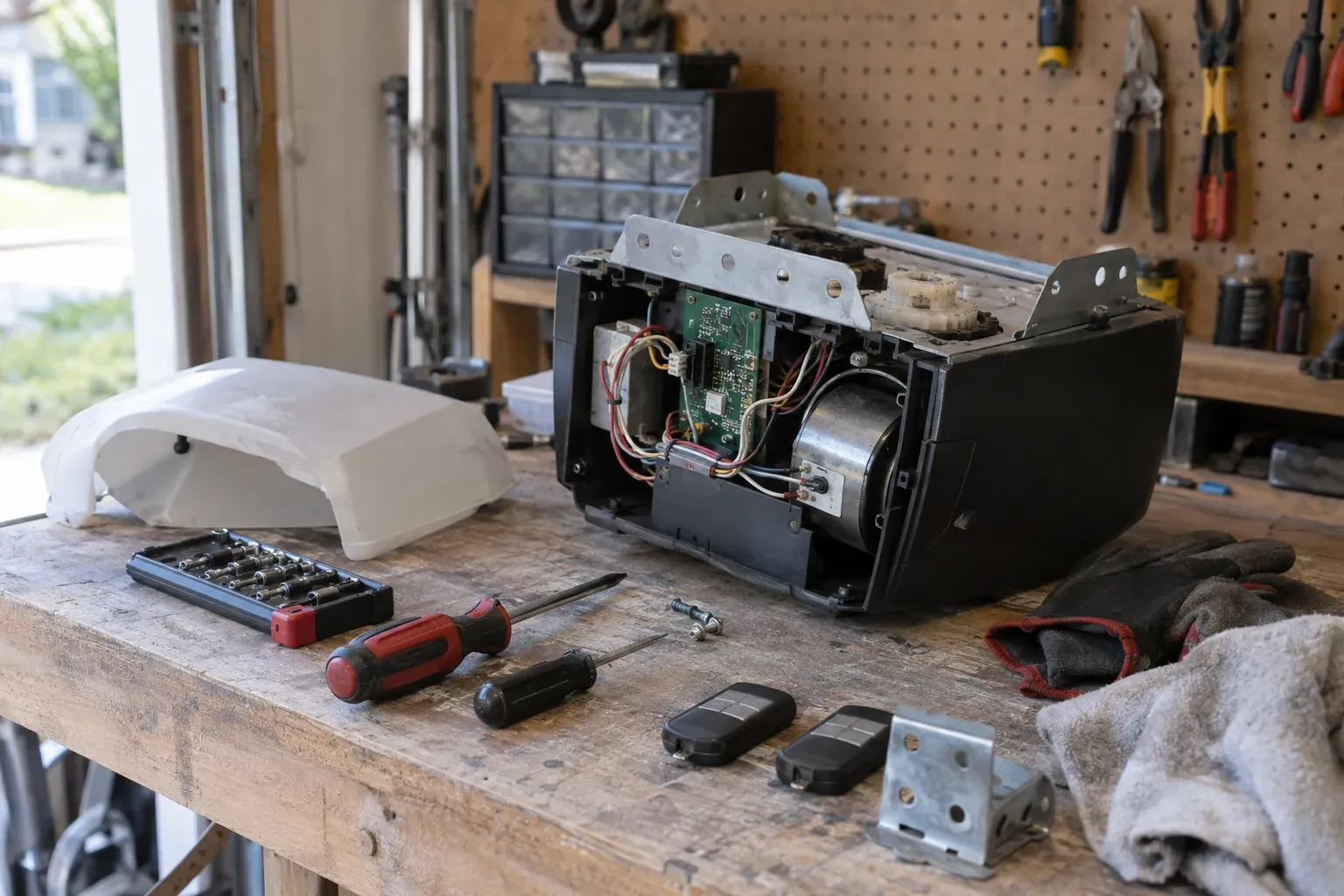
Work begins by separating the bay from normal traffic and placing the door in the safest workable position for the identified fault. Electrical controls are isolated where the task calls for it, and the assembly is held with clamps, locking pliers or rated supports suited to its weight and track type. Stored spring force is managed with proper winding tools and a planned sequence. With movement controlled, hardware can be removed without letting a crooked section, slack cable or broken spring shift the rest of the system.
Level movement through the opening
After cable, spring or track work, the door should rise with its bottom edge level and move without a side lag. Facility staff can watch the first few routine cycles from a clear position and note whether both cables remain neatly seated on their drums. A new tilt, rubbing sound or loose strand is useful information to report before the opening sees heavier traffic. Keeping pallets and vehicles outside the marked travel zone also protects the restored alignment and gives operators a clear view of the complete door path.
Commercial Sectional Door Repair
In the van
Bottom seal and retainer
Lift cables and drums
Track brackets and back hangs
Vertical and horizontal track
Numbered end hinges
Commercial Sectional Door Repair
What affects the quote
Door size and moving weight
Opening dimensions, panel construction, reinforcement and overall door weight determine component ratings, handling methods and how much support is required during the repair.
Parts identification and compatibility
Clear model data and current component markings simplify matching; altered assemblies or unavailable profiles may require additional measurement and an engineered compatible approach.
Extent of impact transfer
A dent confined to one section differs from force that also bent an end stile, roller, guide rail, jamb bracket or supporting anchor.
What to have ready
- Is the door closed, open or stopped between positions?
- Does the door rise level on both sides?
- Which numbered bay or opening needs repair?
Commercial Sectional Door Repair: questions
QuestionsHow are springs and cables handled during repair?
The technician first controls the door's weight and position with suitable supports or clamps. Stored spring energy is then managed with proper winding tools and a defined sequence before connected parts are loosened. Cables, drums and springs are matched to the door and lift geometry, installed with the system secured, and checked for level tension through controlled movement.
Can one damaged section be replaced on its own?
Often it can, provided a compatible section is available and the surrounding panels, end stiles and hardware remain serviceable. Matching involves more than width and height: thickness, profile, insulation, joint shape, reinforcement and hinge pattern all matter. The technician also checks whether the impact shifted track or mounting points before deciding that a single-section repair is the right scope.
How should a repaired door be lubricated?
Use the product and interval specified by the door manufacturer. Hinges, roller bearings, shaft bearings and springs may have defined lubrication points, while track generally benefits from being clean rather than coated with material that holds grit. High-use openings may need a different schedule. The service record can note what was applied and where for consistent future care.
Related services
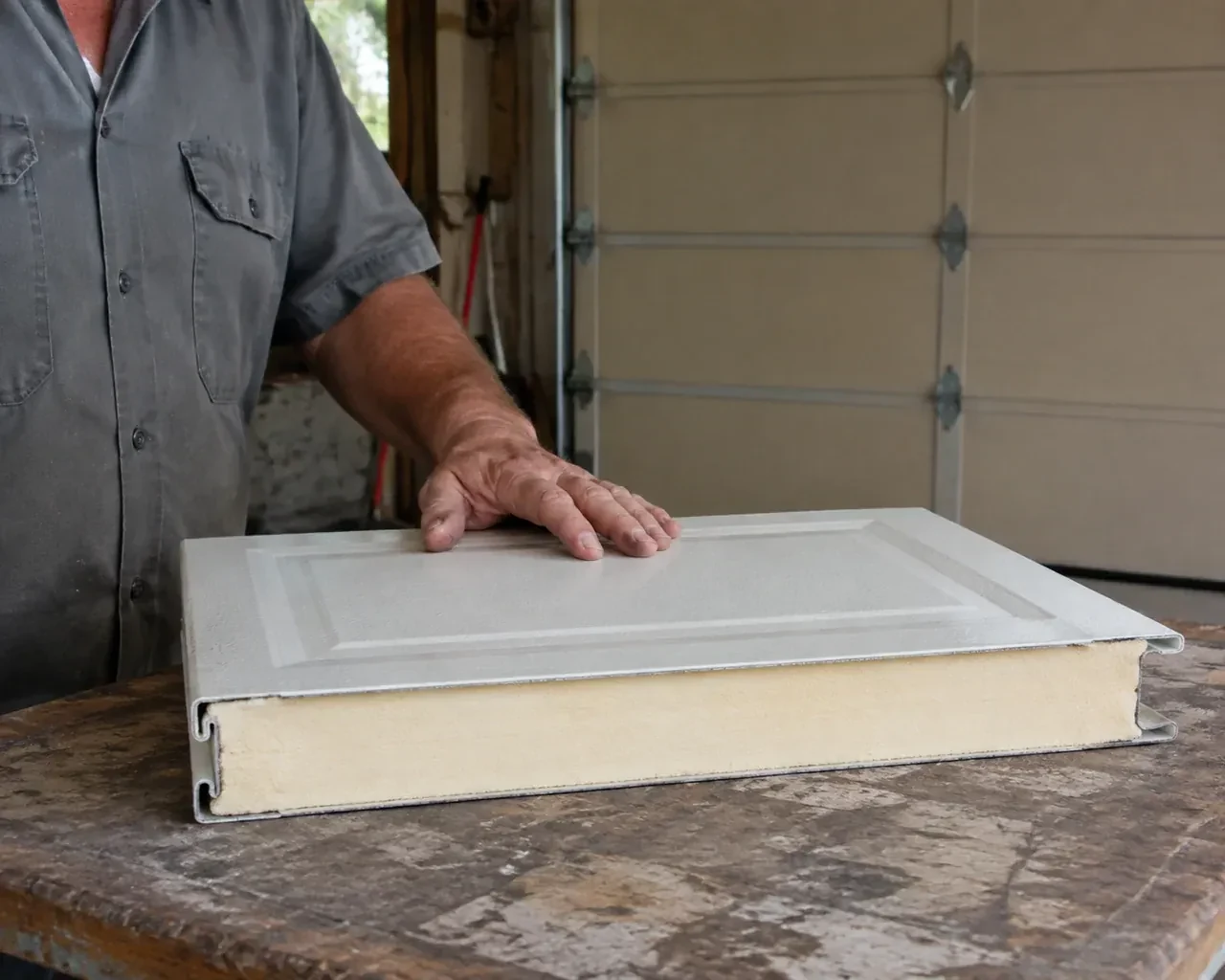
- Insulated Steel Garage Door InstallationYour garage is becoming a workshop, but the thin single-skin door rattles, sweats and lets outdoor temperatures shape the whole room.
- Wind-Rated Garage Door ReplacementNew windows would improve the door's appearance, but they also change the section layout and reinforcement pattern.
- Carriage-House Garage Door InstallationTwo garage openings sit side by side, and small differences in window spacing or decorative hardware would be obvious.