New Doors · Vallentyne
New-Construction Garage Door Installation in Vallentyne
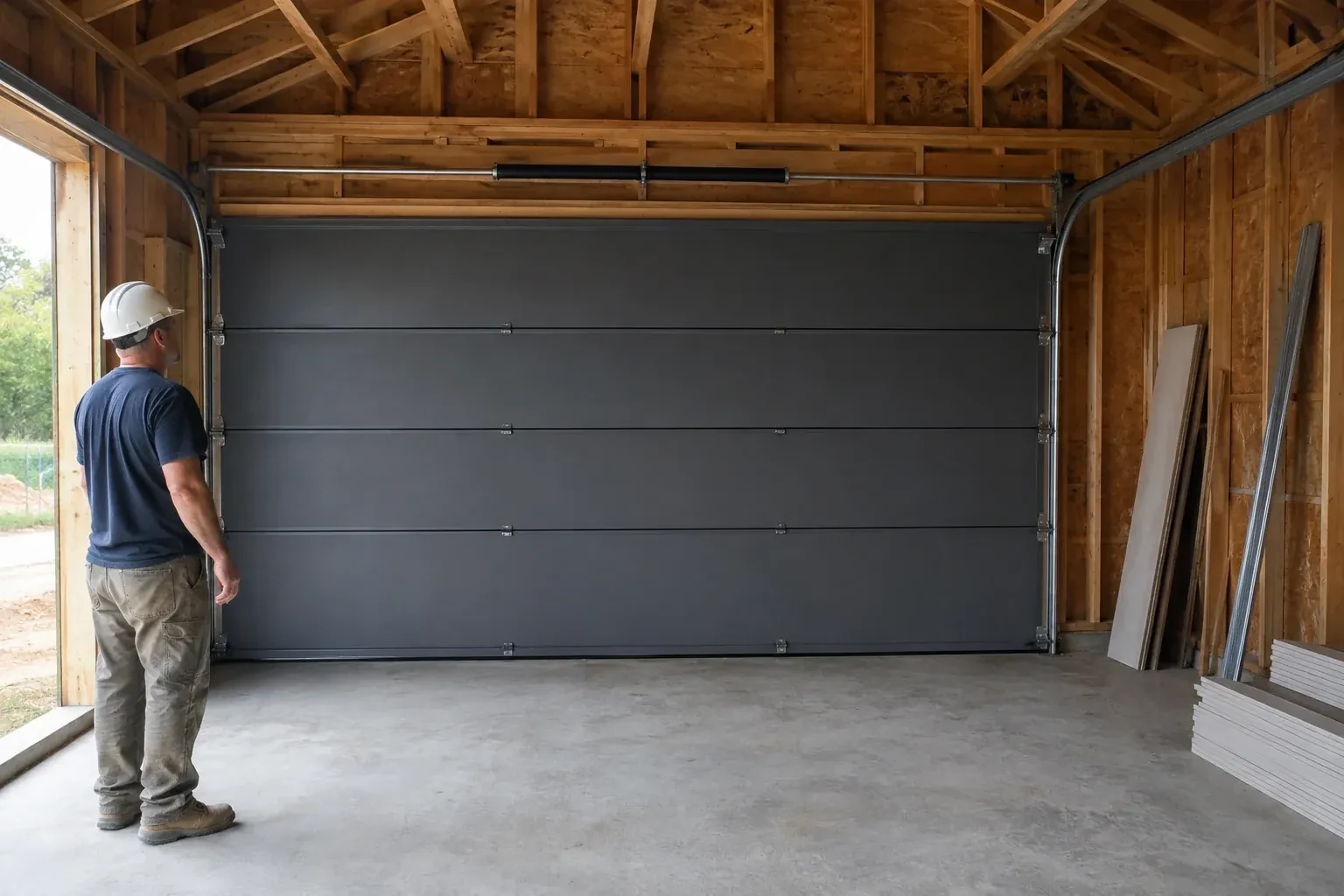
This garage will be heated and used beyond parking, so the opening needs more than a basic closure.
In plain words
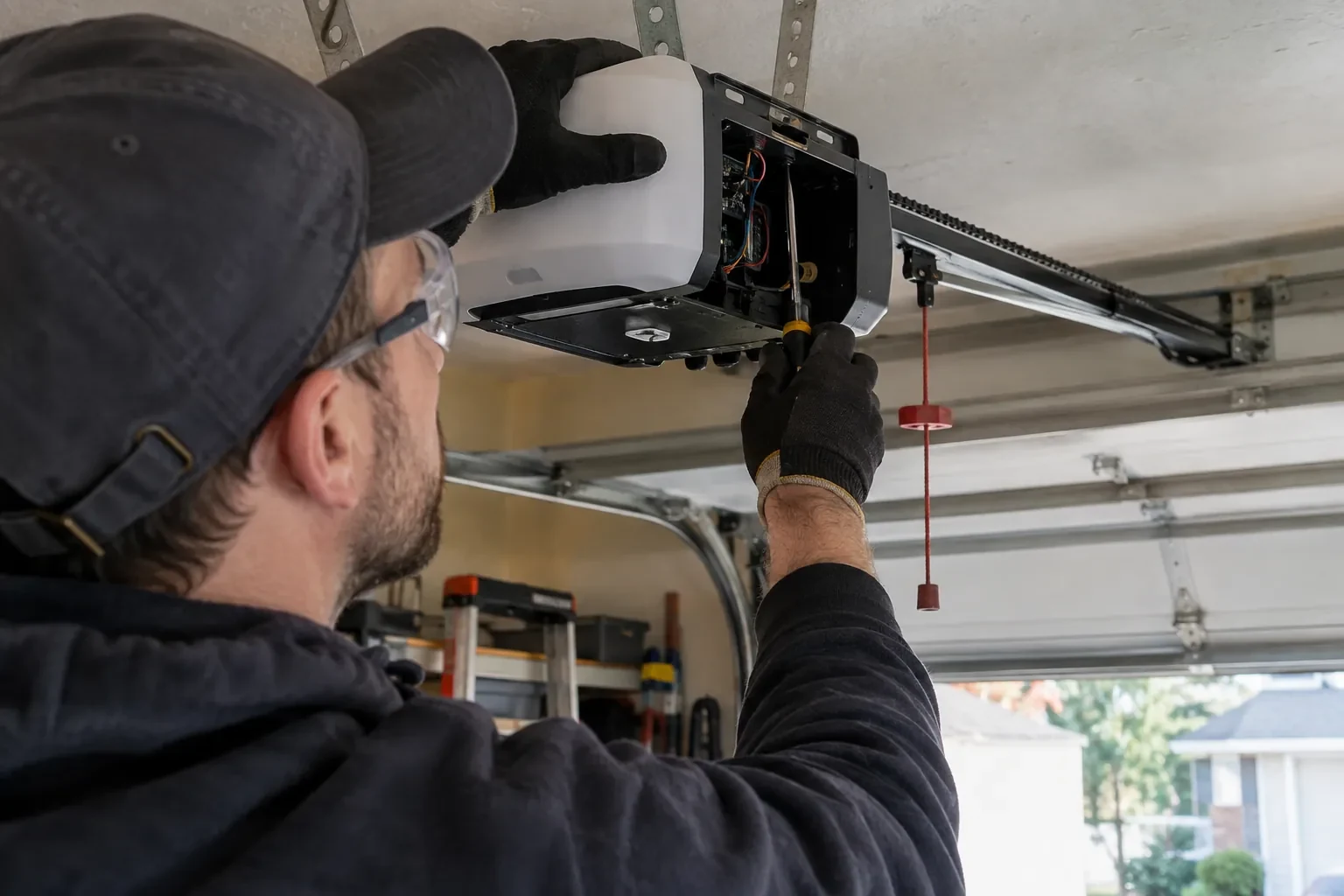
When an electric operator is included, door installation and electrical preparation meet at several points. The ceiling receptacle, operator support, wall control route and sensor locations are confirmed before equipment is mounted. The sectional door itself is assembled, tracked and counterbalanced first, because the motor is intended to move a balanced system. The operator is then connected with appropriate door reinforcement, its travel is set, and the reversal and photoelectric functions are checked during commissioning.
How the visit goesThis garage will be heated and used beyond parking, so the opening needs more than a basic closure. Insulated sections, perimeter seals and careful contact at the finished floor matter from the first installation.
New-Construction Garage Door Installation
How the visit goes
Setting the installation window
Site readiness includes timing as well as dimensions. The opening should be available, final reference surfaces established and the route for door sections clear. The installer confirms delivery access, protected staging space and whether lifts, scaffolds or other trades occupy the work zone. Electrical completion, floor coatings and exterior trim are placed in sequence around the door work. The builder and installer then have a shared completion point: a tested door system, a tidy opening and named follow-up items for any work that remains with another trade.
Closing the weather gaps
Weather sealing is fitted after the door sits correctly in the opening. The bottom retainer and compressible seal meet the finished floor, while perimeter stop moulding contacts the exterior face without squeezing the sections so tightly that movement binds. Section-joint seals and glazed openings are checked as part of the selected door construction. The installer views the closed door from inside for visible gaps and adjusts the seal position where the building surfaces allow. Trim, caulking or cladding work assigned to another trade is identified separately for project closeout.
A defined closeout for the build team
For the builder, completion means the opening, installed door and remaining trade responsibilities are clearly separated. The garage door has been assembled, supported, balanced, sealed and tested within its agreed scope. Items such as final electrical connection, exterior caulking, cladding touch-ups or floor finishing are listed only when they remain elsewhere in the project. This closeout gives the next trade a clean starting point and gives the owner a system that has already been demonstrated. It also keeps later cosmetic work from being mistaken for incomplete door installation.
New-Construction Garage Door Installation
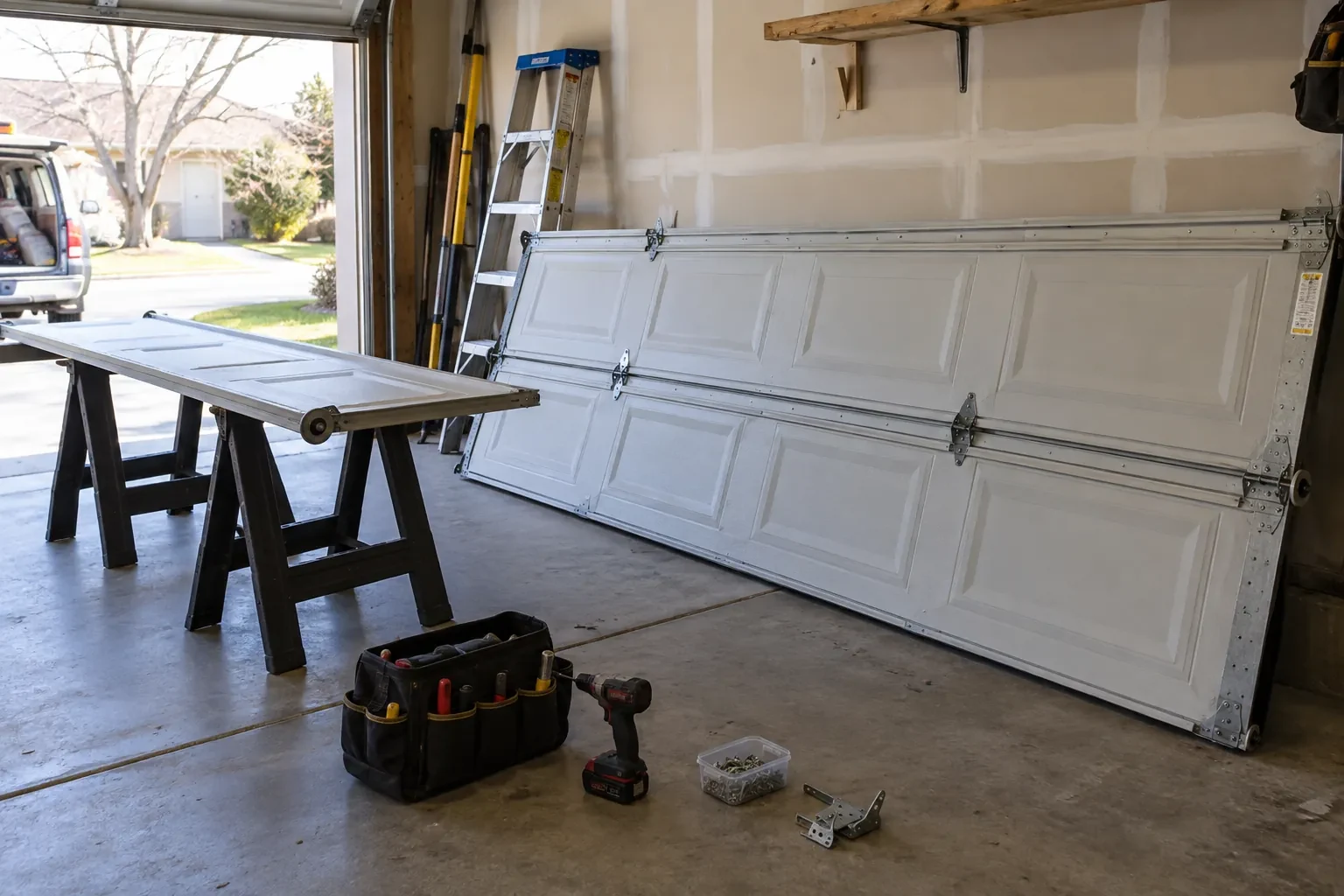
In the van
Torsion shaft and bearings
Counterbalance springs
Door reinforcement struts
Graduated hinges
Vertical and horizontal tracks
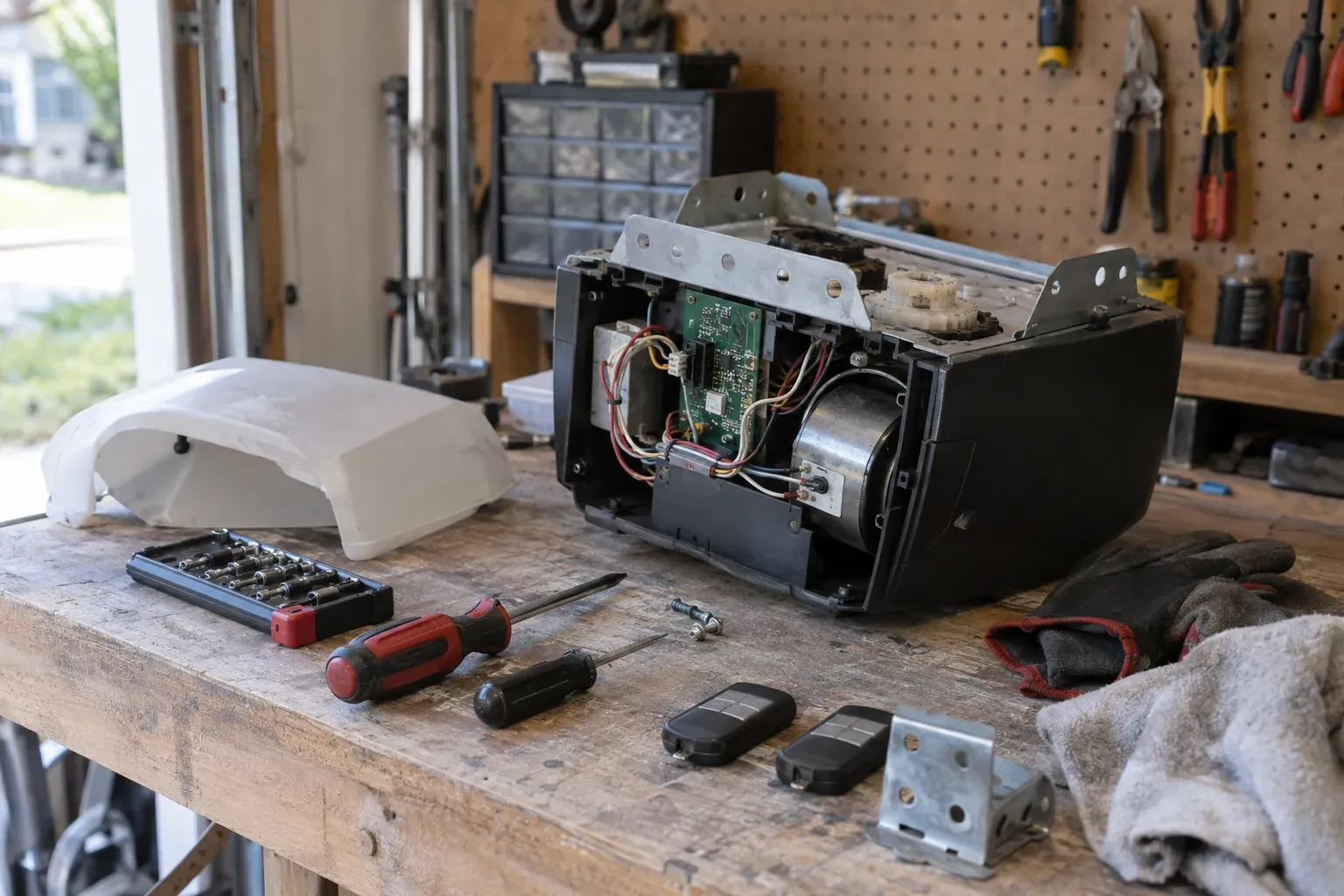
New-Construction Garage Door Installation
What affects the quote
Delivery and work-area access
Long sections need a suitable route into the garage and protected space for staging. Restricted access, occupied work zones or special lifting needs change the installation plan.
Section construction
Single-layer, multi-layer and insulated section assemblies use different materials and carry different weights. The selected construction shapes the door package as well as its matched spring requirements.
Counterbalance arrangement
Door weight, track geometry and available space shape the spring, shaft, cable, drum or pulley package. Heavier and specialized configurations require their corresponding matched hardware.
What to have ready
- What headroom, sideroom and backroom are available around each opening?
- Is the finished floor installed, level and at its final elevation?
- Where are the operator receptacle and control wiring planned?
New-Construction Garage Door Installation: questions
QuestionsCan the finished door still be operated manually?
Yes. A properly counterbalanced sectional door is checked by hand, whether or not an electric operator is added. With powered equipment, a manual release disconnects the operator so the designated handle can be used; the door is closed first, since an open or unbalanced door can move unexpectedly once released. Handover includes a demonstration of disconnection, movement and reconnection under the product instructions. The release path and lifting area should remain accessible rather than being blocked by storage.
Which documents should stay with the completed door system?
Keep the door and operator manuals, model or component identification, approved selections and any relevant drawings with the building records. The closeout note can include door size, track arrangement, counterbalance type, controls and completed commissioning checks. Private access codes remain with the owner rather than in a general service file. These records make future maintenance and compatible part identification much more straightforward.
Who handles permits or inspections for the garage door work?
Responsibility depends on the project, municipality and the wider building scope, so it should be named in the construction documents or proposal. The builder can confirm what approvals cover the opening, framing, electrical work and installed door. The door installer supplies relevant product and installation information for their scope. Keeping these roles explicit prevents an inspection assigned to one party from being assumed by another.
Related services
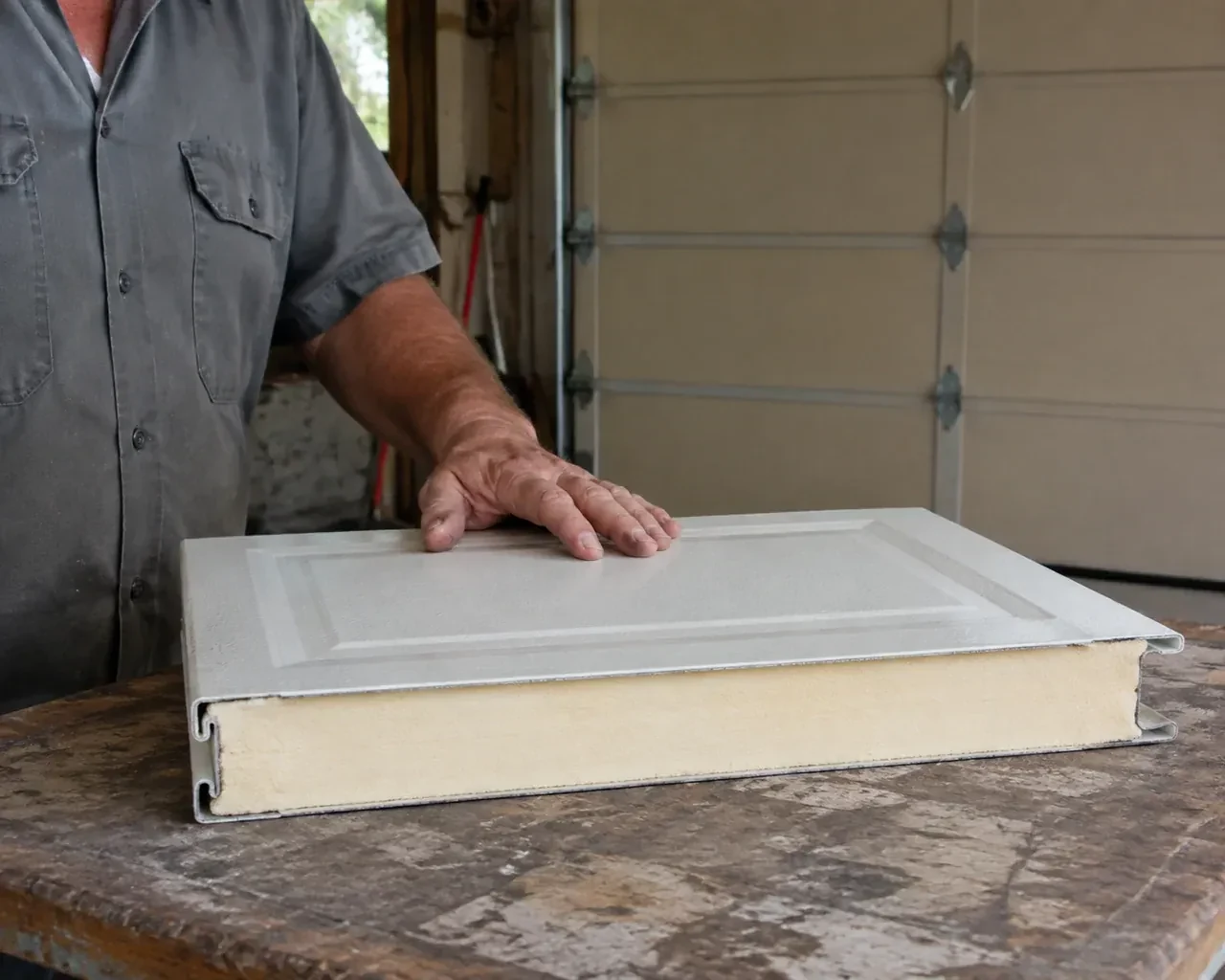
- Insulated Steel Garage Door InstallationYour garage is becoming a workshop, but the thin single-skin door rattles, sweats and lets outdoor temperatures shape the whole room.
- Wind-Rated Garage Door ReplacementNew windows would improve the door's appearance, but they also change the section layout and reinforcement pattern.
- Carriage-House Garage Door InstallationTwo garage openings sit side by side, and small differences in window spacing or decorative hardware would be obvious.